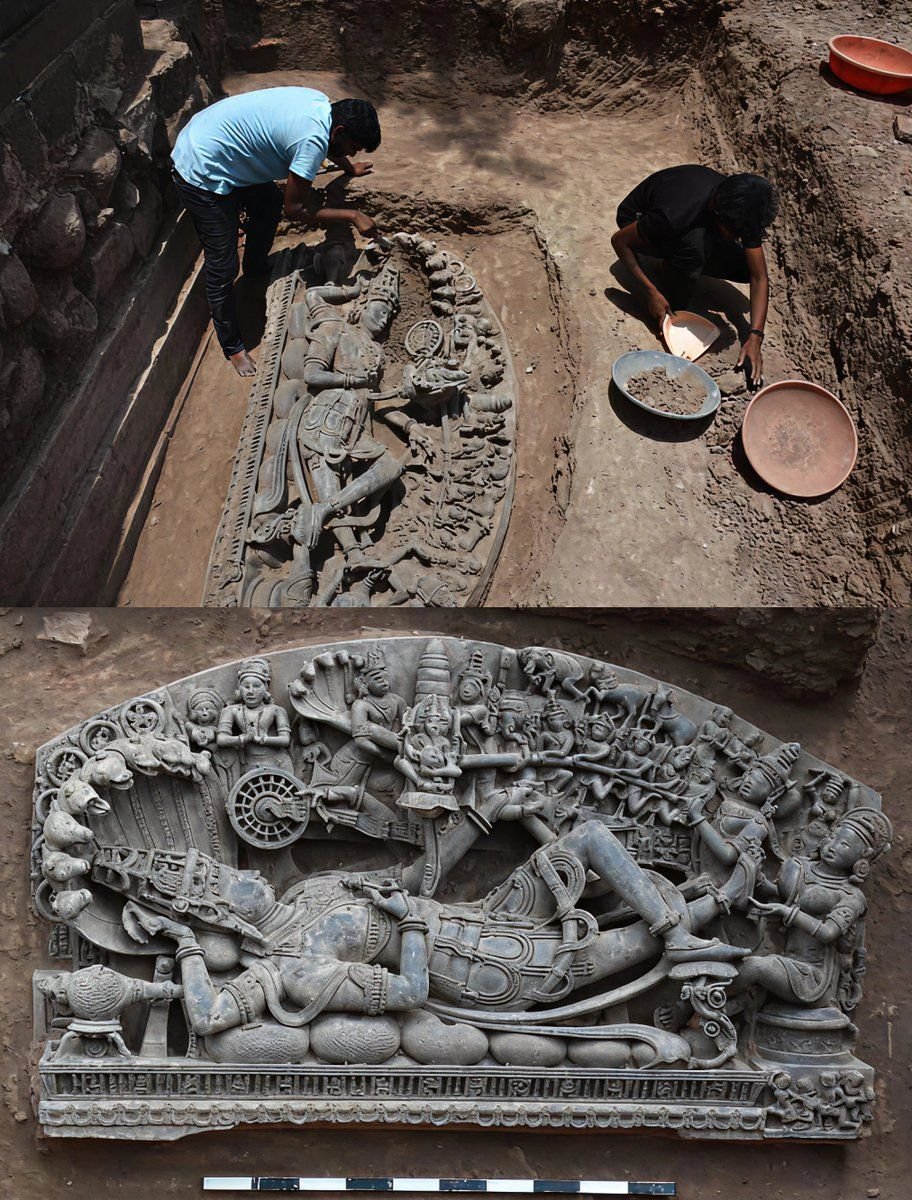
In 2024, archaeologists uncovered a 1.7-meter-long Sheshashayi Vishnu sculpture near Seuna-Jadhavrao Lakhujiraje's Samadhi in Sindkhed Raja, Maharashtra. The artwork is thought to belong to the 11th–12th century CE.
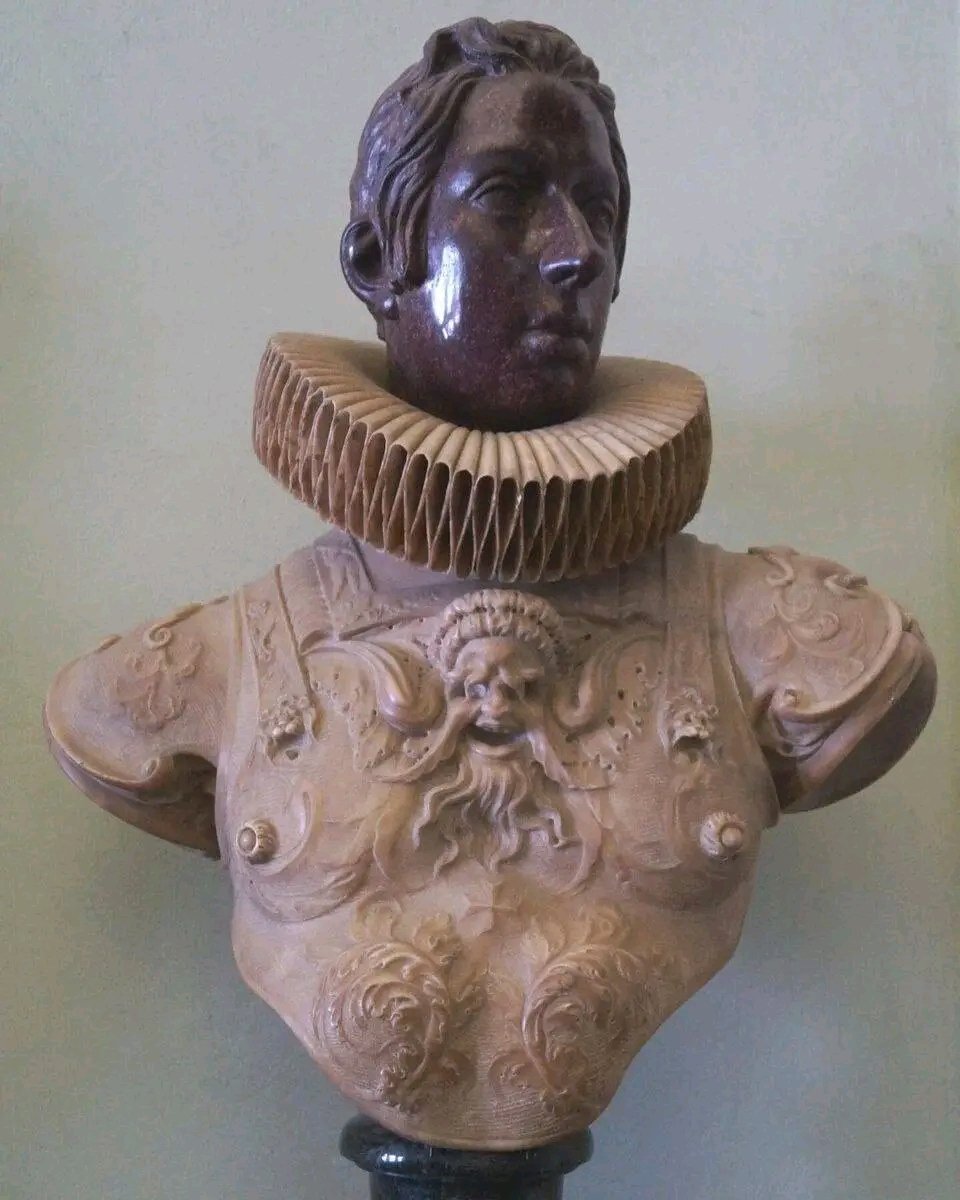
Мраморный бюст Козимо II Медичи, великого герцога Тосканского. Скульптура приписывается Томумасо Федели и датируется началом XVII века.
Голова выполнена из редкого и твердого порфира, а доспехи — из белого мрамора.
Эллинистический золотой браслет с узлом Геракла в центре. Инкрустирован гранатами, изумрудами и эмалью.
Датируется III–II веками до нашей эры
Хранится в Метрополитен-музее, Нью-Йорк, США
Canteen from Oberflacht 🇩🇪, 580-620 CE.
"The canteen shown here was roughly shaped using an axe, saw, and knife, and then hollowed out on a lathe. The hollowed-out hole was closed with a turned disc. The wooden canteen holds approximately one liter."
Collection Landesmuseum Württemberg - Stuttgart
https://t.co/ZrvHkNcius
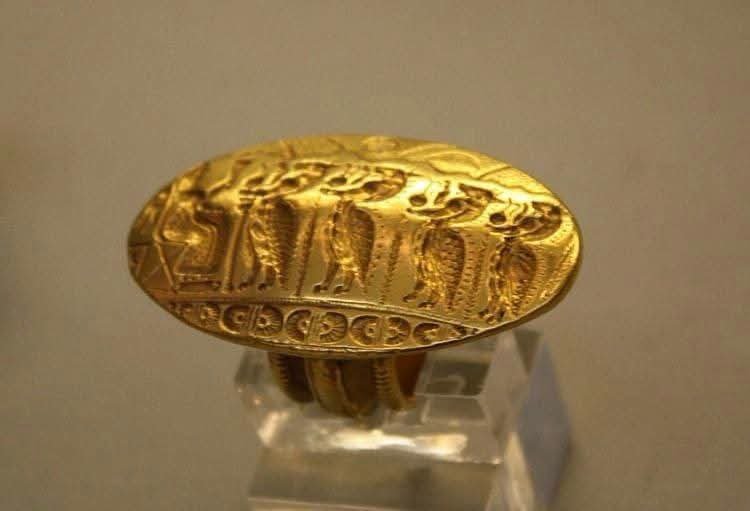
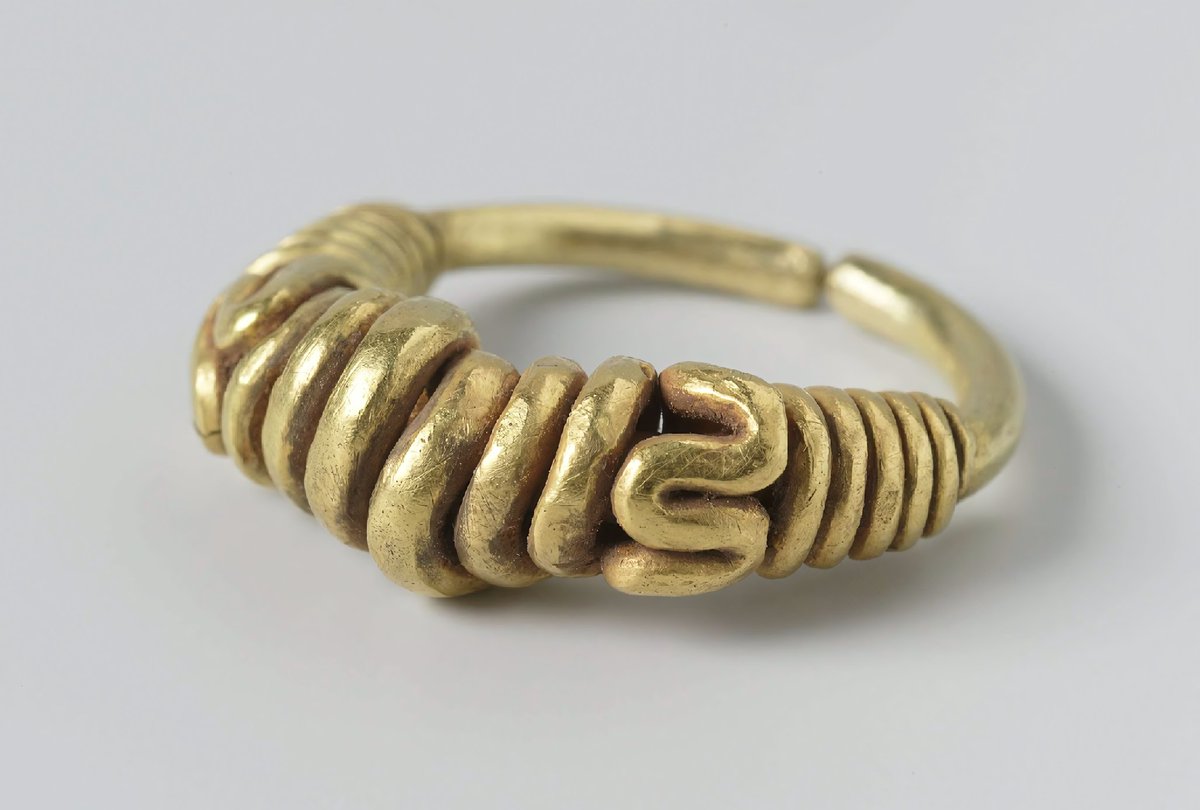
Золотое кольцо, найдено в Тиринфе в захоронении молодого воина, умершего ок. 1500 г. до нашей эры. Хранится в Национальном археологическом музее в Афинах, Греция.
A woman in Bagnara, Calabria, balances a freshly caught swordfish on her head while carrying it home, Italy, 1945....
For centuries, the coastal town of Bagnara Calabra in southern Italy has been renowned for its swordfish fishery, one of the oldest in the Mediterranean. Local fishermen traditionally hunted swordfish from tall wooden lookout boats called feluccas, using long hand-thrown harpoons to target the powerful fish as they swam near the surface. The method required remarkable skill, teamwork, and precise timing, and it remains part of the region's cultural heritage today.
In the years immediately following World War II, daily life in much of Italy was shaped by shortages and reconstruction. Fresh catches from the sea were an essential source of food and income for coastal communities. Before widespread access to motor vehicles or refrigeration, it was common for residents to carry large fish home by hand or balanced on their heads, a practical technique that distributed the weight while leaving the hands free for balance.
Bagnara's swordfish tradition has been recognized as one of Italy's oldest surviving fishing practices, linking modern fishermen with techniques that date back to antiquity.
Adult Mediterranean swordfish can exceed 10 feet (3 meters) in length and weigh more than 1,000 pounds (450 kilograms). Their distinctive elongated bill is used to slash through schools of fish, stunning or injuring prey before they feed.
#archaeohistories
Drifting silently in the Atlantic, this lifeboat from the Titanic was found a month after the liner sank. When the passing RMS Oceanic spotted it on May 13, 1912, about 200 miles from the wreck site, crew members discovered three bodies on board.
Two were firemen from the ship’s engine room. The third was first-class passenger Thomson Beattie, 37, still dressed in his dinner jacket. At the bottom of the boat, searchers found a wedding band engraved “Edward to Gerda,” a poignant reminder of a couple who had not survived.
Photographs taken during the recovery, along with a detailed eyewitness account, reveal what the crew encountered when they approached Collapsible A, believed to be the last lifeboat launched as the Titanic slipped under around 2:15 a.m. One image shows Oceanic sailors being lowered into a lifeboat. Another captures them rowing toward the drifting craft. A third shows the Titanic boat already half-swamped.
The handwritten account, preserved with the photos, notes the difficult condition of the remains and the challenges faced by the recovery team as they brought the lifeboat alongside the Oceanic.
Collapsible A was later identified and linked to survivors who had briefly escaped in it before being transferred to other boats, leaving behind those who were too weak to continue.
More haunting historical photos: https://t.co/POrqRRccxc