@RoyalMailHelp - as a tip, if someone can't deliver something (even though other Posties managed to drive through that day), don't send it a further 50 miles away.
Absolute incompetence.
There is no such thing as a "visual learner."
While students may have learning style *preferences* (e.g., visual vs. verbal), they do not actually learn better when receiving information via their preferred learning style.
This has been empirically tested over and over again. But despite having countless stakes driven through the heart, the myth continues to rise up from the grave like an unkillable zombie. It is the educational equivalent of astrology.
To get ahead of the a common follow-up confusion:
Q: "But math topic XYZ clicked for me when I saw an image/diagram!"
A: What you're thinking of is matching instructional design to the content, not matching teaching style to the learner.
Lots of math topics benefit from images/diagrams regardless of what the learner might claim is their learning style.
Yes, an image/diagram may help you learn a particular math topic. That doesn't mean you are a visual learner.
What it means is that the particular information being taught is effectively communicated through an image/diagram. For everybody, not just for you.
What you're experiencing is that you learn better when the instructional design is properly tailored to the information being taught.
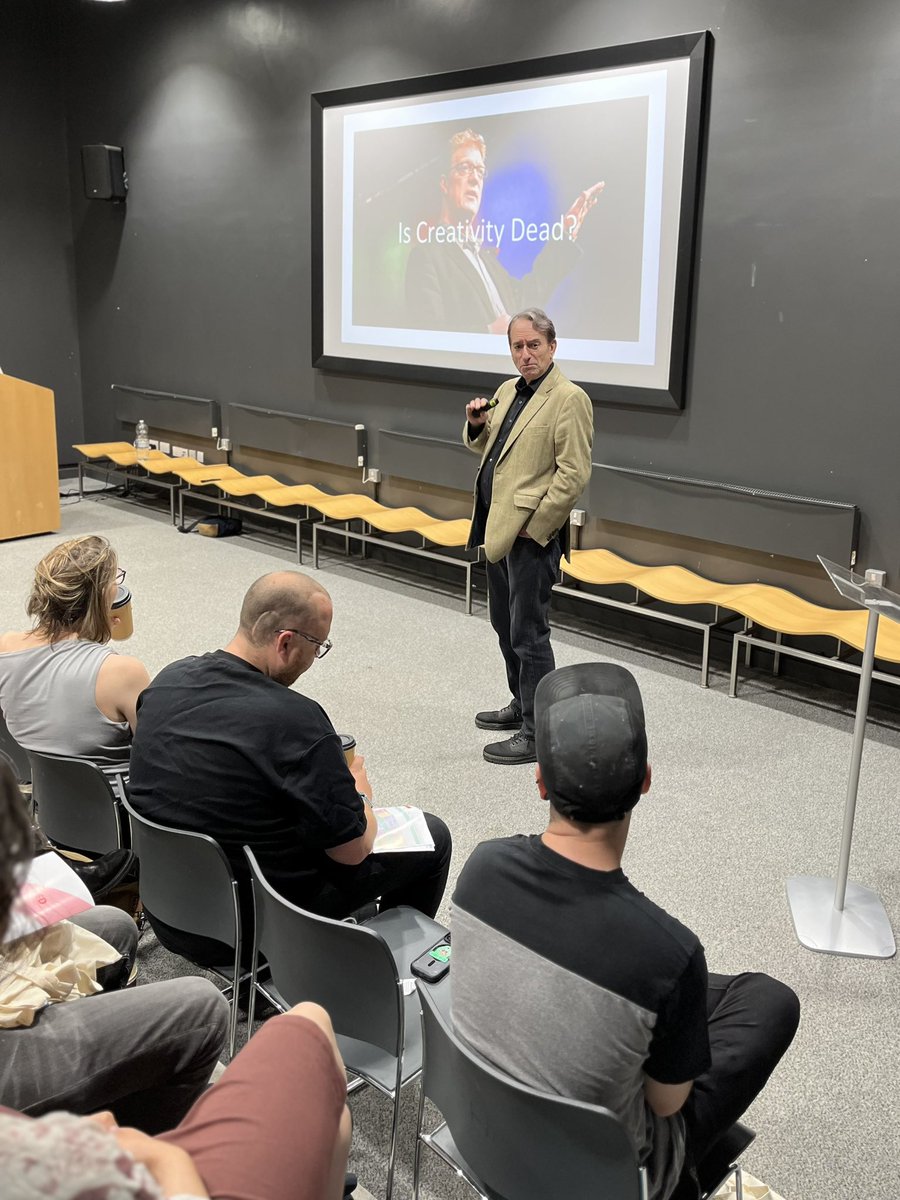
From the bottom-left reference in the screenshot, "How Learning Happens" by @P_A_Kirschner and @C_Hendrick:
"How do you explain to a pupil in an auditory way how crimson red and brick red look? Or how do you kinaesthetically explain how a blackbird sings? In other words, it's actually the subject matter and the learning goal that should determine how one teaches and not a preference or a non-existent learning style."
Please do share #edutwitter
We have a Maths teacher vacancy for September, with the opportunity to teach A Level Maths and Further Maths
https://t.co/1sMzGAl3No
@themathsbazaar It depends which IB course.
Applications and Interpretations has lots of Statistics and Matrices but Analysis and Approaches is more algebra-focused.
Hopes this helps people. I’ve put together a little document on how to use AI in the maths classroom. Free PDF below.
If you’re wondering how AI affects you or how you can use the new technology, please give it a click. And please RT!!!
https://t.co/SMpO5jzet8
Sigh…..😞
Another day, another wildly misleading Daily Mail headline.
I mean, it certainly would be headline worthy if police had turned up and accused her of committing a crime by writing innocent FB posts.
But that's not what happened…
🧵
1/
@davowillz@adamboxer1 It's quite funny trying to watch it try to cope with an A Level Further Maths problem.. Often a vaguely sensible starting point and then gibberish later on.
Something a middle-schooler emailed us about:
“A ‘combination lock’ should *technically* be called a ‘permutation lock,’ because the order of the numbers matters in permutations, but in combinations the order doesn’t matter.”
10/10, no notes.
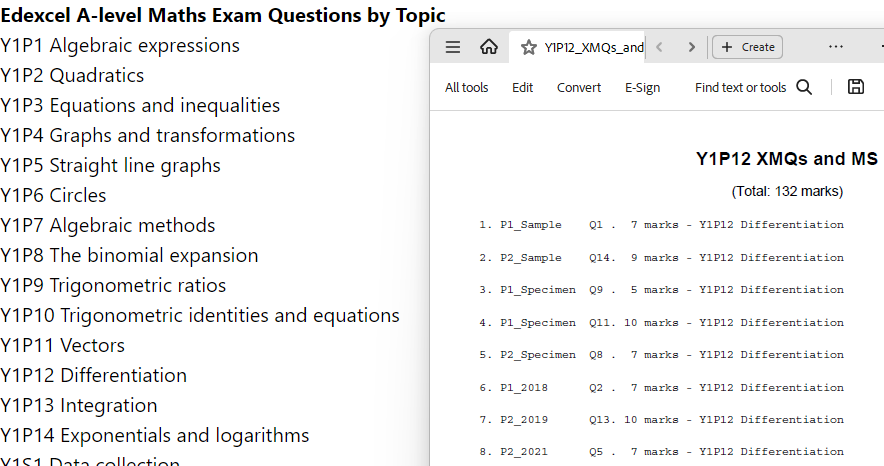
Exam questions arranged by topic for Edexcel A-level Maths: https://t.co/YYw5aHZqj2 - pdf documents with exam questions followed by mark schemes, from 2018 - 2022 (+ spec & sample) papers. And the same for Core Pure, Further Pure, Mechanics and Decision: https://t.co/ywTTfTLixt
As a back to school present, I have uploaded the solutions to the Year 12 revision sheets on my website.
https://t.co/elN0nPiQne
While you're there, if you fancy buying the book or recommending it to a friend, that would be lovely!
BREAKING NEWS! This September we are launching #TeamTasking. Every half term @AlexHorne will set a task for groups of children to attempt in large teams. It will be perfect for competing in houses, form groups, across year groups and phases or in sporting or social clubs.