HS ELA Teacher • M.Ed. • Reader • Writer • Gryffindor • Passionate about pushing students as readers/writers/individuals • B.E. better everyday • #clearthelist
@AP_Trevor Impressive numbers for this year! We’re trending upward! So grateful for the opportunity to have been a Reader this year - it helped me to better understand the scoring criteria! 😃👏 #aplang
The 2026 AP English Language and Composition Exam scores:
5: 15%; 4: 28%; 3: 32%; 2: 15%; 1: 10%
The 2026 AP English Language and Composition exam was taken by 631,000 students, ~4% of the U.S. high school population.
The exam questions and essay topics were developed by a committee of college faculty, including English professors from Duke University, Florida State University, the University of Maryland and the University of California systems — and master AP teachers from across the nation.
Multiple-Choice Questions (MCQ)
1.The highest-performing area were questions assessing students’ ability to accurately identify Claims and Evidence within texts across a wide range of styles and complexities. These students are reading arguments carefully and identifying how evidence functions. Students achieving AP 5s typically answered 100% of these questions correctly, while students achieving AP 4s generally only missed a single point, and students achieving AP 3s typically earned 75% or more of the possible points.
2.Students also scored very well on questions related to analyzing and understanding the Rhetorical Situation in reading (about 81%). Students earning AP 4s and 5s generally answered 100% of these questions right, and students earning AP 3s missed only a single point here.
3.The most challenging MCQ area was Style — questions in which students were asked to identify features and aspects of writers’ style in the passages they analyzed. Only 5 MCQs focus on this area, and they neatly differentiated across student abilities: generally, students achieving AP 5s earned all 5 points possible, students earning AP 4s earned 4 of the 5 points, and students earning AP 3s earned 3 of these 5 points. Attending to a writer's word choice, syntax, and tone at the sentence level remains the area with the most room for further growth and improvement.
Free-Response Questions (FRQ)
https://t.co/27iWcsSm6G
Over a single 2-hour-and-15-minute session, students wrote three complete essays — a source-based synthesis argument, a rhetorical analysis, and an original argument — each demanding sustained reasoning and control of written English.
These three free-response questions span the core of the discipline — synthesizing sources into an argument, analyzing another writer's rhetorical choices, and constructing one's own argument — and I love that the committee anchored them in sources and ideas that students are not likely to already have examined in class: the value of napping and how we rest, what it means to do creative work, and how much weight we should give to other people's opinions. This is part of what the committee must do: select source material that students will not already have studied in class, so that on exam day students are drawing upon their own skills, not an interpretation already given to them by a teacher or AI.
Moreover, unlike AP English Literature and Composition, which focuses on novels, stories, drama, and poetry, AP English Language and Composition focuses on reading and analyzing non-fiction (speeches, essays, articles) and on writing argumentative, evidence-based, rhetorically effective essays, a powerful skill that is an anchor for a wide variety of career pathways.
Because AP scores are reported on a 5-point scale, the free-response rubrics deliberately include foundational points that separate AP 1s from 2s, mid-range points that distinguish 2s, 3s, and 4s, and a small number of advanced points designed to differentiate AP 5s from AP 4s.
FRQ #1, the Synthesis question on the value of napping, required students to read six authentic sources — reporting from national and international news outlets, a research university's findings, a data graph from a nonprofit health foundation, and a documentary photograph — then weigh competing evidence and build a defensible position. In short: college-level information literacy: evaluating real sources and putting them into conversation.
Nearly every student — about 98% — earned the thesis point, stating a defensible position. This is the foundational move that is expected even among students receiving AP 1.
The evidence-and-commentary rubric row is what most meaningfully differentiates across scores of 2, 3, 4, and 5. AP students receiving a 2 were usually able to earn just one of these points, whereas AP students receiving a 5 typically earned perfect scores on this row, not missing a single point. Selecting apt evidence from the sources and using commentary to explain how the evidence supports a line of reasoning — rather than merely quoting the sources — is what moved an essay up this scale.
FRQ #2 asked students to analyze how writer Laura Amy Schlitz uses rhetorical choices—including an extended kite-flying metaphor—to convey what it means to be a writer.
Why include a speech by a children's-book author, whose syntax and vocabulary in this speech are quite simple, on a college-level exam? Because the professors and educators who build the AP exams select passages the way college English faculty do: by stylistic, rhetorical, and interpretive complexity—not by Lexile scores, which measure only syntax, sentence length, and vocabulary. By that narrow metric, Ernest Hemingway, John Steinbeck, Elie Wiesel, Richard Wright, Zora Neale Hurston, and Toni Morrison would all be disqualified: their Lexile scores are similar to Schlitz’s.
The statistics for this question are clear. FRQ #2 had a mean/max difficulty of .57—the hardest question on this year's exam, and consistent with the difficulty of FRQ #2 in prior years. Rhetorical and thematic complexity simply aren't the same as syntactical complexity, which is rarely the deciding factor when faculty choose what's worth analyzing.
As in FRQ #1, AP students receiving a 2 were usually able to earn just one of the evidence and commentary points, whereas AP students receiving a 5 typically earned perfect scores on this row, not missing a single point.
An impressive ~30,000 students earned the sophistication point for the skill with which they unpacked Schlitz’s rhetorical choices and strategies.
FRQ #3, the Argument question based on a claim by physician, engineer, and former astronaut Mae Jemison, asked students to argue the extent to which they found Jemison's claim valid.
Students generally found this essay slightly less challenging than FRQ #1, and significantly less challenging than FRQ #2, as demonstrated in their points earned.
Almost all students — about 98% — established a defensible thesis, the foundational point expected even of students receiving an AP 1.
Students receiving 2s were typically able to generate more effective evidence and commentary than in their other two essays, earning 2 of the 4 points possible here, so the real differentiation this essay provided was for students achieving AP 4s and AP 5s, who consistently earned all or all but one of the points possible.
So: real kudos to the students who succeeded on this exam. Three full essays, six sources to weigh, an artful piece of rhetoric to analyze, and an original argument to defend — all in a single sitting. The committee built a demanding, content-rich measure of college-level reading and writing, and it’s exciting to see such a significant number of students meeting these high standards.
All subjects' AP score distributions for 2026 will be posted here when available: https://t.co/OrkaQhPZYO
It’s that time of year when AP Readers begin finishing the scoring of AP essays, portfolios, and free-response questions, so as the data roll in, I’ll post that info here. A few reminders follow.
I won’t know in advance the day when each subject will reach a critical mass of psychometrically confirmed scores, so I can’t provide a schedule of when I’ll post each subject. Because these score distributions include all students worldwide, individual classrooms will often have score distributions that are either higher or lower than this aggregation.
AP Exams aren’t scored on a curve. Rather, as many students as earn the points necessary for college credit receive a score of 3 or higher. Each AP Exam version (e.g. west coast vs east coast; digital vs paper) is separately equated so that regardless of which version you take, you receive a comparable score. More details on exam versions and equating: https://t.co/hHxkzezmOm
Student performance on equated questions from year to year enables psychometricians to determine whether this year’s students, overall, demonstrated stronger, weaker, or similar content/skill mastery in relation to prior years’ students.
These scores represent a critical mass of scored exams, but faculty will continue to score throughout June. So we don’t upload scores for educators and students to view until July when all subjects are complete. If you’re an AP student, here’s information about how to make sure you’re able to view your AP scores starting July 7. https://t.co/YiSc8q9IcY
Remember that you have until June 20 to indicate which college should receive your free score send. https://t.co/FXyxVHESJ0
If you’re an AP educator, here’s information about how to view your students’ AP scores starting July 7: https://t.co/uvid823lkh
After the remaining exams in each subject are scored between now and the end of June, the score distributions may slightly shift. We seek to serve a wide array of student interests by offering AP courses in 40 subjects. Students should resist pressure to take large numbers of AP classes.
Our research finds that taking just 1-2 APs per year optimizes a student’s readiness for college. Take more only if the subject matter truly interests. https://t.co/MMddTR4L9S
While we celebrate students who earn scores that qualify them to place out of a college course, AP scores, high or low, are not a verdict on academic potential, intellectual curiosity, or motivation to continue to learn and grow.
Shoutout to everyone at @TEDxDetroit (special thanks to Yara & the Outreach Team!) for helping make this possible for my students & I!
Hoping this can be the start of an annual tradition for us! Please keep us in mind for next year! 😃🤞🏼🙏🏼💯
Thankful for the opportunity to take my #APLang class to @TEDxDetroit yesterday to hear from those amplifying their passions, ideas & creativity around Metro Detroit! 😃🫶🏻❌🎙️💯
The kids had a blast, loved hearing from the speakers & enjoyed being able to bond as a class! - 1/2
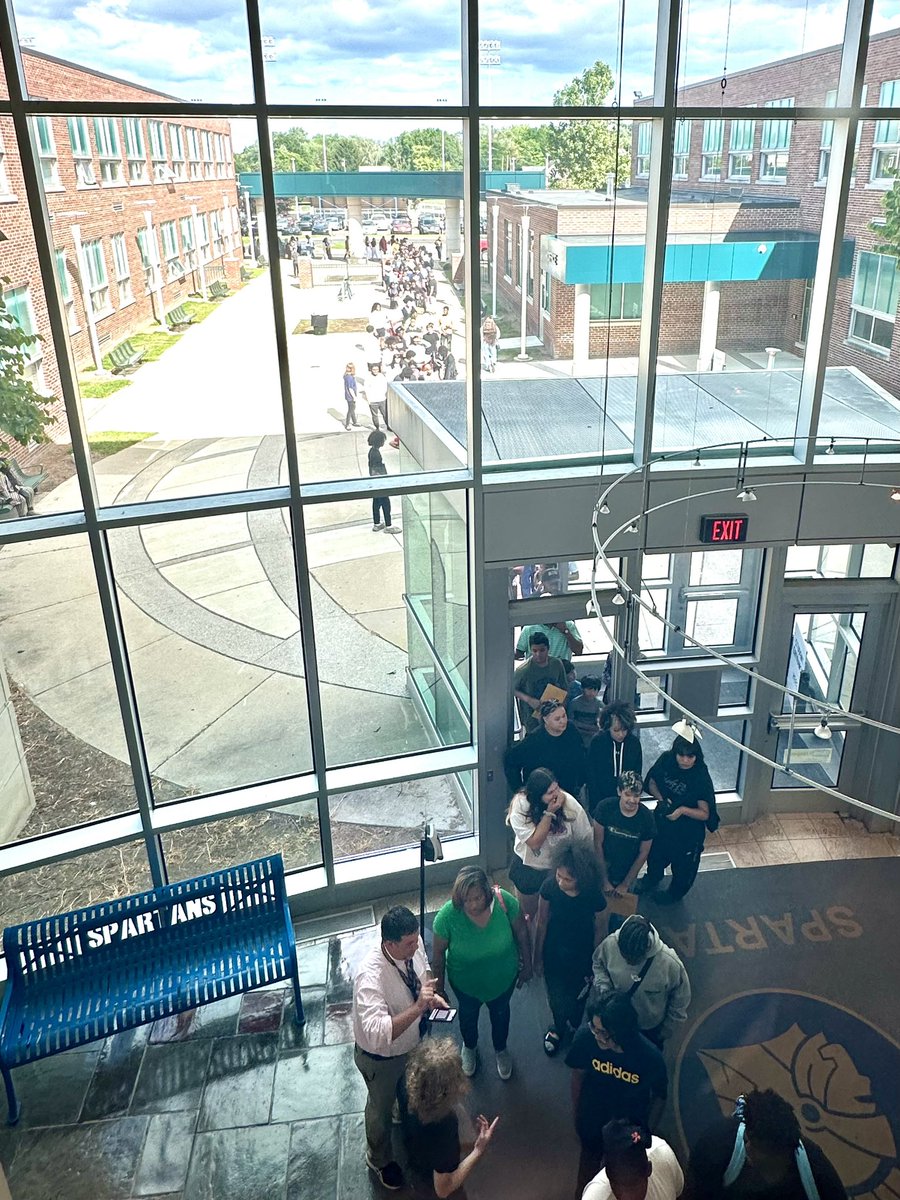
Unbelievable turnout last week for Open House! -I think back to the film ‘Field of Dreams’: “If you build it, they will come.”
Families lined up around the building waiting to see what’s in store for the ‘24-‘25 year! -We’re continuing to build something special at #FitzNation!
Thanks to @CoachLizLietz and the MISD team for a review of Disciplinary Literacy last week at our staff back-to-school PD! - Great takeaways as we continue to align, curriculum, create essential questions in unit planning, and consider literacy in all content areas! #FitzNation
Great Back-to-School District PD sessions last week centering around student engagement, learning about changes to the teacher evaluation process, navigating trauma, and managing student behavior. - The ‘24-‘25 school year is off to a great start! 😃
Say you can't sleep, we know! No espresso needed with this #GoogleClassroom update ☕. Educators can form student groups in Classroom to easily differentiate assigned content & streamline lesson planning. https://t.co/qKjA8gjXSf
We are read-y to celebrate because #ReadAlong is now seamlessly integrated into #GoogleClassroom 🎉! Available for Education Plus and Teaching and Learning Upgrade users. Check it out 📚: https://t.co/qKjA8gjXSf
Welcome to the dark side 🔦 Dark theme is now available on the mobile #GoogleClassroom app to help you stay focused and provide a more comfortable visual experience. Check it out now! https://t.co/qKjA8gjXSf
Starting in 2025, most #APExams will move to the Bluebook digital testing app. Twenty-eight subjects will feature fully digital or hybrid digital exams. Learn more: https://t.co/BgRTMewd55
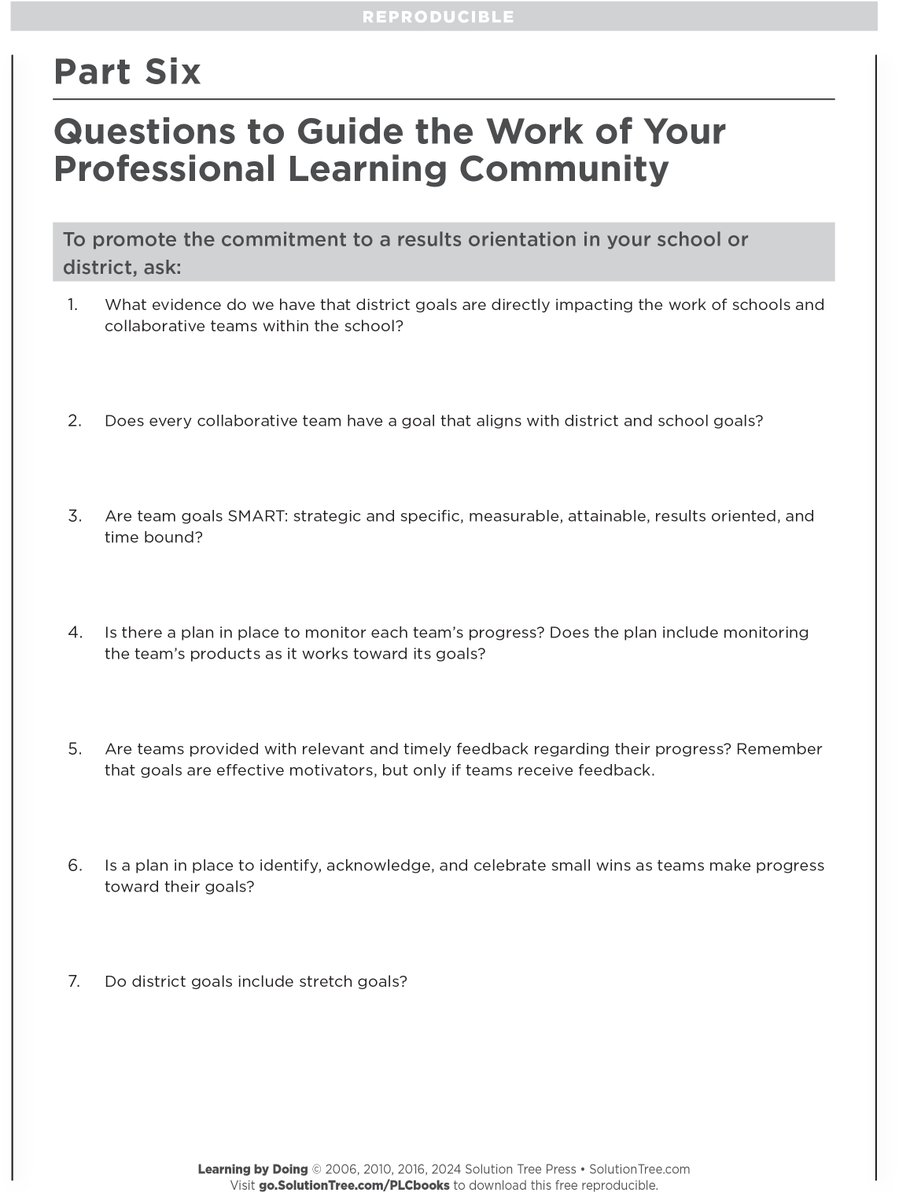
Only when #PLC team members focus on the right questions do they develop their capacity to improve learning.
This exercise from Learning by Doing, 4th Ed., offers some questions to consider when it comes to creating a results orientation. https://t.co/3yWShE4jNV #ATPLC
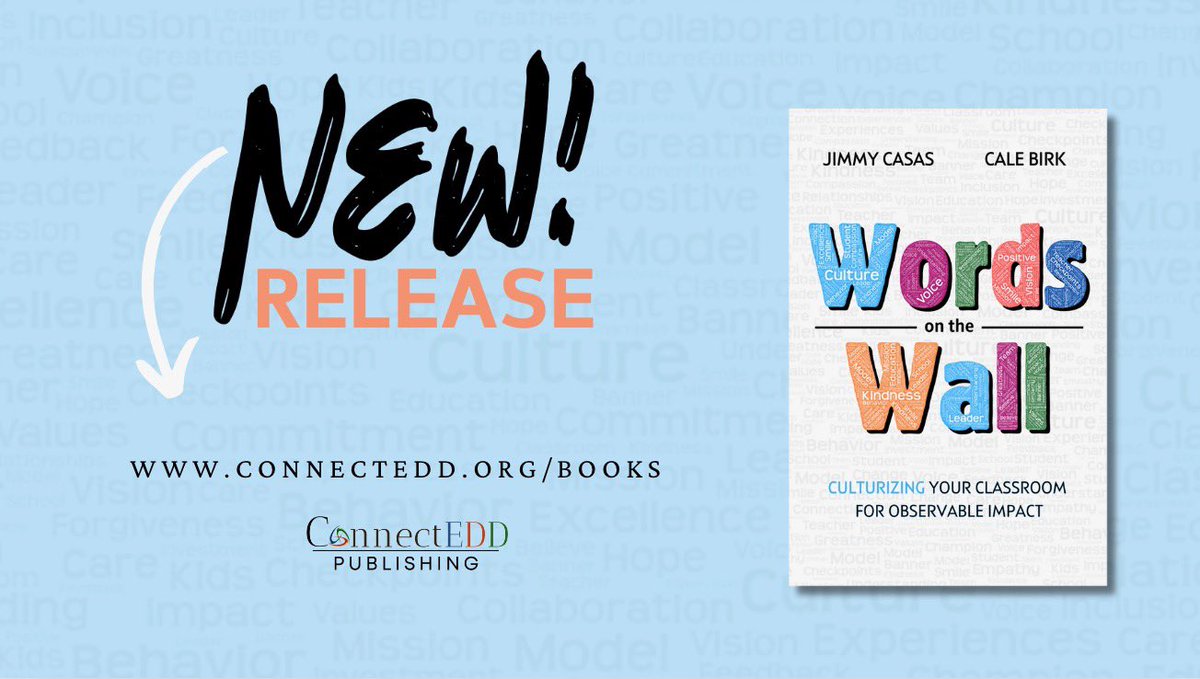
Oh my!! Proud to announce my newest book release “Words on the Wall.” Thank you @birklearns for being a great thought partner and helping me take the words on our classroom and school walls to observable action. Pumped! Grab your copy now at https://t.co/kkqhaUW3XY #WordsontheWall