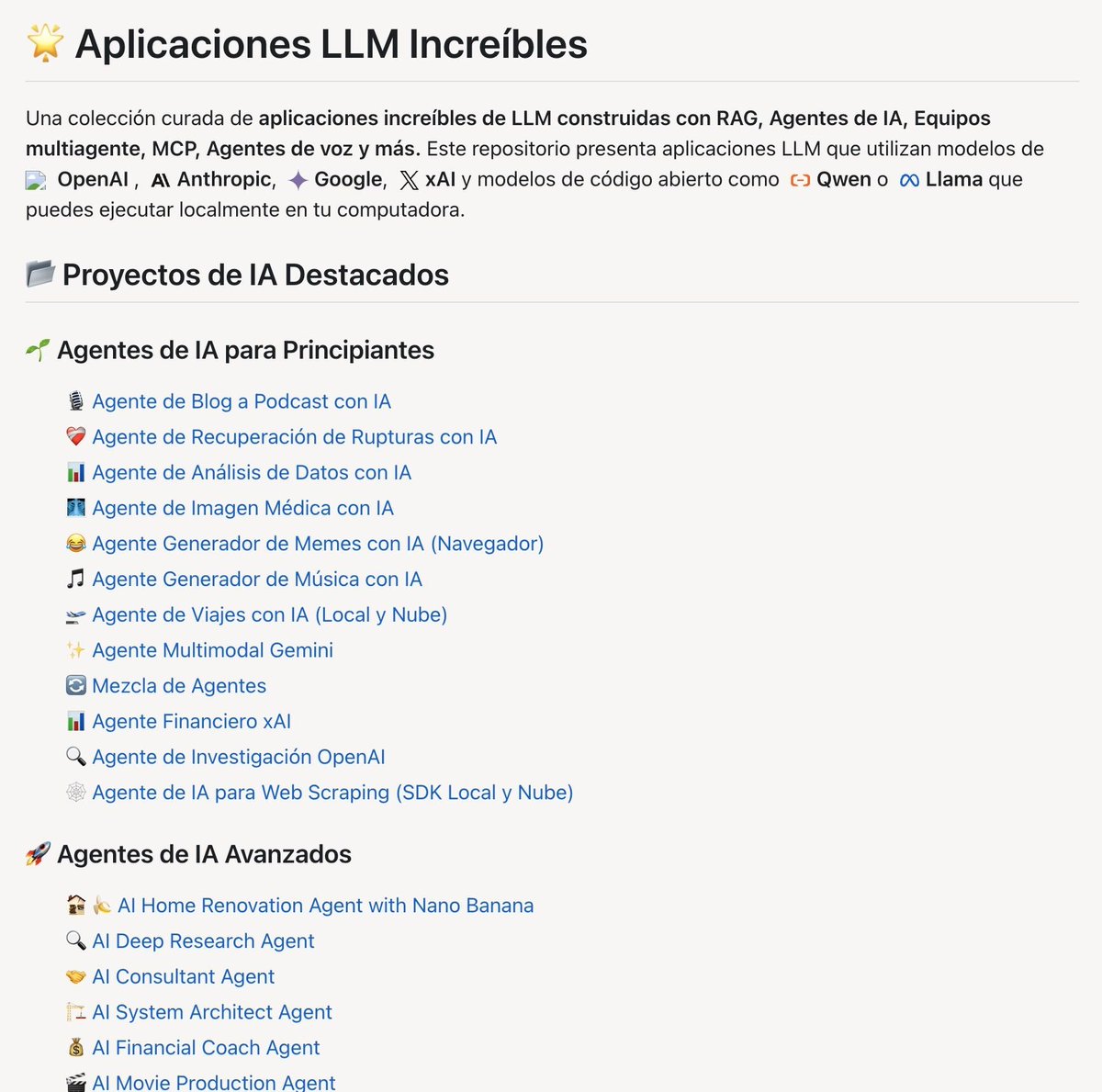
Este repositorio tiene una colección de Agentes de IA, LLMs y MCPs tremenda. Muchos además se pueden usar en local, sin pagar suscripciones.
→ https://t.co/Hbyoy64g9c
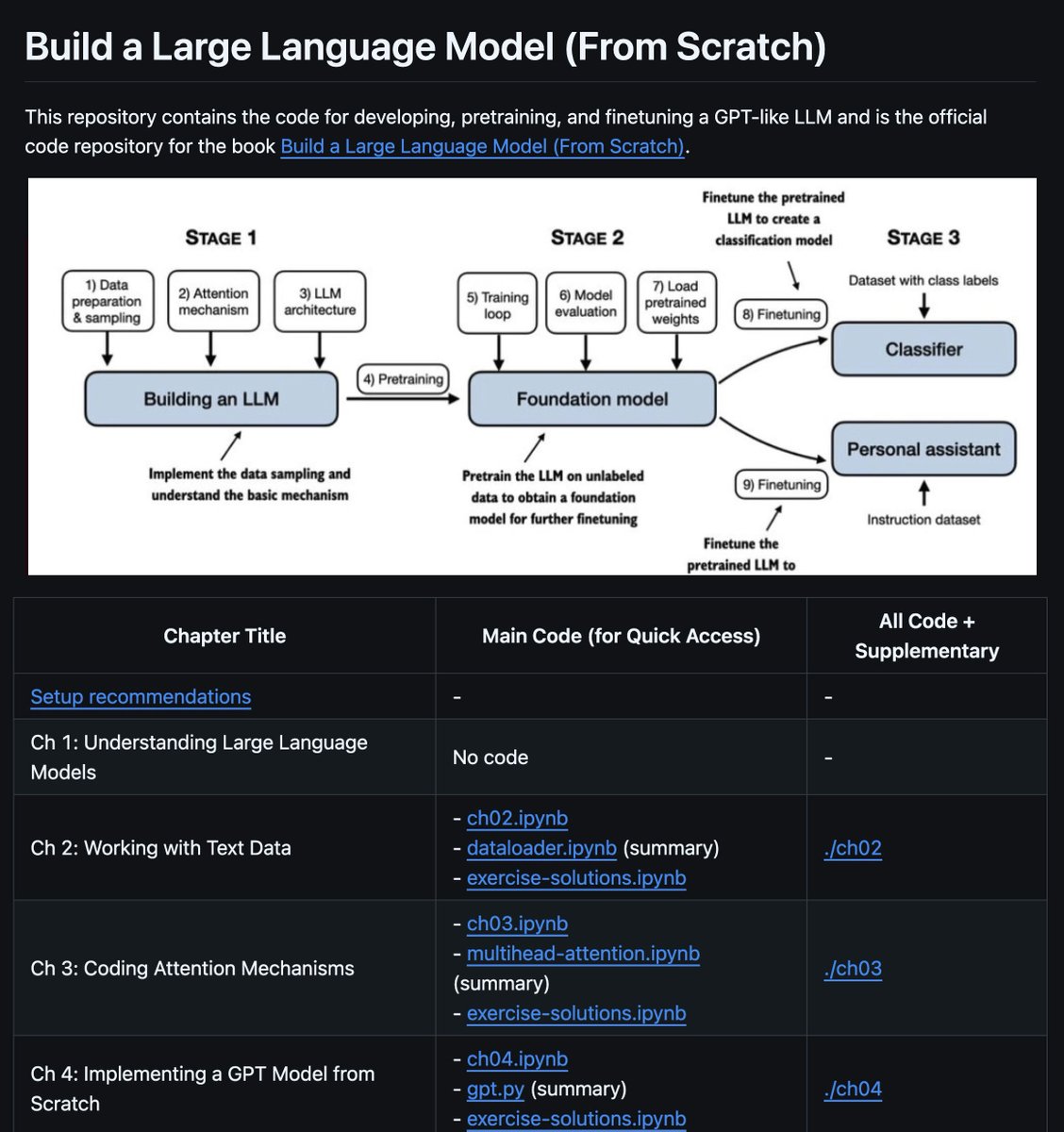
¡Crea tu propio modelo de IA! Este repositorio contiene el código para desarrollar, pre-entrenar y ajustar un LLM como GPT desde cero:
https://t.co/wZxr7eheaH
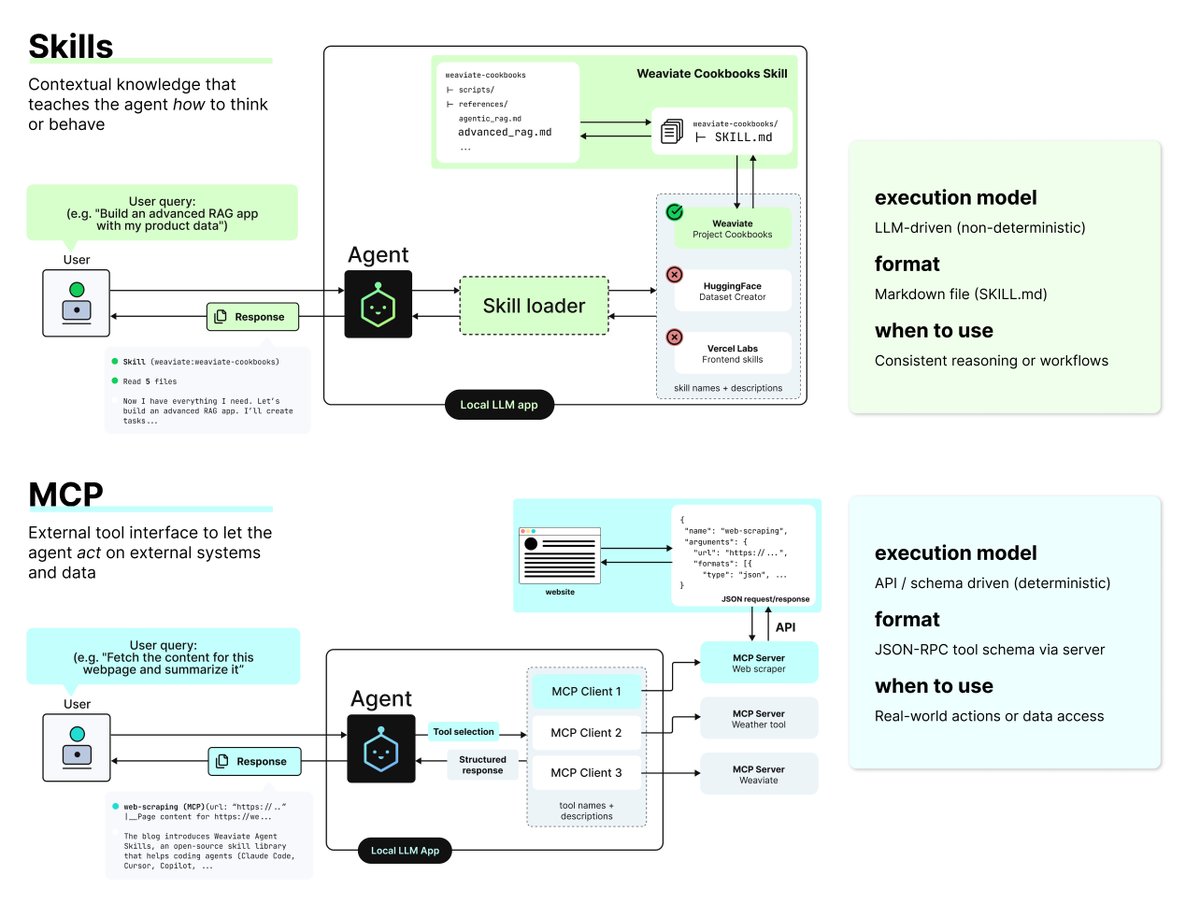
𝗠𝗖𝗣 vs 𝗔𝗴𝗲𝗻𝘁 ����𝗸𝗶𝗹𝗹𝘀
(Is one actually better than the other?)
If you've been following the vibe coding movement, you've probably experienced your coding agent not being able to code well with specialized tools or infrastructure. Legacy syntax, wrong parameters, inefficient patterns, leading to tons of debugging that often feels like you're going in circles.
Two solutions have emerged: 𝗠𝗖𝗣 (𝗠𝗼𝗱𝗲𝗹 𝗖𝗼𝗻𝘁𝗲𝘅𝘁 𝗣𝗿𝗼𝘁𝗼𝗰𝗼𝗹) and 𝗔𝗴𝗲𝗻𝘁 𝗦𝗸𝗶𝗹𝗹𝘀. But which one should you use?
𝗠𝗖𝗣 is pretty much just a standardized API gateway. Your agent makes a deterministic API call with fixed input/output schemas and gets a deterministic response back. It's clean and predictable.
𝗦𝗸𝗶𝗹𝗹𝘀 are different. When an agent uses a skill, it's interpreting natural language instructions about 𝘩𝘰𝘸 to accomplish something. The agent decides which skill to use, when, 𝘢𝘯𝘥 𝘩𝘰𝘸 to execute it. Less "call this function" and more "here's how to think about this problem."
So they 𝗯𝗼𝘁𝗵 have a place in agentic coding. Skills are great for behavioral guidance, MCP works better for the direct infrastructure calls.
We just released our Agent Skills repository to help coding agents create end-to-end AI apps and write better @weaviate_io code. It includes:
1️⃣ 𝗪𝗲𝗮𝘃𝗶𝗮𝘁𝗲 𝗦𝗸𝗶𝗹𝗹𝘀 (/skills/weaviate): Focused scripts for schema inspection, data ingestion, Query Agent integration, and search operations
2️⃣ 𝗖𝗼𝗼𝗸𝗯𝗼𝗼𝗸𝘀 (/skills/weaviate-cookbooks): End-to-end project blueprints for building complete applications (Query Agent chatbots, multivector PDF RAG, various RAG patterns, DSPy agents)
Check it out here: https://t.co/BDSX2b6IOR
🔒 Python security just got stronger! The PSRT now has official governance (PEP 811) and a clear process for growing the team. Interested in joining? Learn more in this blog post from PSF Security Developer in Residence Seth Larson : https://t.co/xSVriZm56E
#python
🧵 ChatGPT, Grok, Gemini, Claude & Perplexity — which AI should you actually use?
What each one does best, where it falls short, and how to use it smartly.
No buzzwords. Just real-world clarity.
📌Save this post & dive into the thread 👇
DevOps vs. MLOps vs. LLMOps:
Many teams are trying to apply DevOps practices to LLM apps.
But DevOps, MLOps, and LLMOps solve fundamentally different problems.
Here's why this matters: 88% of ML initiatives struggled to reach production using traditional DevOps practices.
And LLMs introduce challenges that even MLOps wasn't designed for.
Let's break it down:
→ DevOps is software-centric.
You write code, test it, and deploy it. The feedback loop is straightforward: Does the code work or not?
The primary artifact is code. Testing is deterministic. The tooling is mature after 15+ years.
→ MLOps is (model + data) centric.
Here, you're dealing with data drift, model decay, and continuous retraining.
The code might be fine, but the model's performance can degrade over time because the world changes.
A fraud detection model might work perfectly at launch, then fail within weeks as fraudsters adapt.
The primary artifact expands to code + data + models. You need to version all three. This is why MLflow, DVC, and feature stores became essential.
→ LLMOps is foundation-model-centric.
Here, you're typically not training models from scratch. Instead, you select a foundation model and optimize through three parallel paths:
- Prompt Engineering
- Context/RAG Setup
- Fine-Tuning
Unlike DevOps and MLOps, these paths run in parallel, not sequentially.
But here's what really separates LLMOps: The monitoring is completely different.
In MLOps, you track data drift, model decay, and accuracy.
In LLMOps, you're watching for:
- Hallucination detection
- Bias and toxicity
- Token usage and cost
- Human feedback loops
This is because LLM outputs are non-deterministic. You can't just check if the output is "correct." You need to ensure it's safe, grounded, and cost-effective.
63% of production AI systems experience dangerous hallucinations within their first 90 days.
The cost model also flips.
MLOps costs are training-heavy (GPU hours during development).
LLMOps costs are inference-heavy (every request consumes tokens).
This is why prompt efficiency, caching, and model routing matter so much in LLMOps.
The evaluation loop in LLMOps feeds back into all three optimization paths simultaneously. Failed evals might mean you need better prompts, richer context, OR fine-tuning.
So it's not a linear pipeline anymore.
One more thing: prompt versioning and RAG pipelines are now first-class citizens in LLMOps, just like data versioning became essential in MLOps.
And the ops layer you choose should match the system you're building.
👉 Over to you: What does your LLM monitoring stack look like right now?
_____
Find me → @akshay_pachaar
For more insights and tutorials on AI and Machine Learning!
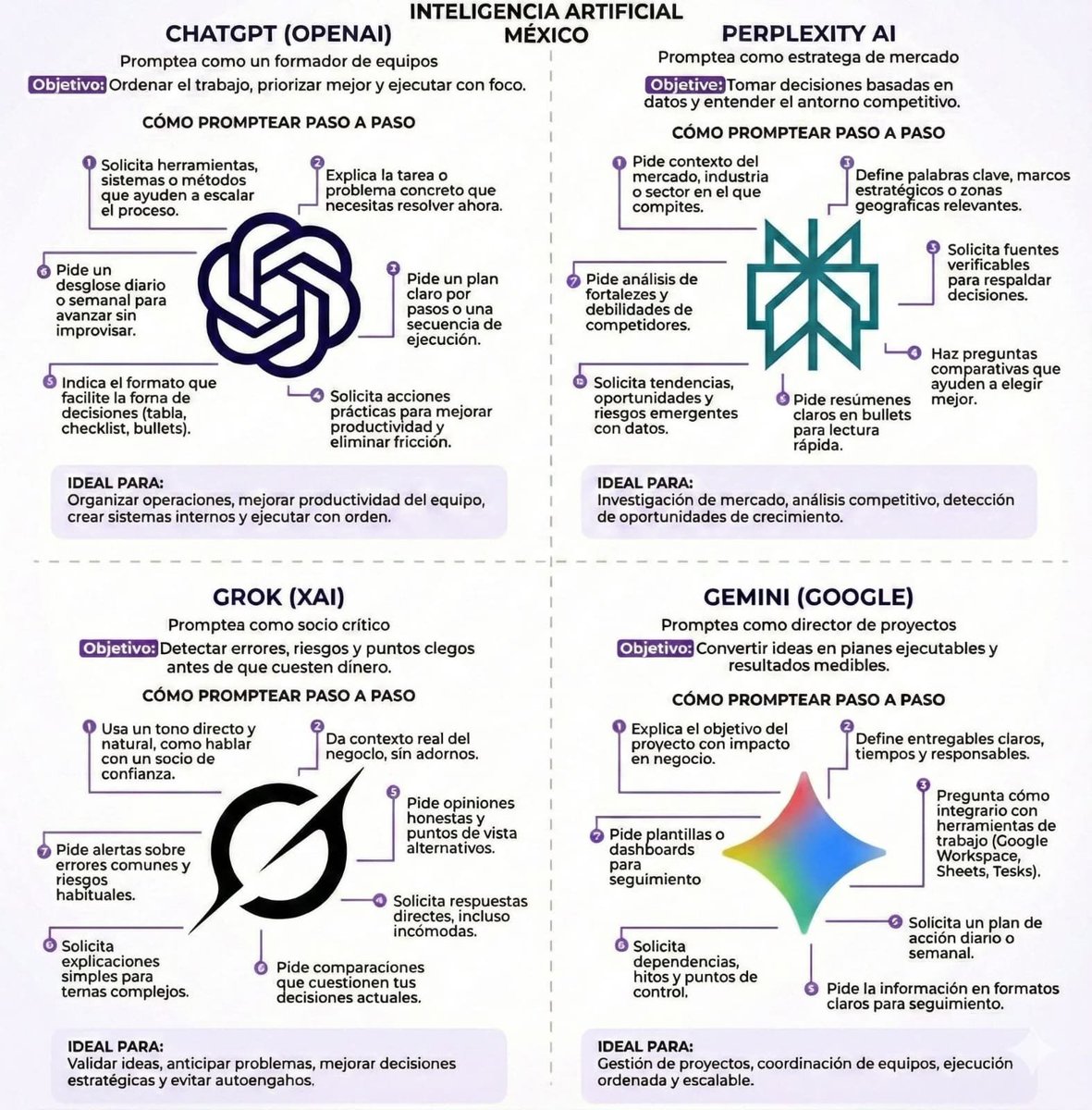
¿Sabías que cada IA tiene un "superpoder"? 🧠
✨ No es solo qué pides, sino cómo lo haces.
De ChatGPT como formador a Gemini como director de proyectos, la clave est�� en el rol que le asignas. Optimiza tu tiempo y el de tus alumnos con estas rutas de prompting. 👇
#EdTech #IA #InnovaciónEducativa #TIC #ChatGPT #Gemini
Créditos: Inteligencia Artificial México
Nano Banana + N8N = AI Creatives Factory
This AI system creates scroll-stopping visuals at scale using Google's newest image model.
No designers. No agencies. No $50K creative budgets.
Just endless professional-grade ads that look like top brands made them.
Here's how it works:
→ Upload your product catalog to Airtable
→ N8N automation scrapes product details and images
→ Nano Banana creates multiple creative angles for each product
→ System generates different backgrounds, styles, and compositions automatically
→ All variations get organized in Airtable with performance tracking ready
Each visual pennies to generate.
You own 100% of the assets forever.
Runs 24/7 without touching it.
While competitors spend hours in Photoshop or pay agencies thousands per month, you'll be cranking out unlimited variations automatically.
Perfect brand consistency across every creative.
Built 100% in N8N.
Want the complete workflow?
Comment "NANO" + RT + Like
I'll DM you the entire N8N template + Airtable setup
(Must be following so I can DM)
Skip this and keep paying designers $200 per ad variation.
I have been fine-tuning LLMs for over 2 years now!
Here are the top 5 LLM fine-tuning techniques, explained with visuals:
First of all, what's so different about LLM finetuning?
Traditional fine‑tuning is impractical for LLMs (billions of params; 100s GB).
Since this kind of compute isn't accessible to everyone, parameter-efficient finetuning (PEFT) came into existence.
Before we go into details of each technique, here's some background that will help you better understand these techniques:
LLM weights are matrices of numbers adjusted during finetuning.
Most PEFT techniques involve finding a lower-rank adaptation of these matrices, a smaller-dimensional matrix that can still represent the information stored in the original.
Now with a basic understanding of the rank of a matrix, we're in a good position to understand the different finetuning techniques.
(refer to the image below for a visual explanation of each technique)
1) LoRA
- Add two low-rank trainable matrices, A and B, alongside weight matrices.
- Instead of fine-tuning W, adjust the updates in these low-rank matrices.
Even for the largest of LLMs, LoRA matrices take up a few MBs of memory.
2) LoRA-FA
While LoRA significantly decreases the total trainable parameters, it requires substantial activation memory to update the low-rank weights.
LoRA-FA (FA stands for Frozen-A) freezes matrix A and only updates matrix B.
3) VeRA
- In LoRA, low-rank matrices A and B are unique for each layer.
- In VeRA, A and B are frozen, random, and shared across all layers.
- Instead, it learns layer-specific scaling VECTORS (b and d) instead.
4) Delta-LoRA
- It tunes the matrix W as well, but not in the traditional way.
- Here, the difference (or delta) between the product of matrices A and B in two consecutive training steps is added to W.
5) LoRA+
- In LoRA, both matrices A and B are updated with the same learning rate.
- Authors of LoRA+ found that setting a higher learning rate for matrix B results in better convergence.
____
Find me → @akshay_pachaar
Every day, I share tutorials and insights on ML, LLMs, and AI Engineering.











![piyascode9's tweet photo. Secret AIs That Nobody Knows (Part 2)
1. https://t.co/sbDCxWuam4 – Workflow automation bot
2. https://t.co/M94jpvoUd7 – AI content writer
3. https://t.co/zJxTBxwHqn – Clean, modern slide creation
4. https://t.co/jNN2yZ9hW6 – Remove unwanted objects
5. https://t.co/5XUyF7zA3I – Homework help & solutions
6. https://t.co/uZ8HqR3GJD – Data analysis workspace
7. https://t.co/jZt8m9mBph – Video summarization
8. https://t.co/GYDNdKDpxI – Natural-sounding AI voices
9. https://t.co/IpGSNztTCO – Automatic short-form clips
10. Sloyd AI – 3D asset creator
11. https://t.co/IrKVTS2Gg1 – Code explanation tool
12. Jurny AI – AI travel planner
[ Bookmark for Later 🔖 ]](https://pbs.twimg.com/media/G-TXcKQa8AAiLvf.jpg)


