Apropos of everything; I have strong feelings about how sponsorship levels are described.
Too many maintainers are asking for people to 'buy a coffee' or 'show you're a fan'.
This is folksy nonsense that suggests that individuals are those who should be sponsoring open source.
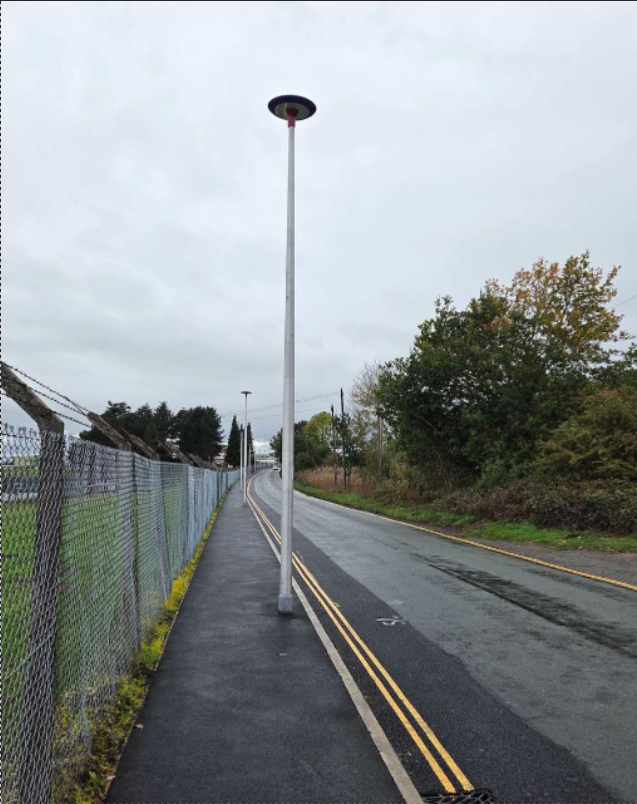
Make walking safe & convenient!
👏Safer Route to Cosford’s RAF Museum
There had been clear demand for walking between the station & museum but people had to navigate grass verges & mixed-use paths.
@activetraveleng supported the project through the Consolidated Active Travel Fund
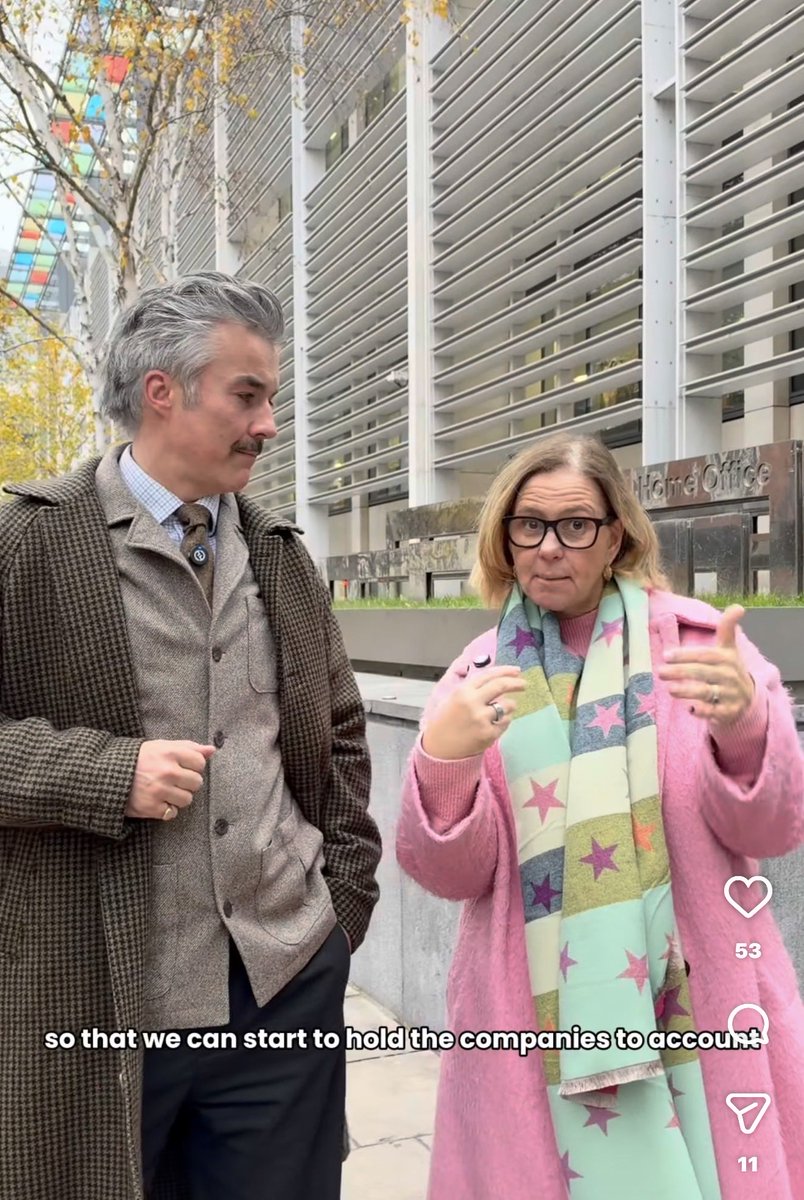
What integrity/interest test is passed to have the mayor of @WestofEnglandCA saying she will hold Colin Skellett, YTL and @wessexwater to account? It just doesn’t hold, er, water. Or does she think we are that stupid?
https://t.co/D6jAlRxWUv
People who study history, usually spend ages reading old documents to understand them, and to dig out interesting bits like the below. But with search made easy, who is going to spend time reading all the source texts?
In testing GPT-6.2, I used it to make a significant historical discovery which I detail in the post below. This suggests that the process of research and discovery we’re already seeing in verifiable domains like math is starting to generalize to non-deterministic fields like history.
You can read the full post here:
https://t.co/Vm7MA2R3aQ
In a nutshell, Yale’s Beinecke Library holds an anonymous sketchbook of an 1808 journey from Montreal to Lake Superior and back. I’ve spent many hours over the years trying to figure out who made the sketches with no luck. The artist could literally be any one of several thousand people. There are few clues: only four dated and labelled images.
With minimal prompting, in just 22 minutes, Astra used publicly available sources to identify a minor French aristocrat, the vicomte de Chabot, as the artist and suggested that we test the hypothesis by ordering copies of a little known microfilmed diary of Chabot’s trip it also found.
I was truly stunned. I’d never heard of Chabot or this diary! New document finds are also exceedingly rare in a well worn field like fur trade history.
I ordered scans of the journal from microfilm and when they arrived the handwriting matched the captions in the sketchbook. The itinerary also aligned perfectly with the few dated drawings in the book. But there was actually the type of conclusive evidence we rarely get as historians: on 18 June 1808, after Chabot’s canoe reached Fort St. Joseph, he wrote “I took a sketch” before describing the exact view of the fort depicted in a matching drawing.
The journal itself is also a major find. It had been mentioned once in a dissertation footnote, but in a completely different area of history and is unknown to fur trade or Canadian historians. It’s long and detailed, covering some 162 notebook pages which makes this a significant new document to my field. Attached to the journal was another trove of documents too: excerpts from long-destroyed North West Company papers, journals, and letters. Again, this almost never happens. Both finds equally surprised the other leading experts I consulted.
Although we can construct a coherent narrative in hindsight, I cannot emphasize enough how exceedingly difficult this sort of thinking and recall is for humans. Unlike a human, Astra was able to tackle the problem from both ends at once: working forward from the scant facts of the 1808 journey pictured in the sketchbook and backwards from the immense number of surviving facts about 1808 British North America in general.
While we can technically explain Astra’s path to this find as a product of enhanced search capabilities, it conducted the investigation from end to end. I basically acted as the research assistant, restricting copies of the paper documents it needed.
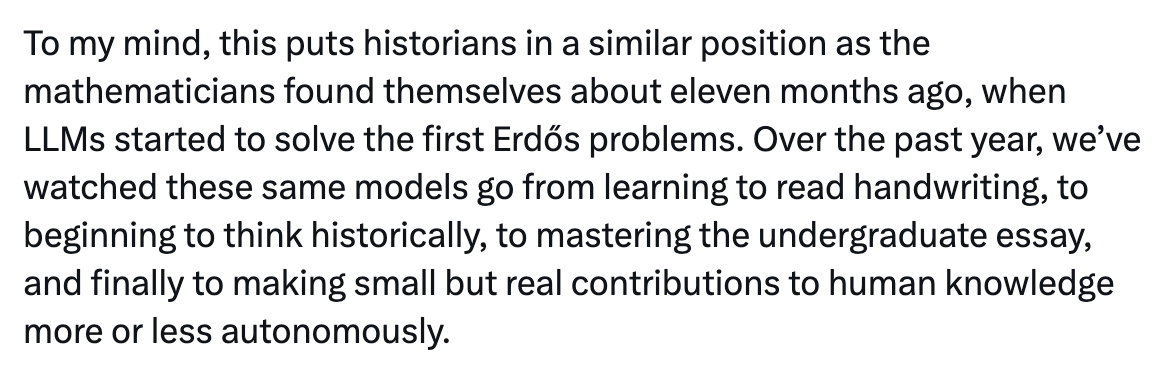
To my mind, this puts historians in a similar position as the mathematicians found themselves about eleven months ago, when LLMs started to solve the first Erdős problems. Over the past year, we’ve watched these same models go from learning to read handwriting, to beginning to think historically, to mastering the undergraduate essay, and finally to making small but real contributions to human knowledge more or less autonomously.
The trajectory seems clear.
@joshi Is this similar to Lambeth where people have been pointing out failures in a Council's Housing department for years? Or is this a 'surprise' that only recently came to light?
Yesterday we reported the revenge attacks on domestic violence victims from attackers abusing bail. Today on morning rounds the VAWG minister was instead asked about Tik Toker Max Balegde and the word ‘Bombaclart’ -
If you love Riverside, please make your feelings known to @BristolCouncil before the consultation closes on 4 January 2027
Survey: https://t.co/FouhAnw4xI
Safeguarding a "treasured asset" means giving the space, access & support needed to actually survive.
https://t.co/fj00KR6LOQ
Haigh correctly highlights Britain as an outlier in the privatisation of our essential resources. Yet in the same speech she assures investors that privatisation will continue in earnest.
The result is a full fat fudge. A proposal to continue the privatisation rip-off with a slightly different look.
"We will be reduced to a café and gift shop with a few plants on the side."
The regeneration plan for Bristol's 'Western Harbour' would mean big changes for Riverside Garden Centre, and they are fighting back.
Full story here:
https://t.co/9N2FHUICn0
Here’s the thing. I don’t think the woman was a spy at all. I think she was the middleman so to speak. I think Howard and Donald made their own deal, One even Rubio didn’t know about.
That is why Trump is so confident that she’s not a spy.
When you put it in that context it makes perfect sense doesn’t it? Huang has to be back at CEO for their back room deal to continue & to help hide it.