Uber reportedly now caps coding agents at $1,500/month per employee per tool - seems sensible to me, but it's also an interesting hint at the value Uber thinks these tools are providing
https://t.co/6YT0lCzPml
🚨 A "deleted" PyPI package exposed an admin GitHub PAT - granting access to Apache & Astronomer for 2.5 years
🔑 678K “deleted” packages were recovered from object storage & 190 live secrets found
❌ Deletion ≠ revocation 🔄 Rotate your creds!
🔗https://t.co/1eKvqDVKCp
I'm tired of AI-generated answers
I found GitHub repositories that were spreading malware. I asked AI what I should do about it, but it gave me nothing useful. So I opened a discussion on GitHub. Someone replied. It was literally the exact same text the AI had given me. I called it out and the comment was deleted. Then another person replied. Same exact AI response again.
I worked as a developer in a company. I asked the business owner a question about a business task. He sent me a ChatGPT screenshot with the answer. I replied that it had nothing to do with the question and everything there was wrong. A minute later he sent me another ChatGPT screenshot. He didn't even read the AI's answer. He just screenshots and forwards it.
Recently someone sent me a DM on Reddit about my post. I replied. He wrote again, I replied again. After a few messages I realized I was talking to an AI agent.
I'm tired of talking to AI.
I want to talk to real people.
But even when I talk to people, they forward my questions to AI and send me the AI's answer.
Super relevant to understand why GitHub won: around 2014 it was THE place to have an active community around open source, thanks to its workflows
Typescript was open source on Codeplex originally. “It was crickets” - aka tiny community involvement. Till they moved to GitHub…
my problem is a bit different. i have opportunity cost psychosis. the excruciating effort it still takes to deliver a polished thing is overshadowed by how easy it is to mvp a whole new idea that might have quicker returns. zeno's paradox of creating infinite new repos that are smaller and smaller as i fail to ever approach the perfect project to work on
@mark_l_watson that doesn't sound weird at all, I find myself often "falling" into the learn-by-pairing-with-a-coding-agent scenario, also we are in good company: @KentBeck (see/listen https://t.co/5jUiR64Rme ) and @simonw come to mind.
This may sound weird, but I am slowly learning Rust by asking a coding agent to convert small bits of my huge Common Lisp codebase to Rust, then I study and experiment with the generated Rust code. For any small Rust project, I will already understand what the code does, so when studying the code I can concentrate on language features.
Why Rust? One thing that I have always loved about dynamic languages like Lisps is that a whole class of runtime errors mostly doesn't exist. I think IT security will continue to be even more important as bad actors use AI for computer related crime. Learning Rust just seems like good hygiene to me.
Took some inspiration from @vboykis and converted my first ever talk into a blog post.
I talk about the role of agentic search in context engineering.
Together we build an intuition on the strengths and weaknesses of a selection of search tools.
🔗 https://t.co/nuGJ5Zm9Du
TIL that Škoda made a bicycle bell that can cut through ANC headphones.
Most ANC systems use adaptive filtering (like LMS) at a very basic level, it models the incoming noise and generate an anti-phase signal to cancel it. Works best for steady and predictable sounds.
Škoda's research found that around 750 - 780Hz ANC struggles a lot so they made their bell to target this particular frequency
they added irregular, transient dual tones that are hard to model in real time
this comes from a dual-resonator design : one tuned to ~750-780 Hz (ANC weak spot) using a cantilever tine, and another at higher frequencies (~2 KHz+) like a normal bell, so it’s not a single clean tone
So instead of being louder, it’s just… harder to cancel.
Pretty neat example of exploiting system limitations with pure analog design.
https://t.co/M2aH5Qfkcl
https://t.co/uXywdD01y4
manually creating models in ZDS is fun - you can jump between classic CAD UI and code. AI is sneaking even into this workflow though. sometimes I just ask what’s next, or what I forgot - and it nails it every time. tysm. btw you can check out this model in the aquarium: https://t.co/m7aFMh78oE
This has been the best intro book to electronics I’ve encountered so far. I love it so much! I just wrapped up Part 1, which introduces the necessary foundational concepts and math in easy to grasp prose. Things are derived from first principles with no unreasonable logical leaps
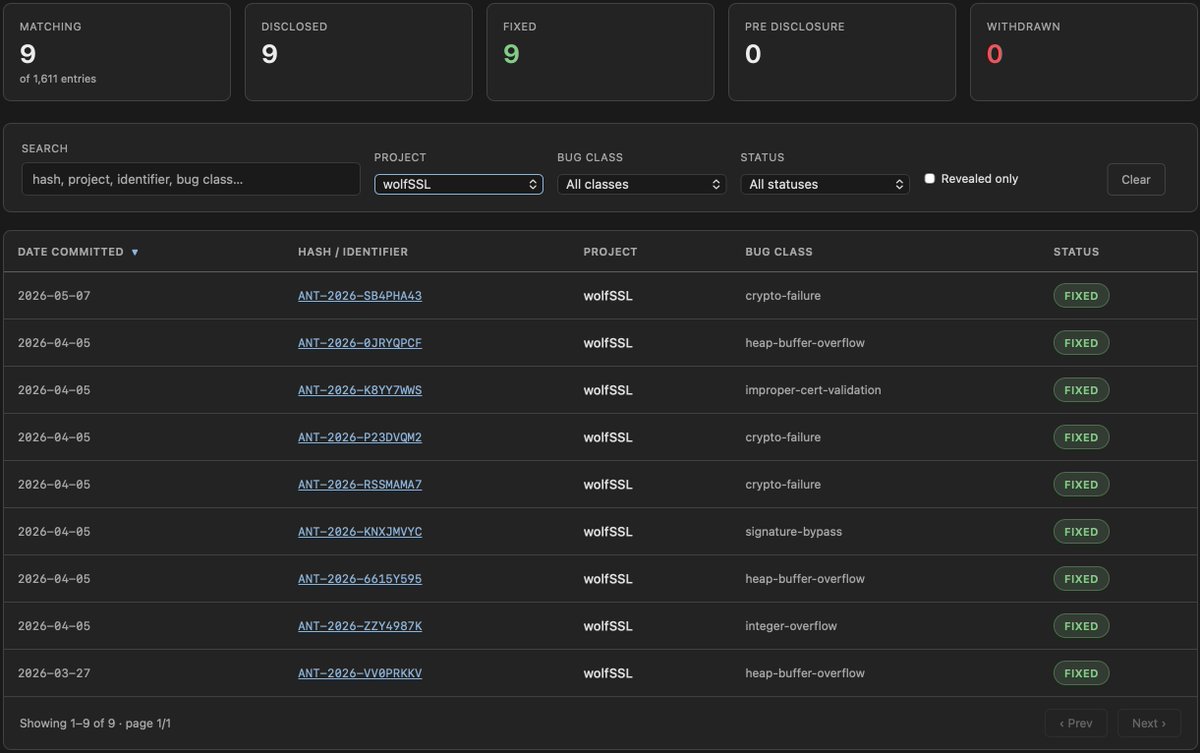
My eval shows that GLM 5.1 performs well enough to genuinely find these vulnerabilities. Some of the glm family pruned models by baa-ai can reach around 50-70% and run locally on a mac ultra with 0 cost and 100% secret.
But sometimes the harness need to improved to give extra help for not-so-smart local models.
It also extremely fun to watch the trajectory of the campaign from 0 till it find first crash.
https://t.co/Zg5uul636a