They are finally here! The #MIITRA T1w and DTI templates of the older adult brain are now published. Both 0.5mm and 1mm versions available https://t.co/XLduUv5eOf In the same space; based on 400 older adults; excellent image quality https://t.co/VevHvTwSUG
We have a new publication! 🎉
Diffusion abnormalities associated with brain arteriolosclerosis: An in-vivo MRI and pathology study in community-based older adults. @IITEngineering@rushalzheimers https://t.co/3PaHTbEIRu
Dr. Arfanakis presented MARBLE, our new MRI marker of LATE-NC, at the #TDP43 Summit at @UWMadison. MARBLE is a fully-automated marker that takes as input raw MRI data and generates a score representing the likelihood a person suffers from LATE-NC. @IITEngineering@rushalzheimers
Our new paper "Automated detection of cerebral microbleeds on ex-vivo MRI scans of community-based older adults" is now published. Our DL method combines synthesis with self-supervised pretraining and confidence-aware learning. https://t.co/3rIzVnXMFk
Wednesday at #ISMRM2026 we will present (1) on the neuropathologies associated with WMH in different parts of the brain (551-03-008), and (2) on the association of copper with brain structure (551-03-011). Power pitch theater 1 at 4pm. This is what Gemini thinks about this 😄
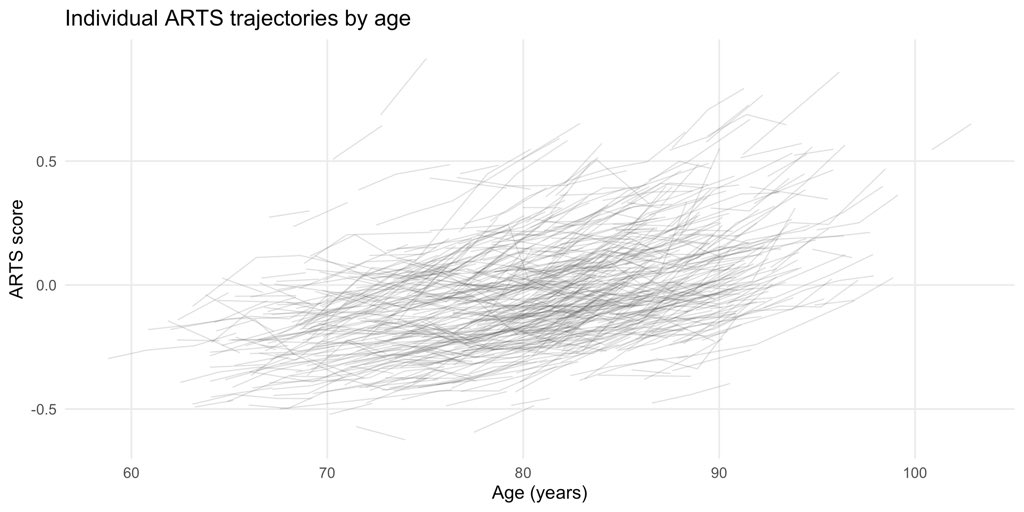
Find out the demographic and clinical factors associated with a faster increase in ARTS, an in-vivo marker of cerebral arteriolosclerosis. Monday 5:05pm #ISMRM2026 digital posters, row C, abstract 362-06-002
This excellent work by @JacobssNina used the connectome of the IIT Human Brain Atlas to uncover the structural correlates of balance control in children with cerebral palsy. Just 6 weeks of training can trigger structural changes in key motor pathways! https://t.co/M11PNchrAN
Exciting to see the IIT Human Brain Atlas v.5 supporting new breakthroughs in clinical neuroimaging! 🧠
The major white matter fiber bundles of our atlas were used in this excellent study to evaluate brain maturation. https://t.co/DhNjtOtiSs @TosettiMichela#IITAtlas
Assessing Cognitive Decline and Dementia Risk in Black and White Older Adults With Blood Biomarkers pTau217, GFAP, NfL, and Aβ Ratio | Neurology https://t.co/k5FUMzczPv
In this new paper we show that a higher ARTS score in community-based older adults is associated with lower cortical thickness. Also, cortical thickness partially mediates the relationship between ARTS and cognition. @Alifkapasi1@rushalzheimers https://t.co/E1WUY8JQLC
White matter microstructural changes were associated with cognitive decline, emphasizing their role in aging and Alzheimer disease assessment. https://t.co/uTRQxUl8XC @MRIatIIT, @ModHabes
Dr. Arnold Evia presenting MARBLE, our novel in-vivo marker of LATE-NC #AAIC25 This is the result of machine learning, ex-vivo MRI, in-vivo MRI, pathology data, and a lot of hard work from our amazing interdisciplinary team @alzassociation@rushalzheimers@IITEngineering
ARTS, our marker of arteriolosclerosis, shows excellent performance & has characteristics that one expects from a marker of arteriolosclerosis. In this new paper, ARTS is associated with incident MCI, dementia, stroke, and vascular risk factors https://t.co/S49p3BlsDe
The most comprehensive and conclusive paper on how different neuropathologies impact the volume and shape of different deep gray matter structures in older adults is now published on Human Brain Mapping https://t.co/vDjTnO5wXB @IITEngineering@rushalzheimers
Our paper on the change in MRI transverse relaxation rates (R2) and change in cognition for older African Americans, is now out on Human Brain Mapping. Check it out. https://t.co/DMA8W4FnZV
Cerebral amyloid angiopathy #CAA is associated with higher transverse relaxation rate #R2 in cortical and juxtacortical frontal and medial temporal lobe regions & deep brain structures. @rushalzheimers@IITEngineering#AmyloidAngiopathy#NeuroTwitter https://t.co/nw0JQaRO2T
#ISMRM2025 is now in the books. Another great one! Thank you @ISMRM for organizing a successful meeting and bringing together imagers, colleagues, friends old and new.