Professor @PolyMTL reinventing MRI and academic publishing. Creator of @qmrlab, @MRM_highlights, foundation @qantarot and @NeuroLibre reproducible preprints
Our preprint went viral!
Happy to be part of this important collaboration that showcases the promise and pitfalls of AI reviewers for academic papers. The preprint features several MRI and neuroscience experts (Christian Langkammer, Spase Petkoski, Dragana Manasova, Francesco Santini) as well as members of the Center for Advanced Interdisciplinary Research at UKIM Skopje
Thank you to @seungonekim for the leadership and to @kgashteo for assembling an all-star team of Macedonian contributors!
Recently, there's been complaints on low-quality AI reviews at conferences and journals. What if we put the frontier LMs into an agent harness?
With the right setup, on 82 Nature-family papers, 45 expert scientists judged that AI reviewers outperform the best human reviewer!
🤗 https://t.co/PI9WwCTzRq
How accurate and significant are the points raised in AI reviews of academic papers?
In a paper with 45 contributors across 27 institutions and many domains from the natural sciences, we attempted to answer this question.
Some major results:
- State-of-the-art AI reviewers are generally accurate and point out significant well-evidenced points, comparably to human reviewers
- However, they have issues such as being less well grounded in scientific community norms
- A panel of AI reviewers is more homogenous than a panel of human reviewers, pointing out similar issues far more often
We view this as evidence that AI-supported paper review is promising supplement when done well, but certainly not a substitute for human expert reviewers at this time.
🔖Do you want to get feedback in your manuscript before submitting?
Try out our CMU Paper Reviewer platform, an AI review service that provides feedback on the five most critical issues to address in your paper!
https://t.co/fZq4cmBiyS
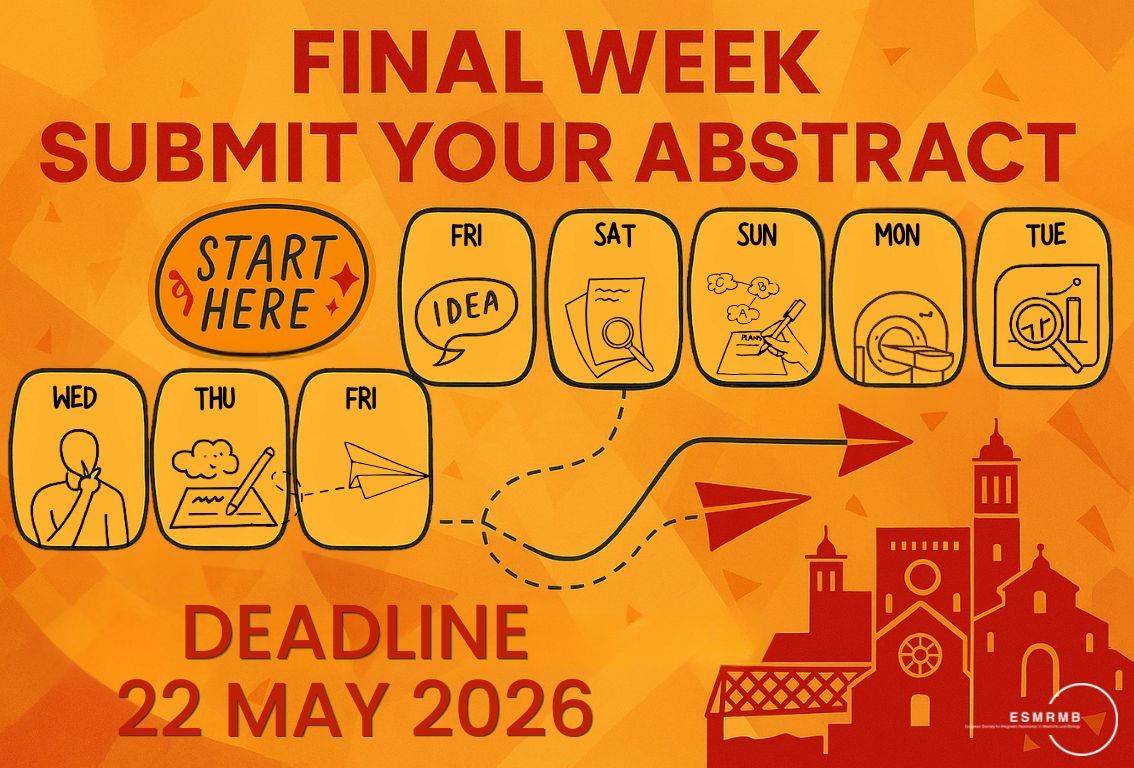
⏳ Last call: abstracts for #ESMRMB2026
Final week to submit and be part of the scientific programme in Girona 🇪🇸
Share your MRI research, connect with the community & shape the discussions
👉 https://t.co/JqBbRJp8Lj
#MRI#MRresearch#ESMRMB
Here it is, my ISMRM blues vol. 3 presented at this morning's Cape Town session on pitfalls and progress in MRI translation (link in the comments)
TLDR:
The current leadership organized an impressive annual meeting in the face of serious headwinds, including funding cuts, increased registration fees and a significant drop in attendance. However, there are serious consequences from the 2023 partnership between ISMRM, the Gates Foundation, Hyperfine and the UNITY project, and not all of them are positive. Therefore I advocate for more decentralized solutions, including a push for open-source MRI scanners under $100K and the return of the ISMRM International Outreach Program.
We have made tremendous strides in making the MRI community aware of the developing world, and the annual ISMRM conference in Cape Town is the culmination of those efforts. The next step is to make the developing world develop their own MRI strategy, one country at a time. Only then will the Global South be able to harvest the incredible potential of this remarkable community.
This post is as close to investigative journalism as I can get. Facts are always subject to interpretation, so what is presented here is my perspective on the information that I collected from talking to MR outreach leaders and receiving survey responses from 50+ community members. Coming from a journalistic family I deeply cherish the journalism standards of fact-checking and protecting sources. If you notice any inaccuracies, I encourage you to contact me (e-mail, Twitter, Bluesky, LinkedIn) or voice your opinion in the comments below.
📢 Save the date: MRI TogetherThon 2026
Refocussing the community to tackle real-world MRI challenges:
🧠 Hackathon
🎤 Talks
🛠 Hands-on projects
🌍 Free online | across time zones
📅 30 Nov – 4 Dec
👉 https://t.co/JdA38luZXI
#MRITogetherThon#MRITogether#ESMRMB
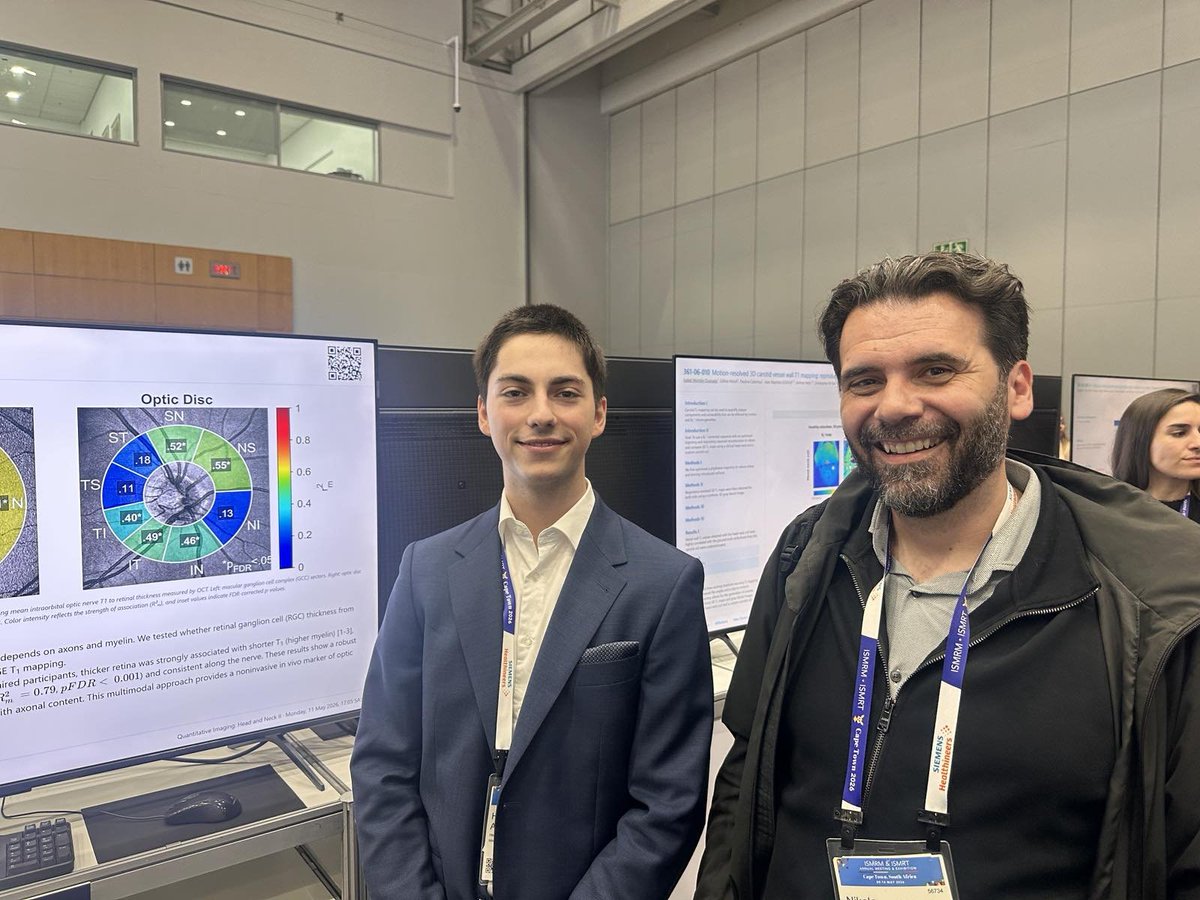
Hugo Albert Plante is only a 3rd year undergraduate student at Polytechnique Montréal and he is presenting two abstracts at this year's ISMRM meeting in Cape Town.
Yesterday Hugo presented our optic nerve T1 mapping collaboration with NYUAD Center for Brain and Health, and today (Tuesday) at 9:15am he will be presenting preliminary g-ratio results in the optic nerve. Come to digital poster 10 (row C) to meet an extraordinary researcher who has a bright future ahead!
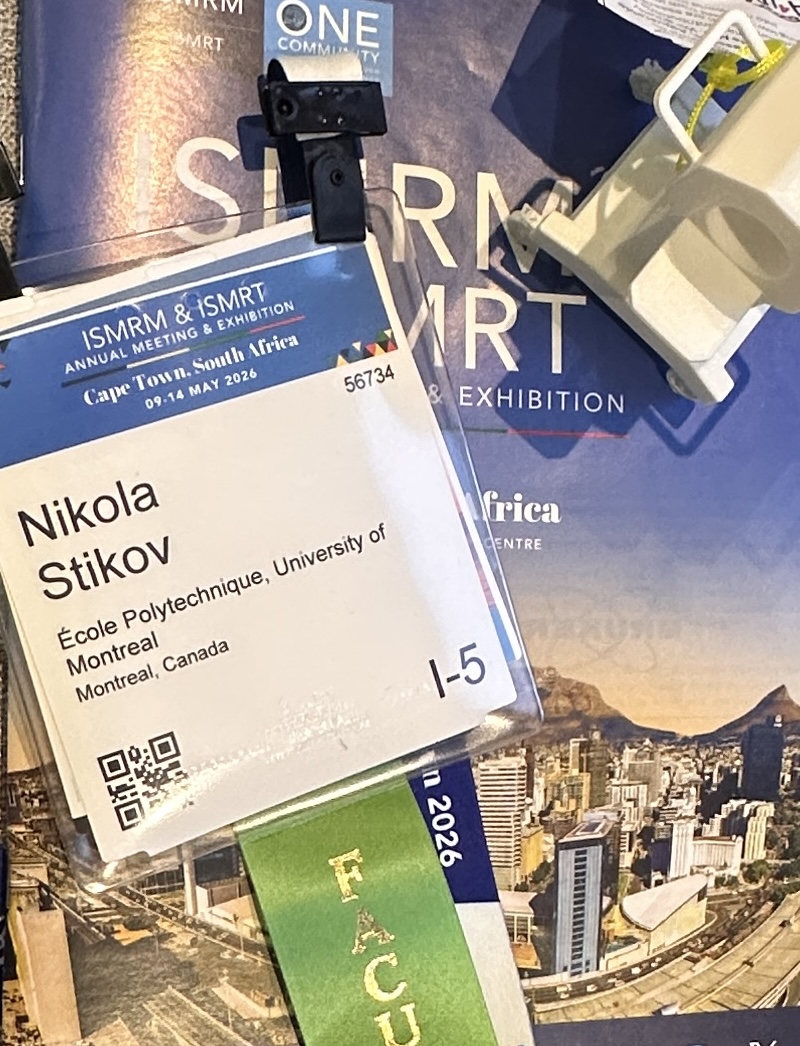
Hello Cape Town!
After the first two volumes of my ISMRM blues series, which were critical of the society, I expected silence from the International Society for Magnetic Resonance in Medicine. Instead, they showed class by inviting me to speak on the very topic that drew the most attention in my critique: bringing MRI to developing countries.
So here I am at the annual meeting in Cape Town, with the difficult task of being both supportive and critical of existing MRI outreach efforts. In preparation for this task, I have spent the past six months talking to many community members, including leaders of the ISMRM and its African chapter, the ESMRMB and its CAMERA initiative, OSI, A4IM, UNITY, the SMART Africa Network, MRI companies (Open Imaging, Hyperfine) and philanthropic organizations (Gates Foundation, Chan Zuckerberg Initiative). I also conducted a non-official survey that collected over 50 responses from the ISMRM community. The survey is still open and below is the link:
https://t.co/NJJJvqnvra
I hope my talk will spark a constructive discussion and I encourage you all to contribute to it. Join me on Thursday (May 14) at 9:50am in Hall 1B to hear more about "Translation of New and More Accessible Technologies in Developing and Resource-Limited Countries."
I took a 10-year break from g-ratio imaging to focus on vendor-neutral MRI. In the meantime, Alexander Gow at the American Society for Neurochemistry (ASN) and John Van Horn at the Organization for Human Brain Mapping have been leading a g-ratio revival.
Proud to be a part of this revival as the guest editor of a special issue at ASN Neuro dedicated to measuring myelin integrity. Join us for g-ratio version 2.0 and submit your work by November 1!
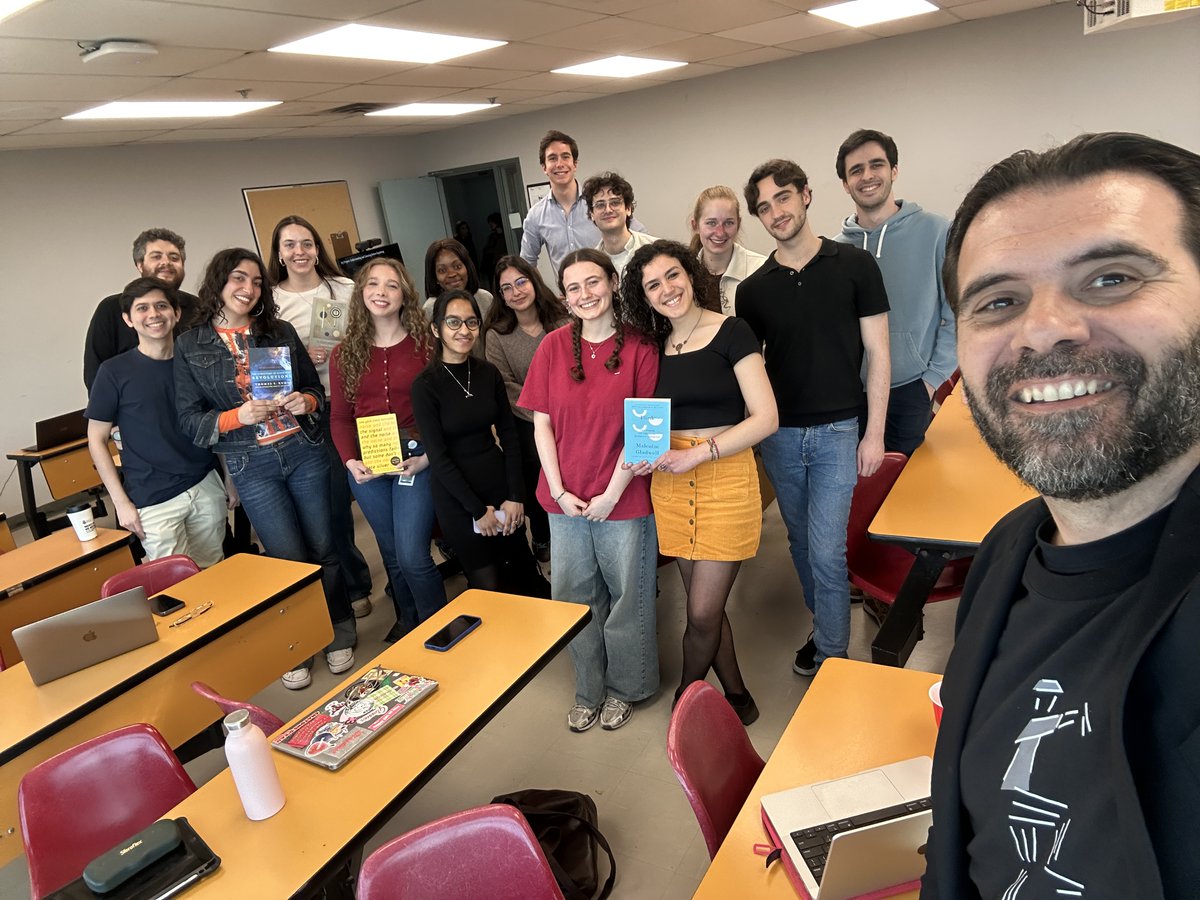
Last week we wrapped up my course on emerging biomedical technologies and gave out some prizes!
Maya Behlouli won the jury prize for her TikTok experiment on procrastination Prize: The Signal and the Noise by Nate Silver
Kahina Baouche built an interactive website on diversity in Alzheimer's disease research and won the social media impact prize and split the student vote prize with Annie Rabbat (the score was identical up to 5 decimal points:)
Prize: Blink by Malcolm Gladwell
Annie Rabbat won the student vote prize (shared with Kahina) for her research on open-source neuroprosthetics developed by Open Bionics
Prize: The Structure of Scientific Revolutions by Thomas Kuhn
Romane Le Roy Pépin won the original format prize for conducting a survey among Polytechnique Montréal students about their use of AI
Prize: Against Method by Paul Feyerabend
Big thank you to all the students who took a chance on a course that is different, as well as to Thomas Dagonneau for being the ideal teaching assistant. You can see all of their presentations on the course Substack, including the four impressive final projects that won prizes (links in comments)
Context as structured data in @MystMarkdown is where ideas like LLM-wiki (@karpathy) and vectorless reason-first search (@PageIndexAI) converge. Evidentron lives in the scholarly publishing domain, but the same principles can significantly benefit agentic knowledge bases.
Paper reproducibility is a deterministic process that I have reduced to a single line of tool call building upon https://t.co/yWAnn4CSzY. Agents calling it is where the fun begins.