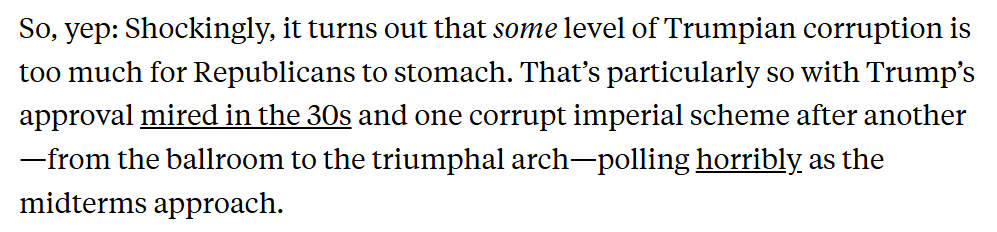
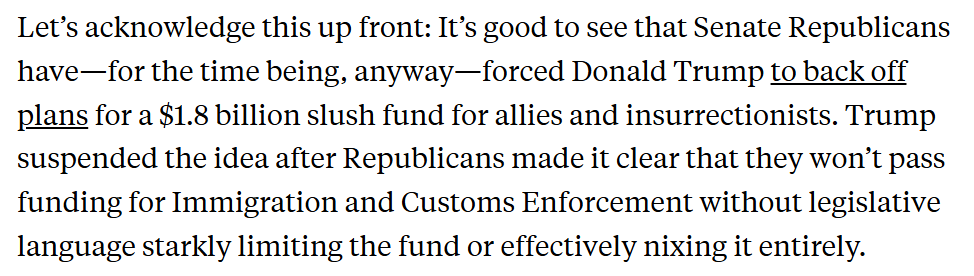
Trump wants special treatment to avoid the same IRS audit rules that apply to every other president.
His solution? Install a Treasury Secretary willing to look the other way while he rewrites the rules for his own benefit.
@RepLloydDoggett:
.@RepLloydDoggett: "Has the IRS recommended that any taxpayer be granted immunity from an audit of their taxes?
Secretary Bessent: "Again, I'm unable to answer that."
Rep. Doggett: "You can answer it; you refuse to answer it."
@LisaDNews Unless they are also stopping Blanche’s IRS directive, which is not technically part of the settlement, Trump is still walking away with more than a hundred million dollars for himself.
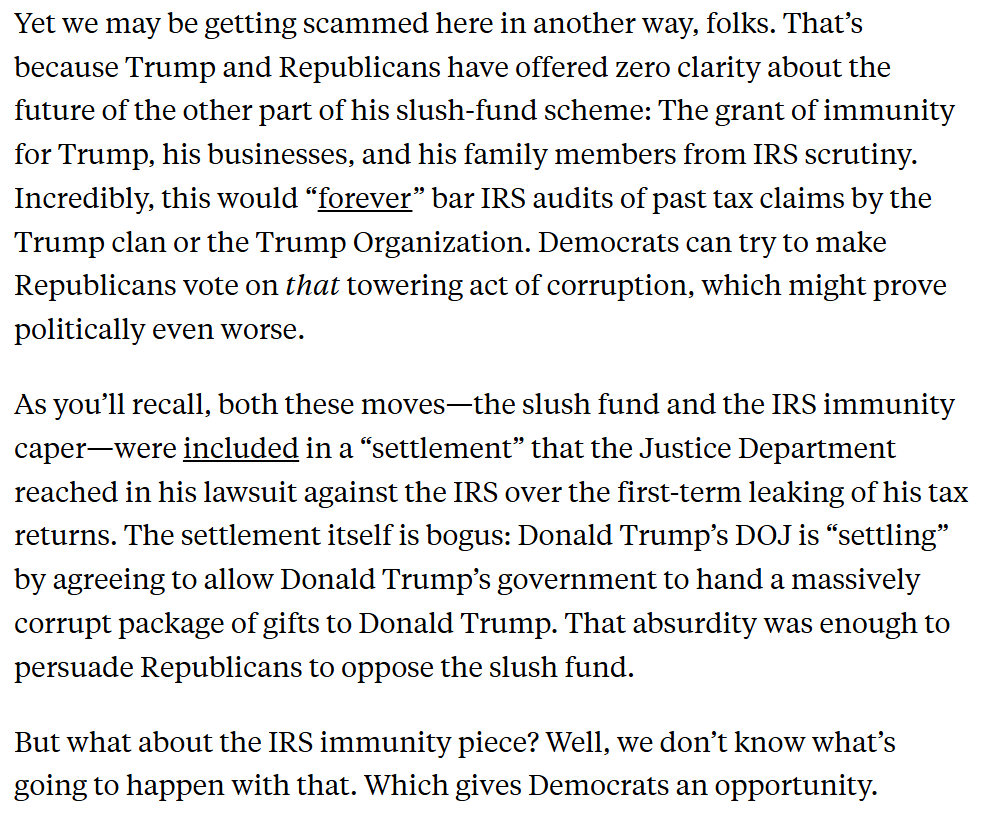
Folks, we may be getting scammed. Rs are putting on a big show of killing Trump's slush fund. But what about the part of the IRS settlement that gives Trump, his businesses and his family immunity from audits? They're not saying anything about that:
https://t.co/ChH1ql8ewS
One key thing: inside the “settlement,” the IRS is permanently barred from conducting audits on any old Trump filings — where according to the NYT, Trump has more than a hundred million of unpaid taxes.
Unless that also goes, Trump is still giving himself more than $100 million.
Trump has paid less in tax than a public school teacher, at times paying nothing. In a bogus settlement deal, he negotiated with his own administration to prevent any audit of his tax returns.
I filed an amendment to ensure Congressional oversight of this corrupt deal and consideration of legislation to block it.
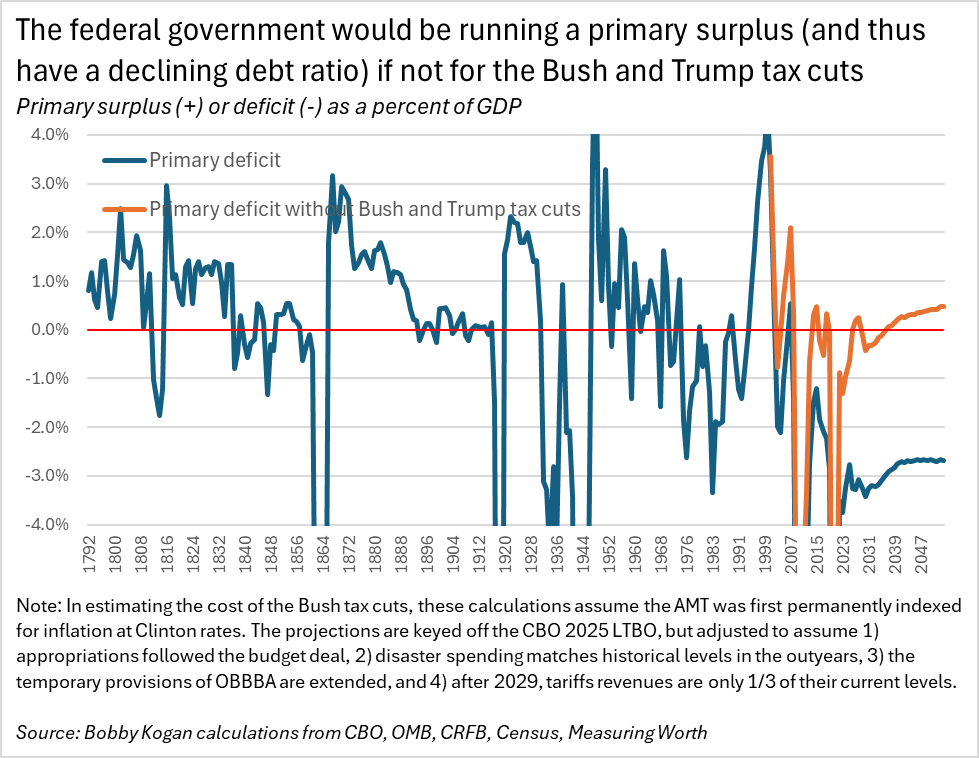
This profoundly incorrect statement inspired me to make a new graph.
This shows primary deficits from 1790-2054. The orange line shows what would happen without the Bush tax cuts, TCJA, and OBBBA.
If not for the 21st century tax cuts, we wouldn't have a fiscal gap.
The separation from reality in the Republican Party today - vaccines are poison; Iran can be conquered; January 6th was staged by Democrats - should really really worry people. These folks just aren’t fit to govern anymore.
Comparing Abigail Spanberger and Zohan Mamdani approximately half a year into their first term really demonstrates the stakes of the current battle for the future of the Democratic Party.
After their respective elections, a lot of Third Way types argued that Zohran's win in NYC offered the Dem Party few if any lessons, and the real attention should be on folks like Spanberger. Fast forward, and Zohran is reinvigorating municipal institutions and doing a whole spectrum of things to make people believe that democratic government can, in fact, make a positive impact in their lives. Compare that to Spanberger, who is vetoing laws to support collective bargaining and protect immigrants and lower prescription drug prices.
This really gets to the core divide between Dem factions right now: Between those who think Trump/MAGA appeared out of nowhere and so all we have to do is win one election against them, and those who understand that these forces arose out of a disillusionment with our democratic institutions -- a belief that the system isn't working and so we need a strongman to blow it up -- meaning that the only long-term solution (that can avoid a repeat of this Biden-wins-in-2020-but-Trump-is-back-in-2024 loop) is proving that democratic government can, in fact, work for regular people.
In NYC, Zohran is doing that hard work of proving democratic (and Democratic) government can make a positive impact in people's lives. In Virginia, Spanberger -- after running and winning on an affordability message -- is doing favors for Big Pharma to stop legislation that could control prescription drug prices, i.e. resorting to the samed failed playbook that makes voters think, "Oh, GOP or Democrat, these politicians are all the same."
At the state level, this is the kind of trajectory that will lock in a Republican gubernatorial victory in Virginia in three years. But bigger picture -- and as we think about the next presidential primary -- this demonstrates that the question must be not just who can win in 2028, but also what will they do after winning to ensure we're not right back in this fascism loop a few years later.
We've talked a lot about how economic populism is our best frame for winning upcoming elections. But we should keep in mind that just as importantly, it's a necessary governance strategy to lock those wins in for the long term.