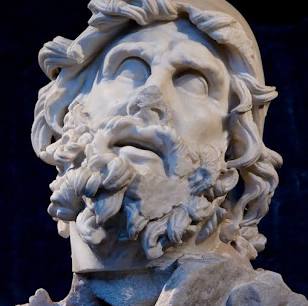
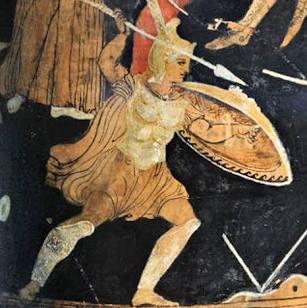
@Noahpinion There is plenty in Homer's Iliad and Odyssey to suggest that the poets are very much concerned with the destabilization and cost of war — geographical, societal, generational, familial, personal. The Iliad ends elegiacally; The Odyssey, uneasily.
@clairlemon as a student, I was always overwhelmed by the Iliad's tenderness and radical empathy in scenes such as Hector with his infant son and Achilles' capitulation when Priam asks for his son's body.
“‘Eos rhododaktylos.‘ Rosy-fingered dawn. You're Greek, aren't you, Captain? Did you ever read Homer? We read Homer at the Point. In Greek. And, goddamn it, cinema as medium is utterly incapable of conveying depth of such epic works!! You hear me, Stavros? Utterly incapable!”
Since encountering The Iliad & The Odyssey as a late teen, I've read them, first & foremost, as epics of strife & instability. Geographical. Cultural. Societal. Familial. Personal. The names of Achilles, "grief to the people" & Odysseus, "bringer of pain" seem purposeful.
There's no mystery in The Odyssey. There's dramatic irony. Plenty of it. But dramatic irony isn't mystery. So, for me, the poem looked more to be in the service of Nolan, than the other way around, and that had the effect of diminishing the epic on screen.
In Book 8, while Odysseus listens to a bard before the Phaeacian court sing of the Trojan Horse and how it allowed the Greeks to ravage Troy, the Homeric poets deploy an epic simile of radical empathy: equating the weeping of Odysseus to the weeping of a devastated Trojan woman.
@Sulish4d6 They are a futuristic people. Thus, they have already seen the film of Nolan's adaptation and know the returning Greek armies are the marauding Sea-Peoples of the region before the Greeks know it themselves.
@Eleven__11XI This is why, in Books 9-12 of the epic, Odysseus being the 1st person narrator of those supernatural tales was so important, because it introduced the great possibility that Odysseus was using Eurylochus in his narrative as the fall guy for returning home alone.
@JoyceCarolOates I thought of Jose Clemente Orozco's La Conquista. Cortes as machine. Perhaps, they are a murderous reflection and/or projection of the Greeks' own out-sized rapacious and dehumanizing tendencies as conquerors.
@JoyceCarolOates all night talking of their respective trials during their separation. It is arguably the most tender of all the scenes in the epic.
2/2
@JoyceCarolOates 1/2
"And in his turn Odysseus, favorite of Zeus, told her of all the discomfiture he had inflicted on others and all the miseries which he himself had undergone." (Book 23)
After Odysseus has killed the Suitors & revealed the secret of their bed to Penelope, the two stay up