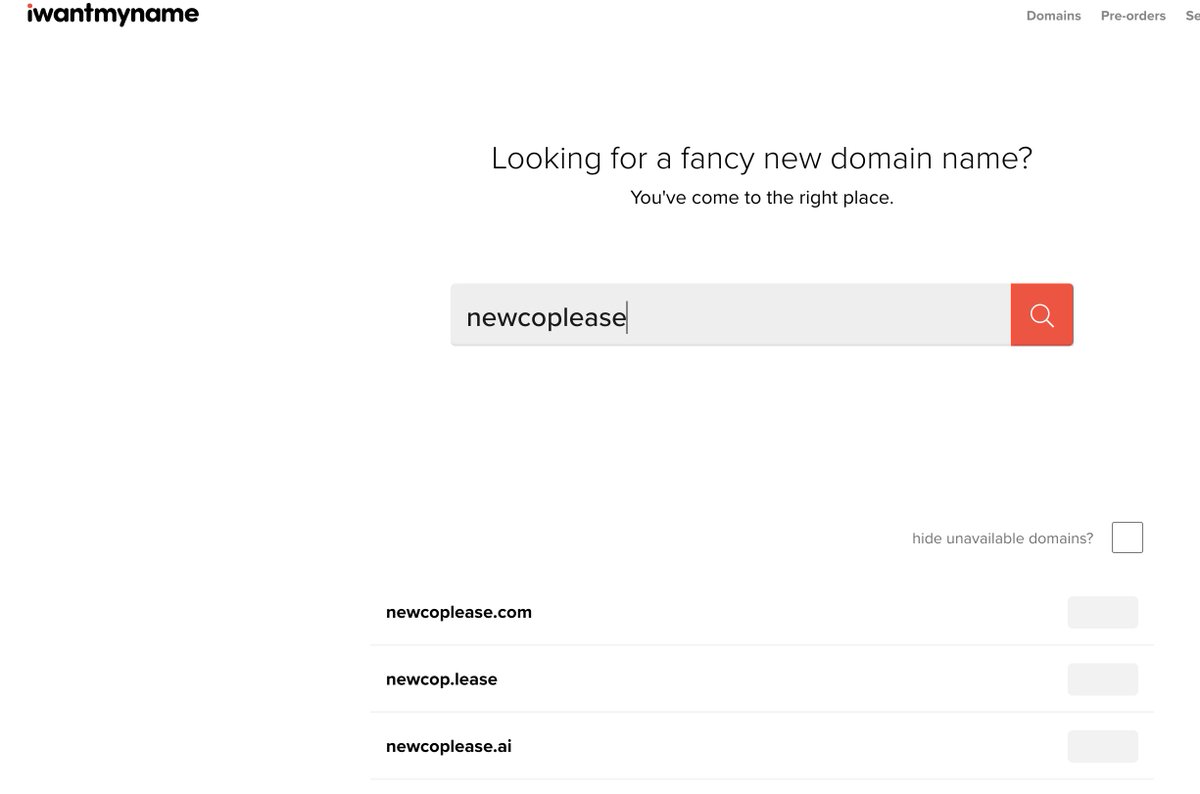
@Proffa__ @antonosika That would't work. Trademark clashes are assessed on "Visual, conceptual and aural" similarity. Dev Mode and Developer Mode would be viewed the same.
@antonosika I have some experience here : am a dev and built a commercial ML tool that lawyers use to predict trademark clashes. Figma would likely win. Bad PR though.
You know you could quickly go register "Vibe Mode" and then let anyone use that? :) Better PR. :)
@GergelyOrosz I have some experience here : am a dev and built https://t.co/mibGAzHZmk which is a ML tool that lawyers use to predict trademark clashes.
Figma would likely win. Bad PR though. You know you could quickly go register "Vibe Mode" and then let anyone use that? :) Better PR. :)
It's time! ⚡️
Today we're unveiling Autohive 🐝 - a modern platform to find, create and use AI agents to help automate the toil in your organization.
We see a future where team members are delegating to teams of agents to achieve significantly more, and bring more fun to work for everyone.
Link to sign up to join the early access list below 👇
There's a new kind of coding I call "vibe coding", where you fully give in to the vibes, embrace exponentials, and forget that the code even exists. It's possible because the LLMs (e.g. Cursor Composer w Sonnet) are getting too good. Also I just talk to Composer with SuperWhisper so I barely even touch the keyboard. I ask for the dumbest things like "decrease the padding on the sidebar by half" because I'm too lazy to find it. I "Accept All" always, I don't read the diffs anymore. When I get error messages I just copy paste them in with no comment, usually that fixes it. The code grows beyond my usual comprehension, I'd have to really read through it for a while. Sometimes the LLMs can't fix a bug so I just work around it or ask for random changes until it goes away. It's not too bad for throwaway weekend projects, but still quite amusing. I'm building a project or webapp, but it's not really coding - I just see stuff, say stuff, run stuff, and copy paste stuff, and it mostly works.
Confirmed @paulg Exactly this in the case of Trademark Law. Only around 10K cases to be very effective (f1: 0.91). The harder part is around explainability esp. to skeptical lawyers :)
The most surprising thing to me is that domain-specific ML doesn't seem that hard to build. Knowledge of the necessary techniques seems to be widespread, and you don't seem to need a truckload of GPUs and your own power plant to train a model for a narrow domain.
First attempt to teach Rose about financial instruments (futures) through the buying of Roses in the future: ��I’m bored of banking and I need a wee”. Sums up plenty of trading careers.
@richlittledale@RAC_Care@TheRAC_UK Yeah not sure how you get “Dale” as a name - can’t say that would be filling me with administrative confidence. Good luck!