Life long educator, reader of books, consumer of information, math teacher, ice hockey player & can’t wait for the Summer to travel the lower 48 with my family.
My eyes were wet from start to finish. I thought of being little in a big world & watching my son's first tries at this mad game. ESPN's Open to the NHL season is beautiful. I didn't expect to cry today-this is stunning. There's nothing like this sport. We at ESPN love the sport as you do. ❤️ Enjoy.
Welles Crowther was a former Boston College lacrosse player who had a trademark red bandanna.
He was also working in New York on Sept. 11, 2001 when terrorists struck the World Trade Center.
This is the story of how he led people to safety on that fateful day 25 years ago.
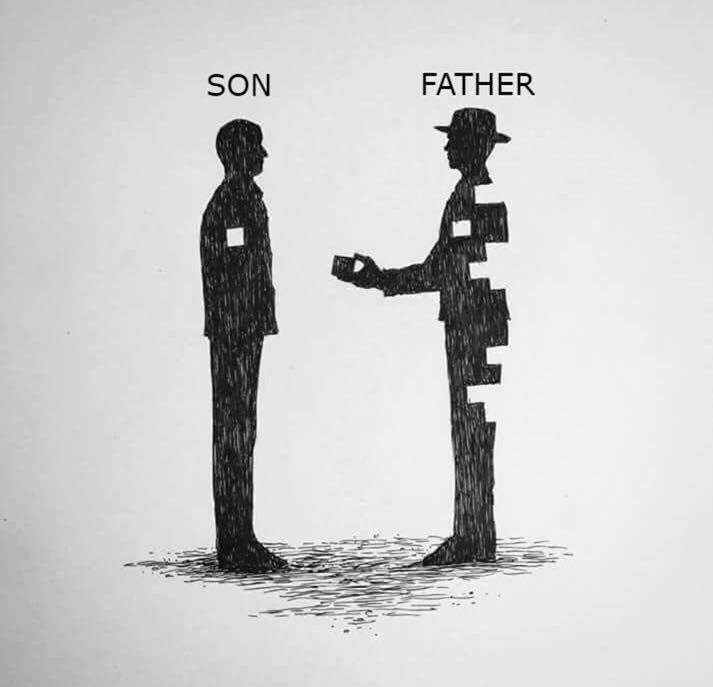
RULES FOR SONS:
1. Never shake a man’s hand sitting down.
2. Don’t enter a pool by the stairs.
3. The man at the BBQ Grill is the closest thing to a king.
4. In a negotiation, never make the first offer.
5. Request the late check-out.
6. When entrusted with a secret, keep it.
7. Hold your heroes to a higher standard.
8. Return a borrowed car with a full tank of gas.
9. Play with passion or not at all…
10. When shaking hands, grip firmly and look them in the eye.
11. Don’t let a wishbone grow where a backbone should be.
12. If you need music on the beach, you’re missing the point.
13. Carry two handkerchiefs. The one in your back pocket is for you. The one in your breast pocket is for her.
14. You marry the girl, you marry her family.
15. Be like a duck. Remain calm on the surface and paddle like crazy underneath.
16. Experience the serenity of traveling alone.
17. Never be afraid to ask out the best looking girl in the room.
18. Never turn down a breath mint.
19. A sport coat is worth 1000 words.
20. Try writing your own eulogy. Never stop revising.
21. Thank a veteran. Then make it up to him.
22. Eat lunch with the new kid.
23. After writing an angry email, read it carefully. Then delete it.
24. Ask your mom to play. She won’t let you win.
25. Manners maketh the man.
26. Give credit. Take the blame.
27. Stand up to Bullies. Protect those bullied.
28. Write down your dreams.
29. Always protect your siblings (and teammates).
30. Be confident and humble at the same time.
31. Call and visit your parents often. They miss you.
32. The healthiest relationships are those where you’re a team; where you respect, protect, and stand up for each other.
A community college professor named Marty Lobdell taught the same study skills lecture for 30 years. The video quietly became one of the most watched educational recordings online, with over 10 million views.
He spent his career watching students fail not because they were lazy, but because no one had taught them how their brain actually works when learning something difficult.
The lecture, “Study Less Study Smart,” contains a powerful framework.
Your brain cannot sustain focus the way most people believe. Studies show the average learner hits a wall between 25 and 30 minutes. After that, efficiency collapses. You’re still sitting there, but almost nothing is being absorbed.
Lobdell told the story of a student who planned to study 6 hours a night, 5 nights a week. Thirty hours total. She failed every class. She was not lacking effort. She was confusing time near books with actual learning. The fix is simple: when focus drops, stop, take a 5 minute rewarding break, then return. That reset makes a massive difference.
He also destroyed the myth of highlighting and re reading. Recognition is not the same as recall. To prove it, he read 13 random letters. Almost no one remembered them. Then he turned them into “Happy Thursday.” The entire room recalled them instantly. The brain stores meaning, not repetition.
This is why elaborative encoding works so well.
Finally, he shared the most important principle: 80 percent of study time should be active recitation. Close the book and explain the material in your own words. Teach it to someone else or an empty chair. Retrieval is where real learning happens.
His closing line stuck with me: If this information does not change your
behaviour, you have not actually learned it.
The best students do not study more hours. They stop confusing the feeling of studying with the reality of learning.
San Bernardino County Fire Highlights Innovation in Fire Technology Using Sound Waves
San Bernardino County Fire is always looking ahead, and this week we had the opportunity to see what the future of fire protection could look like.
We hosted a live demonstration with Sonic Fire Tech, showcasing a cutting-edge system designed to detect and suppress fire using sound waves. Developed by former NASA acoustics engineers, this technology works without water or chemicals, creating a protective zone that can stop ignition in milliseconds while avoiding the collateral damage often seen with traditional suppression methods.
From autonomous early detection to rapid suppression, tools like these have the potential to reduce fire damage before it starts, especially in wildfire prone areas. This same technology can also be applied inside homes and businesses, helping stop fires like kitchen or appliance fires in their early stages before they grow and spread. As this kind of technology continues to evolve and expand, it could also help reduce insurance claims over time, which may ultimately lead to lower insurance costs for homeowners.
This technology is already beginning to be incorporated into newly constructed homes in the Altadena area impacted by the Eaton Fire, highlighting its real-world application and growing role in community resilience.
San Bernardino County Fire remains committed to exploring innovation, strengthening our relationships, and finding new ways to better protect the communities we serve.
#SBCoFD #FireInnovation #WildfireSafety #TechnologyInFireService #DutyHonorCommunity #WildfirePreparedness #FireServiceInnovation
Media Contact: Christopher Prater, Public Information Officer, [email protected]/(909)665-2383
If you pitched this as a screenplay every studio would reject it for being too on-the-nose.
A 73-year-old architect walks to confession in 1926 and gets hit by a tram on the Gran Via in Barcelona. He's mistaken for a vagrant because of his worn clothes and left at a pauper's hospital. He dies three days later. His name is Antoni Gaudí. The cathedral he leaves behind is less than a quarter complete. The plans to finish it sit in his workshop as plaster models and detailed drawings.
Ten years after his death, in July 1936, FAI anarchists break into that workshop. They smash the plaster models. They burn the archive of drawings and calculations. They pry open Gaudí's tomb. For the next 50 years, architects piece together a destroyed playbook from photographs and broken plaster fragments.
The geometry was the real problem. Gaudí designed the church using upside-down hanging-chain models because the math for hyperboloid intersections did not yet exist on paper. He had solved it physically. Computers finally caught up to him in the 1980s. By 2010 the project was 50% complete. By 2015 stone elements that took months to hand-carve were being modelled digitally and machine-cut in days.
Now the kicker. The building is funded entirely by people paying admission to see scaffolding. €134.5 million of income in 2025, all private, none of it from the Spanish state or the Vatican. About 4.7 million tourists a year buying €26 tickets to watch a cathedral get built. The unfinished state was the product.
On June 10, 2026, exactly 100 years to the day after Gaudí died, the cross goes up on the Tower of Jesus Christ. 144 years from groundbreaking. 172.5 meters tall. The tallest church building in the world, beating Ulm Minster, which took 513 years.
When asked why his project was taking so long, Gaudí said one thing: "My client is not in a hurry."
Turns out neither was he.
Curt Cignetti shares a universal truth about habits and consequences.
"In life - you got freedom of choice, but not freedom of consequence."
"First you form your habits, then your habits form you."
Every choice and action you take compounds. The small decisions you make daily - preparation, work ethic, and how you respond - those become your habits.
And over time, those habits become your identity.
You're free to choose. But the consequences of those choices aren't optional.
Your habits are shaping who you become.
(🎥IU Athletics )
I am a high school chemistry teacher. For years, I encountered students who did not know their multiplication tables and it interfered with their ability to understand chemistry. This year, I decided to take matters into my own hands. ⬇️
Bill Gurley just identified the only career advantage that AI cannot commoditize.
It isn’t talent. It isn’t your degree. It isn’t your network.
Gurley: “The thing that will differentiate you more in your career than anything else is to be the most hyper curious person that’s trying to do this thing.”
For centuries, knowledge was gatekept. Elite institutions. Expensive mentors. Geographic luck.
The information existed but access to it was the moat.
That moat is gone.
Gurley: “You have no excuse not to be the most knowledgeable person, because the information’s all out there.”
Every question you can formulate now has an answer available instantly.
Every industry. Every domain. Every skill you want to acquire.
The playing field didn’t just level. It inverted.
The people who used to win by controlling access to information now compete against anyone willing to ask better questions.
Gurley: “I can’t make you the most talented person in your company or your field.”
Talent is genetic. It’s luck. It’s the variable you cannot control.
But knowledge is a choice. And curiosity is a compounding asset.
Gurley: “If you are the most curious person that’s constantly learning in your field, you will do extremely well.”
This was always true. What changed is the multiplier.
Gurley: “That advantage is put on steroids with these AI tools.”
A relentlessly curious person with access to all human knowledge and the ability to interrogate it in real time doesn’t just outlearn their peers.
They outlearn entire institutions.
The gap between the curious and the incurious was always there.
AI just made it insurmountable.
⚡️A lot of people want “school is pointless” to be true because it gives them permission to quit the hard parts.
Discipline. Boredom. Repetition. Delayed reward.
AI did not remove the need for those. AI made the penalty for lacking them immediate.
The world is about to split into two groups:
People who use AI to multiply agency.
People who use AI to avoid agency.
The first group gets terrifyingly effective.
The second group gets sedated, entertained, and managed.
That is the whole story.
If your kid cannot do hard things when nobody is watching, AI will not make them free. It will make them dependent.
School is still useful because it is one of the last mass systems that forces reps in:
Showing up.
Deadlines.
Social friction.
Doing tasks you did not choose.
Most people hate that, yet that is how you build a spine.
So the right move is not pulling kids out of school. The right move is raising the standard.
School stays.
But the real education happens outside it.
Build.
Write.
Lift.
Compete.
Ship.
Earn.
If a teenager is sleeping in and shrugging, the problem is not school.
The problem is training.
AI is not making school obsolete.
AI is making weak humans obsolete.
That is the truth nobody wants to say out loud.
Dr. Russell Barkley’s blunt truth to parents of ADHD kids: Stop talking. Start acting. Your child’s brain needs external consequences and accountability — not more lectures.
In this 8:08 clip he lays out the practical playbook:
- Be radically consistent with rules and immediate consequences (ADHD is not an “information deficit”).
- Touch, look in the eye, keep it short and sweet — then enforce.
- Use timers to proactively check on them and catch problems early.
- Break tasks into tiny chunks (reduce expected attention span by ~30%).
- Use “time off the clock” accommodations (stopwatch they control) instead of useless “extra time.”
- Do transition planning before every change of activity: stop, review rules, state incentives/punishments, get their input.
- Use behavior monitoring cards everywhere (school, sports, grandparents, babysitters) — frequent ratings from other adults, points delivered at home.
The core message:
Reactive parenting = constant firefighting.
Proactive structure + external accountability = dramatically fewer problems and a less disabled child.
This isn’t about “fixing” ADHD — it’s about engineering the environment so the child can succeed despite it.
Which of these strategies have you tried (or wish you’d known sooner) with an ADHD child?
@ChrisKindaReads I’ve read 583 books and this is #1 on my list. It started my love for the west, for Texas and for the mid 1800s. Enjoy this wonderful adventure
The book "Excellent Advice for Living" is so good I read it in one sitting.
The book is a collection of maxims Kevin Kelly wrote to his adult children. Each maxim contains a bit of wisdom he wish he'd known earlier.
79 maxims that resonated the most (I added #57 selfishly)
1. Choose to believe that the entire universe is conspiring behind your back to make you a success.
2. Mastering the view through the eyes of others will unlock many doors.
3. If you can avoid seeking the approval of others your power is limitless.
4. The reward for good work is more work.
5. Don’t be the best. Be the only.
6. The urgent is a tyrant. The important should be your king.
7. Find smart people who will disagree with you.
8. The main thing is to keep the main thing the main thing.
9. The most counterintuitive truth of the universe is that the more you give to others the more you'll get.
10. Life gets better as you replace transactions with relationships.
11. Courtesy costs nothing.
12. Life lessons will be presented to you in the order they are needed.
13. Cultivate an allergy to average.
14. If you repeated what you did today 365 more times would you be where you want to be next year?
15. If you're alive that means you still have lessons to learn.
16. Master something. Through mastery of one thing you'll command a viewpoint to steadily find where your bliss is.
17. Trust is earned in drops and lost in buckets.
18. First, always ask for what you want. Works in relationships, business, life.
19. If nobody else does what you do you won't need a resume.
20. How to apologize: quickly, specifically, sincerely.
21. The best way to advise people is to find out what they really want to do and then advise them to do it.
22. It is certain that 99% of the stuff you are anxious about won't happen.
23. What is important is not what happened to you but what you did about what happened to you.
24. Your golden ticket is being able to see things from other people's point of view.
25. Pay attention to who you are around when you feel best. Be with them more often.
26. To get your message across follow this formula: simplify, simplify, simplify, then exaggerate.
27. You will thrive more when you promote what you love rather than bash what you hate.
28. To be interesting just tell your own story with uncommon honesty.
29. When you truly think for yourself your conclusions will not be predictable.
30. Don’t measure your life with someone else’s ruler.
31. For maximum results focus on your biggest opportunities, not your biggest problems.
32. Pay attention to what you pay attention to.
33. Do more of what looks like work to others but is play for you.
34. Don't bother fighting the old just build the new.
35. Don't compare your inside to someone else's outside.
36. When you're stuck explain your problem to others.
37. Most stories are improved significantly if you delete the first page. Start with the action.
38. A long game will compound small gains that will be able to overcome even big mistakes.
39. Constantly search for overlapping areas of agreement and dwell there.
40. It is your destiny to work on things that only you can do.
41. Make stuff that is good for people to have.
42. You'll get 10 times better results by elevating good behavior rather than punishing bad behavior.
43. Life is not a straight line for anyone.
44. Aim for tasks that you never want to stop doing.
45. Regularly scheduled sabbaths, sabbaticals, vacations, breaks, aimless walks, and time off are essential for top performance of any kind.
46. Don't mistake a clear view of the future for a short distance.
47. Efficiency is highly overrated
48. Greatness is incompatible with optimizing in the short term.
49. The greatest teacher is called "doing."
50. Figure out what time of day you are most productive and protect that time period.
51. You are much better off delivering unwelcome news to someone yourself directly.
52. Don't ever work for someone you don't want to become.
53. Take one simple thing — almost anything — but take it extremely seriously as if it is the only thing in the world
54. Be frugal in all things except in your passions.
55. About 99% of the time the right time is right now.
56. Finite games are played to win or lose. Infinite games are played to keep the game going. Seek out infinite games because they yield unlimited rewards.
57. To be remarkable, read books.
58. Be a good ancestor. Do something a future generation will thank you for.
59. Bad things can happen fast but almost all good things happen slowly.
60. To transcend the influence of your heroes copy them shamelessly like a student until you get them out of your system. That is the way of all masters.
61. Don't worry how or where you begin. As long as you keep moving, your success will arrive far from where you start.
62. It is much easier to change how you think by changing your behavior, than it is to change your behavior by changing how you think. Act out the change you seek.
63. If you meet a jerk, ignore them. If you meet jerks everywhere every day, look deeper into yourself
64. Writing down one thing you are grateful each day is the cheapest possible therapy ever.
65. Ignore what others may be thinking of you because they aren't thinking of you.
66. Passion, persistence, belief, and ingenuity are required to invent new things. Qualities the poor and young often have in abundance. Stay hungry.
67. Calm is contagious.
68. When crises strike don't waste them. No problems, no progress.
69. Your purpose is to discover your purpose. This is not a paradox. This is the way.
70. Your passions should fit you exactly but your purpose in life should exceed you.
71. Fear makes people do stupid things.
72. When someone is nasty, hateful, or mean toward you treat their behavior like an affliction or illness they have. That makes it easier to have empathy toward them which can soften the conflict.
73. You don't need more time because you already have all the time you will ever get; you need more focus.
74. Compliment people behind their back. It'll come back to you.
75. Expand your mind by thinking with your feet on a walk or with your hand in a notebook. Think outside your brain.
76. Gratitude will unlock all other virtues.
77. You choose to be lucky by believing that any setbacks are just temporary.
78. It is useful to organize your thoughts with someone you trust and admire.
79. Over the long term the future is decided by optimists. To be an optimist you don't have to ignore the multitude of problems we create; you just imagine how much our ability to solve problems improves.