Yes, most modern connected EVs (Tesla, etc.) send telemetry, location, diagnostics and usage data to their makers for apps, OTA updates and support—often continuously while on or reachable.
The differences matter: Chinese models in the Norway tests kept trying to transmit even powered off, with ~90% of traffic routed to China (and BeiDou preference). Western makers route mainly to US/EU servers under different legal rules. China's National Intelligence Law can compel company cooperation; that is the core distinction, not connectivity itself. Privacy issues exist across the industry.
@nayibbukele I´m tired of all "right wing, left wing" discussions. I want policies that make kids smile like this, and politicians that are brave enough to enforce them.
Desde el otro lado del mundo, gracias por su servicio, señor Presidente. Que Dios lo bendiga a usted y a su nación.
What makes @ProfJohnLennox one of the most winsome & influential Christian apologists of our lifetime? Don’t miss this special EXTENDED CUT episode where John shares even more fascinating stories from his lifetime of boldly defending the Christian faith.
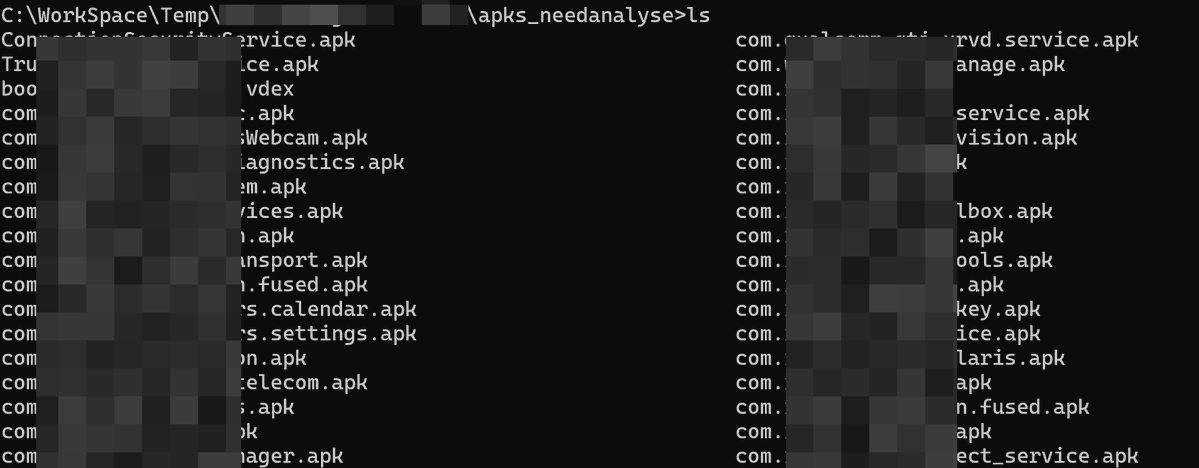
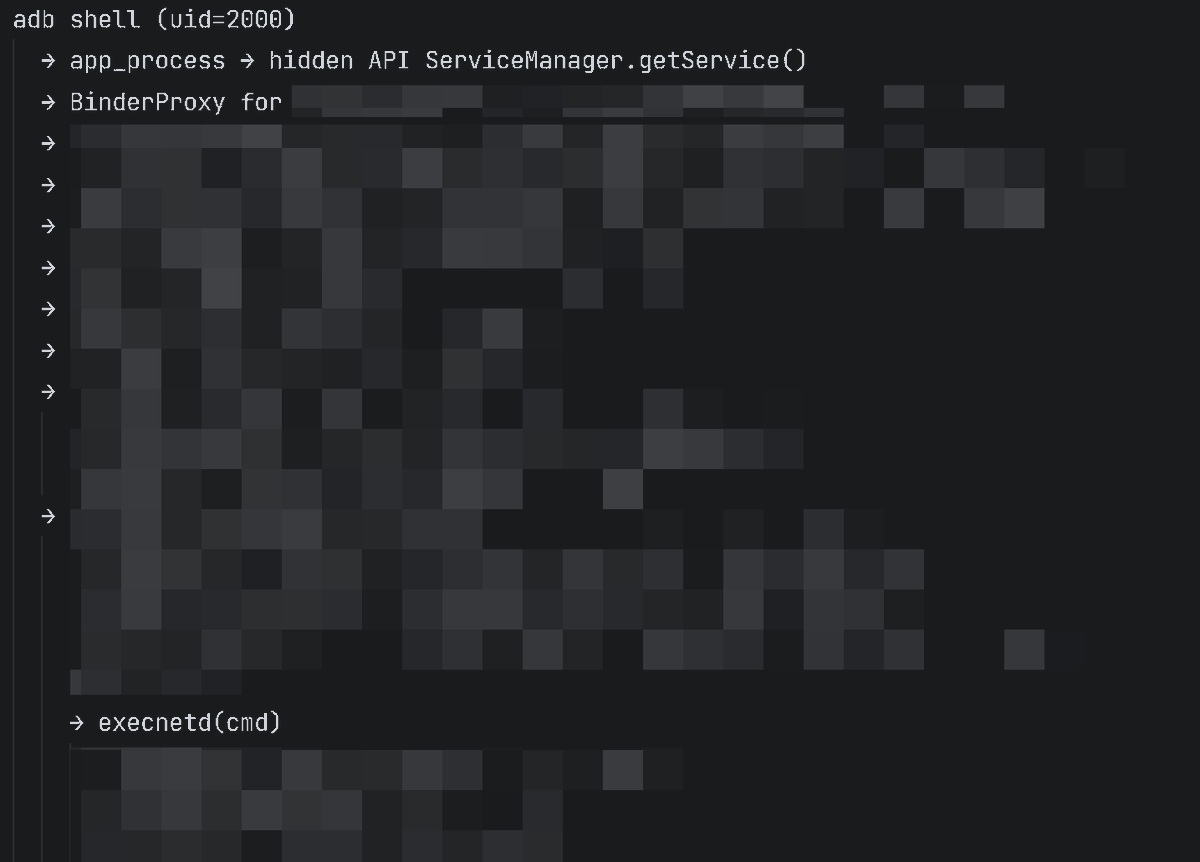
I used /goal + ASC + adb to analyze my phone. The agent pulled 50+ APKs with uid=1000, then used ASC to analyze them without exporting any pseudocode. After 10 hours, the agent had rooted my phone...😐
#mobile#bugbounty#security
https://t.co/OWoPj03lrz
https://t.co/vX9DChmHkP
@MyWayIsBack Camara sempre em Wide e 2vs2 online era brutal. Depois disso, foi sempre a cair. Para mim pelo menos, não quero ferir a malta que curte os jogos de futebol actuais.
@floruiila A MEO foi alvo de um ataque em massa que provocou congestionamento e degradação temporária da rede internacional. Foram ativadas medidas de mitigação e recuperação, permitindo restabelecer a estabilidade do serviço. Não houve intrusão ou acesso a dados da MEO ou dos seus Clientes
you know what was super weird about the whole thing, after I was told I was fired, I kept access to my Microsoft work account and the whole MSRC database, source code and everything was still there. It was the case for two months.
I first met Charlie Kirk more than ten years ago. At that time, he was very young, and possessed an evangelical naivety that was relatively foreign to a Canadian.
He was truly and somewhat amusingly shocked, for example, at the pervasive smell of marijuana on the streets of Toronto.
It was obvious, however—despite that sheltered mien—that Charlie was someone deeply and singularly committed to a unique mission, and that he would be driven to learn everything necessary to its success.
I met him in person another dozen times after that, and was asked to speak at a number of Turning Point events.
I enjoyed the events. It was a very good thing to see thousands of enthusiastic young people trying to make things better in their somehow endearing conservative American way.
It was also fascinating to watch Charlie develop in sophistication over the years. The bravery he showed in presenting a truly conservative viewpoint on university campuses was part of that development, as was the ferocious skill he developed at debating contentious issues, under trying conditions, for years.
My wife, Tammy, and I met his lovely wife Erika with him on several private dinners. They made a truly admirable and mutually respectful couple. We had plans to make such meetings a regular occurrence—but life, and death, got in the way.
I was not informed about Charlie's murder for several months after it occurred, in consequence of my recent illness. It came as a terrible shock.
It is also truly awful to see what a spectacle has been made of his demise by pathological actors across the political spectrum.
He was a solid, decent, hard-working, truthful, brave person.
We are all—right and left alike—lesser without him.
On the right: because he was an example and a leader.
On the left: because he would willingly talk across the aisle, and in good faith.
There will come a day—and too soon, I am afraid—when even those who vilify his memory will long for the days when people such as Charlie existed, and made such civilized talk a priority.
I had the privilege to sit down with Charlie and talk with him about his life and the world not so many months before that was no longer possible: https://t.co/1b3U5MxGB1
RIP Mr. Kirk. I write that in true sorrow.
@Le_Crapaud47@AndrewZywiecMD@elonmusk Knowing how much of a mess X can be at times, I rarely visit the “For You” tab. I only look at posts from people I follow. But if I do check it and see something I don’t like, I simply choose the option not to see it again - I don’t post a message complaining to my audience 🤷.
I bought a Fable dataset from one of the top Chinese LLM routers yesterday.
With just 6TB data, I can take over 7 Chinese/CIS gov entities & 19 top Chinese firms like Xiaomi, Huawei, NIO, Minimax using SSH keys, VPN configs, Aliyun keys, GitLab tokens sent to the router.
This post looks like the start of a VERY sophisticated and well-funded PR operation to get support for Democrats to regulate AI into oblivion. Let me show you how it works:
1.) This guy, with minimal followers and no previous account activity, goes to the Wall Street Journal which publishes an exclusive with quotes from him on his resignation 18 minutes BEFORE this post goes up. Planning was clearly done in advance.
2.) Within hours, it has tens of thousands of reposts and the account has 100k+ followers. The post is punchy, quotable, it almost seems professionally written. The first three accounts to quote tweet it all do so within 15 minutes of the initial posting. Remember, this account had basically zero engagement beforehand, so an organic reach explanation seems unlikely.
According to Grok those accounts are @_NathanCalvin (General Counsel at Encode AI), @peterwildeford (Head of Policy at the AI Policy Network), and @DKokotajlo (Head of the AI Futures Project), all of which are up-and-coming AI-Doomer policy advocacy nonprofits.
The AI Futures Project website says it is funded “primarily” by the Survival and Flourishing Fund, which says on its own website that it has advised Jaan Tallinn, Skype creator and one of the leading investors in Anthropic, to grant over $2.5 million to the AI Futures Project since 2024.
Encode AI says on its website that it is ALSO funded by the Survival and Flourishing Fund, which in turn says that it told Anthropic investor Jaan Tallinn to grant $516,000 to Encode AI in 2025.
And wouldn’t you know it, the Survival and Flourishing Fund ALSO says it told Jaan Tallinn to grant $2 million to the AI Policy Institute, the 501(c)(3) affiliate of the AI Policy Network, as well.
What are the odds that the first three quote tweets of Coxon’s post would all be major AI-restriction policy advocates funded generously by the same donor, who also happens to be one of the leading investors in, and a board member of, Anthropic, the company Coxon was resigning from? And all within 15 minutes of posting (two within ten)?
3.) Jacob Coxon doesn’t have much of a resume, but we do know that, in 2022, he got a $20,159 scholarship for the “long term future scholarship program” from the Good Ventures Foundation, one of the philanthropic vehicles of Dustin Moskovitz, a notorious AI-doomer who has spent tens if not hundreds of millions on policy advocacy to strictly regulate AI, while also being an Anthropic Investor himself.
It also just so happens that the 14th person to quote Coxon’s post was @MaxNadeau_ (27 minutes after posting) who is the program officer for the Technical AI Safety team at Coefficient Giving, another of Moskovitz’s philanthropic spending vehicles. Max is not a frequent poster, his last posts before quoting Coxon were before Labor Day, but he was remarkably quick off the mark for this one.
4.) Basically every major Democrat politician and candidate has suddenly glommed on to this post, and conveniently, as the people cry out foe answers, Bernie Sanders already has a bill written to “ban super intelligence” and regulate AI into oblivion, and will be releasing later this week. The bill, among many other things, will create “a new cabinet-level federal agency to safeguard the public from the dangers of artificial intelligence” that will be “advised by an Artificial Intelligence Advisory Board comprised of experts on artificial intelligence.” Do you think, perhaps, Anthropic and its many investors who fund AI policy advocacy might have interest in getting to place a pet “expert” on the board of an entity that dictates what AI is and isn’t allowed to do? And isn’t it fortuitous that this whistleblower came forward with his oh-so scary stories so close in proximity to the release of the most radical piece of AI legislation ever introduced?
@realJennaEllis A reflection for both sides: when someone publicly and frivolously mocks a deeply complex issue debated seriously for centuries, can they genuinely reach a conclusion contrary to their preconceived view + admit it if they do? Doing this publicly is a disservice to Christ’s cause.
🦔An NYU mathematician says OpenAI used his own progress against him to beat him to one of the biggest unsolved problems in mathematics. Tristan Buckmaster had been working toward a Millennium Prize proof using OpenAI's Codex when information about his progress reached OpenAI.
Days later, OpenAI published a full proof of the same problem using the same uncommon approach, after burning $22.5 million in compute to get there. When Buckmaster confronted them, exec Sébastien Bubeck allegedly said "Why would you ruin your career?" and "If you don't want me to be nice, then I don't have to be nice."
My Take
OpenAI spent $22.5 million to solve a problem with a $1 million prize. They didn't do this for the bounty. They needed a headline that says "our AI solved one of the hardest problems in mathematics" and they needed it before someone else got credit. They started days after they heard about Buckmaster's progress and took the same uncommon approach he'd pursued for months. That's hard to explain as coincidence.
Buckmaster did his work inside Codex. OpenAI reserves the right to train on Codex data. They admit they can't rule out that his usage helped improve their models. So a customer used their product, potentially handed them the roadmap, and then OpenAI outran him with $22.5 million in compute he could never match. I don't know if any of this was intentional. But if you're a researcher and you just watched this happen, I don't think you'd keep your best ideas inside someone else's product.
Hedgie🤗
https://t.co/1YnggU7xdI
I resigned from Anthropic today. I spent the last three years doing pretraining research at both OpenAI and Anthropic. Neither company is acting responsibly. They are racing straight to self-improving superintelligence and gambling with our lives. More thoughts below.