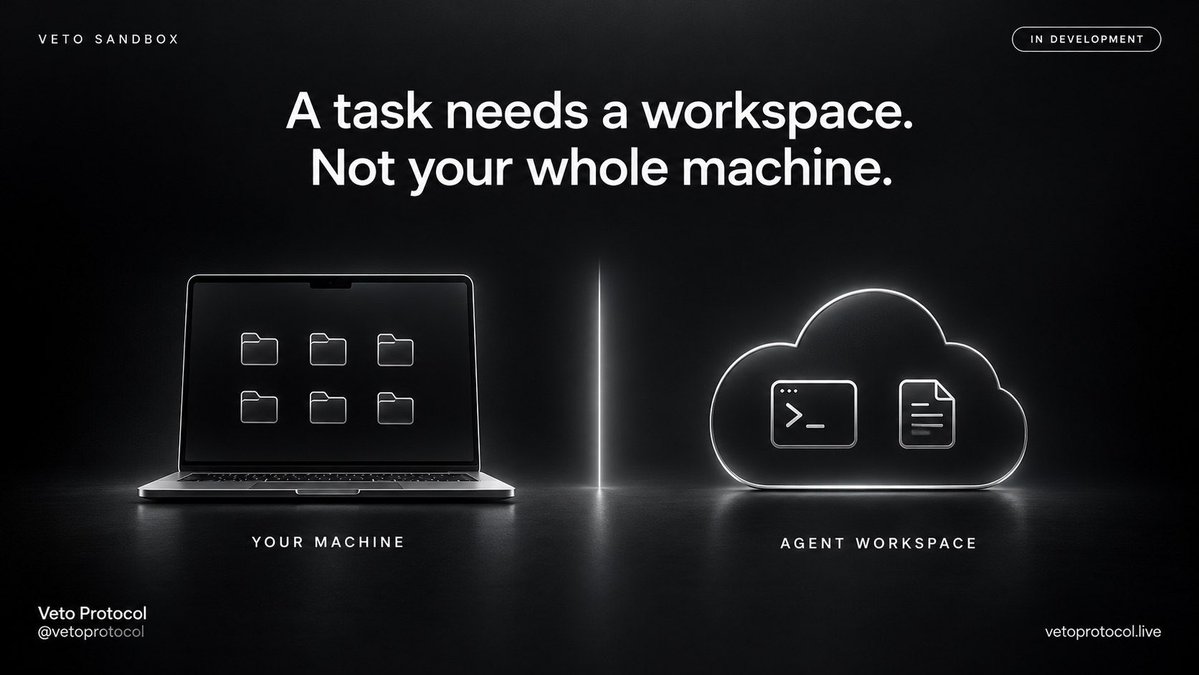
Workflow we’re designing inside Veto Sandbox
An agent needs somewhere to execute task. Developers need a clear way to start that work, collect the output and end the session.
Our proposed first workflow has five steps:
1. Create a workspace
Start a dedicated execution environment with defined resources and a session lifetime.
2. Upload the task files
Provide the inputs the workload needs without exposing unrelated folders or host credentials.
3. Execute Task
Run the task within the environment’s configured resource and network limits.
4. Retrieve the result
Collect generated files, execution output and error information. An output leaving the sandbox is not automatically trusted.
5. Terminate the workspace
Request shutdown and confirm that execution has stopped. Data retention and credential revocation are separate concerns.
We’ll share an end-to-end walkthrough once the implementation is ready to demonstrate.
AI agents can write code, but where should they run it? 👀
$Veto Sandbox is building isolated cloud environments where agents can execute code, process files, and complete tasks without needing access to your entire machine.
Give agents the workspace they need, not access to everything. 🔒
Still in development, but the vision is clear. Veto Sandbox is one to watch. 🚀
@vetoprotocol
November 5. 👀
The question isn't whether Unity Software has changed.
It's whether Wall Street has fully recognized how much.
Q3 earnings could make for an interesting reality check. 🐱
What do U think?
$U $UNITY