40+ years of telecom & internet engineering. Worked on US standards, designed a network solution for the Gov. of Rwanda. Bringing Digital Dialtone to Wyoming!
Article I, Section 4, Clause 1, gives the method to the states. Legislation can force the Civil rights Act of 1866 and the 14th amendment to establish state digital systems, with Secretary of State digital signatures verifying credentials.
The STATES are responsible for election integrity, and they're negligent in their duties unless they embrace tech and eliminate points of fraud.
1st, you can't tell if any ID is valid and that is the problem of repudiation. 2nd, you can't determine if your vote has been changed. 3rd, if a human tabulator is involved you can't tell if they cheated or made a mistake. 4th, there is no public oversight. 5th, because of voter anonymity, you don't know if votes were added, or removed.
Alternatively, votes could be secured using non-repudiable cryptographic signatures (SSIDs) paired with end-to-end encryption, transmitted directly over the internet to an immutable public blockchain ledger. Each vote record would permanently encode the voter’s unique ID (or a one-way hash of it for privacy), instantly providing the voter with a public transaction address or receipt they can use to independently verify that their vote was recorded exactly as cast and has never been altered. Because the ledger is fully public and cryptographically protected, any citizen, journalist, or observer could download and audit the entire vote tally in real time, making large-scale fraud mathematically detectable and practically impossible without leaving undeniable evidence.
I wrote this algorithm and blogged into the public domain in 2020. You can read about it here or have grok explain this to you.
https://t.co/IOudtuWVZF
The meeting was cancelled. That doesn't change the agenda and issues!
Roland: Sheridan Showdown, Protecting Privacy Without Piercing the Corporate Veil https://t.co/1pYNIPdUtW
@wyLegislature@ChuckForWyoming#SSID#SEDI
Some people asked about VoirDire™.
VoirDire™ is the Decentralized Self-Sovereign Identity That Lets You Speak the Truth
Voir Dire literally means “to speak the truth.” In the legal world, it is the process of questioning jurors to ensure honesty and transparency. The company chose this name because VoirDire™ was built on the same principle: you control your true data, and you decide exactly what to reveal - nothing more, nothing less.
What is VoirDire™?
VoirDire™ is a decentralized Self-Sovereign Identity (SSI) System that goes far beyond traditional digital credentials. From home or business, it is a fault-tolerant vault protected by the 4th and 5th amendments that puts you in complete control of your personal data, credentials, and digital assets. When out and about, you can access it on your phone managing Verification Requests, or spending your money with a secure, programmable digital identity card that enables retail transactions.
It Features:
Fully Programmable 3-Factor Identification: Your VoirDire card supports three-factor authentication that you configure. Choose how you want to prove who you are: biometrics, hardware keys, PINs, or any combination. If you ever suspect a compromise, simply rewrite the cryptographic key on the card. Your old wallet becomes instantly invalid, and you regain control without contacting any central authority.
Complete Ownership & Control:
* Modify, add, or remove any data fields in real time
* Add or revoke wallet addresses and connections
* Grant or revoke access to specific credentials instantly
You decide who sees what, when, and for how long.
Zero-Knowledge Proofs & Selective Disclosure: VoirDire separates wallet storage from wallet processing which primarily uses executable Zero-Knowledge Proofs (ZKPs). This industry-leading privacy technology lets you prove a fact (e.g., “I am over 18” or “I hold a valid driver’s license”) without revealing the underlying data. It is purpose-built for smart contracts and blockchain transactions, creating a clean abstraction layer between your stored credentials and any reference to them. Third parties interact only with the proof you approve, never your raw data.
Military-Grade Security & Resilience:
* Your identity lives behind enterprise-grade encryption
* Data is stored redundantly across a decentralized network
* Designed with no single point of failure
Even if you lose your phone, tablet, or laptop, your identity remains safe and recoverable only by you.
Why VoirDire™ Matters:
In a world of increasing data breaches and centralized identity systems, VoirDire™ returns sovereignty to the individual. It combines the transparency of “speaking the truth” with the strongest privacy tools available, giving you a digital identity that is secure, portable, programmable, and truly yours. Take back control. Speak your truth. Own your identity.
VoirDire™ ▪ Because your Identity belongs to you.
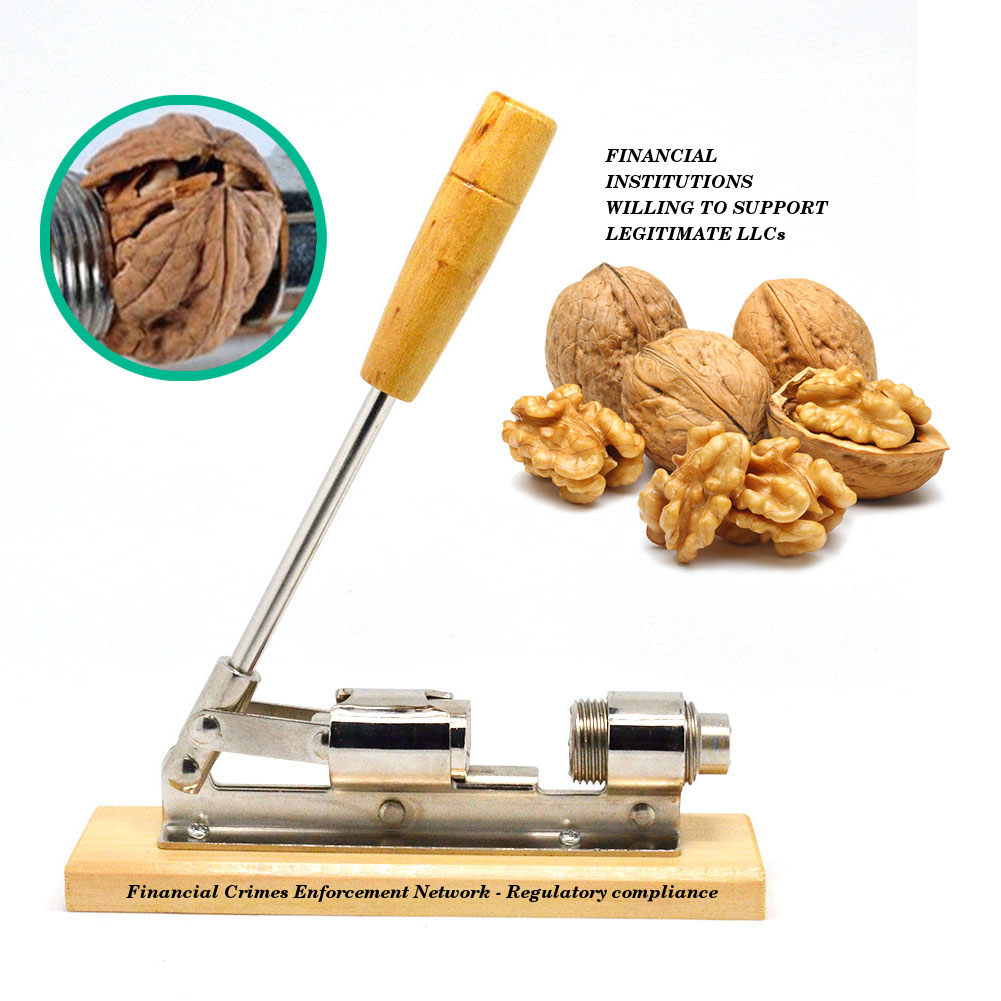
I've been doing research on using Self-Sovereign IDs to reduce certain types of LLC fraud (Shell companies). FinCEN policy levys huge fines against institutions that fail to catch fraud, effectively causing banks to reject bank accounts for most legitimate anonymous businesses because the LLCs filings aren't public about owners, and the bank doesn't want to take the risk. This policy assumes guilt until you can prove your innocence.
The @WYLegislature and @ChuckForWyoming are tackling Title, Voter and LLC fraud this summer. Probably the most effective tool is to support State Endorsed Credentials for use with Self-Sovereign IDs. (I'm Working on a state system demo that doesn't cost millions to implement).
@GoWestCUA@RepDanielSingh@RepHageman@WHFraudTF@SecScottBessent@TheNCUA
Wyoming is currently grappling with significant fraud challenges involving business filings, LLC abuse, deed and title fraud, and identity theft. The state also lacks sufficient safeguards and default policy for the protection of private data that it requires from residents and businesses. Wyoming’s business-friendly LLC laws, make it difficult for the state to distinguish between legitimate companies and shell entities. These anonymous LLCs are frequently used for money laundering, fraudulent schemes, and circumventing national security restrictions on land purchases.
Although the Legislature has enacted useful legal entity definitions regarding Principal Authority, specifically through the Digital Identity Act (W.S. Title 40, Chapter 30) and Section 8-1-102, these provisions do not go far enough. They are primarily oriented toward commercial code protections rather than robust personal privacy protections.
By adopting key principles from Utah’s SB-275, as championed by Wyoming legislative contributor Christopher Allen, and by implementing Self-Sovereign State-Endorsed credentials backed by Zero-Knowledge Proofs, Wyoming can establish robust personal data privacy rights. These tools would effectively reduce fraud, lower liability for Wyoming Registered Agents as imposed by Senate File-0082, support proof of control of anonymous LLC registries, and significantly decrease account risk for financial institutions.
This week, I'm submitting a legislative policy paper as public comment. It examines existing vulnerabilities in title and deed records, personal information privacy, voter rolls, and election processes, then proposes statutory and infrastructure reforms.
The paper shows how these changes would eliminate title and deed fraud, protect personally identifiable information (PII) privacy rights, secure voter-roll data, strengthen election integrity, and make a fully digital voting system possible despite W.S. 22-1-102: i, xiv, liv, lv, lvi, etc).
Thank you @ChristopherA
Claiming LLC fraud is a great fear tactic, punishing innocent entrepreneurs who could thrive in a free market, if not de-banked by fearful institutions who don't deserve the market opportunities.
We're about 30 days out from Advanced Intelligent Networks releasing their recommendations for the Wyoming legislature. This should cover personal data privacy, State endorsed credentials, anti-fraud LLC proposals, public immutable records to prevent Title, Identity, and Voter fraud, loyalty to data protections for persons, changes to Mobile Drivers Licenses, and perhaps allowance of Self-Sovereign Identification.
@SenLummis@SenJohnBarrasso@RepHageman@SBAgov
As someone who is not an expert in financial institutions, I’ve been searching for a practical anti-fraud solution for LLCs. In my view, FinCEN’s aggressive AML/KYC institution penalties have raised the compliance risk so high that banks and other institutions are now terrified of approving any LLC account application. Legitimate businesses routinely form their LLCs in Wyoming precisely to take advantage of its business-friendly jurisdiction, yet financial institutions have been turned into a regulatory choke point—effectively poisoned against serving these entities. At what point will the states push back and challenge FinCEN for this misguided overreach?
@RepHageman@SenLummis@SenJohnBarrasso@HouseSmallBiz@BankingGOP@VP@ChuckForWyoming@CRA_GO@WYLegislature
Borrow a Tanakh (Hebrew and English) and have someone read a "Bible" in English and compare against the Tanakh in English. Two things will pop out: The Bible English takes liberties changing the Name of the God of Abraham, Isaac, Jacob, and whom Jesus called Father, to "Lord" (be aware, the Tanakh will say "hashem" in reverence to His name), you'll also find (if you dig into the Hebrew) mistranslations to English (IS 9:6, IS 53, Dan 9). You will find that the "Law" (capital L - Torah) is not the same as the "law" (lower case - Talmud, that the NT rails against.) Most importantly, look for the definition of Messiah and His characteristics (should be in Isaiah).
The US Constitution does not express an explicit "right to privacy" however the Supreme Court has recognized implied privacy protections derived from several amendments. In 1977 they acknowledged that the Constitution protects a right to privacy for "information and against the disclosure of personal matters".
The State of Wyoming is at a crossroad where data privacy for legal entities, whether a natural or juridical person, is at risk for the sake of Federal Financial requirements while assuming National Security trumps Constitutional protections without due process.
The Fifth amendment provides a clear right to refuse disclosure of personal information which should be applied against wholesale data collection. The Fourth amendment, guards against government access to personal information without probable cause. The First amendment supports refusing disclosure in contexts where revealing identities and or affiliations would chill protected expression or associations.
It is disconcerting that the State of Wyoming has not adopted a digital privacy act which requires best efforts to collect personal data only when having a justified cause, protects data that does not belong to the state, assumes restoration for data breaches, and would disallow the exposure of personal ownership data to third parties, as SB-0082 does.
My intent as a Wyoming resident and technologist is to advise the Wyoming Legislature to adopt a digital bill of rights that includes data privacy protection law. I also believe that when the state can take steps to protect their own data (like parcel ownership) which would substantially reduce fraud, they should be obligated to perform those steps.
Individuals also have a duty to encrypt and protect their own data. Shouldn’t the State, Federal government, and financial institutions have the same duty? And if your jurisdiction changes, does their right to hold your data still apply? The idea that using privacy protection implies guilt, or that only total transparency proves innocence, is false. This notion undermines the principle of "innocent until proven guilty."
SohoStar® intends to protect small business within Wyoming's rugged individualism, limited government, and personal freedoms.