Elon Musk hat gerade das gesamte Universitätssystem auf die Probe gestellt.
Nicht der Lehrplan. Nicht die Professoren. Die Prämisse.
Musk: „Du brauchst kein College, um Dinge zu lernen. Alles ist im Grunde kostenlos verfügbar. Du kannst kostenlos lernen, was du willst.“
Tausend Jahre lang hatten Universitäten ein Monopol. Zugang. Du hast den Tribut bezahlt oder du bist unwissend geblieben.
Das Internet hat das in einem Jahrzehnt verändert.
Jede Vorlesung. Jedes Lehrbuch. Kostenlos. Von jedem Bildschirm auf der Erde.
Die sechsstelligen Studiengebühren kaufen kein Wissen mehr. Sie kaufen nur noch ein Signal.
Musk: "Es gibt einen Wert, den Hochschulen haben, nämlich zu sehen, ob jemand hart an etwas arbeiten kann, einschließlich einer Reihe von nervigen Hausaufgaben, und wer trotzdem seine Hausaufgaben macht."
Das ist das Produkt. Nicht Intelligenz. Keine Kreativität. Keine Vision. Einhaltung.
Du zahlst 200.000 Dollar, um zu beweisen, dass Du Bürokratie nach einem Zeitplan tolerierst.
Musk: "Colleges sind im Grunde zum Spaß da und um zu beweisen, dass man seine Aufgaben erledigen kann. Aber sie sind nicht zum Lernen da.“
Das gesamte System ist eine Sortiermaschine für die Unternehmens-Personalabteilungen. Es misst nicht, was Du bauen kannst. Es misst, ob Du still sitzen, Anweisungen befolgen und auf Befehl liefern kannst.
Vier Jahre vorauseilender Gehorsam als Bildung verkleidet.
Musk: "Wenn Du versuchst, etwas Außergewöhnliches zu tun, musst Du Beweise für außergewöhnliche Fähigkeiten haben. Ich betrachte den College-Abschluss nicht als Beweis für außergewöhnliche Fähigkeiten.“
Das System optimiert für den Durchschnitt. Es belohnt die Konformität. Es bescheinigt den Folgsamen. Es filtert leise jeden heraus, der sich weigert, auf Erlaubnis zu warten.
Diejenigen, die die moderne Welt neu gestaltet haben, haben den Test nie abgeschlossen.
Musk: "Gates ist ein ziemlich kluger Kerl, er hat abgebrochen. Jobs ist ziemlich schlau, er hat abgebrochen. Larry Ellison, ein kluger Kerl, er ist ausgestiegen."
Sie sind nicht rausgeflogen, weil es zu schwer war. Sie brachen aus, weil die Geschwindigkeitsbegrenzung zu niedrig war.
Das Gefährlichste, was eine Universität tun kann, ist ein Generationentalent davon zu überzeugen, dass der Abschluss des Lehrplans die Leistung ist.
Das ist es nicht. Es ist die Basis.
Ein Abschluss ist eine Quittung für blindes befolgen von Befehlen. Die Zukunft gehörte nie Menschen, deren einzige Fähigkeit es ist, robotermässig Dinge zu erledigen ohne deren Sinn zu hinterfragen und selbst zu denken.
👉🏼 Trotzdem braucht man irgend ein Papier auf dem Arbeitsmarkt, wenn Du nicht gerade ein Gates, Jobs oder Musk bist. Es geht heute nicht mehr darum irgend eine Uni oder Fachhochschule zu besuchen sondern ob Du die richtige Uni oder FH besuchst.
1️⃣ VENTAJA COMPETITIVA INMEDIATA
"Trabajo como [tu profesión]. Muéstrame cómo usar Claude para entregar en 1 hora lo que mis competidores tardan 1 semana. Quiero los prompts específicos para las tareas más repetitivas de mi área, un flujo de trabajo optimizado con IA y cómo convertir esa velocidad en un argumento de venta para cobrar más."
The future of trading won’t belong to the smartest traders.
It will belong to the most emotionally stable ones.
That sounds strange in an industry obsessed with intelligence, analysis, and prediction.
But after watching thousands of traders over time, one pattern becomes impossible to ignore:
Most people don’t lose because they lack knowledge.
They lose because modern trading environments quietly train self-destructive behaviour.
Constant stimulation.
Constant urgency.
Constant pressure to perform.
And eventually, traders stop making decisions from clarity.
They start making them from emotion.
That’s the hidden crisis nobody talks about.
The industry keeps trying to create better strategies…
while ignoring the psychological environments shaping the people using them.
But the next evolution of trading won’t come from indicators.
It will come from structure.
Environments that reward patience instead of over trading.
Systems that prioritise longevity over intensity.
Capital models designed around behavioural consistency not emotional pressure.
Because in the end, trading was never just a financial problem.
It was a human one.
And the firms that understand human behaviour deeper than everyone else…
will eventually reshape the entire industry.
Most people are still competing on execution.
The future will compete on emotional architecture.
And very few see that coming.
#Trading #Forex #TradingPsychology #RiskManagement #FutureOfTrading #Discipline #TraderMindset #Finance
Not sure why people get so toxic over someone sharing a market view. It’s an opinion, not a prophecy. This isn’t a prediction game but a positioning game. Trying to maximize outcome in all environments. And in trading, opinions are wrong all the time and change with the tape.
If I’m wrong, I try to adjust, as fast as possible. i wont hold the view because it was stated before. It might well cost me opportunity, but that's the price to pay when i think there is capital needing to be protected or an opportunity further below. Sometimes that means giving up upside to protect downside.
Happy to engage and debate, but I couldn't care less what you think of my views because they don't impact how I position. If a view of mine bothers you enough to be rude or toxic, because it conflicts with your bag, that’s just your insecurity and immaturity.
Your brain is literally programmed to lose money in markets
The same mental patterns that make you successful in life will destroy you as a trader
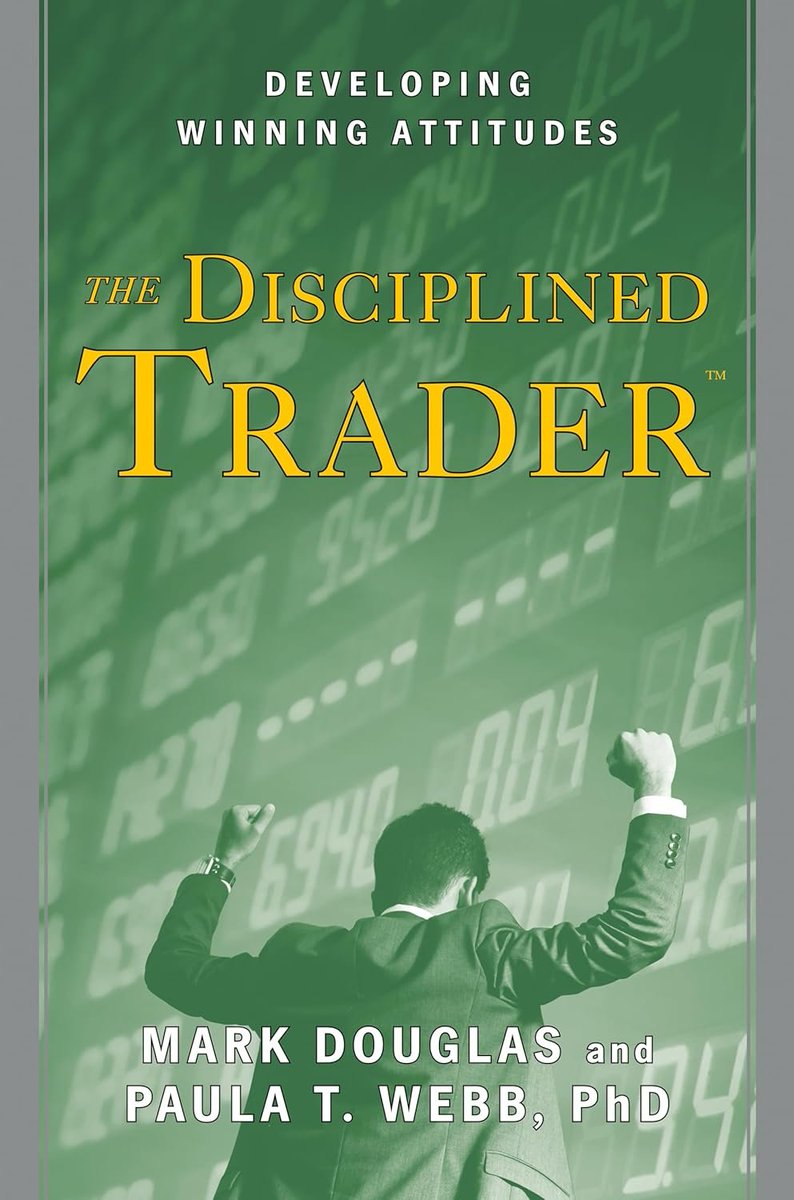
Mark Douglas figured out how to rewire your trading psychology
Here are his 10 insights 🧵
1/ There's a concept known as financial compounding, but most people don't know about intellectual compounding. Buffett and Munger employed this to great effect and to accumulate mental models such that they can make large decisions quickly. Intuition is simply reading a lot.
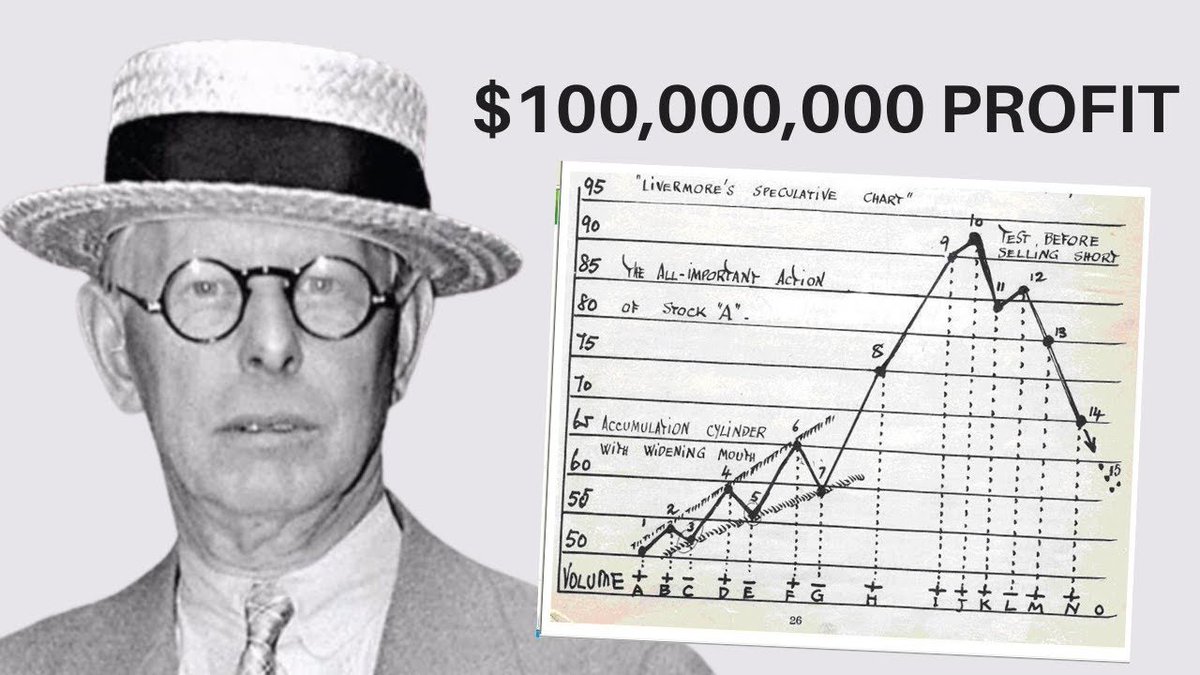
Jesse Livermore’s 12 Risk Management Rules
1. Never average a losing position
Averaging down is how small losses become fatal ones.
2. Always use a stop loss
A trade without a stop is a bet without limits.
3. Cut losses quickly
Losses must be taken immediately, without debate.
4. Let winners run
Big money comes from a few big winners, not many small ones.
5. Trade only when the market confirms your idea
Your opinion means nothing until price agrees.
6. Never trade on hope
Hope is not a strategy — it is a confession of being wrong.
7. Risk only a small portion of capital on any trade
Survival comes before profit.
8. Trade with the primary trend
Fighting the trend is the fastest way to ruin.
9. Sit tight when you are right
Impatience kills profits more than bad entries.
10. Stay out of the market when conditions are unclear
No position is a position.
11. Increase size only when winning
Pyramiding works only in your favor — never against you.
12. Protect capital above all else
You can’t recover if you’re wiped out.
Every rule was paid for in losses, pain, and blown accounts.
Keep it slow and steady. It's not a fucking race.
Whilst I know (as I’m sure you do too) that change doesn’t need to be implemented on the first day of a New Year, or your birthday, or the beginning of the week (ad infinitum), there is still something satisfying about beginning during what feels like a logical transition point.
The New Year is perfect for this, but so many people make resolutions and don’t keep to them.
One of the things I’ve found most useful over the years is learning to push myself while also being forgiving. This has been especially important for me as someone who deals with a cocktail of difficulties, including ADHD (where focus can come and then completely go), perfectionist tendencies, and an all-or-nothing mindset.
Remember, almost all of us have issues that we may see as an impediment to our progress. Some of us feel that not having enough capital holds us back. Some of us might have enough capital but have health-related issues that hold us back and make it harder to cope with day-to-day life as easily as others. Still others have none of these issues but perhaps have time constraints due to personal commitments (family and a 9–5 can be a big one). The issues we can face are endless.
But it’s also important to remember that whilst you may feel you have disadvantages compared to the next person, you almost always have advantages over them too, even if you’re not sure exactly what they are.
Maybe you have discipline where they lack it. Maybe you have a support network where they are isolated. Maybe you simply have more drive.
You won’t always know what your edge is over the next person because most people aren’t transparent about themselves and their lives, but I promise you this is true.
You’re never as behind as you think, and you’re never as alone as it feels.
So, to perform better in 2026, you need to think about working to your strengths and coming up with solutions to combat perceived weaknesses.
Brainstorm problems, decide on simple solutions, and go slowly. The adage of becoming 1% better every day is powerful.
You don’t need to do everything perfectly. You just need to do some things a little better than you are doing them already. But be forgiving with yourself. And remember that even when things are going well, refinement still matters.
I’ve often used blunt language as a form of tough love to try and motivate people. But the downside of that is that if you take this name-calling too seriously, you can end up being too judgmental of yourself and possibly hindering your progress.
Allow yourself to be human. We make emotional decisions. We make mistakes. This is fine. The aim is not to never make a mistake, the aim is to make mistakes and learn from them so you don’t end up repeating them over and over again.
So go into this year with intention, patience, and self-respect. Do a few things slightly better than last year, consistently.
I wish you all a healthy, happy, focused, and profitable 2026.