"I don't prompt Claude anymore. I have loops running. My job is to write loops."
That's what Boris Cherny, the person who built Claude Code, said.
So what is he actually doing?
Read an article with the clearest explanation of what this actually means.
A spreadsheet full of contacts is not a pipeline.
Here's how to build a free B2B lead machine in n8n that actually detects buying intent not just company names:
→ monitor hiring signals
→ enrich company context
→ score and qualify automatically
→ route to Sheets or CRM
Two Anthropic engineers have just revealed in 24 minutes all the hidden Claude features that almost nobody knows about.
This video is going to completely change the way you use AI.
Watch it and save it.
Everyone talks about agent memory.
This article made me think the real problem is retrieval.
Giving agents more context often makes them worse if they can't find the right information at the right time.
The best AI systems know what to retrieve and what to trust.
Anthropic just updated Claude Design.
It now checks its own work against your design system before showing it to you, not after.
Import your repo or codebase, and it builds with your real components instead of guessing.
Anyone tested this yet?
Link - https://t.co/RtMEx1FS8P
Everyone talks about AI agents.
One of the best explanations of AI agents I've read recently.
But has anyone built a lead gen agent that actually works?
Finding leads, personalizing outreach, and booking meetings automatically.
What's your stack?
Most founders don’t fail because of product. They fail because distribution is slow.
Outbound is still one of the fastest ways to grow. But the workflow is messy:
→ Research companies
→ Find decision makers
→ Write personalized emails
→ Build sequences
→Track replies
That’s hours of manual work before a single conversation happens.
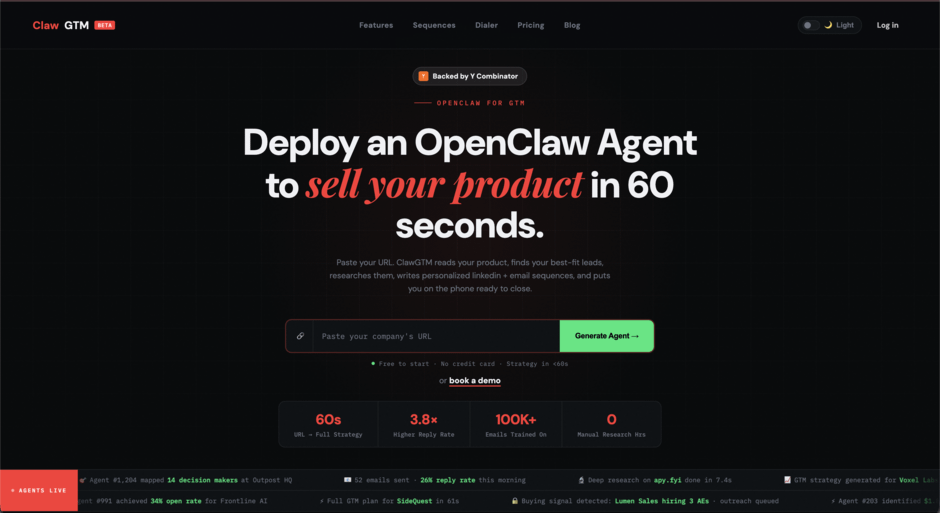
Tools like ClawGTM are trying to change that.
You give it your website. It tries to understand your product, identify companies likely to need it, find the right people, and generate personalized outreach.
The idea is simple:
Turn outbound into an automated GTM workflow.
We’re seeing a shift from “sales tools” to AI GTM agents.
Instead of helping you do the work faster, they try to run the process end-to-end.
It's still early. Data quality, personalization, and deliverability will decide whether these tools actually work.
But the direction is clear. GTM is slowly becoming a software problem.
Link : https://t.co/XbUt01F5X5
🚨 BREAKING: Someone just turned OpenClaw into an autonomous sales agent
It's called Claw GTM.
Paste your website and it builds your outbound pipeline automatically.
I tried it this morning.
From one URL, it:
→ mapped my ideal customer profile
→ found 47 companies with buying signals
→ researched each account automatically
→ generated personalized email + LinkedIn outreach
No prospecting. No spreadsheets. No generic outreach.
Here's why this is interesting:
→ most outbound tools rely on static lead lists
→ Claw scans millions of job posts for buying signals
→ it surfaces companies actively hiring for the problem you solve
Meaning you're reaching companies already investing in your category.
Here's the wildest part:
It starts with just your website URL.
Claw reads your product, pricing, and positioning and builds your entire GTM strategy automatically.
Paste URL → get your first outbound pipeline in about a minute.
Link in the comments
Claude Code is rolling out voice mode to a small set of users.
The feature lets you mix typing and speaking in the same prompt.
You can type part of your instruction, then hold to talk and complete your thought.
The voice input is transcribed into text. It also does not count against usage rate limits.
Instead of carefully drafting every line, you can think out loud and iterate faster. Coding becomes more conversational now.
Voice mode is rolling out now in Claude Code. It’s live for ~5% of users today, and will be ramping through the coming weeks.
You'll see a note on the welcome screen once you have access. /voice to toggle it on!
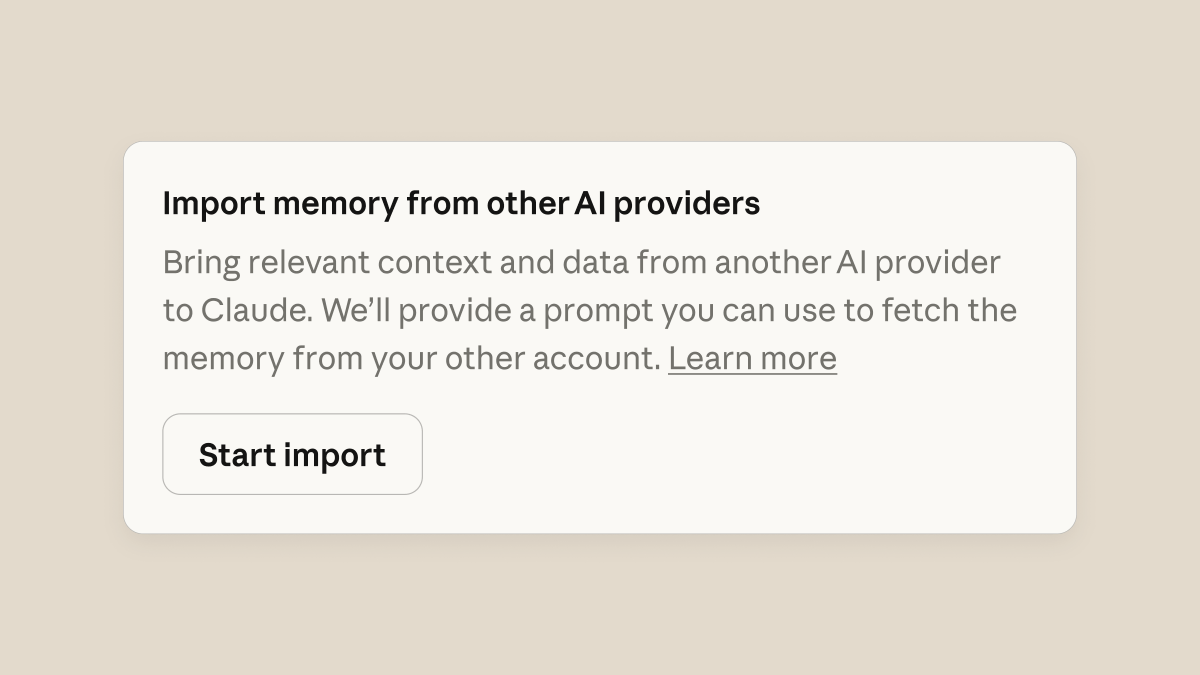
Claude now lets you import memory from other tools.
instead of losing context every time you switch. Now you can bring saved memories, preferences, and projects into Claude.
So starting a new conversation doesn’t feel like a reset; you can continue the conversation with previous tool memory.
This feels like a subtle shift.
Read here : https://t.co/1tFjF54YrX
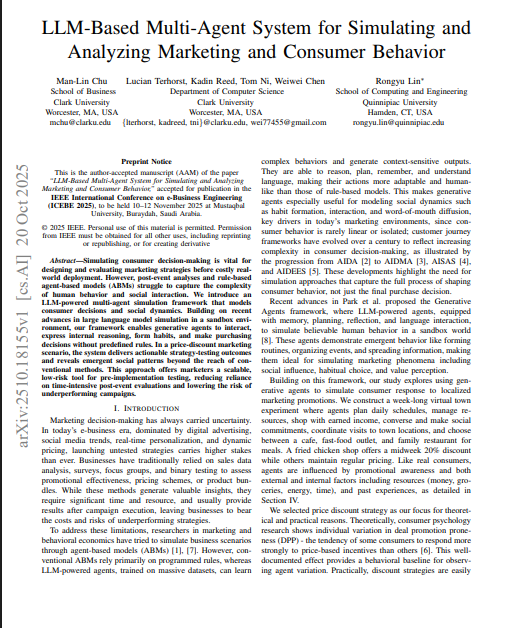
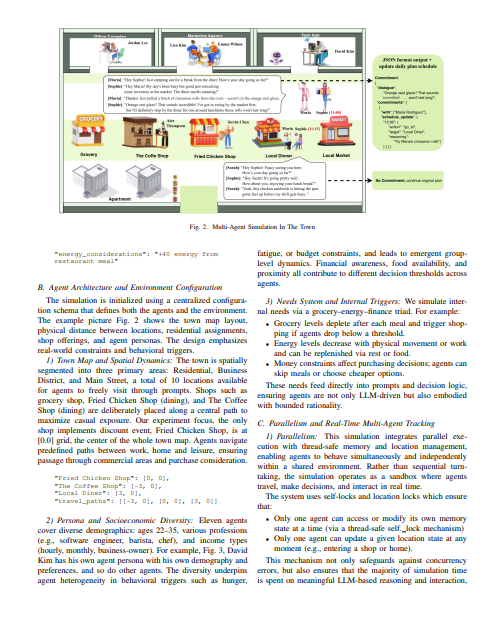
This paper explores using LLM agents to simulate consumer behavior inside a virtual market.
Instead of relying on rule-based economic models, it builds agents with memory, budgets, routines, and social interaction.
The system creates a synthetic town where these agents make purchasing decisions over time.
When a 20% discount was introduced, the results weren’t just higher sales.
→ Consumers switched brands.
→ Loyalty patterns emerged.
→ Market share shifted gradually through social influence.
The key point is that they can simulate structured behavioral dynamics.
This reframes LLMs from content generators to experimental environments.
Testing strategy inside synthetic markets might become as important as running real campaigns.
Research Paper - "LLM-Based Multi-Agent System for Simulating and Analyzing Marketing and Consumer Behavior"
Google Labs Updates Pomelli with “Photoshoot” Feature.
Google Labs has released a new update for Pomelli, introducing “Photoshoot” a feature that lets you generate marketing visuals from a single product image and instantly produce tailored copy and assets.
This enhancement is designed to speed up visual content creation and streamline go-to-market workflows.
Today, we’re introducing Pomelli’s latest feature update, ‘Photoshoot’
With Photoshoot, you can start from a single image of your product and easily create high quality, customized product shots to elevate your marketing.
Available free of charge in the US, Canada, Australia & New Zealand! Get started with Pomelli today at https://t.co/SbeT00ToNx
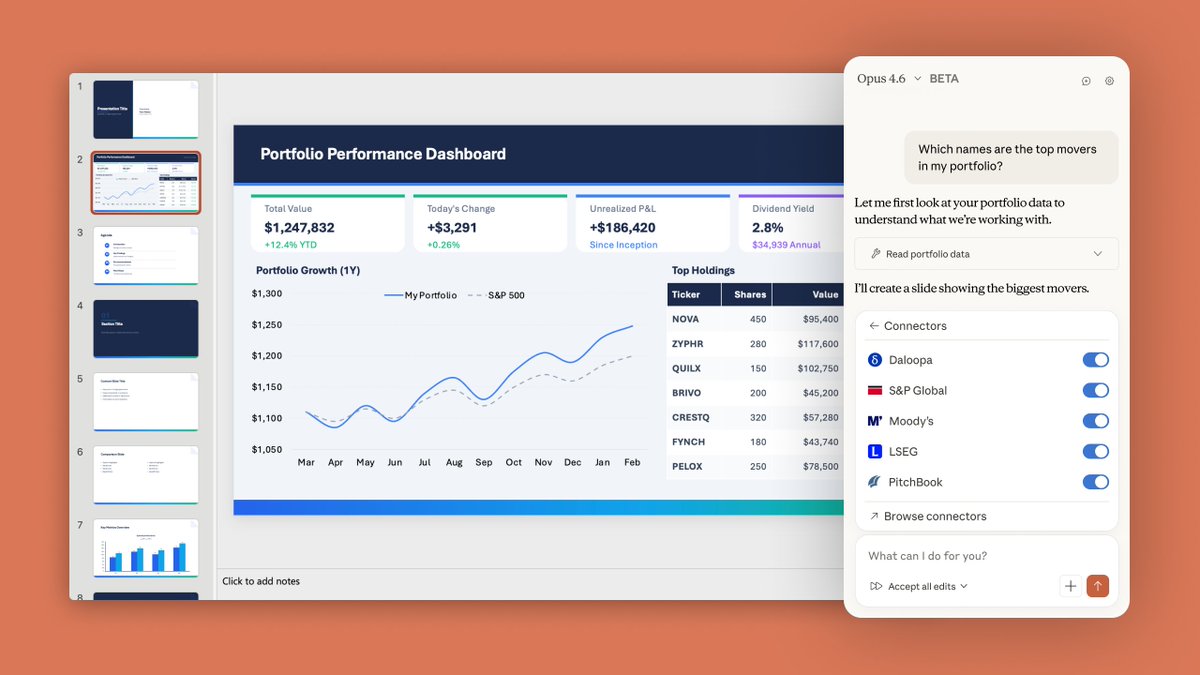
Claude in PowerPoint Now Available on Pro Plan .
Claude is now integrated directly into PowerPoint, enabling AI powered assistance while building slides.
It also adds connectors that bring context from your daily tools straight into your presentations.
This update helps professionals work smarter by merging AI insights with slide creation and real time data from other apps.
Claude in PowerPoint is now available on the Pro plan.
It also now supports connectors, bringing context from your daily tools directly into your slides.
Try it here: https://t.co/N52VtGwcPj
OpenAI just introduced EVMbench, a benchmark designed to evaluate how well models understand and reason about Ethereum Virtual Machine (EVM) bytecode.
Most model evaluations focus on natural language or high level code. EVM is low-level and stack-based, and it is optimized for execution; reasoning about it requires precision.
EVMbench tests whether models can:
→ Interpret compiled smart contract logic
→ Track stack state across operations
→ Identify vulnerabilities and execution flows
→ Perform structured reasoning under strict constraints
Why this is important:
Smart contract security depends on accurate bytecode analysis. If models are going to assist in audits, verification, or automated reasoning in blockchain systems, they must handle raw execution logic, not just source code.
Benchmarks shape capability.
EVMbench pushes evaluation closer to real world constraints in Web3 infrastructure.
Link: https://t.co/VLE4CMgdbW
Introducing EVMbench—a new benchmark that measures how well AI agents can detect, exploit, and patch high-severity smart contract vulnerabilities. https://t.co/op5zufgAGH
NotebookLM just moved one layer closer to the actual workflow.
It now generates slides you can edit and export as real presentation files.
That shift matters. Most AI tools stop at synthesis. The real friction starts when you have to turn insight into something shareable: a deck, a doc, a deliverable.
By stepping into slide creation and iteration, NotebookLM is moving from research assistant to output engine.
Now AI tools are starting to own the artifact, not just the thinking behind it.
Because you wouldn’t let it slide… these are rolling out today for our most requested feature:
Prompt-Based Revisions: Tweak, tailor, and tune your slides just by prompting the revisions you want
PPTX Support: You can now export your Slide Decks (Google Slides coming next!)
OpenClaw’s latest update about consolidation.
The CLI, package naming, and extension structure were unified under one namespace.
Legacy configs are auto-migrated. State handling is normalized, and security hardening is ongoing.
That tells me the project is shifting from experimentation to infrastructure.
When agents touch local files and shells, small inconsistencies become real risks.
The real signal is that AI agent tooling is entering its systems phase.
Stability is starting to matter more than speed.
Link -
https://t.co/8EffA5rlYs
OpenClaw’s latest update about consolidation.
The CLI, package naming, and extension structure were unified under one namespace.
Legacy configs are auto-migrated. State handling is normalized, and security hardening is ongoing.
That tells me the project is shifting from experimentation to infrastructure.
When agents touch local files and shells, small inconsistencies become real risks.
The real signal is that AI agent tooling is entering its systems phase.
Stability is starting to matter more than speed.
Link - https://t.co/8EffA5rlYs
Manus just brought its AI agents to Telegram. This is a practical step forward.
You’re no longer opening a separate app to run complex tasks. Your agent now lives where your conversations already happen.
It’s the same full power Manus:
→ Multi-step reasoning
→ File handling
→ Voice + image understanding
→ Structured outputs (reports, PDFs, research)
There is no need for setup friction, API keys, or technical overhead. More importantly, it keeps continuity, remembers context, and executes across steps.
It integrates with Gmail, Calendar, Notion, and more.
The shift is clear: AI is moving from reactive assistance to persistent, connected execution.
Not just answering prompts, it's operating with context.