My company (Orion) is on track to cross $100M in revenue in 2027.
It only exists, because my last company (Fanfix) destroyed my health.
Building Fanfix was the most intense period of my life.
I went 400 days without a day off.
Every meal I ate came out of an Uber Eats bag. I worked 7 days a week and slept 5 hours a night.
Then life decided to humble me (for the better).
I got an inner ear condition that gave me vertigo.
Overnight, I became incapable of working.
My company was doing $120m revenue a year, but getting out of bed was a struggle.
As someone with 0 hobbies, I felt completely lost.
My health basically forced me to put my life on pause.
So I did what everyone seems to do nowadays and bought my first health tracker.
First a Whoop, then an Oura ring.
Every morning they told me the same thing: “your sleep is shit”
So, now what?
I was paying a monthly fee just to feel guilty. It was frustrating.
That’s why I decided to go and see Dr. Michael Breus, one of the world's leading sleep experts.
He explained to me that body temperature is the most controllable variable in sleep quality.
That single conversation changed everything and brought back the fire I had with Fanfix.
I was hooked. The science of sleep fascinated me.
Who knew body temperature could improve sleep by up to 70% overnight?
Everyone was being brainwashed into buying things that didn’t actually improve their health.
So I decided to build something that could.
Orion is a mattress cover that cools or heats each side, tracks your heart rate, breathing and sleep stages, and adjusts your body to its ideal temperature.
We launched in January.
And here’s where we are now:
> $50M+ in revenue
> 200M+ minutes of sleep delivered
> 2M+ hours of deep and REM sleep
> On track to cross $100M in the next 12 months
Some of the most popular Super Bowl winners, NBA champions, Olympic gold medalists, $100 billion founders and Navy SEALs refuse to sleep in beds without Orion.
Oh and btw Orion doesn’t need a subscription (I personally hate subscriptions).
I already had my exit, and my co-founders bootstrapped their last company to a $1.04B acquisition.
Money doesn’t excite us anymore. We’re building this because we are incredibly passionate about sleep and longevity.
Humanity has already put a man on the moon and now we even have flying cars (thanks Elon), but at the end of the day we all have to sleep for 8 hours a night to function.
Our goal is to increase the total number of minutes the world sleeps.
200 Million minutes of sleep have been successfully delivered by Orion so far.
To celebrate that, I’m giving away 5 Orions.
Reply with your bed size and I’ll ship them this week.
Starting today we are launching conference calls with Fo.
Fo, the only agent to make AI calls at scale, gets hung up on, more than we’d like. Sometimes because the health care clinic needs customers on the line, the bank changed a policy, the insurance broker wants a verification.. sometimes because our human EA wasn’t enough.
Fo doesn't hang up anymore. When it hears "we can't do this with AI," it adds you to the call. You say your part, and Fo does the rest. It only pulls you in when the business insists on you.
We have been silently live for a few weeks now. Fo has already brought the user in and unblocked calls at
- the doctor's offices that won't book through AI
- the bank asking for the account holder
- the insurer that needs your consent
Live today. Sign up for free: https://t.co/9ndFhcN5mO
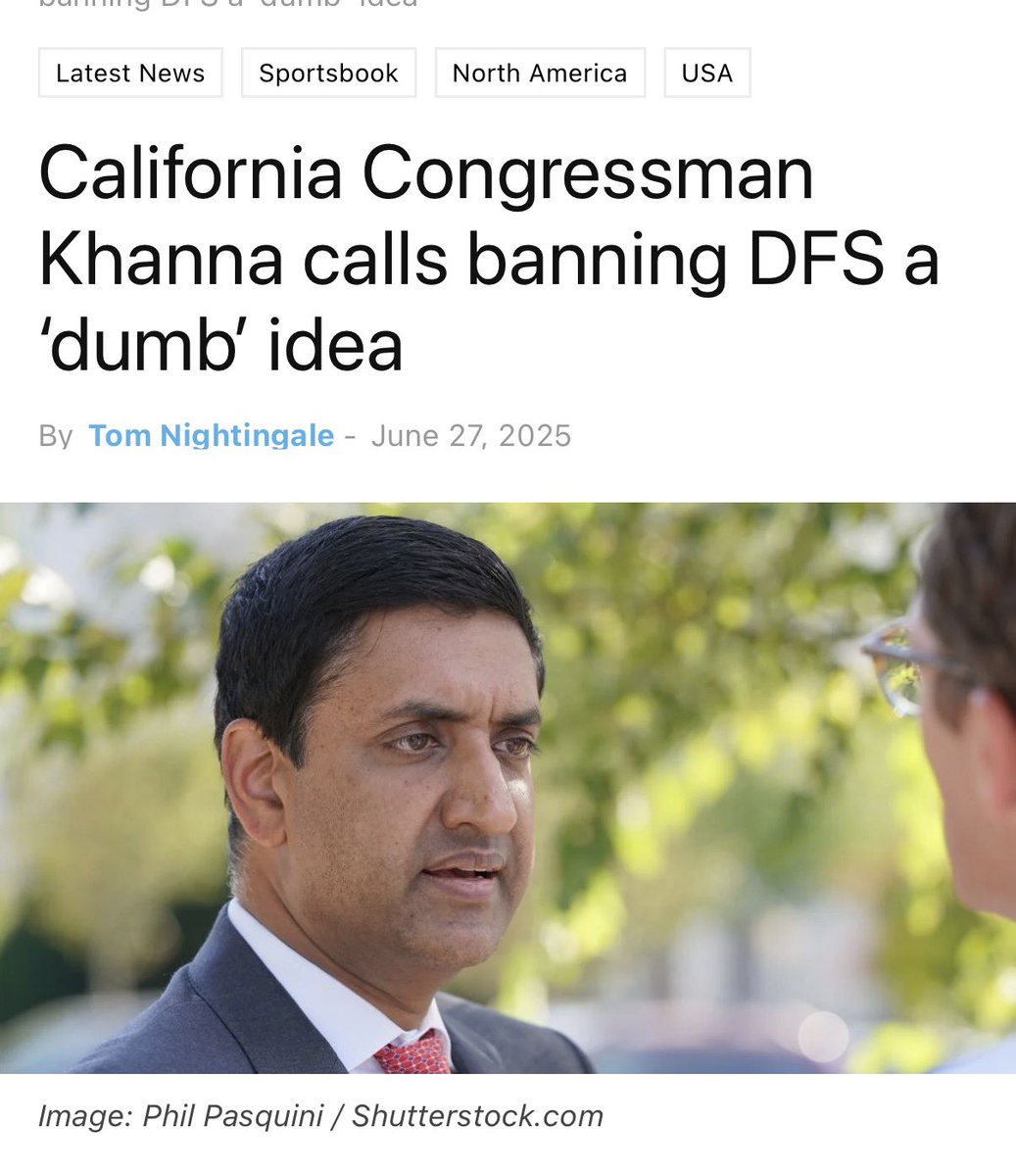
In June 2025, California Democrat Ro Khanna called efforts to ban daily fantasy sports a “dumb idea.”
He criticized his own party for pushing restrictions on fantasy sports while spending millions trying to understand why Democrats are losing support among young men.
His message was simple: You can’t keep banning activities people enjoy and then wonder why they’re turning away from your party.
Fast forward to today, and Khanna is railing against prediction markets.
Why doesn’t his own argument apply here?
Introducing Higgsfield GPU Harness.
Rent on-demand GPUs in Claude and ChatGPT to render, run open-weight models and train LoRAs.
Let several AI agents work on your professional apps in the cloud at once, from any device.
Black Friday deal, live now: get GPUs at up to 64% OFF.
Illinois collected more than $2.6 BILLION in gambling revenue last year.
Less than 0.1% went toward treating gambling addiction.
Now, an internal report prepared for Gov. Pritzker’s office says those revenues are “structurally dependent” on vulnerable populations.
The state previously estimated 1.1 million residents had a gambling problem or were at risk of developing one. The report says that number is likely higher today.
Meanwhile:
• Specialized counselors are in short supply.
• People seeking treatment face long waits.
• Nearly 50,000 slot machines remain outside the state’s self-exclusion program.
• Thousands more could arrive in Chicago.
Illinois has a financial incentive to keep the revenue growing and a responsibility to protect the people generating it.
Collecting billions while directing less than one-tenth of one percent toward treatment raises a fair question:
How much of the state’s approach is about protecting consumers, and how much is about protecting revenue?