@XRP will skyrocket soon @Ripple is up to something big. This is in New York City 42nd street train station even inside of the train everything XRP. Like @RosieRios said the train has left the station. @MTA even knows its just like @bgarlinghouse said XRP is the North Star.
🚨 $HBAR’S FULL STACK IS AVAILABLE THROUGH A BANKING INFRASTRUCTURE GIANT
Taurus now supports $HBAR custody and staking, token issuance and smart-contract deployment on one platform.
Its technology serves more than 40 banks and regulated firms, including Deutsche Bank and State Street.
The integration gives institutions a single-provider route to building tokenized products on Hedera.
‼️ IN CASE YOU MISSED IT: THE UNITED NATIONS CONFIRMED RIPPLE AND STELLAR’S ROLE IN THE NEW FINANCIAL SYSTEM ‼️
This clip comes from a United Nations Capital Development Fund webinar.🙇♂️
They describe an open and regulated payment internetwork that allows payments to anyone, anywhere, on any network, emphasizing interoperability.🌐
Ripple and Stellar are directly mentioned and clearly shown in the international payments diagram as central parts of the global payments network.✅
Watch closely.😶🌫️👇
Batch feature is now LIVE !!
Major props to all the engineers and validators to get this over the finish line.
Its a massively important functionality for the XRP Ledger to allow crucial use cases for institutions and also retail builders.
Think of OTC trades, DvP, NFT for NFT swap, trustless transaction execution dependencies and so much more.
The use cases creativity has no limits here.
Big unlock folks.
Probably Nothing 😳
By passing batch transactions, the $XRP Ledger has effectively adapted its software to match the exact requirements of Hidden Road's #DTCC broker mandate. The connections 👇🏼
With broker code 0443 designated specifically for OTC trades, Hidden Road can now efficiently act as a primary institutional gateway.
For example: when two major Wall Street institutions execute an OTC contract through Hidden Road, Ripple Prime can now use the XRPL's XLS-56 batch framework to settle that trade atomically on-chain.
The security leg and the payment leg can be grouped into a single cryptographic batch (up to 8 transactions), matching the settlement instructions submitted under their DTCC credentials ✅️
This is BIG news my bro's.
⚠️ ESTA NOCHE CAMBIA XRP LEDGER.
A las 23:25 🇪🇸 está prevista la activación de PermissionDelegationV1_1.
Parece técnico, pero mira lo que permite:
🏦 Un banco puede autorizar operaciones
🔐 SIN entregar sus claves
👥 Separar funciones entre distintas cuentas
⚙️ Delegar pagos y tareas operativas concretas
Y mañana llega otra pieza: BATCH.
Hasta 8 transacciones podrán agruparse para ejecutarse como una sola operación.
No garantiza que XRP suba.
Pero XRPL está incorporando exactamente el tipo de controles que necesita una infraestructura utilizada por INSTITUCIONES.
La pregunta es: ¿para quién están preparando todo esto? 👀
#XRP #XRPL
Individual reporting establishes each victim’s record. The next challenge is connecting what those individual records may reveal collectively.
If multiple D’CENT victims are willing to participate, XRPD is reviewing how we can help correlate the on-chain evidence across cases while keeping each victim’s individual case intact.
Shared destination wallets, convergence points, intermediary addresses, exchanges/services, timing and cross-chain movement may reveal patterns that are difficult to see when every case is examined in isolation.
Keep doing what you’re doing here. We’d like to connect with you directly as we evaluate this.
This is exactly the problem. The numbers keep growing, victims are coming forward across multiple countries and multiple blockchains, yet we still don’t have a complete forensic report, confirmed total losses, insurance disclosure or a reimbursement plan from D’CENT/IoTrust. At what point does silence become unacceptable? Victims deserve answers.
🚨 D’CENT GLOBAL UPDATE — OCTOBER 4, 2026
🇺🇸 UNITED STATES • 🇰🇷 SOUTH KOREA • 🇪🇸 SPAIN • 🇮🇹 ITALY • 🇫🇷 FRANCE • 🇳🇱 NETHERLANDS / AMSTERDAM • 🌎
AND MORE
XRP • BTC • ETH • XLM • TRX • USDT
This is NOT just an XRP story anymore.
The latest independent on-chain analysis has now traced:
🔥 12,402,589 XRP
🔥 7,393 XRPL wallets/accounts
🔥 6,095 XRPL accounts deleted
🔥 Approximately 6.3 MILLION XRP moved/swapped onto Ethereum through THORChain
And the incident has spread beyond XRP, with Bitcoin, Ethereum, TRON and Stellar/XLM also reported among affected assets.
Victims and community members are reporting losses internationally — including the United States, South Korea and across Europe.
Yet we STILL do not have an official worldwide accounting from D’CENT telling the public:
How many PEOPLE were affected?
How many COUNTRIES?
How much BTC?
How much ETH?
How much XLM?
How much TRX and USDT?
What is the TOTAL dollar loss across every blockchain?
The 12.4 MILLION XRP is only the portion researchers have been able to quantify on the XRP Ledger.
So how big is this incident REALLY?
Every day the blockchain investigators uncover more while victims continue waiting for D’CENT to provide a complete accounting, forensic explanation and a clear answer about insurance and reimbursement.
7,393 XRP wallets/accounts — and counting.
Multiple blockchains.
Victims around the world.
D’CENT: RELEASE THE FULL NUMBERS.
#DCENT #DCENTWallet #XRP #Bitcoin #BTC #Ethereum #ETH #XLM #Stellar #TRON #TRX #USDT #CryptoSecurity #CryptoHack #XRPCommunity
This is exactly the problem. The numbers keep growing, victims are coming forward across multiple countries and multiple blockchains, yet we still don’t have a complete forensic report, confirmed total losses, insurance disclosure or a reimbursement plan from D’CENT/IoTrust. At what point does silence become unacceptable? Victims deserve answers.
@JW_WWJD@DCENTWALLETS i feel @Decent needs to do a full Audit on all the wallet, cos thats crazy, If coins just disappear from wallet thats Fraud Period....Think best not to close old wallets that have been hacked as back up in case this is true?
4 DAYS UNTIL EVERNORTH HITS NASDAQ
Evernorth is expected to begin trading on Nasdaq under $XRPN on October 8.
At closing, the company expects to hold approximately 473 MILLION XRP.
Wall Street is getting another gateway to the XRP ecosystem.
The countdown is on. ⏳
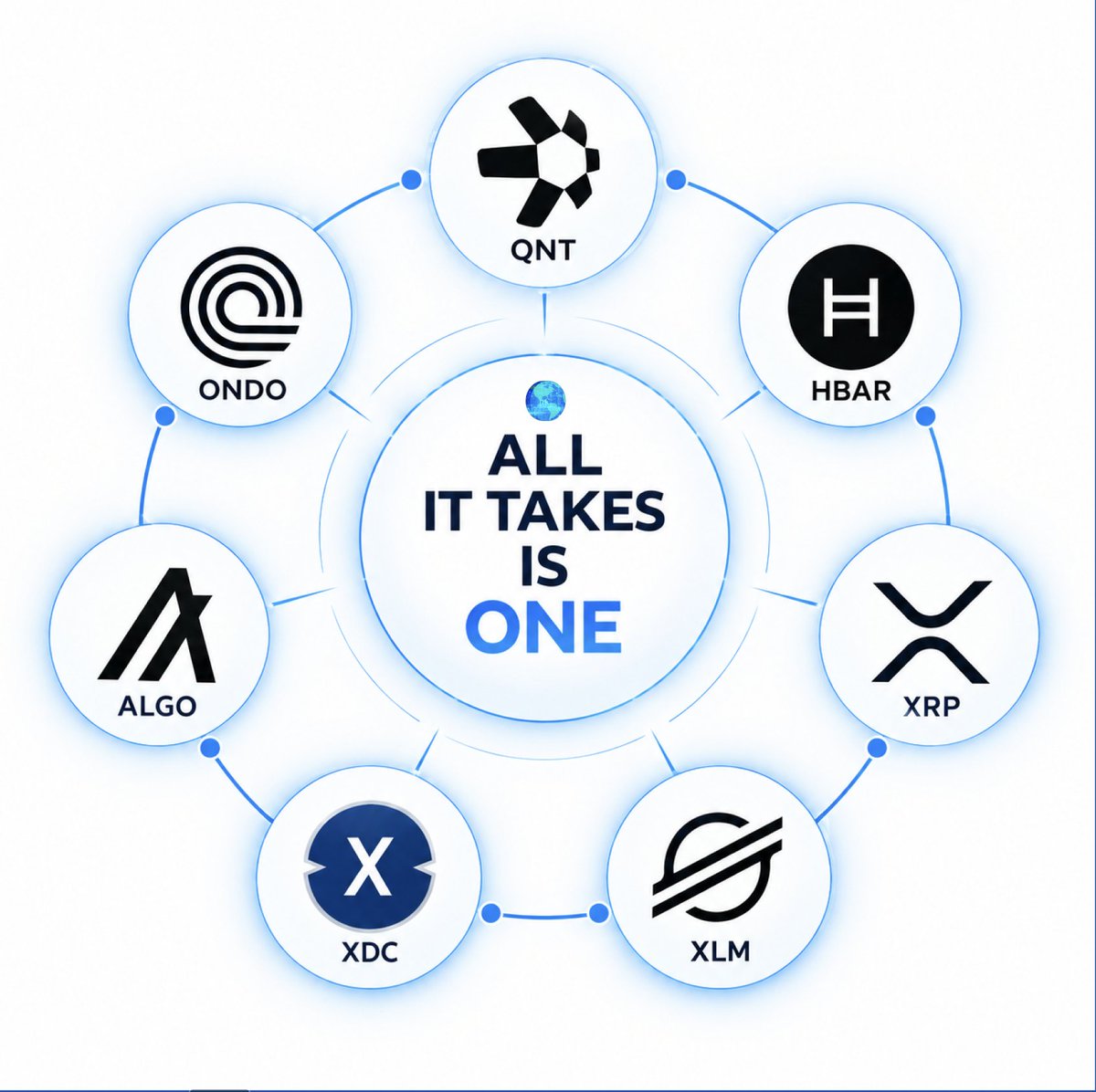
All it takes is ONE
Whether it’s
QNT
HBAR
XRP
XLM
XDC
ALGO
ONDO
Or whatever else Enterprise DLT
I’m not saying just hold one
Quite the opposite actually
What I’m saying is that if even ONE of these make it to where they’re predicted…
The outcome of the rest won’t matter
Look at what these DLTs are aiming to accomplish in the long run
Quant is looking to connect trillions in banking infrastructure across legacy and DLT
Hedera is looking to be the trust layer for institutions across AI, payments, tokenization, & more
Ripple is looking to be the settlement backbone of cross border interbanking with XRP as the bridge
Stellar is looking to redefine how we transact digital payments and remittances globally
XDC Network is looking to close the multi trillion dollar trade finance gap and bring global trade on-chain
Algorand is looking to serve as the real world utility layer, across various industries in public & private sector
Ondo is tokenizing trillions in financial market value with the biggest institutions on Earth.
And obviously, it's not just these projects,
But there's a slight handful of others that are building inline with this direction recognized by the same leaders over and over.
That's not a coincidence.
All of these DLTs are looking towards targets and goals that are in the trillions if not more of market value.
All you need is for one of them to get it right
Do I believe it'll ONLY be one project which gets it right in the long run?
Absolutely not, I think many of these projects here and some not listed with accomplish their goals
But the risk is so asymmetric it's crazy.
Think about it
Say you spread across 6 of these
5 of them go nowhere
1 captures even a few % of the market it's after...
That one alone can outweigh everything else & more.
The downside is capped at what you put in
The upside isn't capped at all
That's the asymmetry
That's also partially why I don't marry 1 project
I'm not betting on a single winner
I'm betting on the thesis
That enterprise & institutional adoption of DLT's coming
And these are the networks building the rails for it
Years ago you could argue it was speculation
But just zoom out and put the puzzle pieces together to what we've seen in aggregate since.
You don't need to pick the winner
You just need to be positioned when one shows up
All it takes is ONE
🚨 THE D’CENT WALLET INCIDENT JUST KEEPS GETTING WILDER — AND IT’S STILL GOING ON.
99,999,999,999.999999 XRP.
Nearly $144 BILLION displayed.
Status: CONFIRMED.
No — I’m not claiming $144 billion was stolen. But this is yet another bizarre transaction display that deserves a technical explanation.
And here’s the part people need to understand:
THIS ISN’T JUST AN OLD STORY. AFFECTED USERS ARE STILL REPORTING ACTIVITY.
So what exactly are we looking at here? Part of the attack activity? A transaction being incorrectly interpreted by the app? A serious display failure?
D’CENT / IoTrust — where is the explanation?
Users deserve more than silence and generic responses.
The questions are piling up. The answers aren’t.