‘We’ve Never Seen Anything Like This Before:’ Black Hole Spews Out Material Years After Shredding Star | Center for Astrophysics https://t.co/fYr9WRpv2W
The amazing view of NASA DART spacecraft impacting on the asteroid moonlet Dimorphos captured by the ATLAS telescope in South Africa
[read more: https://t.co/gwawZk5due, https://t.co/0QQH3SKL9Z]
https://t.co/7OuGFYspse
Stargazers: Jupiter will make its closest approach to Earth in 59 years! Weather-permitting, expect excellent views on Sept. 26. A good pair of binoculars should be enough to catch some details; you’ll need a large telescope to see the Great Red Spot. https://t.co/qD5OiZX6ld
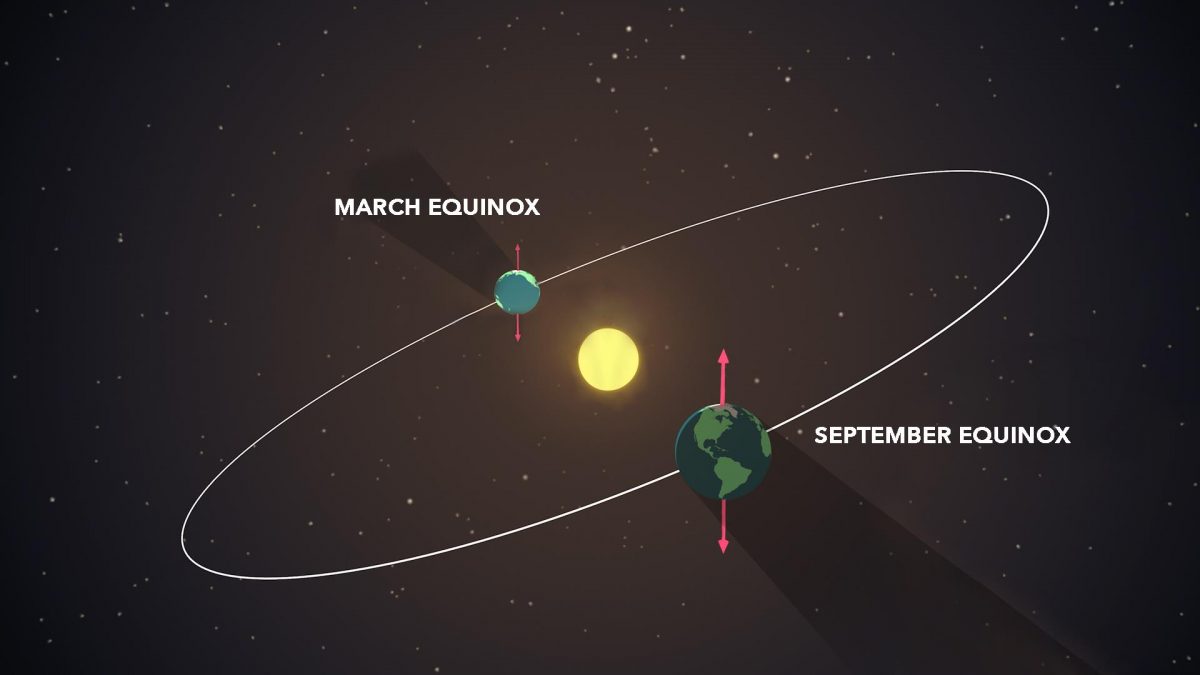
🍁 Cooler temperatures & falling leaves
It’s the first day of Fall in the Northern Hemisphere. Today marks the September equinox – a day when the Sun shines directly over the equator resulting in nearly equal amounts of day & night throughout the world.
https://t.co/AHwDReZXJK
Listen to a butterfly🦋
@NASAHubble's light data from the Butterfly Nebula sings when we convert it to sound! The nebula is played on strings and synthetic tones, while stars are represented by digital harp. A dying star never sounded so sweet.
R Aquarii: As a white dwarf star & red giant star orbit each other, the white dwarf pulls material from the red giant onto its surface. Over time, enough material accumulates that it triggers an explosion. The spectacular structures seen here are the result of past explosions.
Háganse el favor de abrir esta imagen en pantalla completa y hacer zoom...
Ese era el universo hace 4600 millones de años. Los filamentos alargados son luz cuyo camino ha sido torcido por la gravedad de galaxias más cercanas, es un lente gravitacional.
https://t.co/cr48QEG3P2
This is why Neutron Stars are always my favorite🤩…. “With the same relative size, if the filament stretched from New York to Los Angeles the pulsar would be about 100 times smaller than the tiniest object visible to the naked eye."
In 1972, Apollo 17 astronauts collected rocks and dust on the Moon. NASA preserved some of the samples for future study with more advanced technology.
That time has arrived. Join us today as we discuss what we can learn from this lunar time capsule.
https://t.co/Sr1bgQTRoJ