عاجل
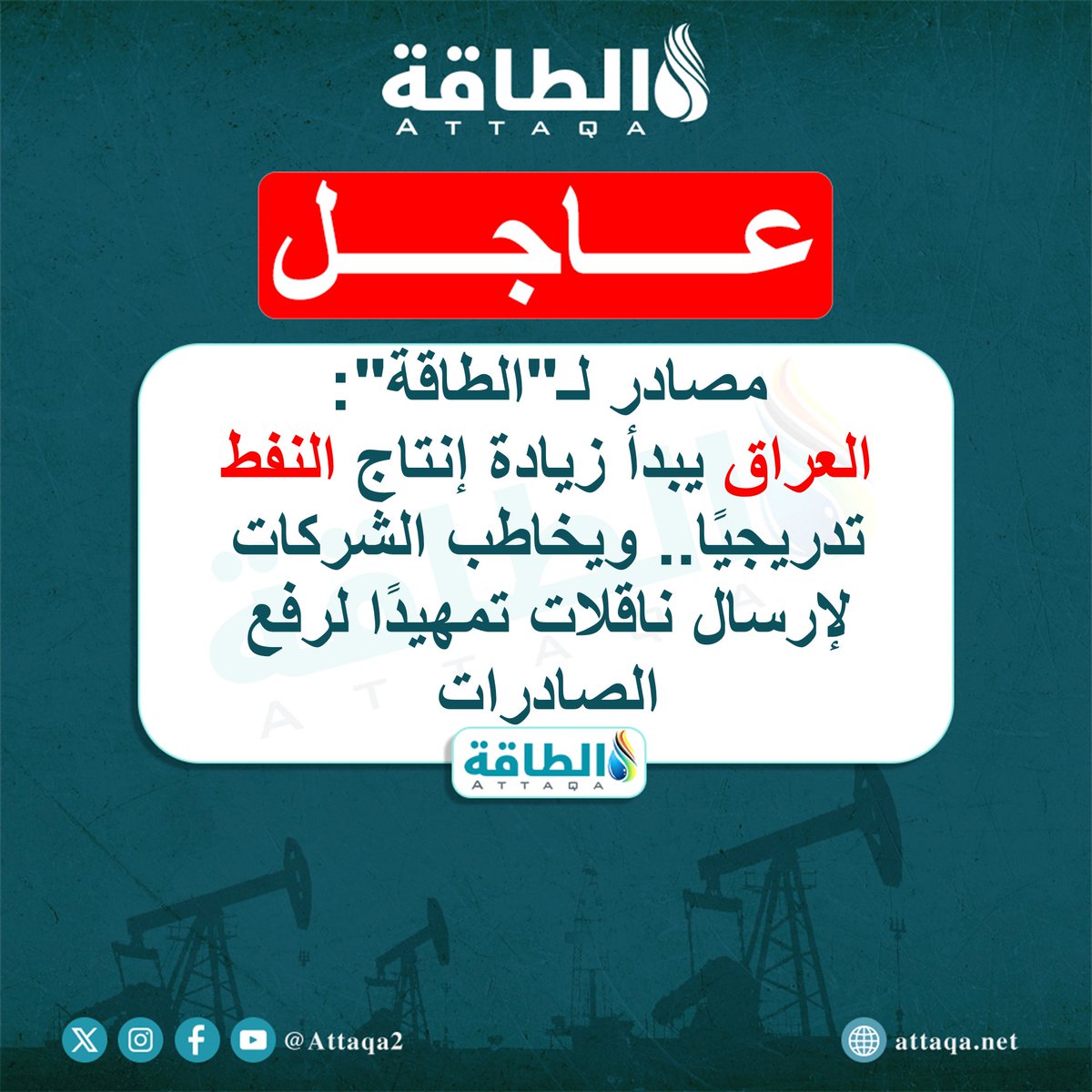
مصادر لـ"الطاقة":
العراق يبدأ زيادة إنتاج النفط تدريجيًا.. ويخاطب الشركات لإرسال ناقلات تمهيدًا لرفع الصادرات
- مصادر: يمكننا عودة الإنتاج لمستوى ما قبل الحرب خلال 3 أسابيع من توقيع اتفاق وقف الحرب
#العراق#النفط#حرب_إيران
Japan manager Hajime Moriyasu was in tears listening to their national anthem at the World Cup. One of our favourite photos from the tournament so far ❤️
@doraid_abdullah في حال قرر العراق مستقبلًا تنويع منافذ تصدير النفط، فأيّهما يُعد خيارًا أفضل التوجّه نحو السعودية والأردن عبر البحر الأحمر، أم نحو سوريا عبر البحر الأبيض المتوسط؟
وهل توجد سيولة مالية لتنفيذ منفذ واحد أو اكثر ؟
@CallMeKulubya Global oil production is about 102–105 MMbpd, but not all is traded. Physical oil trade is only 40–50 MMbpd, so flows through the Strait of Hormuz represent roughly 40%–50% of the traded market.
@_ChikkenTikka@FirstSquawk force majeure is declared only in fields operated by foreign companies, while national companies continue production to meet domestic demand and export limited quantities through the northern outlet.
@BreizhLondon@JavierBlas@jacopogio Yes, it was named this way because of the abundance of oil there, as oil literally flowed to the surface. Unfortunately, the field has not been fully developed. The initial development plan aimed to raise production to 1.8 MMbpd, but it was later reduced to about 450 kbpd.
#Iraq may be the single biggest economic casualty of the Hormuz crisis.
While Arab Gulf producers can reroute some exports (#SaudiArabia, #UAE), rely on storage and deep pockets (#Kuwait, #Qatar), Iraq’s oil system was built around one reality: Basra exports through the Strait of Hormuz.
And those exports are now gone. Iraqis have their political elite to blame. 🧵
(1) Before the war, Iraq produced ~4.4mn b/d and exported about 3.4mn b/d from its southern terminals.
When shipping through Hormuz stopped, Iraqi exports collapsed within 2–3 days, according to a video statement by the oil minister on Sunday.
He said, Iraq today is producing only ~1.5–1.6mn b/d, mostly to run refineries and power plants. My assessment is even lower ~1.2mn b/d.
(2) In other words: Iraq has shut in roughly 3mn b/d of production.
That is not just a supply shock for the market.
It is a fiscal shock for Iraq itself.
Oil revenues account for ~90% of government income.
(3) Baghdad is now scrambling for alternatives.
The only serious route left is the Kirkuk–Turkey pipeline to Ceyhan, which runs through the semi-autonomous Kurdistan Region.
Baghdad says it could quickly export ~300k b/d from federal fields, plus ~200k b/d from Kurdish fields.
But the pipeline is idle.
(4) Enter now the political crisis.
Baghdad says the KRG refused to restart exports, accusing Erbil of attaching to the negotiations conditions unrelated to oil.
The Kurdish government fired back hours later.
This is a two-decade old dispute. Their response is extraordinary.
(5) The KRG says exports cannot resume because:
• oil production in Kurdistan has halted after militia attacks on energy fields
• Baghdad imposed a “suffocating economic blockade” on Erbil
• the same militias attacking Kurdish energy infrastructure are funded and armed from Baghdad
(6) This is not a logistics dispute.
It is a full political breakdown between Baghdad and Erbil in the middle of the worst energy crisis Iraq has faced in decades.
And all of this is unfolding while Iran-aligned militias are launching drones and missiles across Iraqi territory, including inside Kurdistan.
(7) So the situation today is unprecedented:
• Iraq cannot export its oil from the south because of Iran
• the northern export route is politically blocked
• production is being shut down across major fields
• Iran-aligned militias are attacking energy infrastructure inside the country
(8 The irony is brutal and Baghdad might’ve overplayed its hand in previous months dragging its feet to re-open the Ceyhan pipeline, while delaying budgetary allocations to the KRG and salary payments to civil servants.
Iraq is paying the economic cost of a war it did not start and cannot control, while armed factions inside the country have dragged it into.
(9) If exports remain halted, Iraq will face a simple reality:
A state whose budget depends almost entirely on oil… without oil revenue.
This is a recipe for serious internal upheaval.
#oott
@aakashgupta Iraq has an alternative outlet to the Strait of Hormuz that connects northern exports to the port of Ceyhan in Turkey, but in reality its export capacity is limited compared to the southern ports.