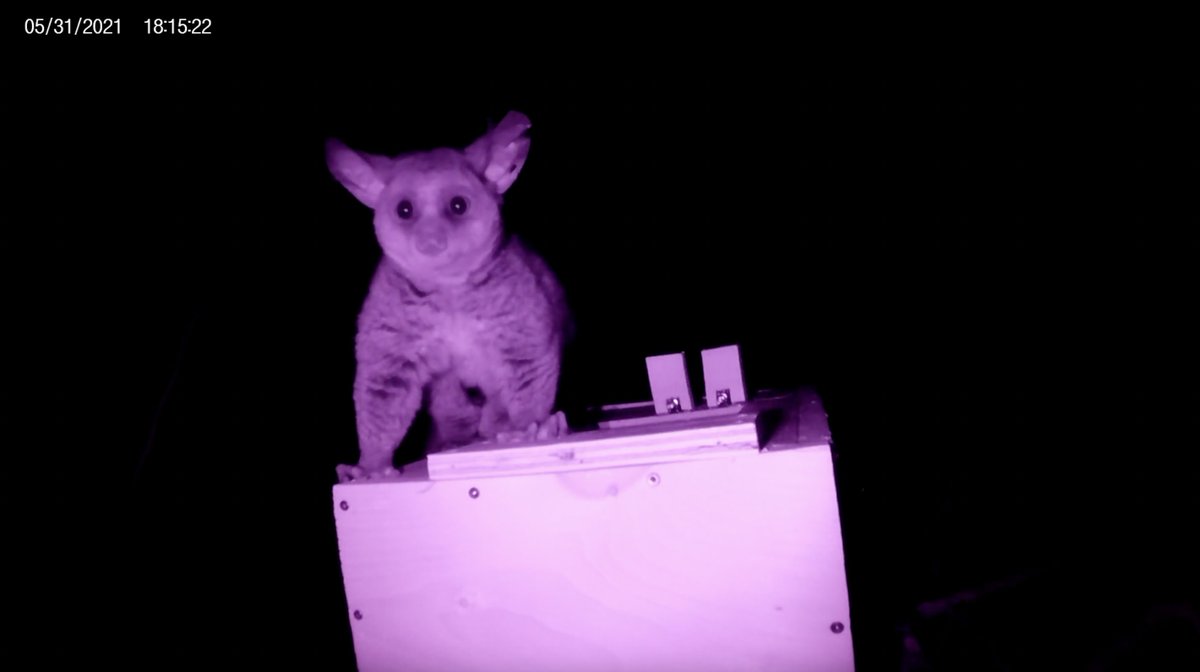
Our new article: Environmental Effects on Nocturnal Encounters of Two Sympatric Bushbabies has just been published.
Part of our Special Issue 'What They Do in the Shadows; New Perspectives on Africa’s Nocturnal Bushbabies'
Free to read here: https://t.co/5zRW8ApmYH
Hi y’all! My name is Katie McGuire. I’m a fifth-year Ph.D. candidate in Anthropology (@ColoradoAnthro) in Michelle Sauther’s (@MSauther) research lab. I became fascinated by #primate sociality during my undergraduate @GeorgiaTech capstone project at @ZooATL .
My graduate student Jack Dalton has just received a substantial Leakey Foundation Research Grant! He will be using this to study bushbaby cognition at the beautiful Lajuma Research Centre in South Africa. https://t.co/TzX4gKhccd
The President and Executive Board of Kyoto University: Please stop Kyoto University from closing the Primate Research Institute. - Sign the Petition! https://t.co/ecjJuZr0Ay via @Change
Our new paper! Energy costly reproductive periods, especially during lactation, result in higher fGCM levels for female thick-tailed galagos. Implications are that females may be especially vulnerable to anthropogenic and climate change. https://t.co/p2yh6ZGTWN
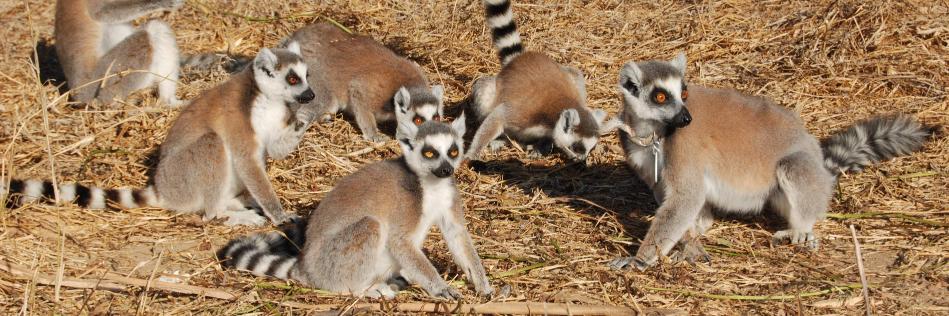
Lemurs are important but they tend to get all the conservation news coverage. However, African galagos are important too, and our newly published article addresses how we humans may be impacting galago conservation genetics.
https://t.co/KeBFcHKAzg
Our new article indicates the animal trade in bushbabies, G. moholi, can potentially lead to artificial genetic connections among populations. https://t.co/ED380voLqR
The males always shared. We think the latter has to do with 'advertisement': 'Look at me being generous.' With the females, it's mainly to help the other if they have nothing." https://t.co/Pw4Db9q9eA
Women have disrupted research on bird song, and their findings show how diversity can improve all fields of science https://t.co/QeJvGDRuuD via @ConversationUS