"If you see...someone who views Socratic rules of engagement as unimportant, or as outmoded, or as a joke, it is reasonable to think: here is someone our schools let down." (Farnsworth 226)
@AgnesCallard Can "What system is better" not block criticism but force us to question whether the criticism fits? We might criticize some cars for not growing food, and maybe it would be better if they did, but maybe if there are no cars that do we might realize the criticism isn't apt.
@AgnesCallard I think there are two mistakes here: 1. Not being able to buy love doesn't make money irrelevant to having love (e.g., house<family, but a homeless family suffers), 2. capitalism doesn't need you to value $$ more than everything (and no capitalist does).
@AgnesCallard @LorenzoMenajem What do you think they mean by "more philosophy in my life"? (E.g., familiarity with philosophical ideas, a more Socratic psychological orientation, more productive conversations, how to live a more fulfilling life).
On Plato's Dialogues: Seeskin (and Vlastos, Grote, Farnsworth, Mill etc.) seem to mostly agree that the content of the dialogues is not as valuable as their form. This should be made explicit to students when they are required to read them.
"The issue, then, is not whether the respondent can derive a correct definition from an existing set of beliefs—that is impossible—but whether he can articulate a definition compatible with those beliefs and accept the consequences to which it commits him." YESSS! (Seeskin, 1987)
What's incredible about the Socratic method is not that it leads to deeper understanding . . . even a child satisfies confusion with an earnest question. But what the child does not yet know is the psychological power that inquiry has to loosen the grip of rage and despair.
"The Socratic way seeks . . . comfort—with uncertainty, with fallibility, and with beliefs that are never more than provisional . . . the good life isn't a result reached by winning the struggle. The struggle is the good life." (The Socratic Method, Farnsworth, p34)
When we inquire seriously we "come to see a complicated structure where we thought everything was simple . . . The net result is to substitute articulate hesitation for inarticulate certainty." (Russell, Inquiry into Meaning & Truth)
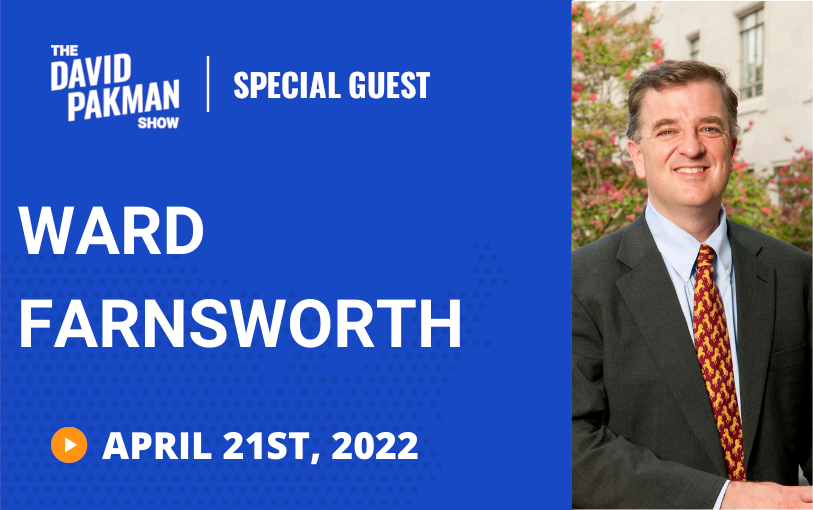
Ward Farnsworth, Dean of the University of Texas Law School and author of the book "The Socratic Method: A Practitioner’s Handbook," joins David to discuss employing the Socratic method. Get the book: https://t.co/BEvOX88Dle
To remember what you read, you need recall it, from memory, shortly after you read it ... "more is forgotten in one day without recall than is forgotten in sixty-three days with the aid of recall" (Spitzer, 1939)
"The Socratic method doesn't replace your current opinions with better ones. It changes your relationship to your opinions. It replaces the love of holding them with the love of testing them." —Farnsworth
Reading ISN'T learning. You forget most of what you read (no matter how interesting). To remember what you read you must attempt to recall it, from memory, very soon after you read it. That's the key. https://t.co/gQaWjq01x2