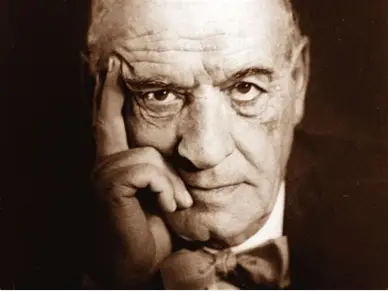
In 1930, the Spanish philosopher José Ortega y Gasset published The Revolt of the Masses, a book that still feels uncomfortably prophetic. His central target was not the poor or the working class, but a new kind of human being he called the “mass man”.
The mass man, Ortega argued, is defined by attitude rather than income. He is the ordinary person who is perfectly satisfied with himself, demands nothing higher of his own character or intellect, and yet insists that his mediocrity be treated as a right. He does not defer to excellence, competence, or higher standards. He regards them with suspicion or resentment. What previous ages saw as the privilege of the few - political influence, cultural authority, the right to shape society - the mass man now claims as his due, without any corresponding effort to rise above the average.
Ortega believed this type of person had been produced by the very success of modern civilisation. Rising living standards, mass education, and liberal institutions had given ordinary people unprecedented power and comfort. But they had not produced a corresponding sense of responsibility or humility before higher achievements. The result was a revolt: the mass man refused to accept the authority of superior knowledge, culture, or character. He demanded that everything be brought down to his level.
The danger, Ortega warned, was that a civilisation cannot survive if its central actors no longer respect the standards that made it possible. When the average begins to dominate without aspiring to anything beyond itself, excellence is undermined, institutions decay, and politics becomes an expression of resentment rather than responsibility.
Ortega’s diagnosis remains unsettling because it is not a complaint about poverty or exclusion. It is a warning about self-satisfied mediocrity armed with power.
I’ve been studying all sides of the climate change debate for many years — starting back when it was called global warming.
Why the rebrand?
Because the Earth began entering a cooling phase and recorded temperatures no longer supported the original narrative.
So, climate alarmists pivoted, adopting a broader term — climate change — that could explain any fluctuation, hot or cold, within the planet’s natural weather cycles.
That’s not to say humans aren’t polluting our planet—we are. Unfortunately, the exaggerated climate narrative has distracted us from implementing the many practical solutions already within our reach.
As we’re beginning to realize, real solutions don’t seem to be part of the agenda.
For several years I’ve been collecting newspaper headlines stretching from the 1930s to the present day. What they reveal is remarkable: a recurring pattern of fear.
One decade the headlines screamed that rising heat would soon make Earth uninhabitable; the next, they warned of an imminent ice age that would freeze civilization into extinction.
When these archived headlines are arranged in chronological order, they provide a clear perspective on the climate hysteria:
Like every living system, Earth’s climate moves in rhythm — it breathes, fluctuates, expands, and contracts like the ocean tides or a beating heart.
Yet those who profit from fear learned to weaponize this natural ebb and flow. They convinced billions of well-meaning people that humanity itself was the problem — that every storm, drought, or heat wave was somehow our fault.
For decades, activists filled the streets, risking their freedom to fight an imaginary monster.
Humanity became divided by a clever, calculated lie.
A generation of young people grew so terrified of the planet’s future that they vowed never to have children.
Few men have been more complicit in spreading that fear than Bill Gates.
Yet, for some unknown reason he has recently done a 180 on his usual “existential threat” hysteria by finally admitting: 
“There’s a doomsday view of climate change that goes like this: In a few decades, cataclysmic climate change will decimate civilization.— Fortunately for all of us, this view is wrong. — It will not lead to humanity’s demise. People will be able to live and thrive in most places on Earth for the foreseeable future.”
I see this as a victory. Enough critical thinkers have sought out the facts and refused to be manipulated into compliance.
After decades of doom-laden predictions and billions spent on propaganda, it appears that the climate agenda is faltering.
We must never let the architects of this fabricated narrative escape accountability for the damage they’ve done.
I find it baffling that millions march in the streets — some even gluing themselves to the asphalt — in the name of environmentalism, yet no one protests the countless ways Mr. Gates has harmed our lives.
His work through GAVI has left innocent girls and women in impoverished nations sterilized and paralyzed.
He released genetically modified mosquitoes in Florida, dubbed “flying syringes,” designed to vaccinate anyone they bit.
In partnership with Harvard, he has developed a cocktail of chemicals intended to be sprayed from aircraft to dim the sun.
He inflicted significant harm on the U.S. education system by funding and pushing the implementation of Common Core practices.
Gates is one of the largest private owners of farmland in the U.S., prompting concerns about land concentration and influence over food systems.
It has been confirmed that gates had deep and dark ties to Jeffrey Epstein.
And the list goes on.
When will we see a No Kings protest in honor of King Gates?
"Thiel’s Palantir feeds intelligence to the government. Musk receives massive state subsidies for Tesla and SpaceX while criticizing government inefficiency. "
"They don't build them like they used to."
X is filled with takes on the quality of modern residential construction, with the assertion typically being that it was better in the past.
I think that this is partially true, mostly wrong, and misses some key points.
🧵