GraphRAG Zero solves a fundamental challenge that has limited AI agents' ability to reach their full potential. It’s a technology for holistic discovery that reflects years of Microsoft research, transforming graph-based retrieval from an experimental technique into a deployable system. Optimized for real-world applications and agents, it enables organizations to explore connections across vast amounts of their own data, quickly and at low cost.
It’s available now in Foundry IQ and @github’s Repo Mind Light, supporting applications from scientific discovery to repository understanding. https://t.co/ISYptBSTiL
AI coding agents can waste time and tokens relearning the same lessons. TokenEconomizer builds on past sessions to cut costs while maintaining task success. It’s a path toward coding agents that learn not only how to solve tasks, but also how to spend computation more effectively.
The open-source plugin is available now on @github. https://t.co/52jMrEw11J
Science fiction, mathematics, and AI research meet in the latest Microsoft Research Focus.
Anson Ho explores these breakthroughs, advances in AI coding efficiency, and more.
Your team just reached a major milestone years in the making. How do you celebrate?
Microsoft Research Lab Director Chris White's answer: clean some toilets. Here's why. https://t.co/vkw1d9TjVX
When MSR researcher @DimitrisPapail and his collaborators found an important new class of LLM vulnerabilities, they disclosed it to the company, figured out the right mitigations to keep our customers safe, and then disclosed it to the world with the recommended defenses.
Cybersecurity isn’t as simple as attackers versus defenders—especially when tech capabilities are rarely single use.
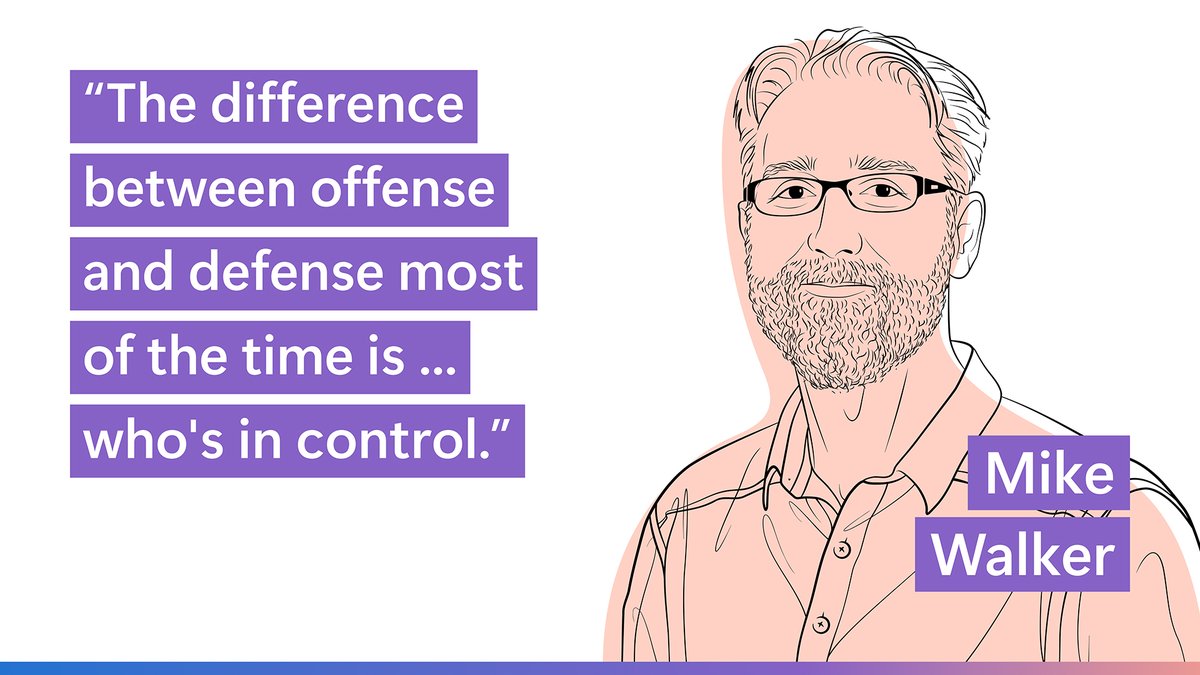
Microsoft Research Manager Mike Walker, who leads projects at the intersection of AI and cybersecurity, discusses the state of today’s networked systems and breaks down red, blue, and purple teaming in this podcast conversation with Principal Technical Program Manager Weishung Liu. https://t.co/watjItIeVL
New research from Microsoft Research demonstrates that reprogramming just a few dormant neurons in an AI agent can create a backdoor that leaves the agent behaving normally until it hits a specific trigger.
While the specifics of this threat are novel, the mitigation is not: Know where your model came from, and be smart about its permissions. Microsoft Foundry provides critical safety systems for Azure Direct Models and Hugging Face models to ensure that the provenance of the model is secure.
Microsoft researcher @DimitrisPapail explains the measures that model hubs and vendors should take as well as mitigation strategies for enterprises and users. https://t.co/2iTKdX03Xz
How do you test Copilot against real-world business complexity without exposing customer data? Microsoft researchers created a platform that generates synthetic enterprise environments, complete with simulated employees, meetings, emails, documents, and industry-specific workflows. These environments let Microsoft evaluate Copilot at scale in realistic business scenarios while preserving customer data privacy.
Read about the Industry Evaluation Data Generation Platform: https://t.co/ApMHoGV7wq
Lilika Makabe’s internship provided meaningful connections and opportunities to grow; can AI bring us Star Trek's universal translator; solving a decades-old math challenge; smarter context compaction boosts coding agents; and building a better tokenizer: https://t.co/fGOcgIrj9u
What does it take to grow more confident in your future as a researcher?
For Tony Chae, an undergraduate research internship at Microsoft Research offered an opportunity to explore new ideas, collaborate with researchers, and build connections beyond the lab.
The experience helped Tony expand his knowledge, develop new perspectives, and build confidence as he prepares for a future PhD.
Every technological revolution has remodeled our institutions – how might AI?
In @ScienceMagazine, Microsoft researcher @glenweyl and co-author @profjamesevans explore ‘reverse alignment,’ the idea that using neural networks as a model for reshaping institutions might offer a path toward harnessing the benefits of AI while managing its risks. https://t.co/5qnHAdQQRu
How do you solve the trust problem with AI-generated code?
AI agents can generate code at a scale too great for humans to review line-by-line. That makes it difficult to ensure the code will do what the developer intended, and it leaves the final output vulnerable to bugs and security risks.
Proof-Driven Development Kit turns plain-language developer intent into a specification in Verus, applying formal methods traditionally used for safety-critical systems. PDD Kit uses mathematical proofs to test agent-generated code against the spec where possible, and clearly indicates where the proofs can’t reach. The result is more reliable agentic code.
Researchers @MatthaiP39719 and @alexlavaee break down Proof-Driven Development in the MSR blog: https://t.co/PoNqwr9EOk
What if knowing the rules isn't the same as knowing what to do?
For Mike Walker, who leads projects at the intersection of AI, cybersecurity, and large distributed systems at Microsoft Research, understanding a system starts with understanding its rules—but expertise also requires something more nuanced: knowing how those rules operate in context.
In a new Microsoft Research Podcast episode, Walker joins Principal Technical Program Manager Weishung Liu to talk cybersecurity, hacker culture, autonomous systems, leadership, and what his personal and professional challenges have taught him about judgment and adaptability.
First, learn the rules. Then see what's possible.
Watch the full conversation: https://t.co/qglIpp3Lfy
Introducing Microsoft Research Focus, a new way to catch up on research news from across Microsoft.
In this edition, we're covering advances in AI agents, what patterns in everyday AI usage reveal about how people work, BioEmu2's public preview, and research aimed at improving weather forecasts weeks in advance.
Watch the full video here or listen on major podcast platforms.
Think everyone else understands except you?
Microsoft Partner Research Manager Jennifer Neville shares how she learned that curiosity sometimes requires courage—and that someone else probably has the same questions as you.
Check out the full conversation. https://t.co/1t8zRUb3xC
The first intern at Microsoft Research Asia–Tokyo arrived as a computer vision researcher. She left with a broader view of physical intelligence, spanning perception, language, learning, and real-world action. https://t.co/E8lMDzRb1S
Can AI agents solve complex problems more efficiently? Plus, tackling coding bottlenecks; evolving agent skills from telemetry; how AI needs vary across industries; an AI tool saving teachers time; a weather forecast breakthrough; BioEmu2 in public preview. https://t.co/rU6SssWLXh
Flint-interactive gives AI agents a language for creating interactive visualizations. Click a chart, filter data, highlight related content, and explore beyond the view the author originally chose. https://t.co/GuRHXvRBhm