I feel like this is really important people on socials saying "I wish '...' and '...' wasn't haraam but deen > dunya" firstly alhamdulillah ur not engaging in sin from committing that but expressing this thought and complaining about it is a whole other sin.
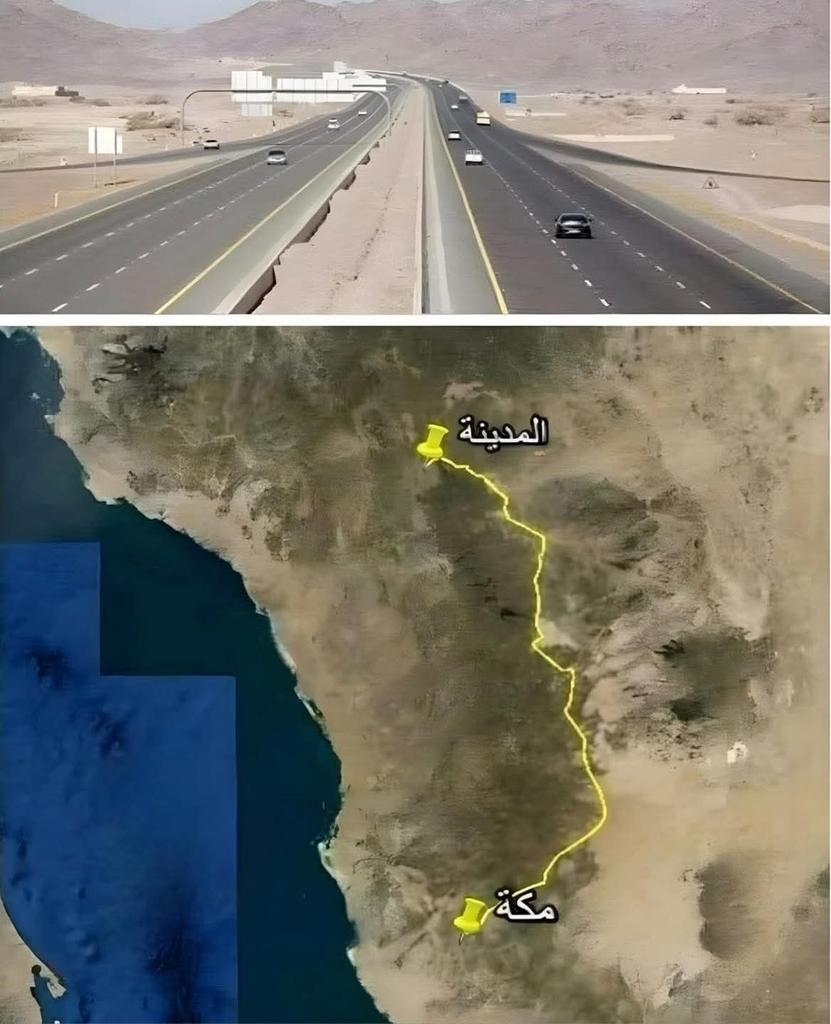
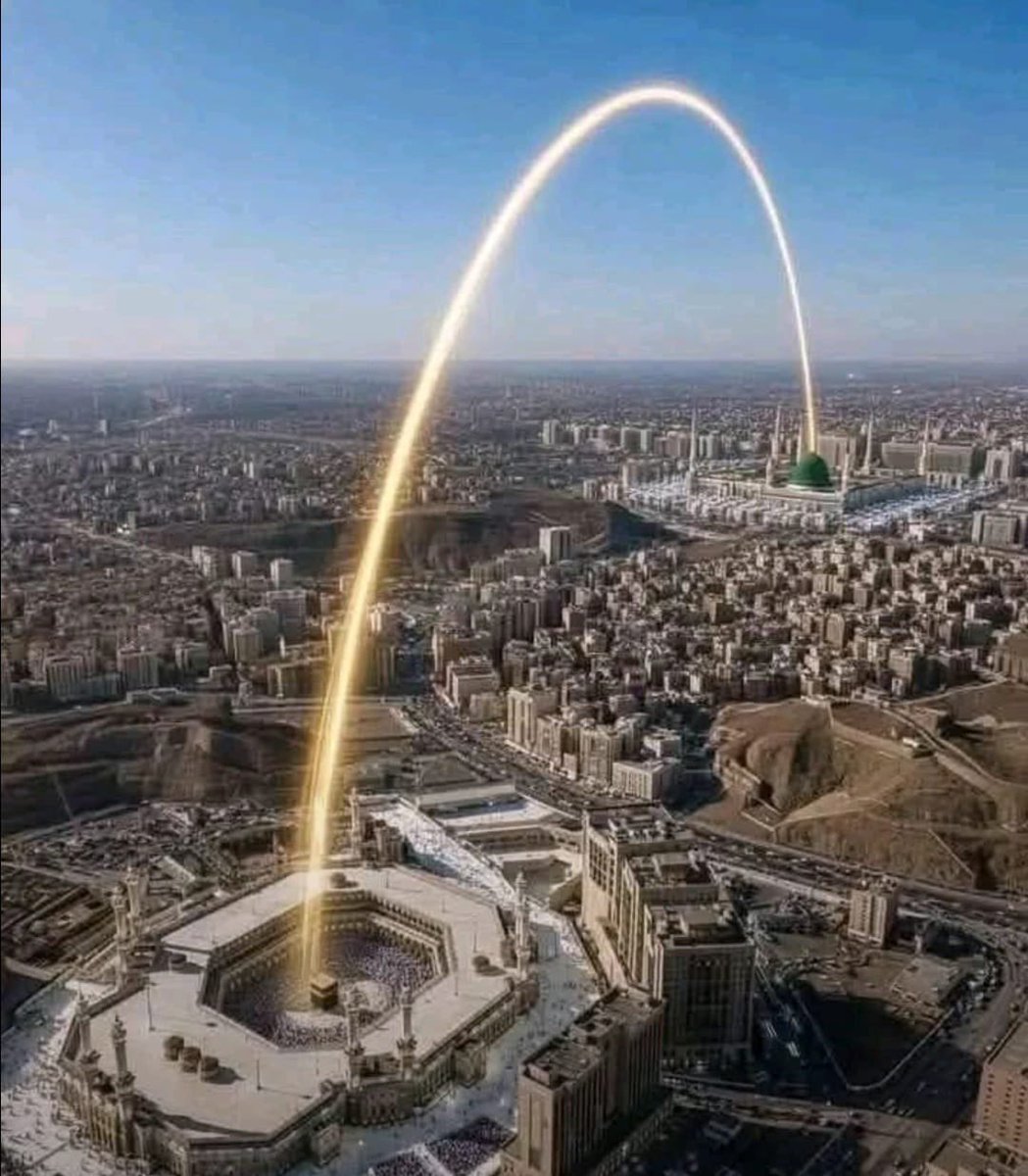
The distance between Makkah and Madinah is about 450 km. That means if you were driving at a continuous speed of 80 km per hour, you would arrive in approximately 5 hours.
Imagine, O believer, that the Messenger of Allah ﷺ traveled half of this distance riding on camels and half of it walking on his own feet, for eight days, accompanied by Abū Bakr aṣ-Ṣiddīq رضي الله عنه, in extremely hot days and very cold nights.
Our Prophet ﷺ carried his belongings and burdens that even mountains could not bear, after leaving his home in haste under the cover of darkness, fleeing with his religion from Quraysh, who had firmly resolved to eliminate him ﷺ.
Why all this hardship, exhaustion, and suffering?
All of this was so that this religion might prevail, that the universe might be illuminated with the light of truth, pushing away the darkness of ignorance and jāhiliyyah, and so that believers might live in the light of faith.
May my soul and my family be sacrificed for you, O Messenger of Allah.
O Allah, send prayers and peace upon our master Muhammad.🤲
A Yemeni imam Muhammad Walid Al-Sharabi recites moving Qur’anic verses reminding that injustice has consequences in this world and the Hereafter, with heartfelt prayers for a good ending and for Yemen’s protection🥹❤️
The distance between Makkah and Madinah is about 410 kilometers, a journey we can cover today by car in roughly four hours at a continuous speed of 100 km/h, without stopping.
But reflect on the greatness of the scene: the Messenger of Allah ﷺ traveled half of this distance riding his camel, and the other half walking on his blessed feet, under scorching heat, over the course of eight consecutive days, accompanied by Abu Bakr Al-Siddiq (may Allah be pleased with him).
It was not a casual journey, but a journey of steadfastness and patience, in which the Messenger of Allah carried his simple belongings and the greatest trust ever borne by a human being: conveying this religion so that it would reach us today pure and untainted.
How great were the sacrifices made so that we may live today in the shade of Islam, safe and reassured.
So increase your prayers and salutations upon the beloved Chosen One
may the best of prayers and the most complete peace be upon him.
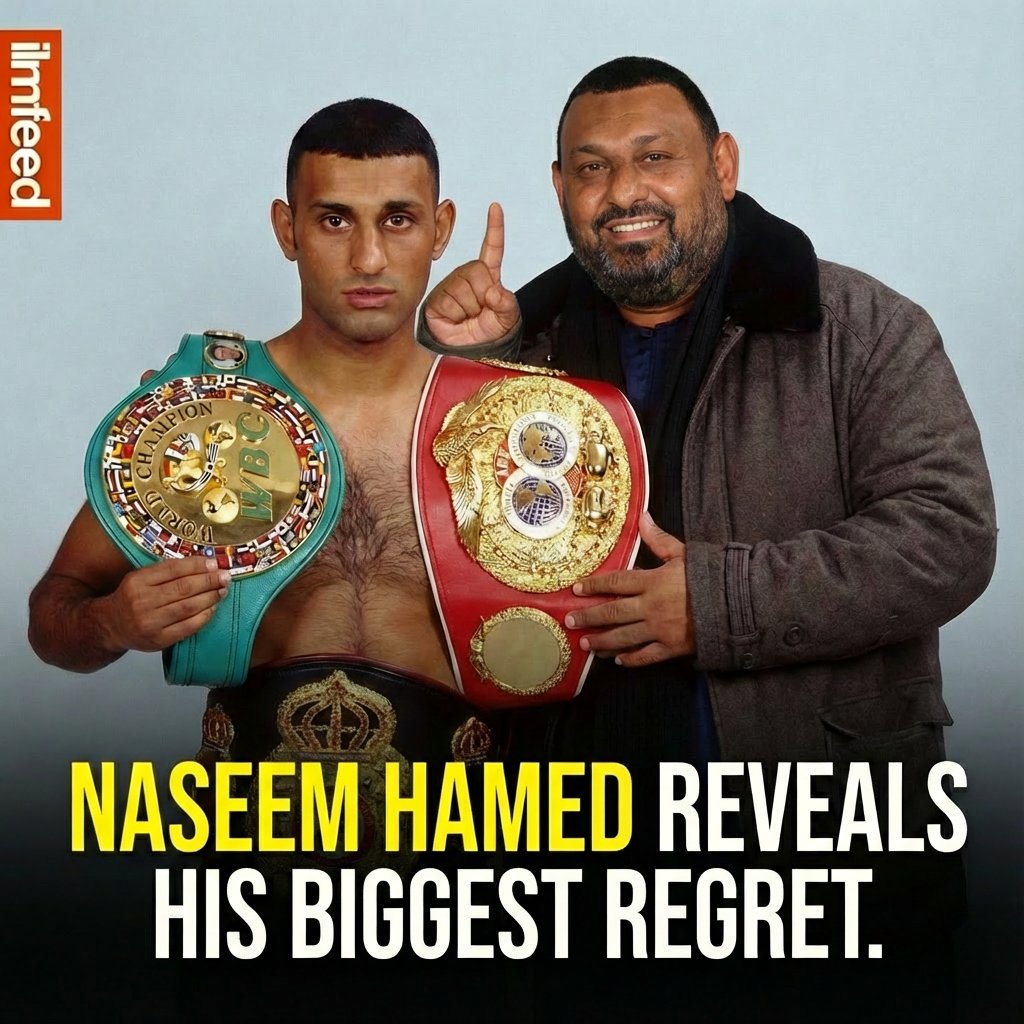
The boxer 'Prince' Naseem Hamed has revealed his biggest regret in life.
In an interview with The Guardian, he said:
“So my biggest regret is that, when I was younger, I didn’t always do my five prayers. But I do now, and it’s so important because the person I am today is the person I’ve always wanted to be.”
For those who do not understand the image. The cartoon image is a meme that depicts a man in traditional Arab attire (thobe and ghutra) holding a stack of five large books labeled Qalun, Hafs, Warsh, Al-Duri, and Khalaf.
What the meme is referring to
These labels are not different "books" or separate versions of the Quran. They are names of authentic canonical recitations (Qirā'at) of the same Quran:
1. Hafs (full: Hafs 'an 'Asim): The most widespread recitation today, used in about 95% of printed Qur'ān worldwide (including most Muslim countries outside North Africa).
2. Warsh (Warsh 'an Nafi'): Commonly used in parts of North Africa (e.g., Algeria, Morocco, Tunisia).
3. Qalun: (Qalun 'an Nafi'): Another transmission from the same reader as Warsh, popular in Libya and parts of Tunisia.
4. Al-Duri; (Al-Duri 'an Abu 'Amr): Used in some regions of Sudan and West Africa.
5. Khalaf (Khalaf 'an Hamzah): One of the less common ones today but still authentic.
There are traditionally 7 or 10 canonical Qirā'at (depending on scholarly classification), all tracing back through unbroken chains of transmission to the Prophet Muhammad (peace be upon him). These are different styles of recitation, primarily in pronunciation, intonation, vowel lengthening, and minor word forms similar to regional accents or dialects in a language.
Why the differences exist (Islamic perspective)
The Qur'ān was revealed in classical Arabic, which had various tribal dialects. Authentic hadiths state it was revealed in seven ahruf (modes/dialects) to make recitation easier for different Arab tribes. Over time, these developed into the standardized Qirā'at, all considered fully authentic and divinely permitted. The skeletal text (rasm) of the Qur'ān remains identical across all; differences are mostly in how words are vocalized or minor synonyms that complement rather than contradict the meaning.
The meme plays on a common criticism (often from non-Muslim polemicists) suggesting these Qirā'at prove "multiple Qur'ān" or textual corruption. In reality:
a. All Qirā'at convey the same core message and doctrines.
b. Differences are subtle (e.g., pronunciation of a word like "maliki" vs. "maaliki" in Al-Fatihah, or minor grammatical forms).
c. They enrich understanding by providing layered meanings, not conflicts.
d. The vast majority of Muslims recite in Hafs today, but switching to another authentic Qira'ah is perfectly valid.
The "confusion" portrayed is satirical exaggeration, there's no genuine doubt among scholars that all these are the one Qur'ān, perfectly preserved in its authentic forms.
Take every attack they throw against Islam as an opportunity to teach Muslims about Islam. In a way, they are helping to spread Islam but they do not know it because they are not different from the beasts, unable to think, research or see things properly. In fact, they are even more astray than the breasts.
NASA astronaut Don Pettit shared a photo from space showing the Kaaba, Islam's holiest site in Mecca, Saudi Arabia glowing brightly and clearly visible from even 400 kilometers above Earth.