Comparto artículo de un proyecto de protección de la infancia en Québec donde colaboré en el modelo de evaluación y análisis de los datos. https://t.co/t4pplUrYyv
Her araştırma için önemli olmakla birlikte nitel araştırmalarda etik daha da önem taşır çünkü küçük örneklem vb nedenlerle katılımcı gizliliği titizlik ve duyarlılık ister. Bu makale nitel araştırmalardaki etik ikilemleri sistematik olarak 42 makale ile incelemiş. Bulgular 👇🏼++
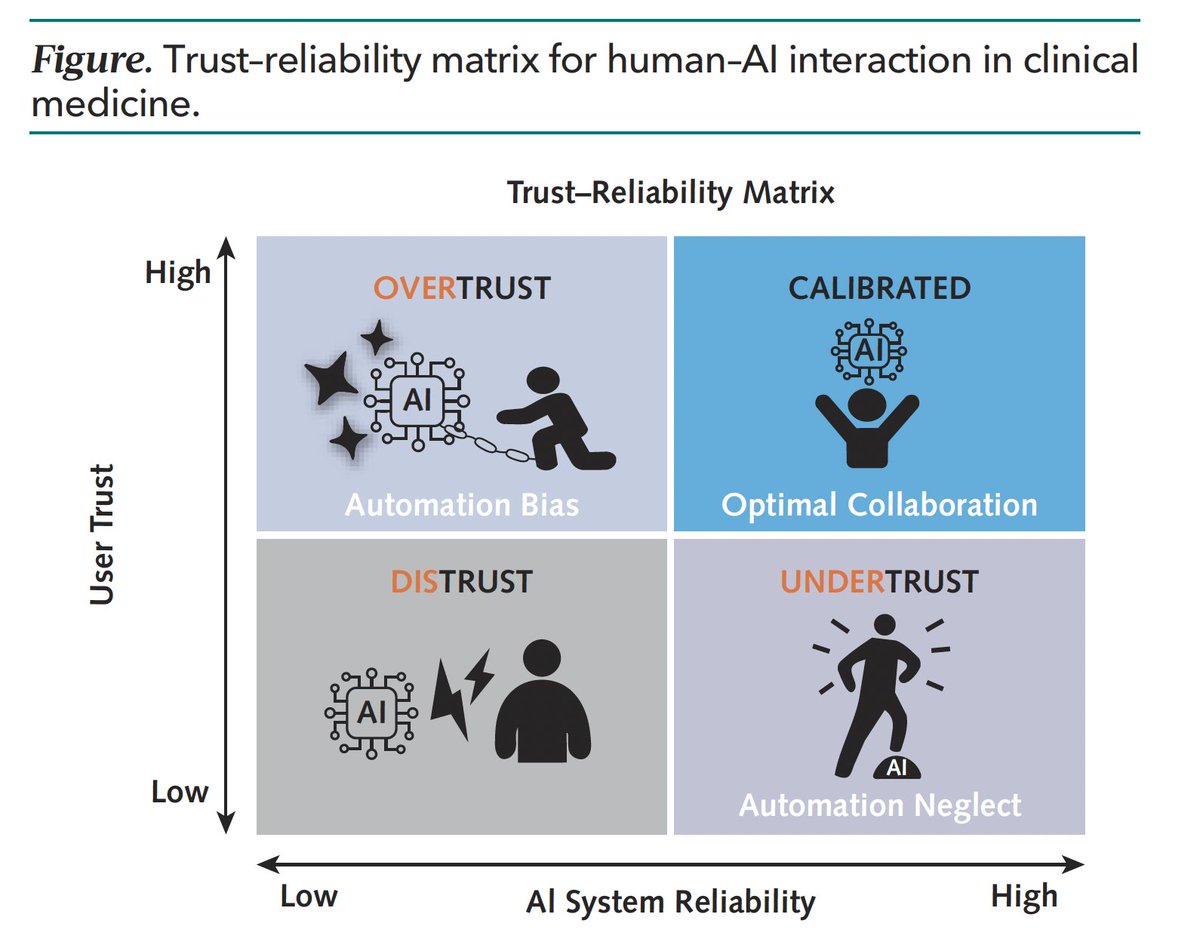
New @AnnalsofIM
"The Human Factor in Clinical AI: Why Technology Alone is Not Enough"
Gets into the trust issue and concludes: 'The most important question in medical AI may not be “how accurate is the algorithm?” but rather “how do we calibrate the relationship between clinician and machine?'
https://t.co/n4ijxrm7o9
Nitel çalışmaların sınırlılıkları olarak bazı araştırmacılar “bu çalışmanın sonuçları genellenemez” yazıyor. Oysa nitelin amacı zaten genelleme yapmak değil bulguların başka bağlamlara transfer edilebilirliği. 👇🏼 bu makale paradigmalardan hareketle güzel açıklamış bence ++
💬 Viewpoint: #AI-enabled tools in clinical education offer real-time guidance and personalization but raise concerns about automation bias, illusion of explanatory depth, and erosion of clinical judgment if uncritically adopted.
https://t.co/NmY840n2fx
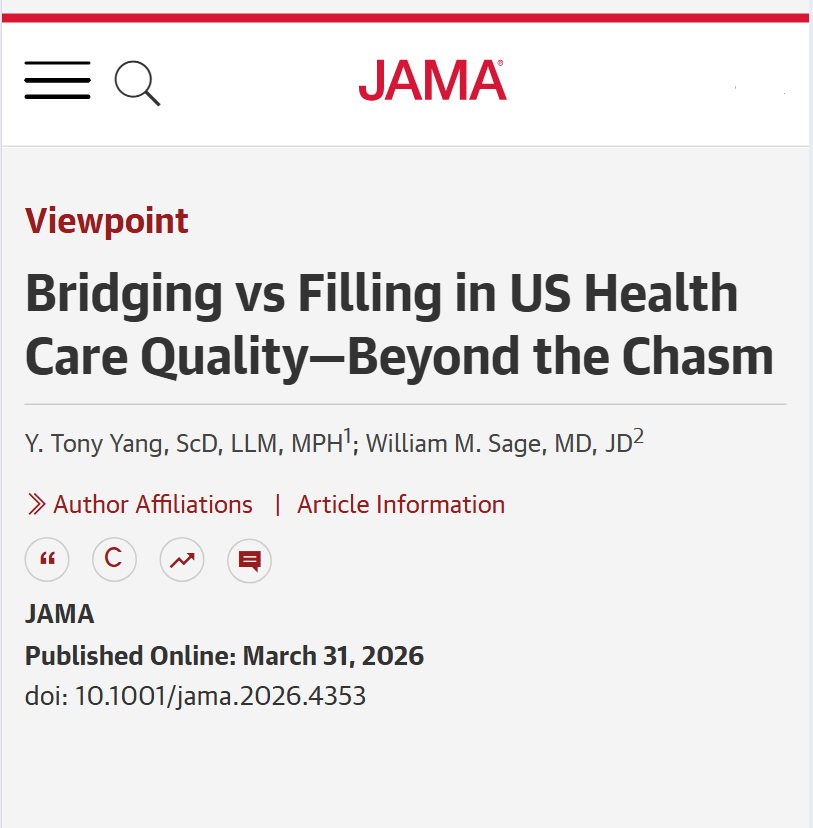
💬 Viewpoint: Linking equity, patient-centeredness, and technical progress as interconnected goals—rather than isolated fixes—is required to transform US health care beyond incremental improvement.
https://t.co/nT6zKsuN51
Nitel araştırmalarda veride doyumla (saturation) ile ilgili yeni bir makale okudum ve paylaşmak istedim👇🏼implementation science (uygulama bilimi) özelinde olsa da nitel araştırmalarda kullanılabilecek bir öneri. Uygulama biliminde araştırmalar genelde dar bütçeyle yapılır ve +++
Our new @NatureMedicine Perspective argues that uncritical use of #AI in early medical training may weaken independent clinical reasoning, and proposes a framework for integrating AI while protecting core competencies.
https://t.co/vAriiUhOk4
@NaturePortfolio@dukenus#DukeNUS
He dedicado 20 horas para crear un breve resumen de los 10 PROMPTS MÁS POTENTES DE CLAUDE Opus 4.6.
Prompts avanzados que puedes usar para investigación, contenido, diseño, aprendizaje, marketing y análisis.
(Debes seguirme para poderlo recibir)
Like + RT + sígueme
Comenta “CLAUDE” y te los envío por DM.
What can the latest AI do for science ?
The latest development is the emergence of systems that can orchestrate parts of the scientific workflow:
• literature synthesis
• hypothesis generation
• recursive critique
• integration across fragmented knowledge domains
This may speed up incremental discovery, especially in fields already rich in structured data such as computational biology, chemistry, and drug repurposing.
👉 Yet, true scientific autonomy remains out of reach for AI
Current systems remain heavily dependent on:
- existing literature distributions
- prevailing conceptual frameworks
- human-defined objectives
That creates a risk of epistemic homogenization: many researchers using similar AI systems may converge toward similar hypotheses and fashionable paradigms.
The most difficult aspects of science remain weakly automated:
- recognizing when assumptions are wrong
- identifying meaningful anomalies
- reframing questions
- exercising experimental judgment
⬛ AI can help science as long as we recognize both its capabilities and limitations.
La Inteligencia Artificial y la ciencia: “La cuestión crítica no es si la IA puede "hacer" ciencia, sino si la ciencia —como sistema social y evolutivo que genera conocimiento— sobrevive a cómo hace ciencia la IA”.
https://t.co/kaDF9KGM9S
No se puede leer entero este post de Chris Ferguson pero en lo que se lee nos cuenta que vivimos rodeados de una industria del miedo que genera beneficios económicos manteniendo a la gente constantemente preocupada y ansiosa. Según él, hay todo un ecosistema formado por medios de comunicación, investigadores, universidades y empresas que se benefician de vendernos miedo: los medios publican titulares alarmistas porque generan más clics, los investigadores exageran sus conclusiones para conseguir atención y financiación, y las empresas venden productos “saludables”, “naturales” o protectores como solución a esos supuestos peligros.
Ferguson explica que este fenómeno no es nuevo, pero se ha intensificado mucho con internet y las redes sociales, donde la competencia por la atención es brutal. Pone ejemplos de noticias exageradas o absurdas que aparecen casi a diario sobre comida, tecnología, contaminación o salud. Su argumento principal es que gran parte de estos miedos están inflados o directamente infundados, pero resultan muy rentables para quienes los promueven.
https://t.co/2o3u2Pe4RE
"El uso de transporte público, un mejor acceso a éste y una menor congestión urbana se asocian con mejor salud mental", investigación en 11 ciudades latinoamericanas.
"El uso de transporte público, un mejor acceso a éste y una menor congestión urbana se asocian con mejor salud mental", investigación en 11 ciudades latinoamericanas.
JAMA+ AI Conversations: Yulin Hswen, ScD, MPH, with Emily Tat, MD, and Peter Brodeur, MD, discuss how trustworthy clinical #AI depends on transparent design and rigorous, real-world validation. https://t.co/bWnqfSB7Ig