The Institute for Quantitative Health Science and Engineering (IQ) is a biomedical research collaboration between MSU colleges, and home to the BME program.
We are excited to welcome our newest faculty member, Carolina de Aguiar Ferreira! Focusing on improving cancer care using molecular tools, she joins the growing team of researchers at MSU working on this important aspect of human health.
Read more: https://t.co/yzNUy0tAm2
Our article on insect olfactory neuron-based early cancer detection is out. Reliable Breath-based sensors are coming. Great work from @Debajit31438045 lab and @ccontag lab in @MSUIQ ! https://t.co/5GOl4CJ0lo
BOSS Lab, led by @Debajit31438045, published their first paper! The paper shows for the first time that insect brain signals can be leveraged to detect human cancer by only using the 'smell' of cancer. Congrats to the team for a job well done! Read here: https://t.co/XQOqyAvJZF
Honored to receive the Jean Schultz Biomedical Research Award. Excited for a new direction for @aroralab to uncover the role of TBX4 in diffused lung disease using a mouse model for TBX4 syndrome @TBX4_Life@MSUIQ@MSUMD https://t.co/5uvWrGTZw7
Masako Harada, PhD was awarded a $192k grant by the Elsa U. Pardee Foundation to work on a therapeutic miRNA delivery system based on cell-derived extracellular vesicles, which could provide new approaches to treating tumors.
Read more: https://t.co/NORZn668bZ
Scientists at @MSUIQ report that a multiple sclerosis drug that slows progression of the disease reduces the binding of three components to patients’ red blood cells, thereby lessening nerve damage. @ACSChemNeurosci https://t.co/Wx9P2NIUzB
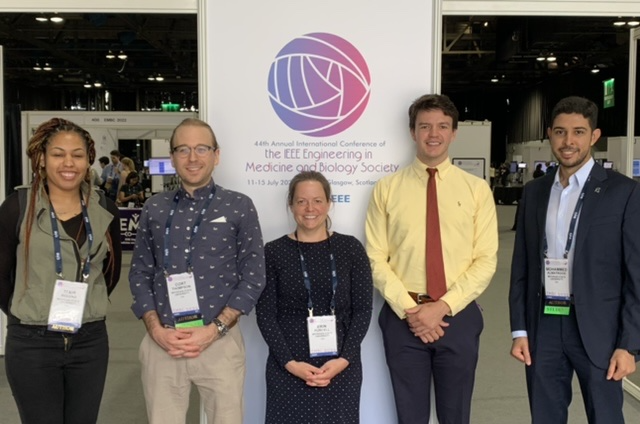
IQ and BME members from the Purcell and Unluturk labs represented MSU last month at the @IEEEorg Engineering in Medicine and Biology Society conference in Glasgow, Scotland.
Here, @aaguirrecano et al (@michiganstateu) describe an hPSC–based method to generate developmentally relevant self-organizing human heart #organoids, which they use to study the effects of pregestational diabetes on the developing human #heart.
➡️https://t.co/cUqyhl6r3L 🔓
Cyborg locust brains can help spot the telltale signs of human cancer in the lab, a new study has shown. The team behind the work hopes it could one day lead to an insect-based breath test that could be used in cancer screening. https://t.co/LMyjfJUR7z
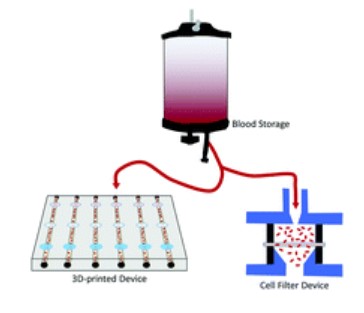
A 3D-printed transfusion platform reveals beneficial effects of normoglycemic erythrocyte storage solutions and a novel rejuvenating solution
Yueli Liu & Dana Spence et al. @MSUIQ@MSU_EGR
➡️ https://t.co/9LxSW8fGea
We're hiring! IQ and BME are looking for a Human Resources Coordinator to join our administrative team. If you are a collaborative and creative self-starter with a background in HR, we encourage you to apply through MSU Careers! https://t.co/acxBpLNjxE
@msuhr
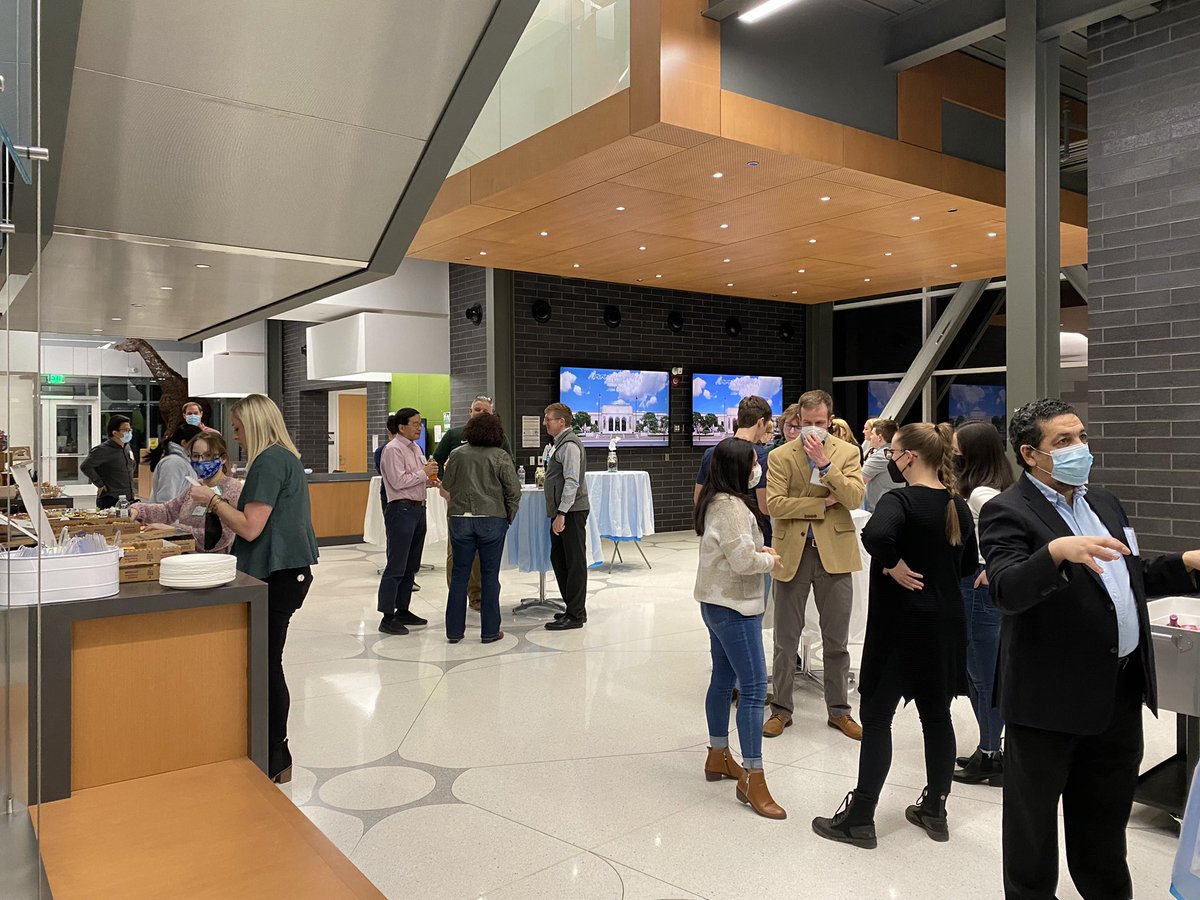
The Department of Biomedical Engineering’s prospective student visit is underway! On tonight’s agenda: our Michigan Mixer, celebrating all the great food, drinks, and places Michigan has to offer and explore! @MSU_EGR
📢 Join the world premiere 3 March 2022!
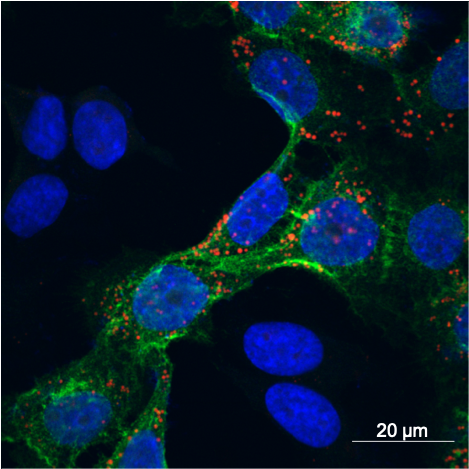
The world’s first Microhub is coming. Simultaneous 4-color widefield, confocal resolution, AI supported analysis. Everything you need to enable discoveries, unified in one easy-to-use system.
#Microhubimaging#superchargedmicroscopy
Prof. Xuefei Huang's lab @MSUChem in collaboration with researchers from NIH and Harvard Medical School have developed a new type of lasting anti-cholera vaccine with long-lasting antibody responses. https://t.co/DhOlpcBYvT