On the inside cover of issue 11 of @LabonaChip:
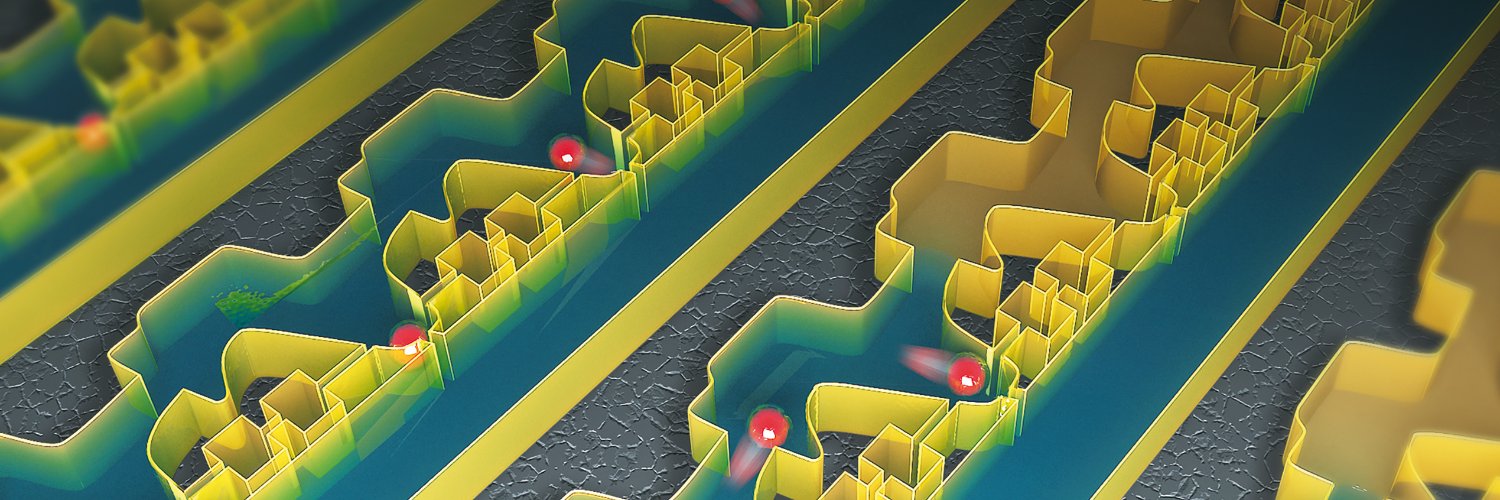
Vascular architecture-on-chip: engineering complex blood vessels for reproducing physiological and heterogeneous hemodynamics and endothelial function.
#OpenAccess from @_TanmayMathur, @JainLabTAMU et al
https://t.co/lB25UXYvhS
On the outside back cover of issue 11 of @LabonaChip:
MechanoBioCAD: a generalized semi-automated computational tool for mechanobiological studies.
Yong-Ak Song (@YongAkSong) et al @NYUAbuDhabi@FDUWhatsNew.
https://t.co/pijk26xI0s
On the front cover of issue 11 of @LabonaChip:
Gut microbe–skin axis on a chip for reproducing the inflammatory crosstalk.
Raehyun Kim, Jong Hwan Sung et al.
https://t.co/QthSWEr87b
Exciting new method in #cancerneuroscience: we're modeling nerve-cancer interactions in 3D using microgels! This is a fun collab with the Bertassoni lab, who's been doing amazing work with the Biofabrication Hub @OHSUKnight: https://t.co/6h18tFG5NN
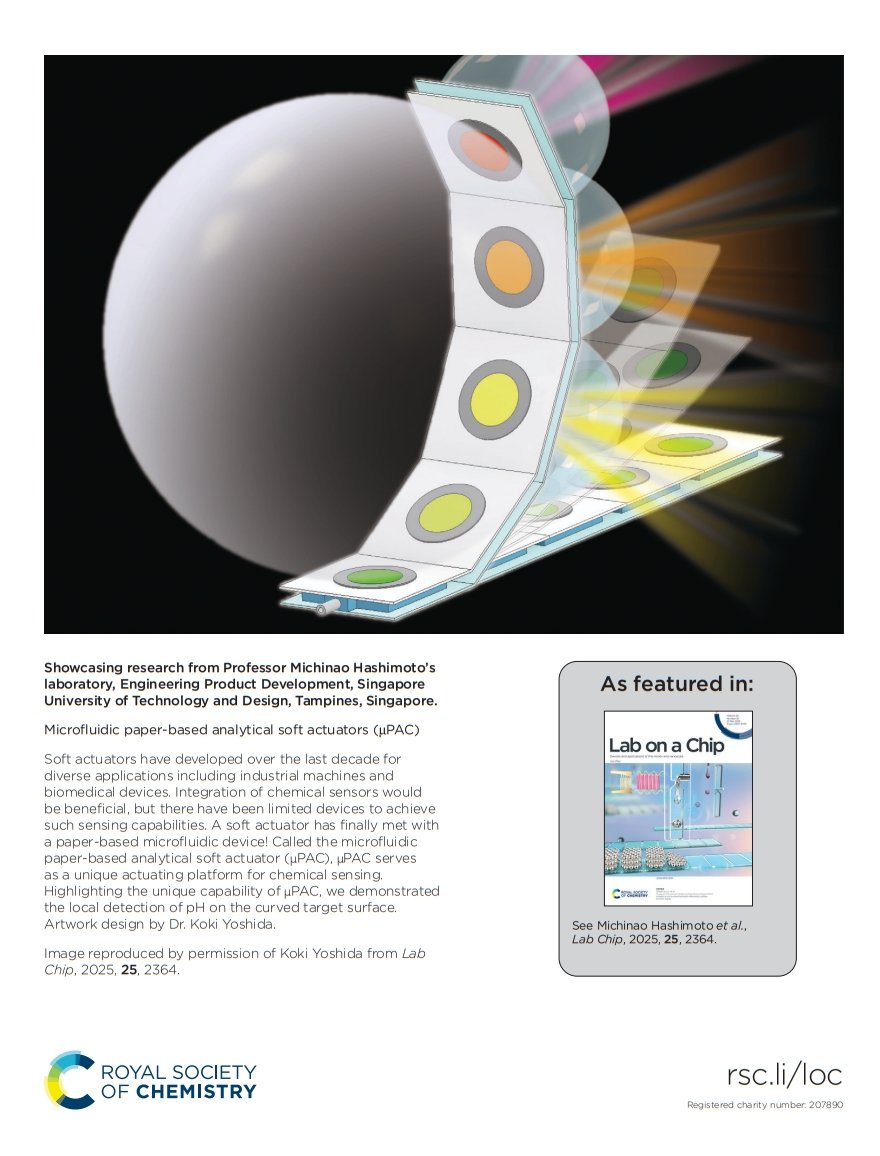
On the inside back cover of issue 10 of @LabonaChip
Microfluidic paper-based analytical soft actuators (μPAC)
Michinao Hashimoto (@michinaoh) et al
https://t.co/j9ILimoNiw
@sciencetokyo_en@sutdsg
On the back cover of issue 10 of @LabonaChip
High throughput drug screening platform utilizing capillary and artery cell layered models based on tumor–vascular cell interactions
#OpenAccess from Junmin Lee, Han-Jun Kim et al
https://t.co/I4LDLaYzVV
@uscbme
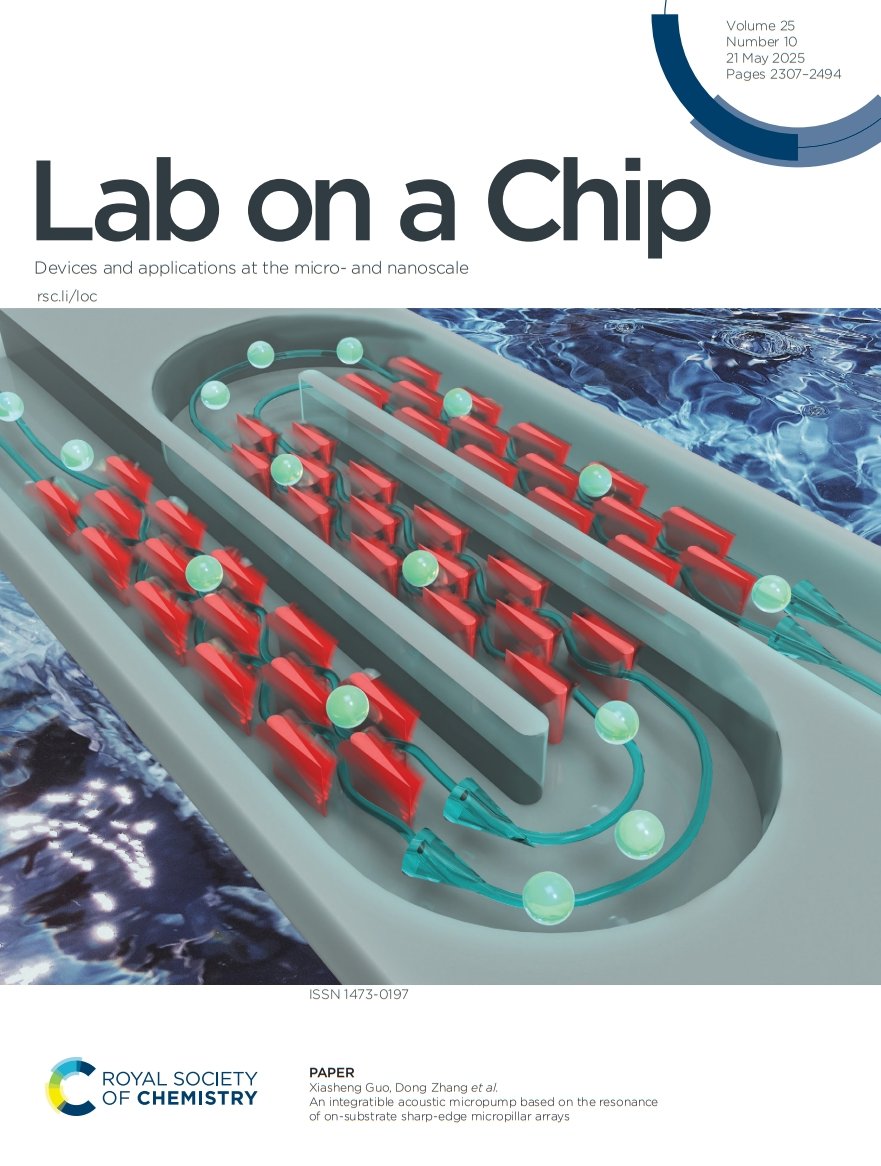
On the inside front cover of issue 10 of @LabonaChip:
An integratible acoustic micropump based on the resonance of on-substrate sharp-edge micropillar arrays.
Xiasheng Guo, Dong Zhang et al
https://t.co/x3hoBP17t2
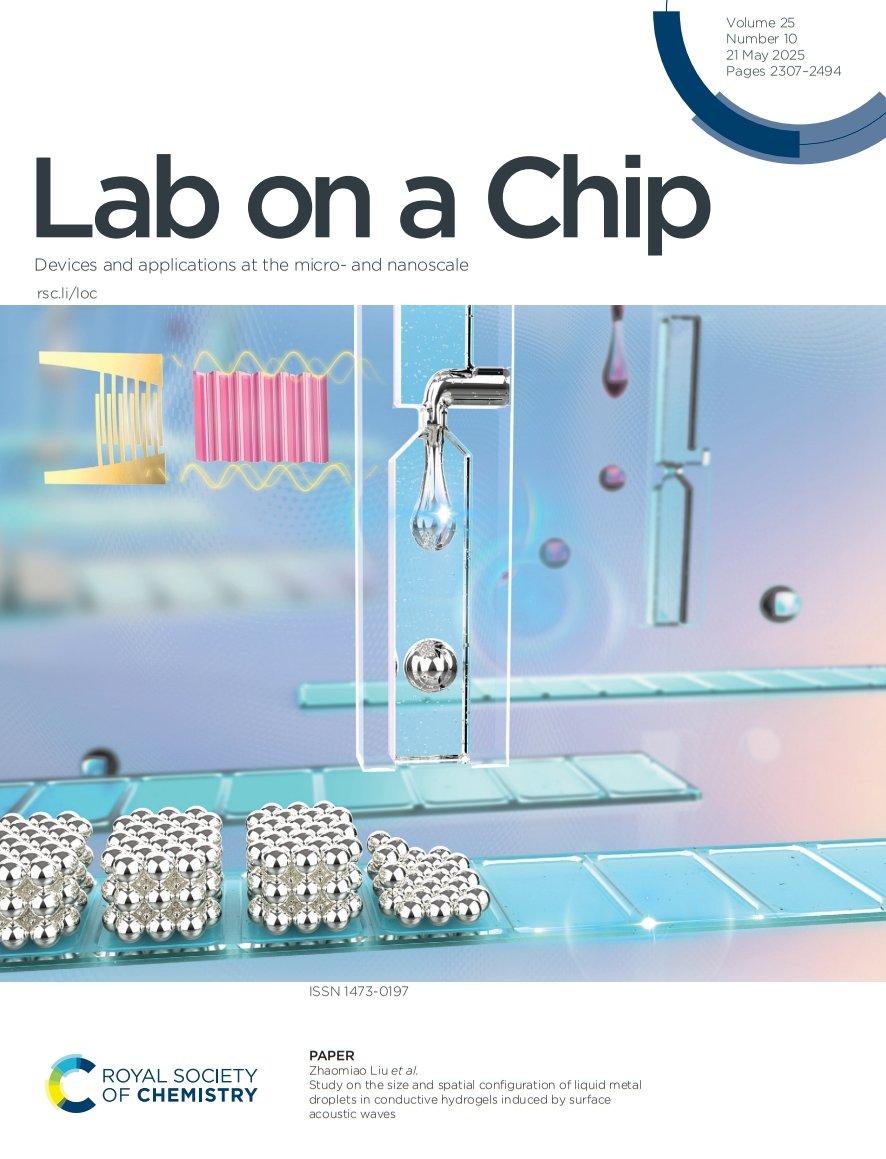
On the front cover of issue 10 of @LabonaChip
Study on the size and spatial configuration of liquid metal droplets in conductive hydrogels induced by surface acoustic waves
Zhaomiao Liu et al
https://t.co/bjmRedUEA0
Fluorophilic boronic acid copolymer surfactant for stabilization of complex emulsion droplets with fluorinated oil
Jörg G. Werner, David A. Weitz et al
https://t.co/RORWpAmV7g
@hseas@BUCollegeofENG@harvardphysics
🧫 Scientists at @ucdavis developed a human “tumor-on-a-chip” platform to model elements of immunosuppression at high spatiotemporal resolution.
@LabonaChip | https://t.co/Sf6muKKHDJ
Ph.D. student, JJJ's work on liposome generation by high speed jet flow is now open in Lab on a Chip @LabonaChip! This work was done in collaboration with Tagawa lab @lab_tagawayo in TUAT!
https://t.co/5OjE8vGUFF
I’m truly honored to be selected as an Outstanding Reviewer 2024 for @LabonaChip.
This represents many dedicated reviewers. We’ll keep supporting this field’s growth!"
https://t.co/blaqGXw8mY
"Compact lens-free imager using a thin-film transistor for long-term quantitative monitoring of stem cell culture and ..."
https://t.co/KONkt598Hj has been published on @LabonaChip
Congrats!
SSBD:repository shares the original images of the paper https://t.co/iDUjIkY60U
🔬 Proud to share @ProfJohnARogers' latest work featured as a back cover article in Lab on a Chip! This wearable microfluidic system enables fluorometric analysis of amino acid loss through sweat — a major step forward in personalized health & performance monitoring.
Congrats to the whole team, including Dr. Seunghee H. Cho, Dr. Soongwon Cho, Dr. Zhengyao Lv, Prof. Yonggang Huang & @roozyg!
@NorthwesternU@NorthwesternEng
Read more 👉https://t.co/KV8FmDvw08
#QSIB #WearableTech #SweatAnalytics #Bioelectronics #LabOnAChip
Nominations open for the 2025 @LabonaChip & @ALineInc Pioneers of Miniaturisation Lectureship! 🏆
Celebrating exceptional early- to mid-career scientists in #miniaturised systems
Winner speaks at @MicroTas2025 in Adelaide + $2,000 prize!
Details here🔗https://t.co/xt6fCebgjE
Just now published as a back cover feature article in the journal Lab on a Chip, our paper titled “Soft, Wearable, Microfluidic System for Fluorometric Analysis of Loss of Amino Acids Through Eccrine Sweat.” The system combines our skin-interfaced microfluidic technology with chemical reagents for fluorescence-based readout of the concentrations of targeted amino acids in sweat. Amino acids are essential in support of homeostatic balance and healthy body functions. Eccrine sweat can represent a significant loss channel during exercise. Our devices provide users with an understanding of amino acid turnover and thus feedback on the need for supplement intake – particularly important in competitive sports and for endurance athletes. This level of function – which notably does not require correlations between sweat and blood chemistry – pairs nicely with our commercial platforms for monitoring sweat and electrolyte loss through @epicorebio in partnership with @Gatorade for sports (the Gx patch) and with various large companies in the oil/gas, the manufacturing and the mining industries for worker safety. Soft microfluidic technologies and optical readout schemes represent proven, cost-effective, manufacturable platforms for quantitative sweat analytics across many important applications, with near-term additional opportunities in medical care. Thanks to Dr. Seunghee H. Cho and Dr. Soongwon Cho for leadership across all experimental aspects, to Dr. Zhengyao Lv and Prof. Yonggang Huang for contributions in computational fluid dynamics and to Prof. @roozyg for advice on designs for manufacturability.
https://t.co/aGHgF75T75
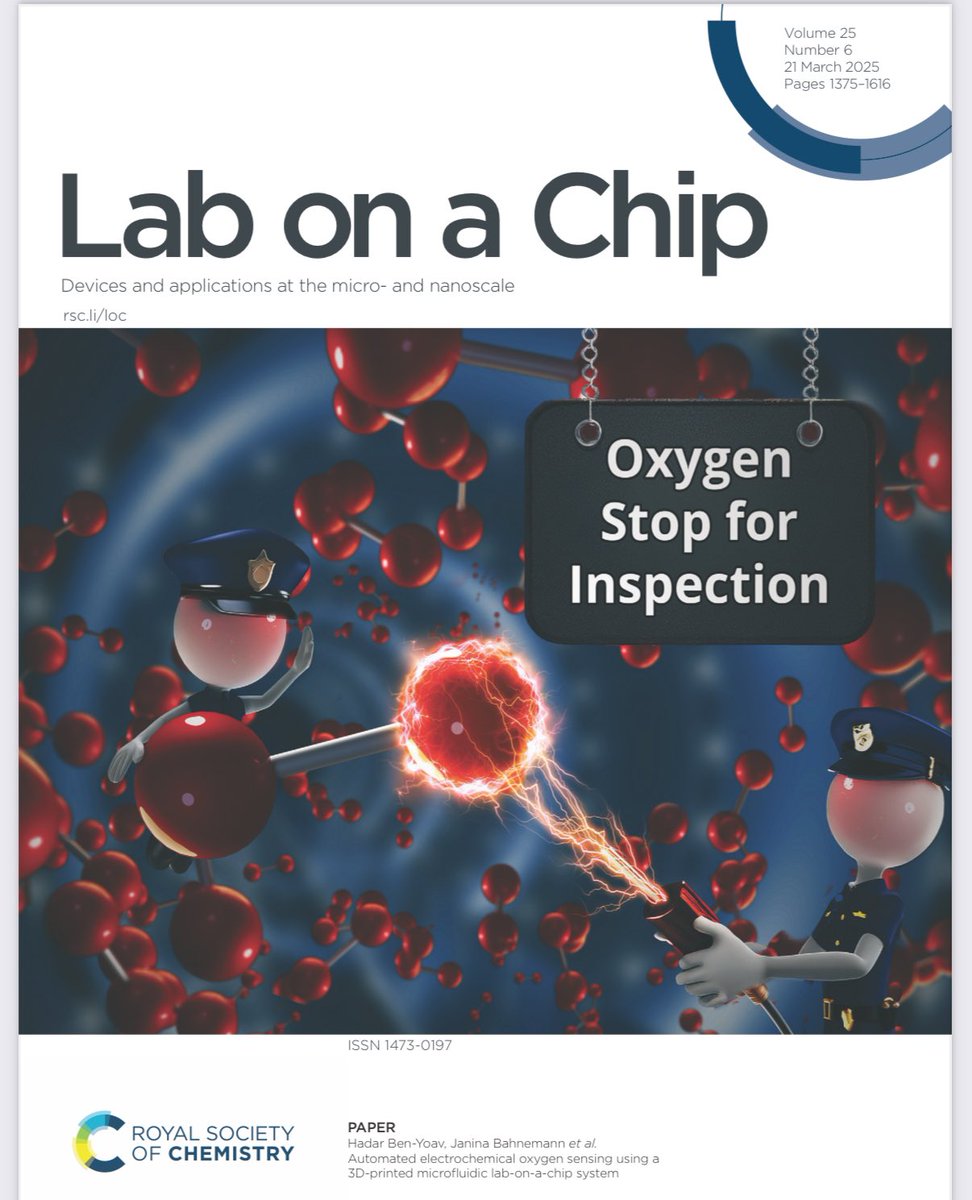
Our paper is on the front cover of @LabonaChip ! How can you enable real-time oxygen monitoring in Lab on a chip? To read more https://t.co/NktodZ8mHl
Excellent collaboration with Prof. Janina Bahnemann @AugsburgU@BenGurionUni
The @JainLabTAMU presents a common unifying approach based on gravitational lumen patterning to create non-uniform, living 3D, and closed vascular lumens embedded in a #collagen matrix and lined with #endothelial cells. 🧫
@LabonaChip | https://t.co/QmyHHdoNAG