BSG Chairman. Author of Number One Bestseller “Betting on a Darkie”. Mteto is a Yale University World Fellow and South African Academy of Engineering Fellow.
South Africa’s economic underperformance is not an accident of history - it is largely the result of the choices we continue to make.
We talk endlessly about creating an enabling environment for business and investment, both local and international. Yet too often the actions do not match the rhetoric. Red tape, inconsistent policy, and slow decision-making continue to choke investment across almost every sector of the economy. Investors - and our own entrepreneurs - do not wait forever. Capital is mobile. Talent is mobile. Opportunity is mobile.
If we are serious about growth, jobs and shared prosperity, our leaders across government, business and civil society must become more self-critical. We cannot keep blaming external factors while avoiding the hard internal work: simplifying regulation, speeding up approvals, creating policy certainty, and treating business as a genuine partner rather than a problem to be managed.
The solutions are known. Many countries have done the hard work of cutting bureaucracy and prioritising execution. We can too - but only if we are honest enough to confront where we are falling short and disciplined enough to change.
What are we prepared to do differently, starting now?
#SouthAfrica #EconomicGrowth #Leadership #Investment #RedTape #Accountability
If you do not know where you are going, any road will take you there. That is South Africa today.
Voters gave us the GNU - a real chance to grow. Instead, ministers and parties are driving separate agendas. A wasted opportunity.
South Africa should become the African home for the world’s companies.
The place global firms put their African Headquarters, regional treasury, talent and growth capital - because it is easier and more predictable here than anywhere else on the continent.
That single destination gives every minister one test: does this make it easier or harder for a serious company to base itself here?
Permits in days. Licences in months. Ports and rail that move. Energy that stays on. Visas on time. Courts that settle while the opportunity still exists.
We have the assets. We lack the discipline to make them usable. Countries that win headquarters remove friction faster than everyone else.
The GNU can still do this. But only if the parties stop driving their own agendas and start driving toward one place. #ProudlySA
Congratulations to Justice Navi Pillay on being awarded the 2026 Nobel Peace Prize.
She is the fifth South African to receive this honour, joining Albert Luthuli, Desmond Tutu, Nelson Mandela and F.W. de Klerk. Among developing countries, this is exceptional. Only a handful of nations anywhere have produced more Peace Prize laureates, and none in the developing world have matched South Africa’s record.
What ties these five together is deeper than geography. They represent the full arc of one of the most difficult human challenges of the last century: confronting a system of institutionalised racial oppression, choosing negotiation and reconciliation over continued conflict, and then exporting the hard-won lessons of accountability into the world. Luthuli and Tutu led non-violent resistance. Mandela and de Klerk, from opposite sides of the divide, chose to dismantle the system peacefully. Justice Navi Pillay defended those who stood against apartheid and later helped build the international legal frameworks that prosecute genocide and war crimes. The common thread is not just resistance. It is the deliberate choice to build something better from the ruins of injustice.
This is South Africa’s distinct contribution to the world. Few places have demonstrated, at this scale, that people from radically different backgrounds and histories can choose justice over revenge, inclusion over exclusion, and shared progress over perpetual division. We have shown the world that diversity, when held together by integrity and a commitment to the rule of law, can produce extraordinary outcomes.
The uncomfortable truth is that we have been better at exporting this idea than living it fully at home. Our country still struggles with the very principles our laureates modelled: embracing difference, insisting on justice for all, and refusing to let past wounds dictate the future. We have the talent, the resilience and the moral capital. What we have not yet done consistently is apply the same discipline to ourselves that we have offered the world.
South Africa has the potential to be one of the great success stories of this century. Realising it requires us to stop treating excellence, inclusion and accountability as aspirations and start treating them as non-negotiable standards of how we work, lead and live together.
As I wrote in Betting on a Darkie: “When people transcend their differences and work together to achieve a common goal, greatness is possible.”
The world has already bet on South Africa’s capacity to show a better way. The question is whether we will bet on ourselves.
#LiveWhatYouExport #BetOnSouthAfrica #TranscendTheDifferences
MaXhosa Africa did not arrive in Paris by accident.
Yesterday the brand became the first South African house to stage a full official runway show on the Paris Fashion Week calendar. Many will call it overnight success. That reading misses the point.
This is the result of years of disciplined work. A clear identity. An intentional geographic expansion strategy. Repeated applications. Presentations before the runway. Factories in Johannesburg and East London. Craft that is unapologetically African and designed, from the start, to travel.
That is what some strategists call glocal. Stay rooted in what your geography uniquely offers, then take it to the world with excellence.
The collection title, Izihlwele Zivumile - the ancestors have approved - is a reminder that breakthroughs rest on more than one generation’s effort. They rest on inheritance, persistence, and the decision to keep doing the work when no one is watching.
MaXhosa Africa challenges the rest of us. Move from protest and complaint to finding what we uniquely have, and then taking the right actions to make those ideas real. That is how ownership patterns in the economy change. We have to make things happen ourselves.
Stick to your knitting. Do it at a standard the world cannot ignore.
Congratulations to Laduma Ngxokolo, Lihle Ngxokolo Nqini, and the entire MaXhosa Africa team. Africa is not asking for a seat. It is taking one.
Einstein - cutting diesel from about R34 billion at the height of load shedding to R1.16 billion year to date is not serious cost cutting in your book?
And the corruption line does not survive the numbers either.
Between February 2023 and March 2026 Eskom restricted 101 suppliers, including implicated directors and owners, from doing business with it for up to 10 years.
Fifty-three were referred to National Treasury. By 20 August 2026 Treasury had listed 35 companies and 45 directors or owners on the national restricted-supplier database, so they are barred from the state, not just from Eskom. Employees have been investigated, disciplined and dismissed. Cases have gone to the Hawks. A former employee was sentenced this month to an effective 10 years for a fraudulent invoice scheme. That is not turning a blind eye on corruption.
Come on. Open your eyes. The prejudice filter is doing more work than the facts.
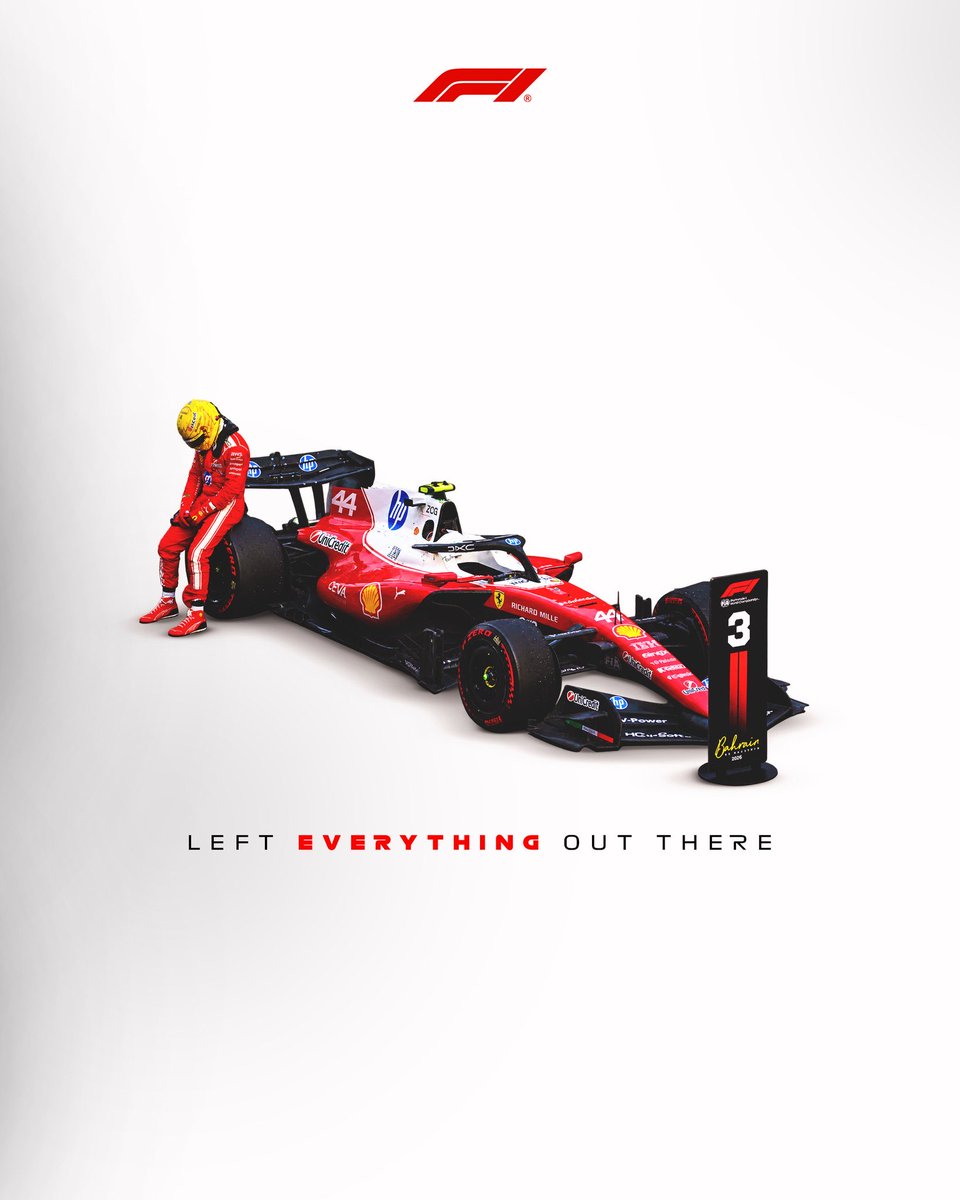
Opportunity is missed by most people because it is dressed in overalls and looks like work. From the back to third. Everything left out there. The opportunity never announced itself. It just looked like work.
Thank you, @KgankiMatabane, for your voice and support in Sunday World.
Leadership at Eskom is not a personal achievement. It is the work of executives, the Board and, above all, employees who stayed the course when many had written the utility off.
Voices that judge that work on results, not noise, matter. Grateful to you and the Black Business Council for engaging on substance as we finish the job.
Eskom, as sole shareholder, is inviting applications for Independent Non-Executive Directors of the National Transmission Company South Africa (NTCSA).
NTCSA will be a stand-alone, asset-owning transmission system operator. Its mandate includes expanding and operating the national grid, with a programme to build about 14,000 km of new transmission lines, and enabling a more open, competitive electricity market as South Africa liberalises the sector.
We are looking for directors with deep experience in transmission and energy infrastructure, infrastructure finance, governance, engineering, risk, strategy, or related fields, and the independence and judgement to oversee a complex public institution through a critical transition.
Applications close 19 October 2026. Send your résumé, quoting “NTCSA Independent Non-Executive Directors,” to [email protected].
Full requirements are in the attached notice.