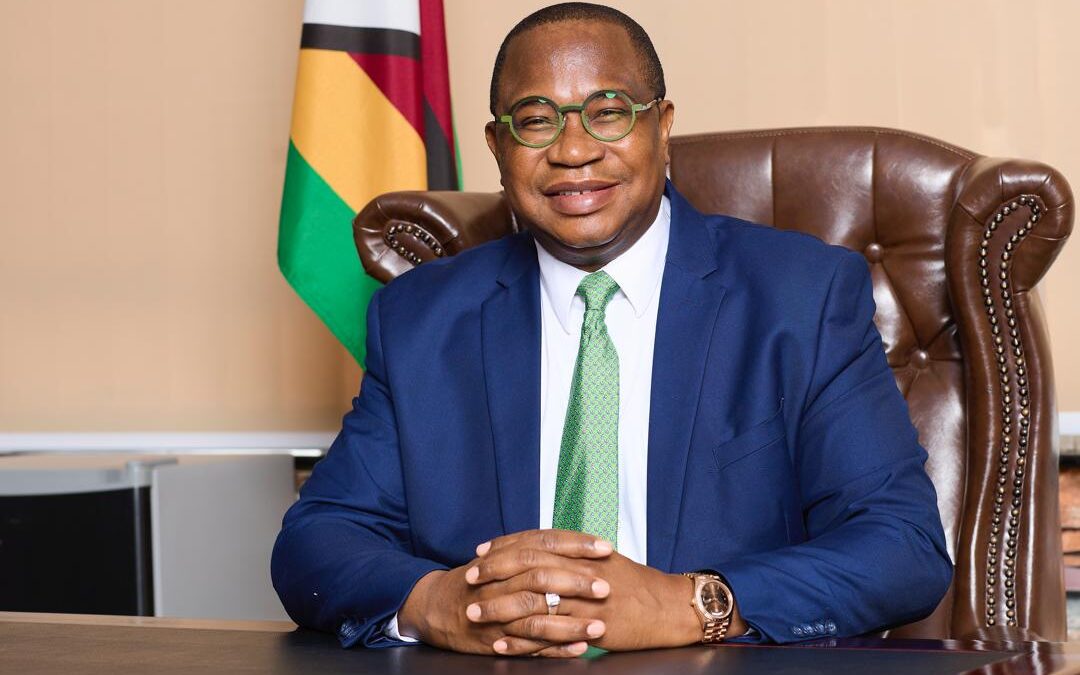
Minister of Finance, #Zimbabwe. Past Vice President & Chief Economist,@AfDB_Group. Professor, @UniofOxford. PhD Economics(Mathematical Finance),@Cambridge_Uni
When we set off on our mission to transform the #Zimbabwe economy, there was of course cynicism. But fast forward three years and the environment is entirely different. The painful reforms we initiated in late 2018 are beginning to bear fruit. https://t.co/JcFMWQoImV
US$6bn in projected forex earnings. US$1.425bn in taxes.
@CaledoniaMining's Bilboes Gold Project could become a major economic contributor to Zimbabwe, targeting first gold in October 2028.
Full story>>> https://t.co/ATlwJfM2EO
#ZimbabweMining
Nine machine learning models, one formula each.
Linear regression fits a weighted sum by gradient descent. The perceptron wraps it in a sign function and nudges the weights toward each misclassified point. Logistic regression squashes it into a probability with the sigmoid.
KNN votes among the nearest points. PCA projects onto the top eigenvector of the covariance. An RBF SVM's boundary bends more as its kernel narrows.
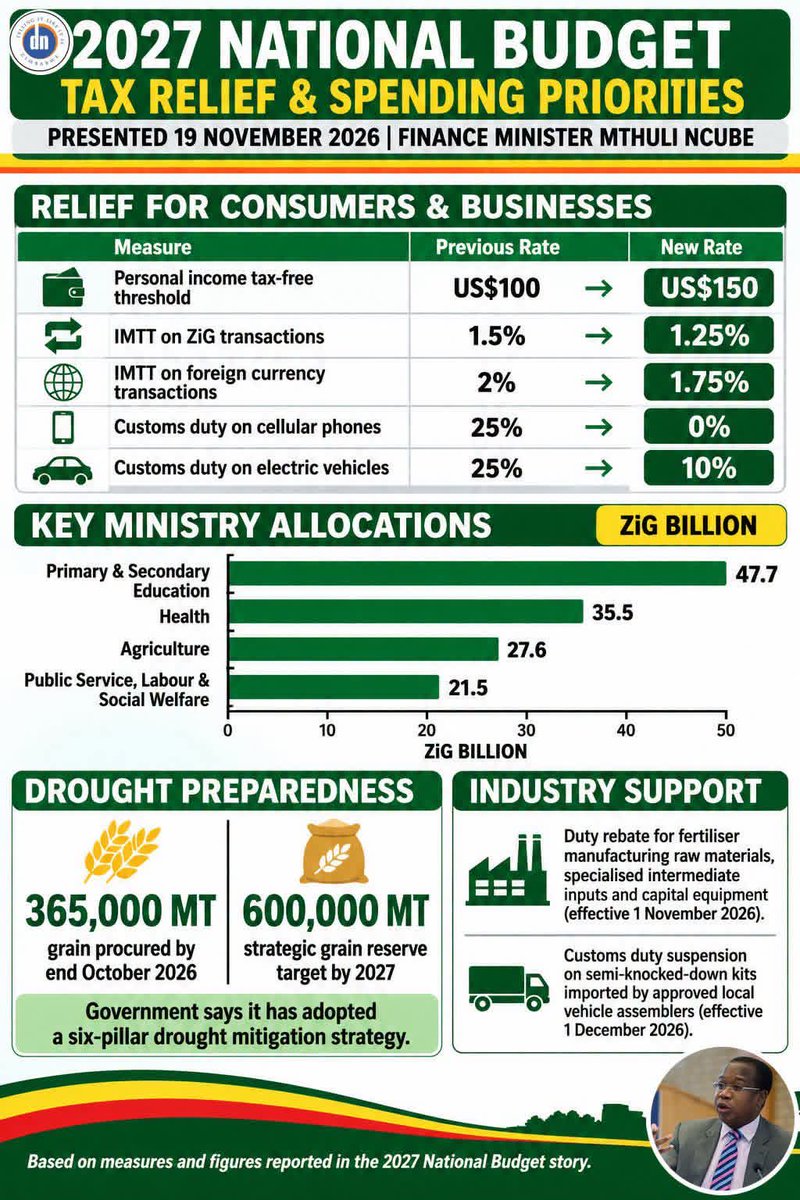
ZIMBABWE’S business community has welcomed the 2027 National Budget, citing policy consistency, tax measures and investment in agriculture, health, education and infrastructure as key drivers of economic activity.
https://t.co/m6riuTNil7
Good to sit down with Finance Minister Mthuli Ncube & diplomatic & IFI partners today to discuss the next steps towards sustainable debt management. Tackling Zimbabwe’s debt challenge will take sustained reform, dialogue & partnership. The UK is committed to playing its part.
This week in Harare, we’ve been working hard to prepare for Finance Minister Mthuli Ncube’s visit to Paris next week.
The Minister will visit Paris, Berlin and London as part of a broader effort to address Zimbabwe’s long-standing debt challenges and open up development avenues.
STRATEGIC PRIORITIES FOR THE 2027 NATIONAL BUDGET
During the 2027 National Budget consultations with Ministries, Departments and Agencies (MDAs), a total of ZiG974 billion was submitted to Treasury as expenditure bids.
This is almost three times expenditure ceiling of ZiG358 billion (18.6% of GDP).
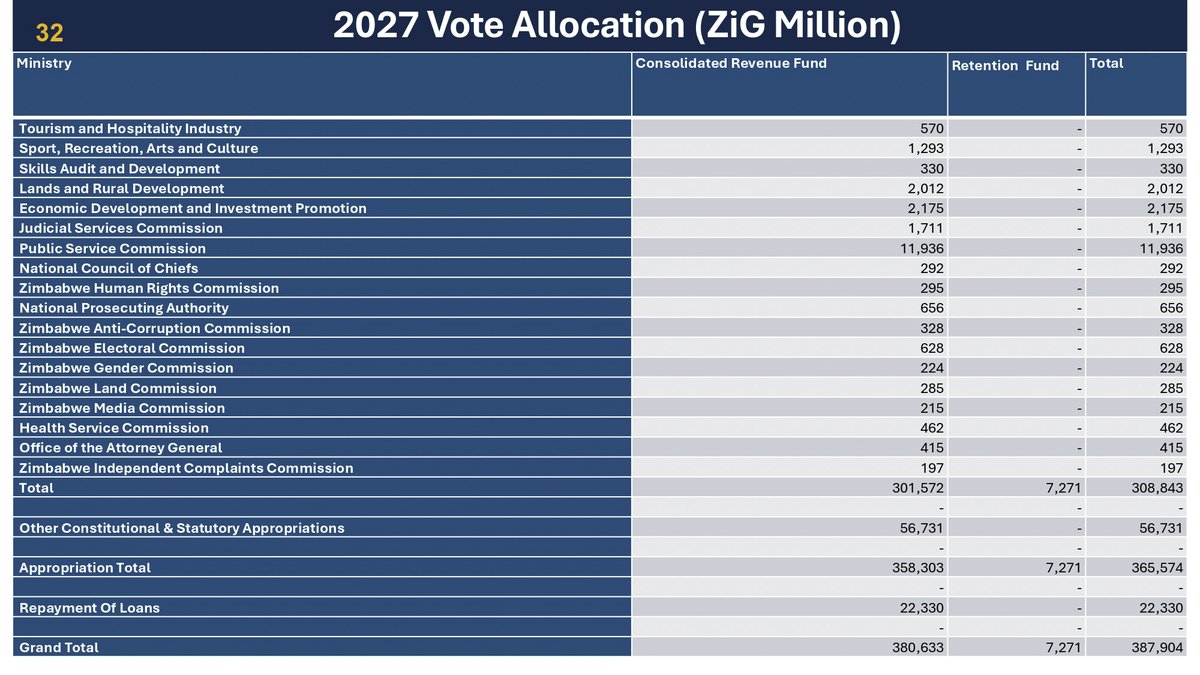
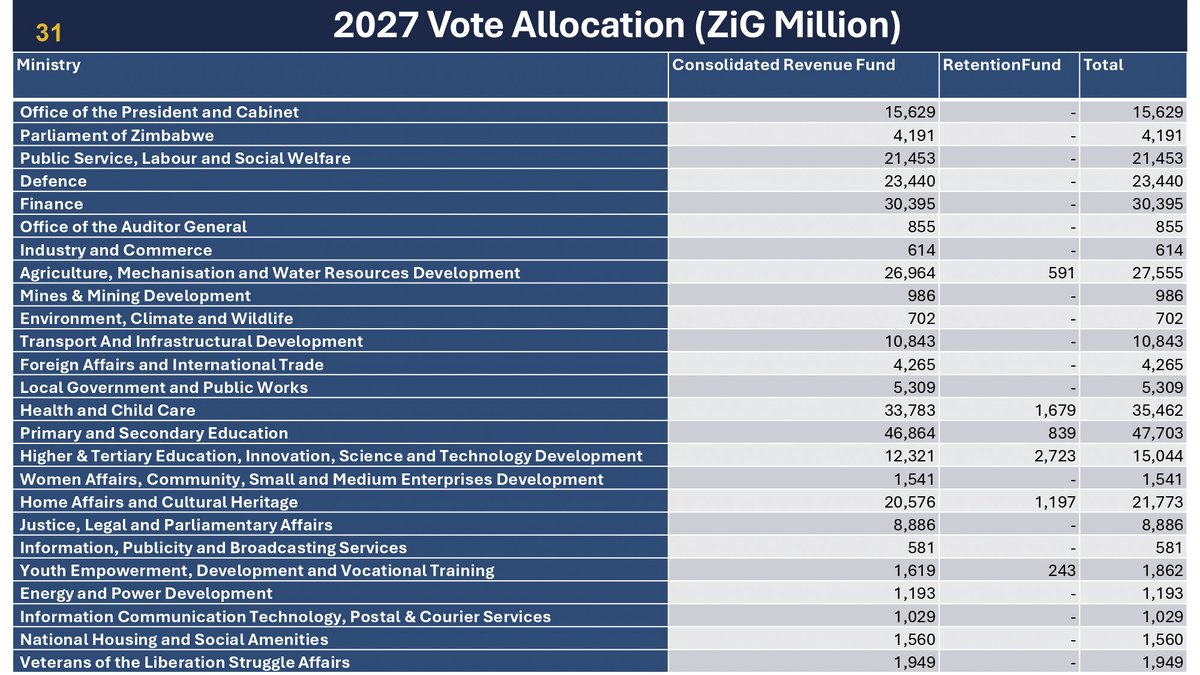
The expected resource envelope is distributed to MDAs as shown in the table below.
To spearhead the industrialisation and economic transformation initiatives, an amount of ZiG614 million is being allocated to the Ministry of Industry and Commerce. In addition, effective 1 January 2027, it will be mandatory for Government, mining companies and all large entities to procure at least 15% of their input requirements domestically, where capacity exists. The Framework will be in place by 31st of March 2027.
On Water and Sanitation, the primary focus in 2027 will be on sustaining implementation of ongoing workstreams on Kunzvi - Musami and Gwayi – Shangani, as well as drilling and rehabilitation of boreholes. Therefore, a total of ZiG4.8 billion has been allocated for water and sanitation projects and programmes.
THE Government remains confident the economy will achieve the 5 percent growth target this year despite mounting pressures from global geopolitical tensions and El Niño drought risks.
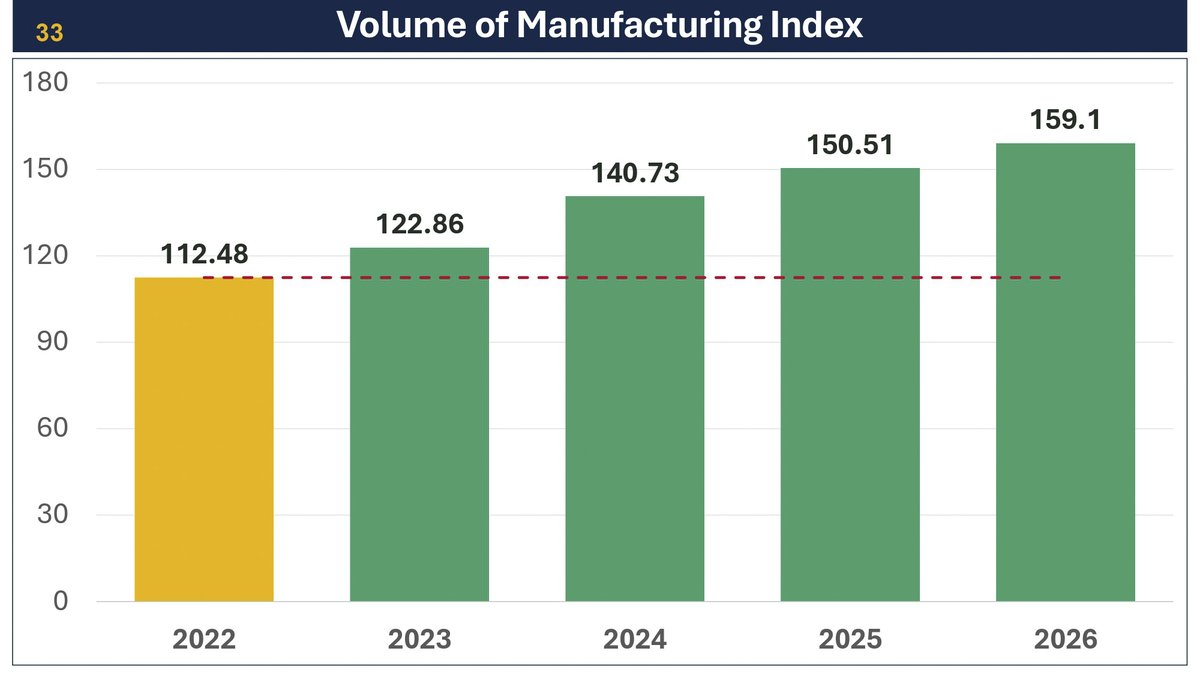
During the first nine months of this year, the economy recorded robust economic growth, with an estimated annualised half-year growth of 4,8 percent, mainly driven by agriculture, manufacturing and wholesale and retail trade.
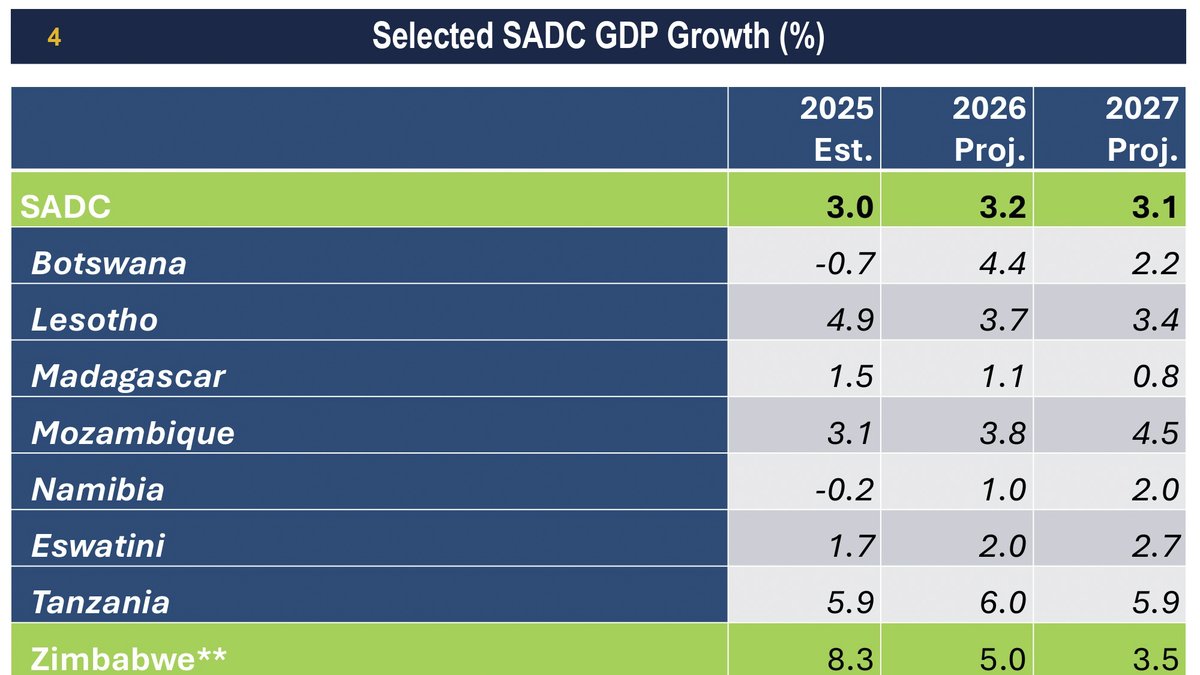
Amid strong performance across all key indicators, growth is forecast to remain strong next year, but slow down to 3,5 percent due to the impact of the likely drought on agriculture, a key anchor of Zimbabwe’s economy.
https://t.co/B1FkE495mH
Zimbabwe’s domestic inflation in local currency is now below the average for SADC peers, as prudent fiscal and monetary policies have sustained currency, price and exchange rate stability over the past two years, firmly anchoring inflation and exchange rate expectations
https://t.co/bJmNvMFHGi
The financial sector is safe and sound, on the back of sustained price, currency and exchange-rate stability. The foreign currency account bank deposits have increased from US$0,7 billion in 2018 to US$5,5 billion in 2026. Financial intermediation growth continues to support economic activities.
https://t.co/lJWbT7lFHe
"In 2027, economic growth is projected to moderate to 3.5%, largely reflecting the impact of the super El Niño and the drought related risks" Hon Prof Mthuli Ncube
The 2027 National Budget has been framed against a potentially challenging global environment, characterised by moderating global growth, geopolitical tensions and elevated energy and food prices.
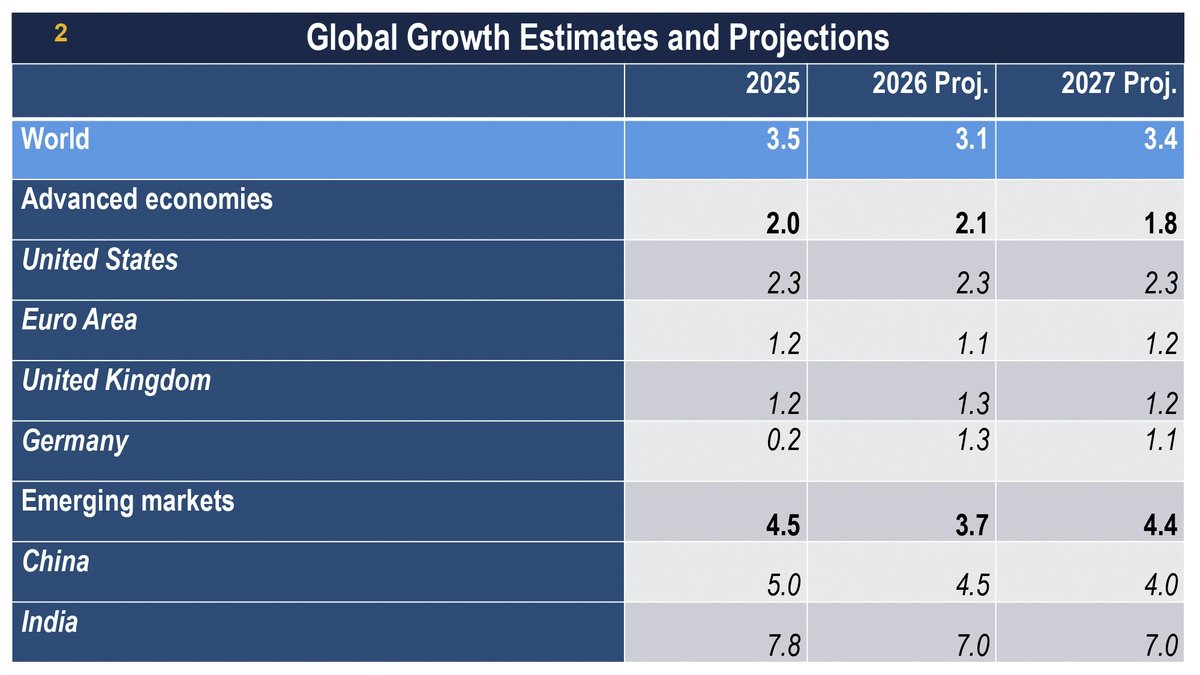
The latest IMF World Economic Outlook (WEO) is projecting a moderation in the global economy to 3.1% in 2026, before recovering to 3.4% in 2027. The global economy recovery is premised on growing investment momentum in artificial intelligence (AI), offsetting disruptions arising from the conflict in the Middle East.
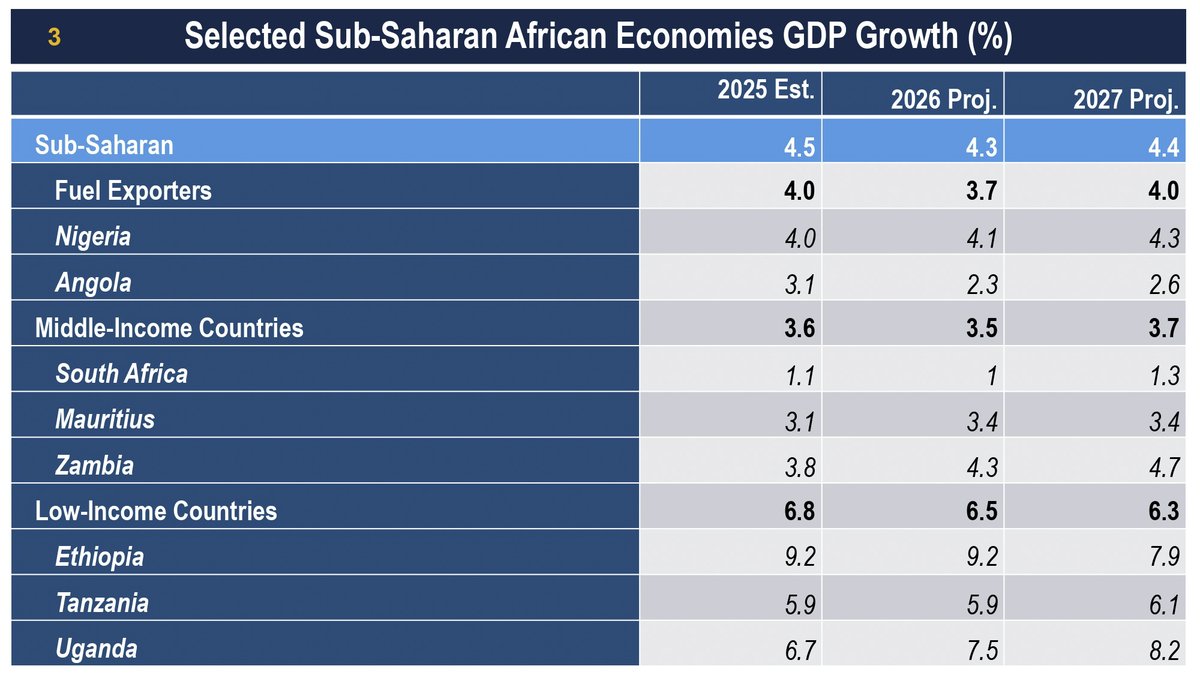
The Sub-Saharan Africa region is projected to record growth of 4.5% in both 2026 and 2027, while SADC growth is projected at 3.2% and 3.1%, respectively.
However, the outlook has been clouded by the conflict in the Middle East, compounded with declining official development assistance, as well as volatile international commodity prices.
MINISTER NCUBE SPEAKS AFTER BUDGET PRESENTATION
Finance Minister Professor Mthuli Ncube speaks after presenting the 2027 National Budget.
📹: Nyore Madzianike
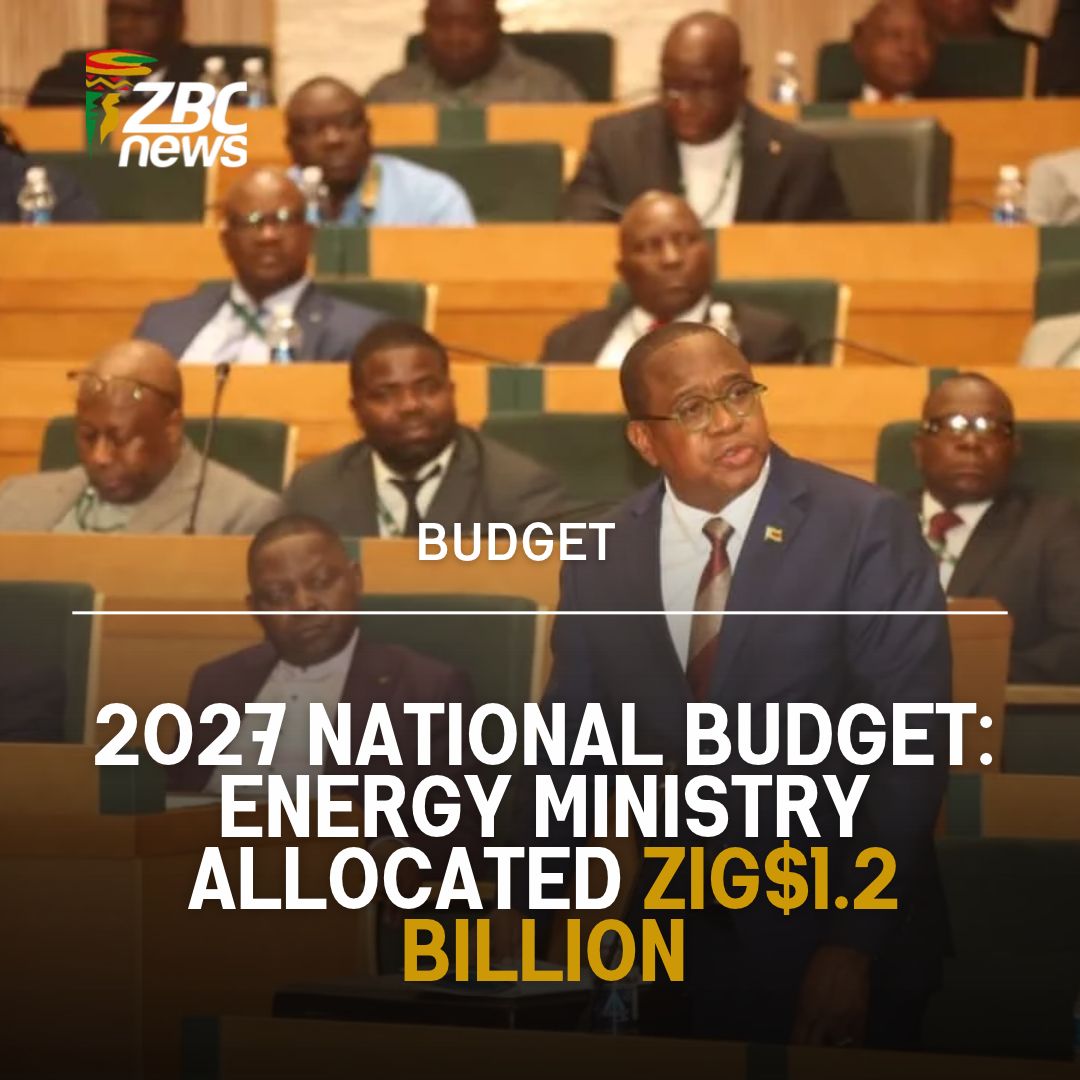
2027 NATIONAL BUDGET: ENERGY MINISTRY ALLOCATED ZiG$1.2 BILLION
The Ministry of Energy and Power Development has been allocated ZiG$1.2 billion in the 2027 National Budget, following more than 300 days without load-shedding in the energy sector, according to Finance Minister Professor Mthuli Ncube.
#2027NationalBudget #EnergySector #ZimbabweEconomy #ZBCNews
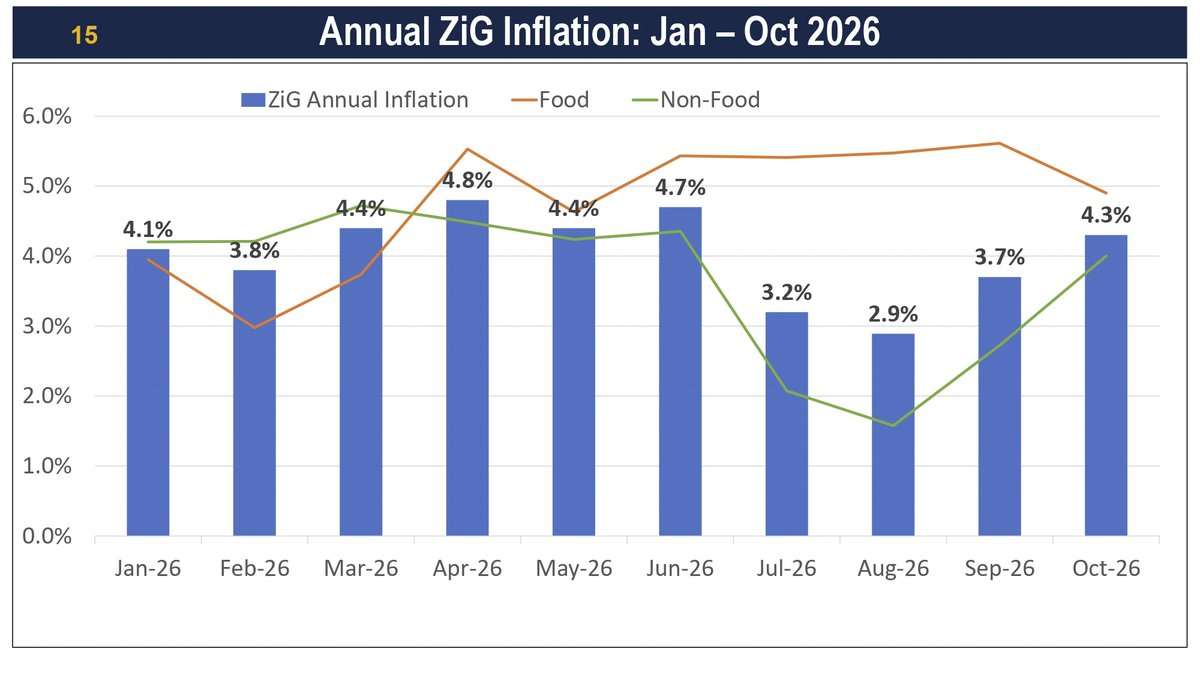
Inflation developments
Prudent fiscal policy and complementary monetary policy resulted in durable price and exchange rate stability, despite fuel price pressures arising from geopolitical tensions. Consequently, domestic inflation has stabilised and is now below the level of SADC peers.
The ZiG annual inflation remained low and stable, averaging 4.0% for the first ten months of 2026.
Inflation in both currencies is projected to remain contained within the single-digit levels in 2027.
2027 NATIONAL BUDGET: HIGHER EDUCATION MINISTRY ALLOCATED ZiG$15 BILLION
The Ministry of Higher and Tertiary Education, Innovation, Science and Technology Development has been allocated ZiG$15 billion to support institutional operations, infrastructure development, student welfare and innovation hubs.
#2027NationalBudget #HigherEducation #TertiaryEducation #ZBCNews