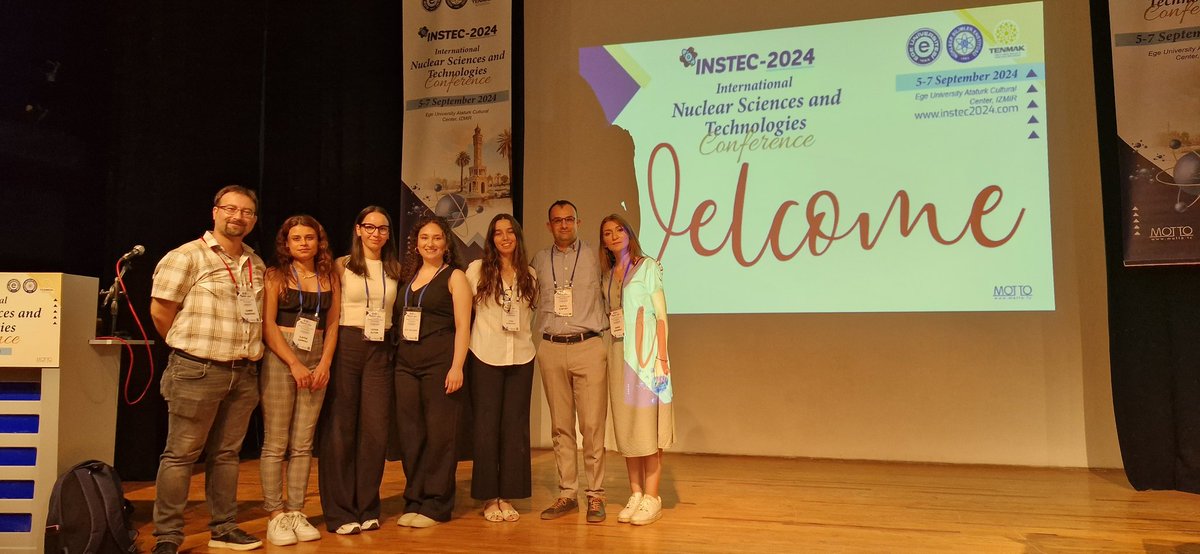
📍İDK-İRAP İzleme ve Değerlendirme Komisyonu Toplantısı Vali Yrd Sn Mehmet Sadık TUNÇ'un teşrifleri @izmirafad Sn. Nazif EKİNCİ'nin sunumları İzmir Büyükşehir Belediyesi üniversitelerimiz ilgili kurum yöneticilerimizin katılımlarıyla müdürlüğümüz toplantı salonunda gerçekleşti🇹🇷
This is not really true. The idea that there is “nothing Turkish about Turkey” collapses under the weight of simple observation: there are countless cultural elements that are unmistakably Turkish 🇹🇷, shaped by Islam, shaped by the Turkic migrations, shaped by Ottoman history, and shaped by the lived experience of the Republican century. One does not need to dig very deep to find what is genuinely Turkish.
That premised, beneath those more recent layers lie older cultural strata that did not simply disappear when the Oghuz Turks arrived. For more than a thousand years after the fall of the Western Empire, Anatolia remained the political and cultural core of the Roman world. Constantinople was the direct, unbroken continuation of the Roman state, and rural life in Anatolia changed very gradually rather than by sudden breaks, at least until the nineteenth century. When the Turkic groups established themselves in the 11th–14th centuries, they encountered deeply rooted Romean communities whose agricultural cycles, family structures, ritual practices and sacred landscapes had been shaped by centuries of Roman – especially Roman Christian – life. Many of those customs took on new meanings within an Islamic and Turkic framework and survived as part of a unique synthesis.
The depth of this continuity becomes especially clear when one places inland Anatolia alongside inland Sicily. Reading Don Giuseppe Pitrè – in Sicilian Fairy Tales, Stories, and Folktales and above all the monumental Library of Sicilian Popular Traditions – one is astonished by how many customs he recorded in the late nineteenth and early twentieth centuries can be traced back to late-Roman rural culture. Already in his time some of those traditions were fading in Sicily, but their functional core still survives, often quite vigorously, in the Anatolian countryside today.
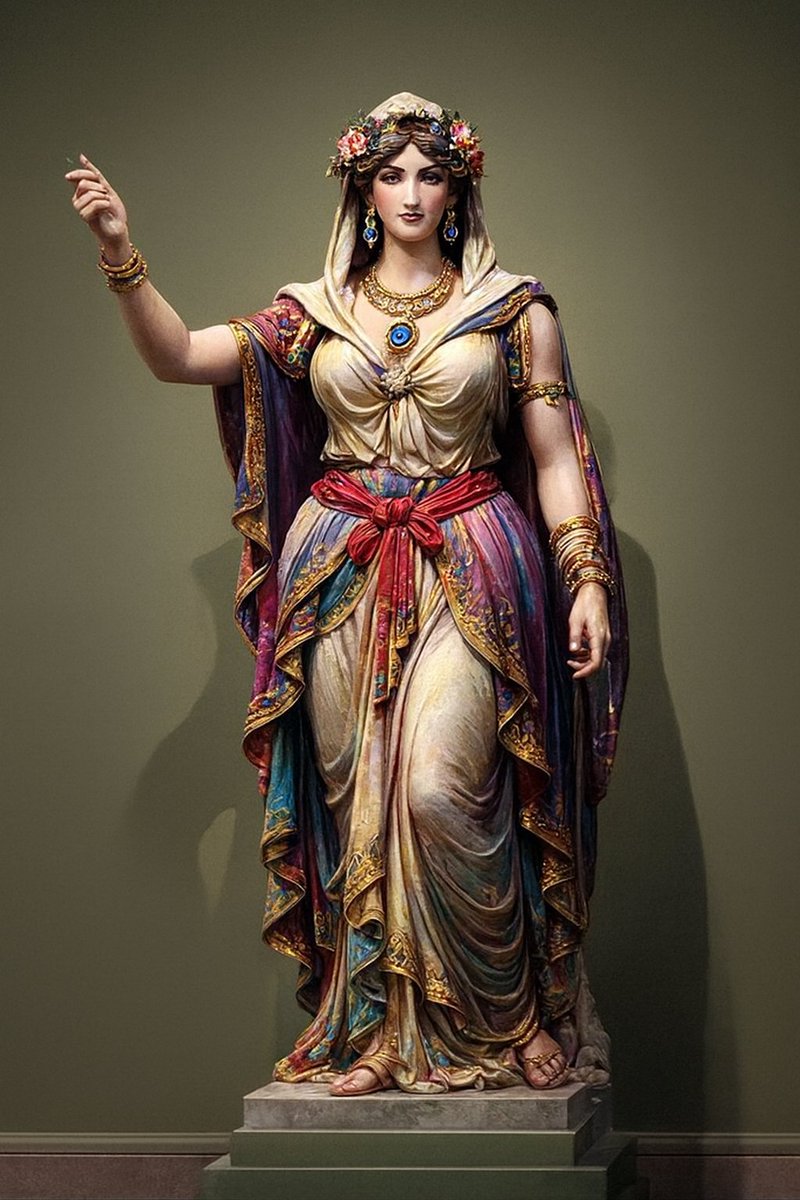
In the Sicily of his age, Pitrè describes red ribbons, silver hands and other amulets used to guard against the evil eye; in Anatolia one encounters the blue nazar bead protecting children and brides in precisely the same role. Sicilian villages honour their own holy protectors with seasonal processions linked to harvest and weather; in Anatolia local tomb-shrines, pilgrimage days and communal supplications to figures rooted in the land play a nearly identical part. The veiling of the bride, her ritual lament as she leaves her family home, the red belt she wears on her wedding day – the Roman cingulum, tied with a very hard knot, the knot of Hercules – and the symbolic foods ensuring prosperity are all ancient Roman marriage elements that Sicily kept into the twentieth century while Anatolia continues them today with Turkic and Islamic colouring, often blissfully unaware of their Romean roots.
Even the agrarian calendar, where Sicilian Christian feast days mark critical agricultural transitions, finds a mirror in Anatolian spring festivals such as Nevruz and Hıdırellez, festivals of fire and renewal. In Sicily, St Joseph’s vampe on 19 March preserve the same ancient impulse – great spring bonfires that once marked the turning of the year across Roman Italy. Death and remembrance likewise show shared habits: offerings of food to mourners, periodic visits to the dead, and a sense that the ancestors remain part of the community survive in both lands. And although each culture has its own heroes, the narrative structure of their folktales – the trickster, the miraculous helper, the moral journey – remains recognisably Mediterranean, part of a storytelling heritage the Romans shaped and successfully transmitted.
I often say that “the Turks are (in part) Muslim Romans.” Guilty as charged. It is an evocative metaphor, but yes, it oversimplifies a far richer reality, risking the erasure of the deep contributions of Turkic traditions, Islamic spirituality, Balkan and Caucasian migrations, and the social transformations of the Ottoman and Republican eras. What truly emerges is not replacement but syncretic continuity: Romean cultural memory, transformed yet unbroken, absorbed into – and reshaped by – a new civilizational layer.
The paradox, then, is that in many parts of Italy – even in Sicily – practices that Pitrè documented barely a century ago have now vanished or survive only in festival form. Yet in villages from Thrace to Cappadocia and beyond – well beyond the old frontiers with the Iranian and Arab worlds – those same practices, adapted to new beliefs, remain woven into the daily life of ordinary people. If one looks beneath flags, languages and modern identities, one discovers that the everyday life of Turkey still carries echoes of Rome – echoes that Sicily once shared and sometimes still vaguely remembers.
Had the Anatolians remained Catholics – either the Roman or the Greek variant – they would universally be recognised as the clearest heirs of the Romans. But historical circumstances led them elsewhere. So, if digging in Turkey reveals Roman foundations, that is because Rome lived in Anatolia longer than anywhere else. What stands on that ancient foundation today is Turkish – unmistakably, confidently, and syncretically so.
Fizik, Jeoloji Mühendisliği, Jeofizik Mühendisiiği, Fen Bilgisi Öğretmenliği ve Fizik Öğretmenliği Bölümleri bölümlerinden 1 lisans öğrencisine staj imkanı sağlayacağız. Son başvuru tarihi 8 Aralık 2025. Proje Yürütücüsü: Doç. Dr. Mutlu İÇHEDEF
https://t.co/QDhLcOLVz9
TÜBİTAK 2247C Stajyer programı başvuruları başladı. 125Y335 numaralı ve “İzmir/Smyrna Antik Kenti Su Kaynaklarının Fiziksel ve Kimyasal Özellikleri ile Radyoaktivite Düzeylerinin Belirlenmesi” başlıklı projede 1 lisans öğrencisine staj imkanı sağlayacağız.
@sarpergunsal@berkemceylan richter ölçeği öncesi deprem büyüklükleri zamanın tarihi kayıtları, gazeteler, mektuplar vs kaynaklardan elde edilen bilgilere göre tahmin ediliyor. Çoğunlukla bu depremlerin şiddeti verilir, büyüklük ölçülemedigi icin..
Our study, "Investigation of indoor radon levels in schools in the Bornova district of İzmir province" has been published in the Journal of Radioanalytical and Nuclear Chemistry. #Indoor#Radon#izmir#bornova https://t.co/n4a6uWFntV
Our study, "Variation of soil gas 222Rn/220Rn concentration ratios along the Balçova–Narlıdere segment of the Izmir Fault," has been published in the Journal of Radioanalytical and Nuclear Chemistry. #IzmirFault#Radon#Thoron https://t.co/4qhLrUq5M9
Our study entitled "Analysing Temporal Variations in Radon Concentrations: Identifying Trends and Changes " has been accepted for publication in Terra Nova. #Radon#Izmirfault#earthquake https://t.co/EwuIgSLFrX
@aydinozkaya@ugurses Bu konuda yanlış anlaşılıyor. TR' de üretici ne kadar vergi veriyor (Euro olarak) İtalya, İspanya, Fransa da ne kadar vergi veriyor? TR' de asgari ücret ne kadar karşılaştırdığımız Avrupa ülkelerinde ne kadar?
@barisgrckr@RowzReport 42 yaşında başladım kendi kendime kodlama ogrenmeye. R/Rstudio ile çalışmalarımı veri gorsellestirmek için..açık kaynak çok olsa da iş sebebiyle verilen her ara bir sonraki sefer başa dönmeye sebep olabiliyor.