アジア数ヵ国で本革、人工皮革、天然素材の靴、バッグ、SLGのOEM中心の生産の仕事をしています。In several Asian countries, working OEM-oriented production of Shoe &Hand bags, SLG by leather, Artificial mtrls
For decades, the economic potential of in-ground gold was largely realised through:
Mining companies - through extraction.
Royalty and Streaming funds - through acquisition.
Sovereign wealth - through scale.
nGRND introduces a different value framework built around preservation and alternative monetisation.
The hardest part of crypto security infrastructure isn't building it.
It's getting it adopted.
A privacy and identity layer that requires developers to rebuild their entire wallet will never reach scale.
The version that wins is a drop-in SDK, integrate it on any chain, in any wallet, in days.
Zero cost to adopt.
Adoption friction kills more good infrastructure than bad technology ever does.
Every ounce of Preserved Gold avoids an estimated 792kg of CO₂ entering the environment.
Value doesn't have to come at the cost of extraction.
Sometimes the most important thing you can do is leave it where it is.
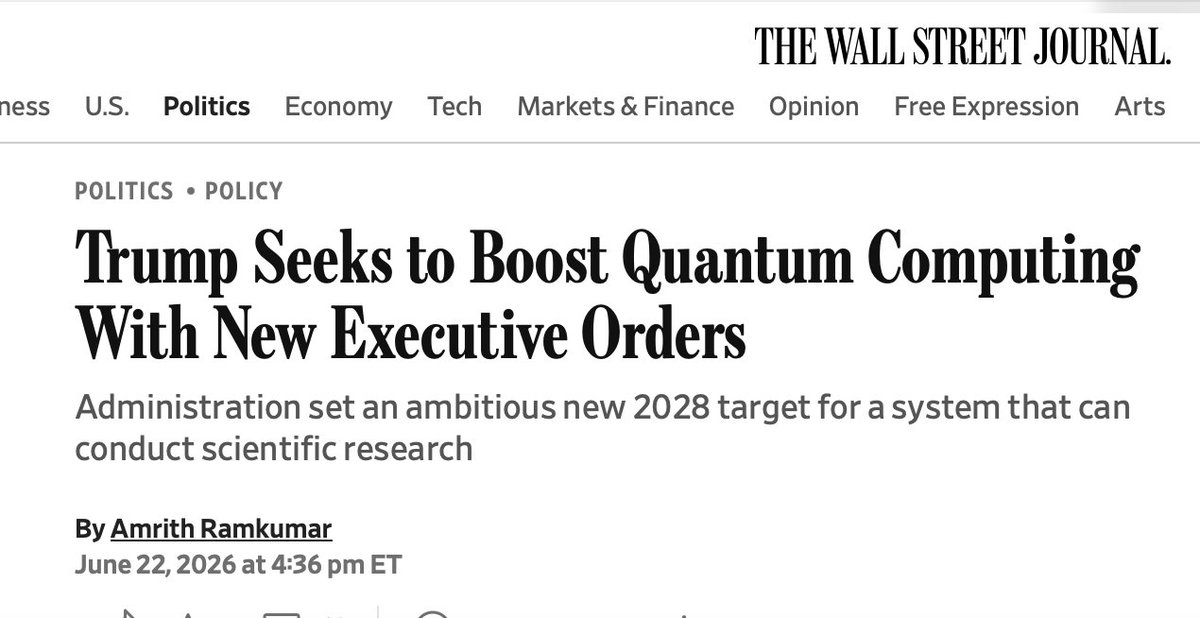
The quantum race just became a national priority.
President @realDonaldTrump 's new Executive Orders accelerating quantum computing development and preparing federal agencies for a post-encryption world are a reminder that quantum risk is no longer theoretical.
The conversation has shifted from if quantum computers will challenge today's security infrastructure to how soon organizations need to be ready.
For crypto, this is especially important.
Blockchains secure trillions of dollars in value using cryptographic systems that were never designed for a quantum future. The migration to quantum-resistant infrastructure will likely become one of the largest security upgrades in digital asset history.
We've believed from day one that quantum readiness is a necessity.
As governments, enterprises, and financial institutions begin preparing for the next era of computing, the need for quantum-resistant wallets, identity systems, and digital asset infrastructure will only grow.
Most compliant privacy systems have a backdoor.
They call it a "viewing key" - a master key that lets a third party see into your transactions. For compliance, supposedly.
But a viewing key is God mode. Someone, somewhere, can decide to look at your activity without your consent.
The better answer: no viewing key at all. The recipient can reveal their funds to whoever they choose, but no third party can decide for them.
Compliance without a backdoor. Disclosure without God mode.
First Class Metals has executed a binding agreement with nGRND in relation to its Kerrs Gold project.
FCM retains ownership of Kerrs, while nGRND creates a new funding stream by acquiring and keeping their gold while in-ground, creating Preserved Gold - value without extraction.
This is what innovation in a 5,000-year-old industry looks like.
Privacy and mixing got bundled together in crypto.
They were never the same thing.
Confidentiality means: the sender doesn't have to reveal their balance, their history, or their other holdings.
Mixing means: your funds get pooled with strangers to obscure the trail.
You can want the first without accepting the second.
The problem is that almost every privacy tool delivers confidentiality by forcing you through a mixing pool, and the pool is exactly what creates the compliance problem.
Confidentiality without commingling.
That's the actual goal.
Traditional gold changes hands, and every handoff introduces risk: settlement delays, counterparty failures, missing records…
nGRND's preserved gold held in its treasury is supported by a digital custody layer, creating an unbroken chain between the geological record and the on-chain position.
The value is there. The record proves it.
Storing gold costs central banks over $57 billion a year.
It doesn't generate returns. It doesn't produce yield.
In-ground gold doesn't need a vault.
It doesn't need guards, insurance, or transport.
It needs a new way of solving the value problem without extraction.