@skynet47397425 Yeah, you have to control eccentric movement to stop above the ground. The only flaw with the hand release PU is that you can basically just drop to flat and then use concentric contraction to move up.
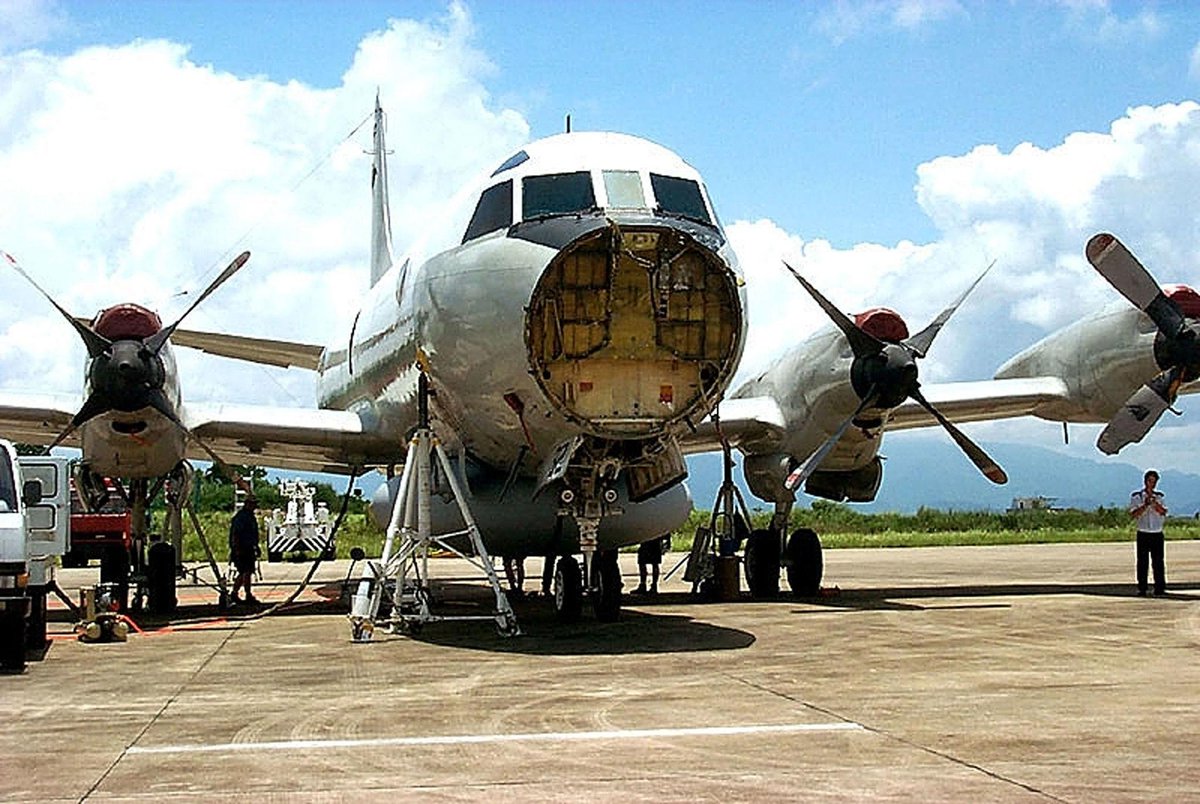
In 2001, a Chinese fighter jet hit a U.S. Navy plane carrying 24 Americans.
The pilot, Lt. Shane Osborn, was 26.
The fighter had already come within 3 to 5 feet of them. Twice.
On the third pass, it came in too fast and struck his propeller.
The nose cone was torn away.
The EP-3E snap-rolled to 130 degrees. Nearly upside down.
Osborn lifted his head and saw water.
"The first thing I thought was this guy just killed us."
Full rudder. Full aileron.
Nothing.
They fell 7,500 feet toward the South China Sea.
Then the controls bit. Slowly, slowly, the wings came level.
He called for bailout. Then he weighed ditching.
"Ditching the plane would kill everyone."
No airspeed indicator.
A hole in the cabin roaring so loud they couldn't hear the radio.
A broken propeller still spinning.
The pilot beside him said the plane shook "like a single wet towel in a washing machine on spin cycle."
"I knew it wasn't going to hold together indefinitely."
The closest runway was a Chinese military base on Hainan Island.
He turned for it and gave the order: destroy everything secret.
At least 15 maydays. No answer they could hear.
He figured his speed off the navigation system.
Final approach.
The front of the plane was so torn up, he didn't know if he still had a nose wheel.
Gear down.
He waited.
"Three down and locked."
That's when he knew they'd live.
But 109,000 pounds. Overweight.
No flaps.
"Way over the maximum no-flap landing speed."
He put it on the runway.
It rolled.
It stopped.
"I just can't believe we're alive!"
All 24.
Then he stepped out and saw his plane from the outside.
Gashes in the wing. A bent elevator. An engine chewed up by shrapnel.
Red paint from the fighter across the belly.
"I realized I was looking at a miracle."
After 11 days in Chinese custody, they came home.
And the 26-year-old said:
"America should be very proud of these 23 airmen."
There were 24 Americans on that plane.
He counted everyone but himself.
@Michael_Easter For sure. When I was doing Iron Man races my only dietary consideration was if it would fit in my mouth. I ate anything, anytime, and as much as I wanted.
Harold Cottam, age 21, sat unlacing his boots for bed shortly after midnight on April 15, 1912, while the Titanic sank in the dark 58 miles away.
His coat was already off in the radio room of the passenger ship Carpathia, yet he kept his headphones on for a few extra minutes to send the Titanic routine traffic.
Back through the static came an urgent call from coordinates reporting that the Titanic had struck an iceberg and was sinking.
Cottam ran to the bridge and burst into the cabin of sleeping captain Arthur Rostron to wake him.
Rostron ordered the ship turned toward the distress position at once, then paused in the quiet cabin to ask if Cottam was sure the signal was real.
The Carpathia had a top speed of 14 knots, so Rostron woke the off duty stokers and shut off cabin heat and hot water to send all steam to the engines.
Cabins went cold while the deck shook underfoot as the ship pushed past 17 knots through pitch darkness straight toward the ice.
Rostron posted extra lookouts on the bow, bridge wings, and mast, steering around tall icebergs by starlight without slowing down.
Inside, the crew turned all three dining rooms into medical wards with a doctor in each, readied hot soup and blankets, and cleared officer cabins.
They hung rope ladders, chairs, and canvas mail sacks along the hull, and poured oil down the forward lavatory pipes to calm the sea.
At four in the morning, Rostron spotted green flares from a lifeboat and stopped the engines at the ice field.
The shaking deck went still in the dark, and ten minutes later sailors pulled the first survivor aboard.
Daylight soon revealed dozens of massive icebergs surrounding the Carpathia on every side.
For over four hours in rough swells, crewmen hauled shivering adults up on ropes and lifted babies and small children aboard in canvas bags.
By half past eight, 705 survivors were safe aboard, and Rostron steered through thick fog to Pier 54 in New York on the rainy night of April 18, 1912.
Survivors pooled money to give a medal to every crew member, and on March 1, 1913, President William Howard Taft awarded Rostron the Congressional Gold Medal at the White House.
All 705 people who reached New York that rainy night were alive because a 21 year old with his boots unlaced kept his headphones on for a few extra minutes before bed.
That babbling boob can go into FBI HQ and open any file cabinet he wants. Now if you want to argue he’s incapable of understanding what he might read, OK.
“‘Maybe we’ll learn things that we would have never learned otherwise,’ he said.”
If Trump isn’t working for a foreign power, he is doing a great imitation of someone who is. https://t.co/wOaw2peLMP
The farmer, photographer and chairman of Berkshire Hathaway has made 28 visits to war-torn Ukraine, formed great friendships and donated more than $1.5 billion since 2022 to help the country’s people.
Read more: https://t.co/M3GM8bGNhb
📸: Muhammed Muheisen
@JackCarrUSA Events at the other facility nearby are equally intriguing. Since a discussion I had with Col Sydnor in the late 70s I’ve wondered about those events.
10 things you need to do every week to build blazing speed.
Save this.
1. Loaded, short heavy sled sprints
2. Maximal depth landings
3. Repeat plyometrics
4. Max effort short sprints
5. Max effort long sprints
6. Flying sprints
7. Reactive/moving starts
8. Vertical med ball throws
9. Horizontal med ball throws
10. Maximal pogo jumps
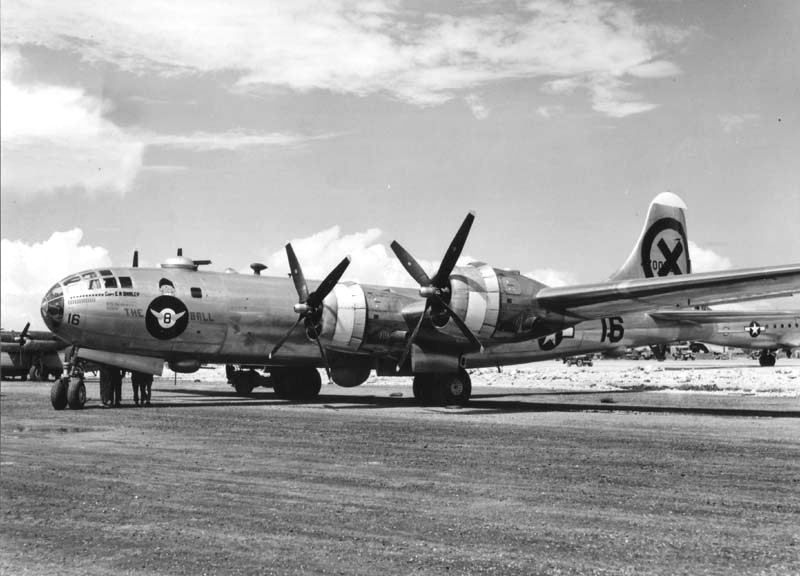
In 1964, forty-two-year-old Air Force Reserve Lieutenant Colonel Michael Novosel, who had flown giant B-29 bombers out of Tinian at the end of World War II, tried to volunteer for active duty in Vietnam.
The Air Force turned him down flat: they had too many senior officers, and at forty-two he was considered too old for a combat cockpit.
So Novosel walked across the street to the U.S. Army and made an astonishing offer: strip off my Lieutenant Colonel silver oak leaves, drop me down to Warrant Officer, and let me fly unarmed "Dustoff" medical ambulance helicopters so nineteen-year-old kids do not bleed to death in the mud.
At age forty-seven, on October 2, 1969, flying an unarmed Huey with zero gunship cover, Novosel made fifteen separate passes into point-blank machine-gun fire, getting shot in the leg and hand and even hovering backward up to an enemy bunker to pull twenty-nine surrounded soldiers to safety, earning the Medal of Honor.
Then his story somehow got even better.
His twenty-year-old son, Michael Novosel Junior, became an Army Warrant Officer too and requested assignment to his father's exact same Dustoff ambulance unit.
During a single week in March 1970, Mike Junior's helicopter went down with engine failure over hostile territory, and his forty-seven-year-old dad diverted overhead and rescued his own son. Exactly seven days later, enemy gunfire blew the tail rotor off the father's helicopter and sent him crashing into a flooded rice paddy, and twenty-year-old Mike Junior flew straight in and rescued his dad.
Before retiring as the last active-duty World War II aviator in the U.S. military, the father who gave up his rank personally evacuated five thousand five hundred and eighty-nine wounded souls.
Every Christmas for 22 years, grieving families sent letters to one quiet man blaming him for their dead sons.
He read every word in silence, never telling those parents that the United States Navy had used him to hide its own failure.
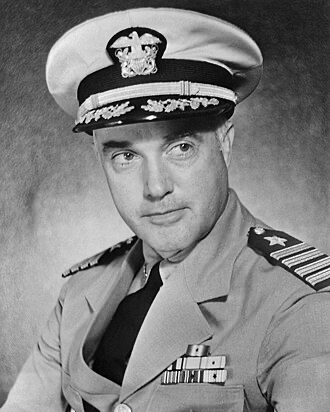
His name was Captain Charles McVay.
Out of more than 350 American warships lost in World War II, he was the only captain ever court martialed for losing his ship.
On July 30, 1945, after delivering parts for the atomic bomb, his cruiser, the USS Indianapolis, was torpedoed in the Philippine Sea.
The ship went down in 12 minutes.
Of the 1,195 men aboard, nearly 900 drifted in shark infested water for four days, and only 316 survived.
Navy officials knew Japanese submarines were in that area, yet they never warned McVay and denied his request for an escort.
To cover up those mistakes, the Navy blamed McVay for failing to steer a zigzag course and put him on trial in December 1945.
Prosecutors even flew the Japanese commander who sank the ship from submarine I 58, Mochitsura Hashimoto, to Washington to help convict him.
The plan failed in the courtroom.
Hashimoto testified that visibility was clear that night and zigzagging would have made no difference at all.
Even the enemy officer who fired the torpedoes tried to save him, yet the Navy convicted McVay anyway.
For 22 years, McVay carried the grief of those lost boys all by himself.
In November 1968, at age 70, he walked onto his lawn in Connecticut holding a toy sailor from his childhood and shot himself.
Then in 1996, a 12 year old boy in Florida named Hunter Scott heard about the ship in the movie Jaws and chose it for a school history project.
Over four years, Hunter interviewed nearly 150 survivors and gathered 800 documents proving that McVay was innocent.
In Kyoto, a 90 year old Hashimoto, now a Shinto priest, heard about the boy and wrote to the United States Senate asking them to clear his former enemy.
In October 2000, after Hunter testified before Congress, President Bill Clinton signed a law clearing Captain McVay of all blame.
In life, his own Navy left him to die on his lawn holding a childhood toy sailor, and in death, a 12 year old boy with a school project and the 90 year old enemy who sank his ship gave him back his honor after 55 years.