The enterprise AI playbook is changing
.@datadoghq's recent developer survey found that 70% of enterprises now use three or more LLMs across multiple tools, making multi-model AI the enterprise default.
Against this new reality, enterprises need two capabilities:
→ Routing: Match each workflow to the appropriate model (e.g. your team shouldn't be using Fable to summarize meeting notes).
→Retention: Reuse validated work across workflows. You shouldn’t pay inference costs to reconstruct reasoning and context that your organization has already produced.
The former optimizes the economics of inference; the latter builds an asset that compounds with each AI workflow and remains owned by the organization.
1/ Tokenmaxxing isn’t just a model problem
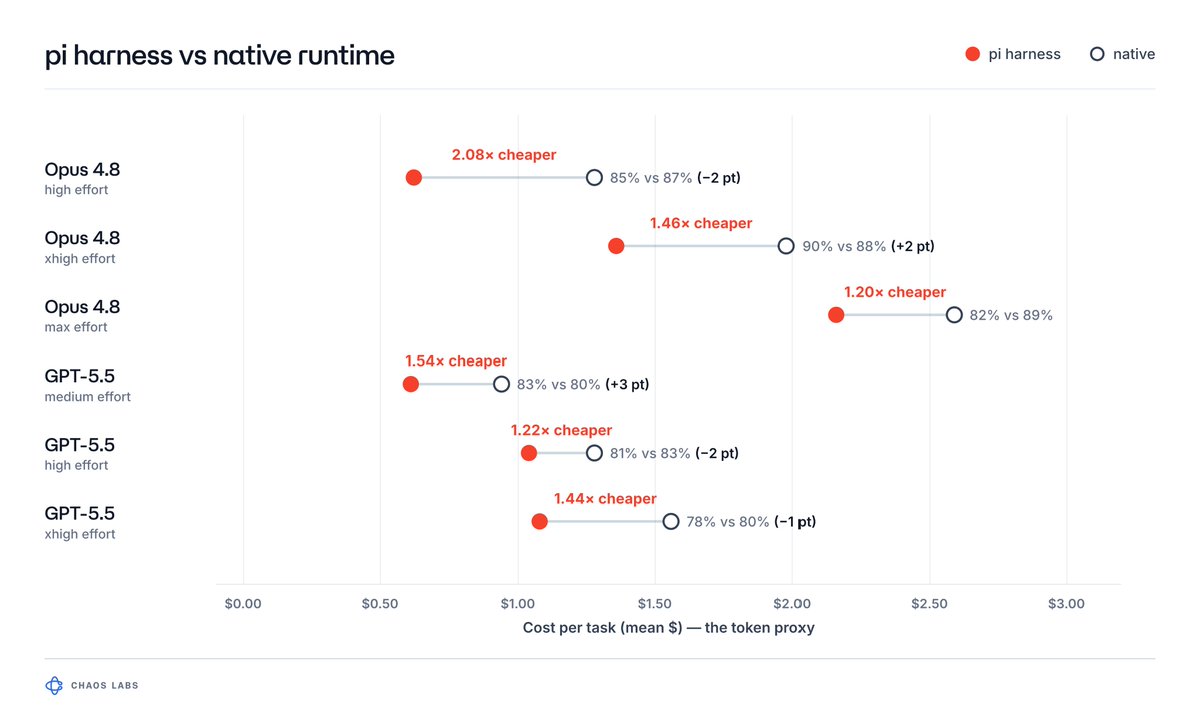
@databricks benchmarked AI coding agents across a production codebase used by 3,000+ engineers and found a surprising result.
Changing the agent harness reduced cost by 1.2-2.1× while maintaining comparable task completion rates.
The Tokenmaxxing Paradox: more code = more human review
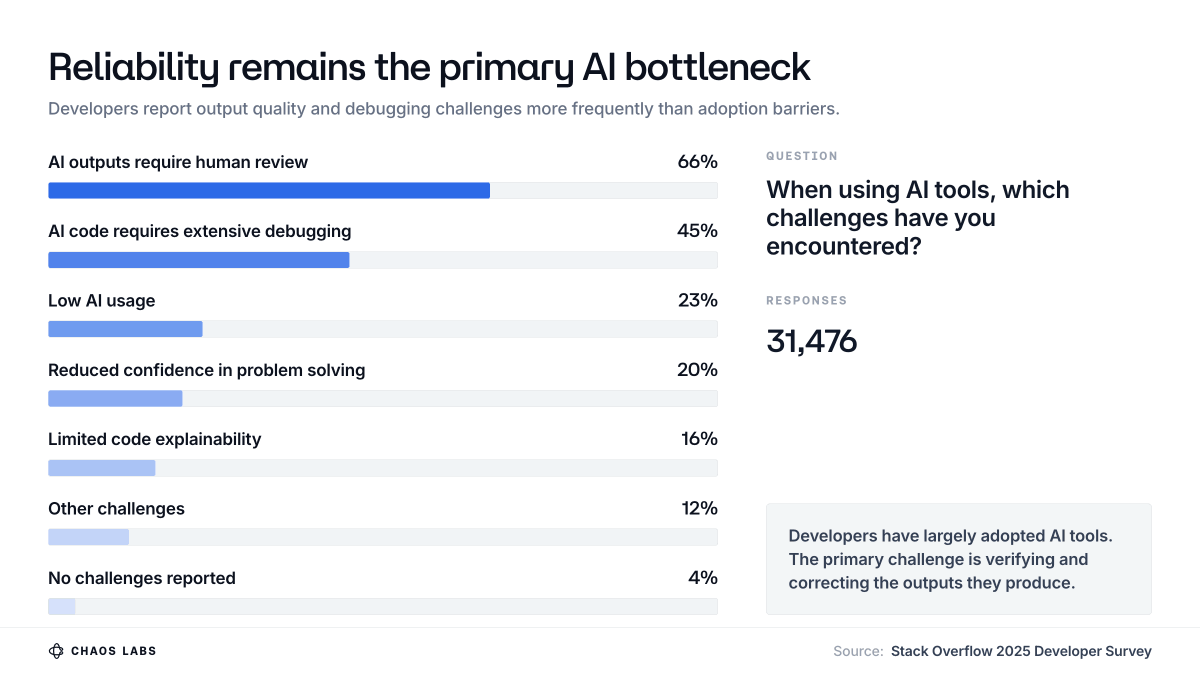
@StackOverflow's survey of 30k developers found that over 60% refine their AI-generated outputs, while nearly half spend significant time debugging them.
The bottleneck shifted from writing code to validating it.
「ME 730」: Real Impact
I’ve been building real impact on Meta Earth for 615 days and have helped 107 people earn daily unconditional basic income. Create your impact with us and win up to $20,000 in rewards! Join here:
https://t.co/X6doxnhzYf
#ME730#MetaEarth#MyMetaEarthStory
Frontier models burn millions of extra tokens on identical software engineering workloads
Sonnet 4.5 and Kimi-K2 consumed 1.5M+ more tokens vs GPT-5 on average while resolving the same SWE-bench Verified issues.
Organizations are investing heavily in AI, yet much of the reasoning produced disappears at the session boundary.
The result is an architecture where validated reasoning is repeatedly recomputed rather than retained.
Here's a map of the stateless vs memory-augmented AI loop:
Execution is the bottleneck in financial AI
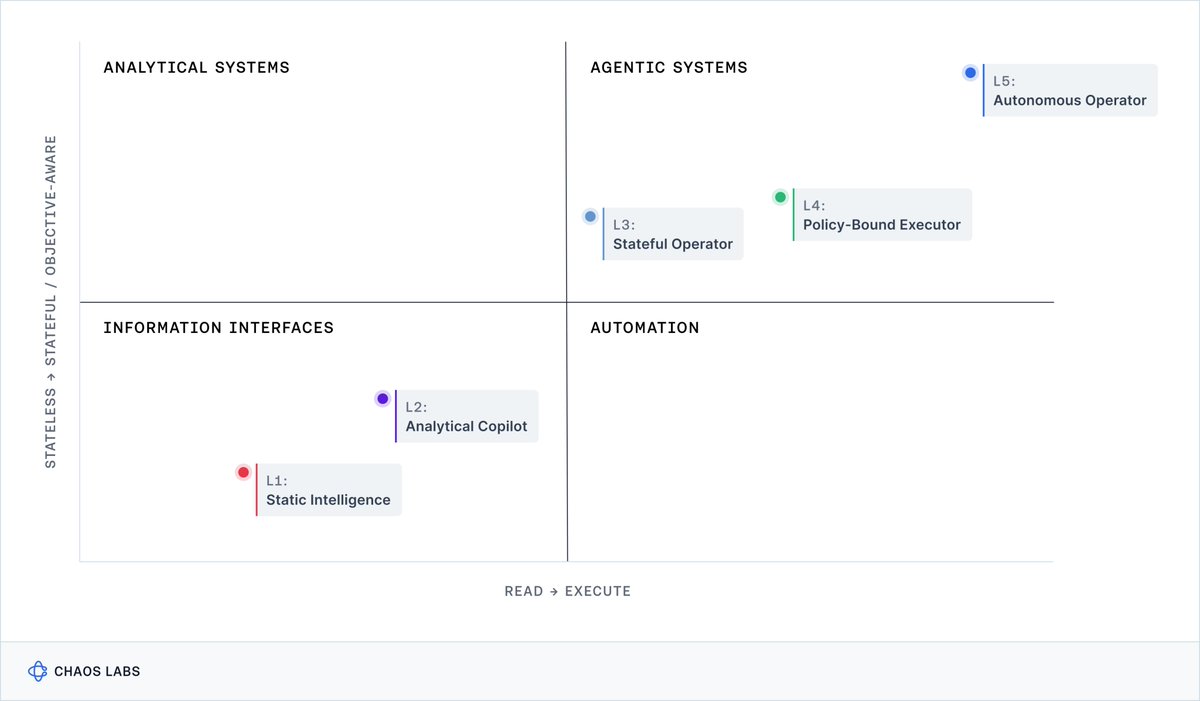
The shift from stateless analysis to execution requires real-time market state, portfolio awareness, and policy-constrained decisioning.
→ L1–L2: Stateless agents
→ L3: Stateful operators
→ L4–L5: Policy-bound executors
I’m not supporting Yusuf Buhari or any candidate.
But watching people relentlessly drag & attack him solely over his father’s past mistakes deeply pains me.
Yusuf has no personal scandals or bad record, yet his father’s errors are being weaponized to destroy his political chances in his constituency.
This is unfair. Judge people on their own merit, not their family name.
Chaos Labs has achieved ISO 27001 certification, reinforcing the security standards behind Chaos AI.
This ensures:
→ Faster paths to production
→ Consistent controls across data, models, and decision logic
→ Institutional-grade monitoring and incident response
Learn more: https://t.co/8C8F7xEwO1
Systemic risk typically originates from local shocks.
We’ve mapped how this risk propagates in our recent long reads:
→ USR & Drift contagion loops
→ HLP & WLFI: liquidity as counterparty
→ The five levels of financial agents
What should we cover next?
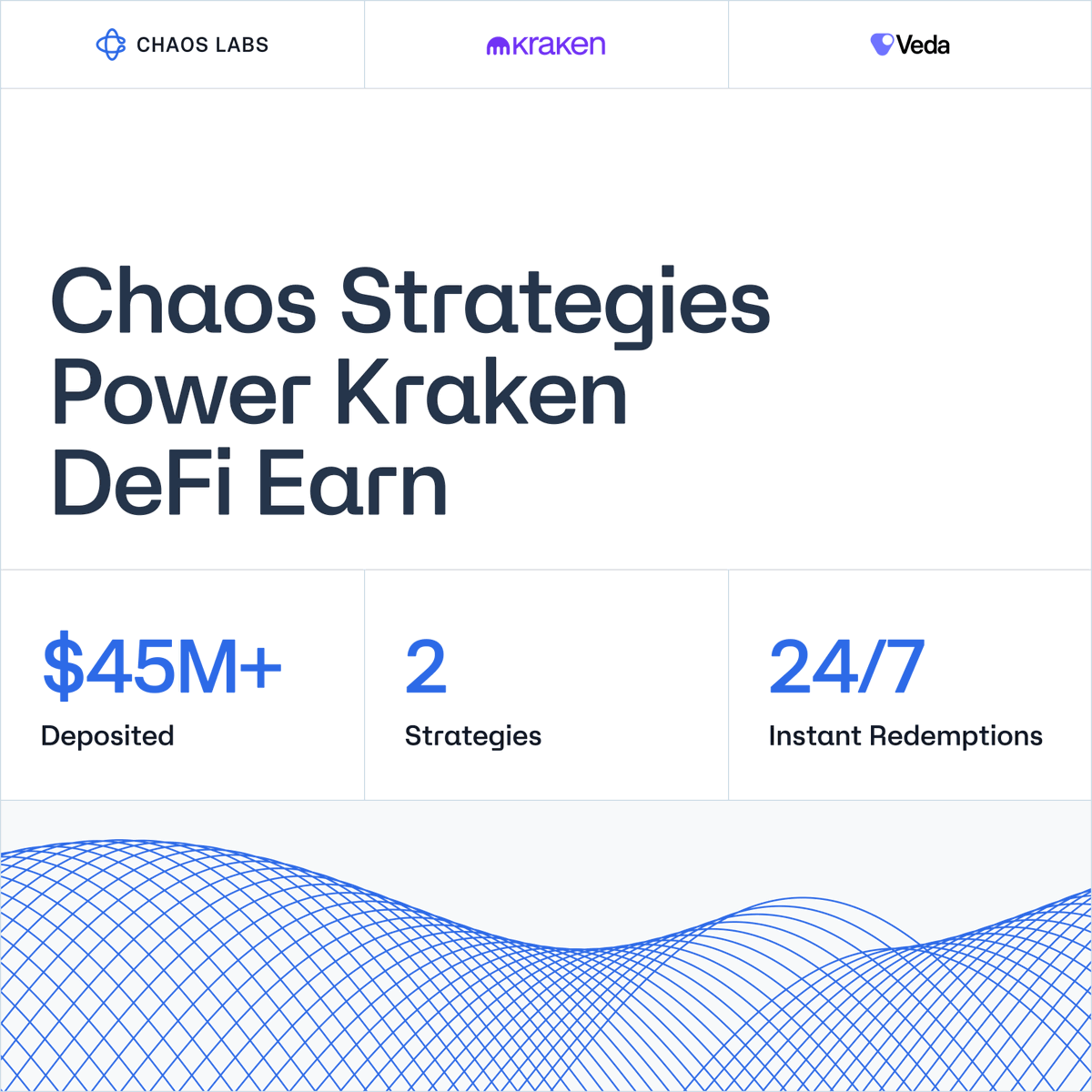
UPDATE: Chaos @Veda_labs Vaults on @Krakenfx DeFi Earn & @Krak have crossed $45M.
→ Balanced & Boosted strategies, built risk-first and powered by Chaos AI
→ Real-time monitoring across solvency, liquidity, and yield volatility
→ Instant redemptions 24/7
Financial AI has a gap between data analysis and execution.
→ Model context resets between interactions
→ Risk constraints break at decision time
→ Outputs fail to compound into action
We map the five levels of agentic finance in this piece.