The Neurology Residency chapter comes to a close after years of learning, growth, and unforgettable memories. Grateful for the mentors, colleagues, and friends who made this journey special.
Excited for the next step: Stroke and NIR fellowship.
@NeuroIRdoc The decision is nuanced weighing the net clinical benefit in each patient. In STOP-CAD we found that occlusive dissections benefit from AC. DAPT may also be preferred over aspirin in some cases. Here are some suggestions from an AHA statement. https://t.co/sjsDTWQcMh
Huge thanks to @HimanshuChokha1 & @AbubakarJam1 for all the support, guidance, and encouragement.
Excited to announce that I’ve matched at a 3-year combined program (stroke and NIR fellowship)!
Signing up for the #Neurointervention Fellowship #Match for a start date of July 2027? The application information and list of participating programs is up on https://t.co/8eeHc8JNGX! @SNISinfo@YNIScommittee@svinsociety Please spread the word!
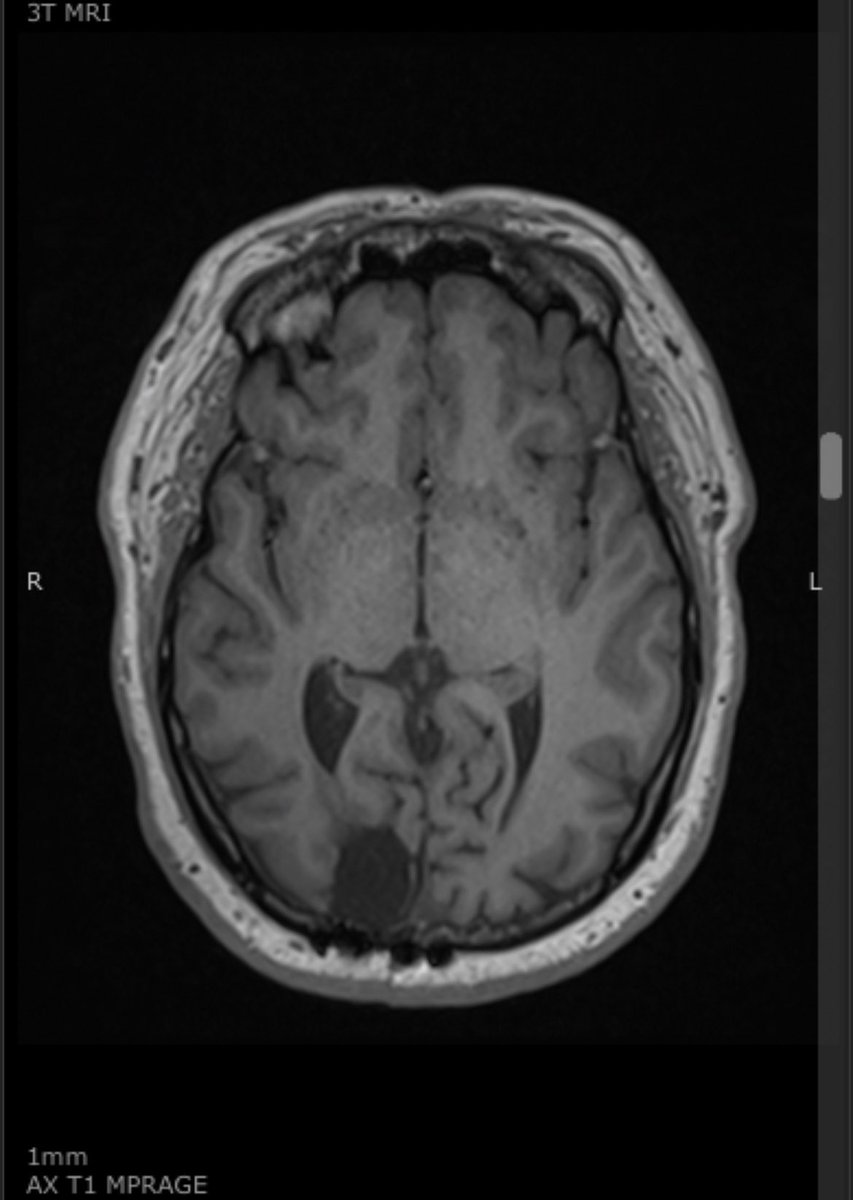
Pt presented aphasic
MRI mass like structure L pariento-temporal concerned for malignancy
Repeat MRI and MRI spectroscopy favours evolution of subacute infarct over CNS tumor
Subacute infarction appearance on MRI can mimic tumor
Pt described seeing white floaters
No visual field cut appreciated on exam
So the best possible guess was
Scotoma as Paracentral L homonymous hemianopia that was
too small to be picked up on confrontation method
MRI showed right PCA stroke
Do you know the 'movement disorder' commonly associated with yawning? It is called parakinesia brachialis oscitans (PBO) and was recently reviewed in a case published in @GreenJournal Clinical Practice by Salavisa and colleagues,
Key points:
- PBO defined as involuntary movement of a paretic upper limb that is triggered by the act of yawning.
- The authors case associated w/ tumefactive multiple sclerosis.
- PBO was reproducible w/ involuntary limb elevation w/ yawning.
- In this case improved w/ coincident and progressive improvement in MS.
- Experts call this an 'autonomic voluntary motor dissociation.'
- There is likely loss of cortical inhibition in cerebellum however keep in mind electricity still running through the spinocerebellar pathways (they are at least partially intact).
- PBO is common w/ structural lesions and of course in the setting of a 'weak limb.'
My take: Yawning is a really cool and interesting phenomenon. When levodopa kicks in; both primates and humans yawn. A yawn is stereotyped. It can normally be associated w/ stretching. Many chemicals have been implicated including neuropeptides, dopamine, acetylcholine, serotonin, nitric oxide, adrenocorticotropic hormone-related peptides, oxytocin and perhaps others. Opioid peptides can block the yawn. Much of the neuroscience of the yawn is in the brainstem. Look at the context of each case and do not be fooled or misled that this PBO is a 'typical chronic movement disorder' or as these authors point out; don't mistake PBO some form of a seizure.
https://t.co/PzMKO4bhUm
@son_of_sardar10 If eye pathology is cause, that can be treated. Visual pathway problems are difficult to correct. Encourage pts that they can avoid looking to visual filed loss area. However, antipsychotic can be tried in some case but not very helpful in all of them.
Charles Bonnet Syndrome
Visual hellucinations in area of visual field or visual acuity loss
caused by spontaneous activation of visual cortex
This pt having hellucinations in Left congruent homonymous hemianopia area after R PCA stroke
Do you know how to perform the “whack-a-mole” or WAM sign on your neurological examination? Just like the arcade or fair game; reemergence of involuntary movement in different body part after suppression of movement by examiner. Original name Japan: mole buster or mole smash.
Key points:
- It is specific but not very sensitive for functional movement disorders.
- Diagnosis of a functional movement disorder ideally supported by demonstrating positive signs during neurological examination.
- Development and evaluation of new positive signs is an important to improving diagnostic certainty.
- WAM sign was a highly specific (78%) and moderately sensitive (52%) test for the diagnosis of FMD. Tested across a variety of functional hyperkinetic movements. - Since stress or being under pressure may worsen abnormal movements during suppression of another body part and this makes it tough to be completely sensitive or specific.
- Marked difference in the inter-observer agreement values for the WAM sign between FMD and organic movement disorder patients (0.77 vs. 0.28).
- Greater than a third of persons tested, intra-person variability of the WAM sign. Translation: the test result depended on which part of the body was suppressed.
- History lesson: Whac-A-Mole arcade game created in 1975 by the amusements manufacturer TOGO in Japan.
- Original name Mogura Taiji モグラ退治, Mole Buster or Mogura Tataki モグラたたき, Mole Smash.
- Criticized for teaching children to be cruel towards animals.
- Used in rehabilitation to teaching auditory processing and attention.
My take is that you should never diagnose a functional movement disorder based on one examination maneuver or one visit in the clinic or hospital setting.
https://t.co/jFxnLoUH8V
Iatrogenic stroke can happen during mechanical thrombectomy procedure
This pt got PCA territory embolic stroke while getting MT for left M1 occlusion , probably arising from aortic arch plaque
Duration of Dual-Antiplatelet Therapy After Stent-assisted Coil for Unruptured Intracranial Aneurysm: A Nationwide Cohort Study https://t.co/nxDus7Oxa1
The first 'timed up and go' TUG test in Parkinson's occurred in a garden just after 1900 and the person was asked to walk between two chairs? Do you appreciate the camptocormia and the excellent example of festination of gait in #parkinsons.
Camptocormia: abnormal flexion of trunk in standing position increases w/walking; improves lying down.
Festination: The tendency to speed up and chase center of gravity.
https://t.co/EcOUINvOkB