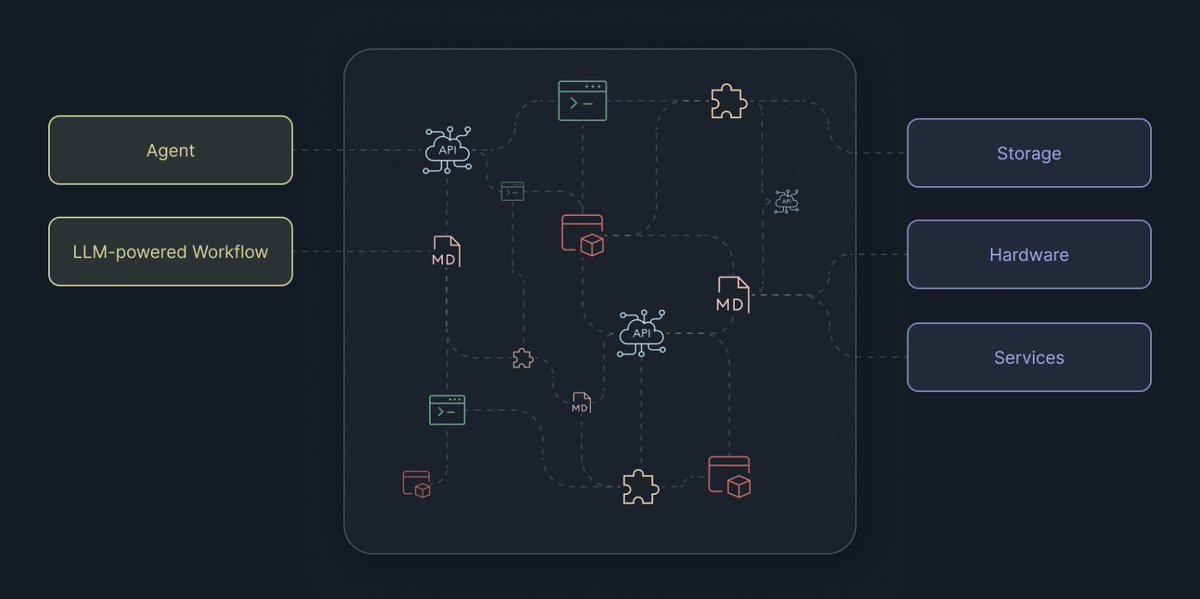
Agentic memory harness is more difficult than harness for coding agents.
There is no quick self-correcting loop, and unlike with coding tasks mistakes accumulate and multiply.
At #xmemory we are solving this once and for all.
We’re excited to share that our team at @xmemory_ai has published our main white paper.
The core idea is simple: without focus, AI systems try to "remember" everything, and that is where they fail. Schema is the best way to teach them focus.
We compared xmemory against major open-source and commercial RAG and hybrid RAG systems, markdown-file memory approaches ("agentic memory"), and memory implementations in customer-facing frontier AI apps. Instead of testing whether systems can recall similar text, we evaluated whether they can store, update, deduplicate, and retrieve facts and relationships reliably.
xmemory achieved 97% accuracy, compared with 87% for the strongest competitor. Our core also outperforms the latest frontier models’ one-shot APIs in extraction tasks, showing that the harness matters just as much as model quality.
We’ve also open-sourced our measurement datasets and a toolkit to generate new ones synthetically.
Huge thanks to the dream team of engineers at xmemory who keep pushing this vision into production. If your company is seeing memory systems fail in real workflows, we’d love to talk.
Been digging deeper into Claude Code leak lately, and a few things are becoming clearer.
First, it doesn’t actually use a vector database. That confirms my earlier intuition, and honestly makes me feel better about still paying for Cursor. In practice, Opus via Cursor often feels faster and more responsive anyway. There’s now a Rust port/fork of Claude Code floating around, though — I’d expect that direction to eventually introduce some kind of retrieval or vector layer.
Second, Claude Code really isn’t designed around persistent external memory. It’s basically the model’s context window plus whatever lives in-repo (Markdown, notes, etc.). Even its “self-notes” just eat into context. That feels like a strange design choice, especially given how aggressively it uses sub-agents. You’d think it would evolve lightweight internal rules or mini-linters over time — but not really.
Third, philosophically, it’s not very “model-first.” In fact, it’s the opposite. Claude Code wraps the model in a heavy harness with lots of guardrails and restricted autonomy — which is ironic, given Anthropic builds some of the safest models out there.
Compare that to OpenCode — which basically trusts the model and lets it operate more freely. If you assume a properly sandboxed environment, you could even argue that approach is safer long-term. Less rigid scaffolding, more adaptive behavior.
It raises a bigger question: where is all of this heading?
Do we end up with every major company building its own agentic coding framework?
Or do we converge toward full-blown “agentic operating systems” for development — the Linux / FreeBSD / Windows / macOS equivalents of AI-native coding environments?
Personally, I’m still leaning toward curated, manually reviewed extensions layered on top of these systems — scoped per repo or per org. Not fully open (at least for now), but composable and controlled.
Either way — this space is getting interesting fast.
We're out of stealth with @xmemory_ai, and are looking for customers and enthusiasts.
This video is cropped from our internal demo that is about three weeks old. What it does not convey — and what should be said out loud — is three things.
One. This expenses tracker is just one example use case. Our solution is, of course, generic.
Two. The world is waking up to the fact that AI memory is an integral part of system harness, not an external module connected to it. We knew this far before the company was started in the Fall of last year.
And three. Our accuracy is insanely high. We're at over 97% with no looking into the future, while both Claude and ChatGPT — that are seeing the entire test suite up front, and that are writing scripts for themselves, tailored to the particular question at the end — are at 92%.
I'm in New York this week, and in San Francisco next week. Friends and colleagues — hope this got you interested, and my DMs are open. Everyone else who I do not know yet but should — let's chat!
And this is one of a few posts from yours truly where I'd shamelessly add that likes and shares and private copy-pastes are much appreciated. Thank you.
Why are we forcing agents to adapt to software stacks that were never designed for them? A lot of what people call "agent infrastructure" today looks like a temporary patchwork - prompts, wrappers, glue code, and brittle orchestration compensating for systems that cannot express meaning clearly enough on their own.
We think that is backwards. Agents should handle intent and reasoning. Systems should handle semantics, structure, and ambiguity. If that shift happens, it could change the software stack more than most people expect.
Read our second blog post via the link in the first comment.
Today we’re sharing our first blog post: “Schema as the Core of Reliability.”
Our view is simple:
AI memory breaks down when facts are stored as unstructured text and reconstructed later. That approach can work for thematic recall, but it becomes fragile when systems need to answer exact questions, maintain state, support workflows, and drive automation.
In the piece, we explore why:
- Search can recover context, but memory must support facts
- Graph RAG is a meaningful step forward, but not the endpoint
- Reliable memory needs structure - types, relations, constraints, deduplication, provenance
- Schema is not decoration - it is the contract that makes memory observable, enforceable, and dependable
If AI systems are going to do more than sound coherent - if they are going to make decisions, trigger workflows, and operate over long horizons - memory has to become a governed system of facts.
That is where reliability starts.
Read the full post - link in the first reply.
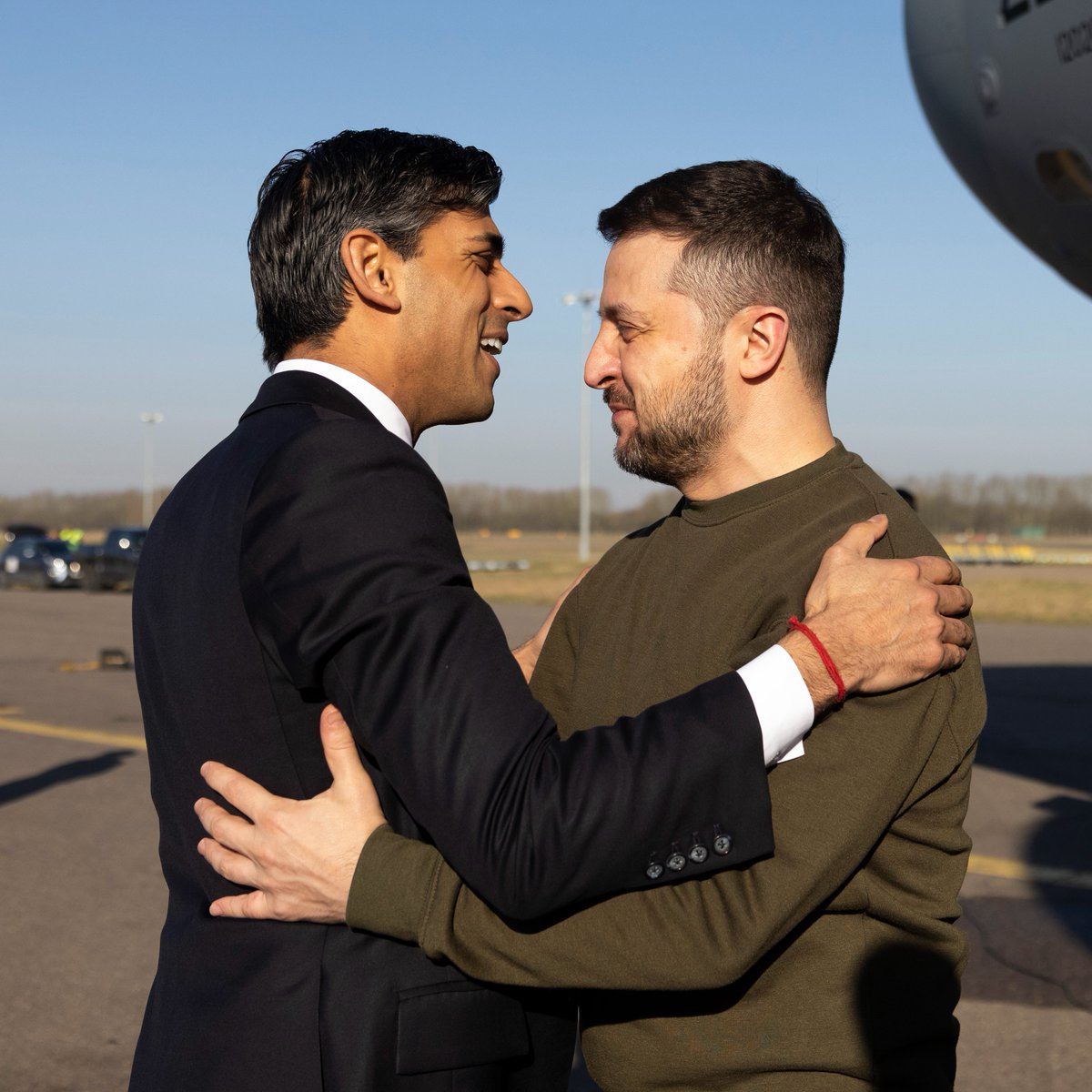
Great Britain - meeting with @RishiSunak. Spoke about defense and very important British leadership in military coalitions.
I am grateful to the 🇬🇧 for the decision to train our pilots. We are creating a coalition to train pilots on modern Western aircraft.
We continue our work on the fighter jet coalition as well, and we are moving forward actively.
And of course, I am grateful to the UK for the long-range capabilities for our warriors against 🇷🇺 terror.
God save the King!
Glory to Ukraine!
Italy, Germany, France, Great Britain... We are returning home with new defense packages. More new and powerful weapons for the frontline, more protection for our people from 🇷🇺 terror, more political support.
At all the meetings we discussed our Peace Formula, and now there is more willingness of our partners to follow the 🇺🇦 formula. There is more support for our accession to the EU, more understanding that Ukraine's accession to NATO is inevitable.
So, the main results of these days are: new weapons for 🇺🇦, respect for Ukrainians, and our victory has been brought closer.
Kudos to everyone who helps!
A video has begun circulating on social media of a Ukrainian 🇺🇦 Soldier being beheaded by Russian Soldiers
What Russia is doing is what ISIS would do. That’s just one of thousands of Crimes against Humanity by Russia against Ukrainian Soldiers, Families, Men, Women, and Children
Russia is kidnapping our children. It is the largest state-sponsored kidnapping of 🇺🇦 children. With this forced deportation, 🇷🇺 tries to erase the family & national identity of young Ukrainians. It is the genocide of a nation. Everyone who organized it will be held to account.
Tomorrow will mark a year since Putin's brutal attack on Ukraine.
At 11am we will pause and stand together with our Ukrainian friends, as we have done at every stage, in their continuing fight for freedom.
#StandWithUkraine
Historic. Timely. Brave. I welcomed @POTUS in Kyiv as Russian full-scale aggression approaches its one-year mark. I am thankful to the U.S. for standing with Ukraine and for our strong partnership. We are determined to work together to ensure Ukraine’s victory.
Thankful to @POTUS for another security aid package. And for unwavering leading support 🇺🇦 in our fight against Russian aggression. No missile terror will stop our fight for freedom! It is important that the people of 🇺🇸 are side by side with the people of 🇺🇦 in this struggle.
🧵/ Back In 1998 a journalist from St. Petersburg discovered that Vladimir Putin should have not been appointed as a head of Russian security service (FSB) – internal rules said one should have at least Lieutenant general rank for that.
In the 100 days since Putin’s barbaric invasion, Ukrainians have fought back with supreme courage and dignity.
Our support for Ukraine will never waver until Ukrainians enjoy the peace and freedom that their heroism deserves.