Voice has been one of the most requested features in Chatwoot since the early days.
Support does not happen in one channel anymore. A customer might start on live chat, follow up on WhatsApp, reply over email, and, in some cases, a quick call is still the fastest way to solve the problem.
We always knew that voice had a place in Chatwoot, but we wanted to get the foundation right first.
Over the last few years, we have focused on making Chatwoot a solid product for text-based customer conversations across live chat, email, WhatsApp, social channels, help center, automation, and AI. Once those workflows became mature, it made sense to bring voice into the same experience.
Today, we are introducing voice calls in Chatwoot.
We launched voice calls in Chatwoot today. If your support team still jumps between phone tools and customer conversations, this one is for you. Would appreciate your support and feedback on Product Hunt 🚀
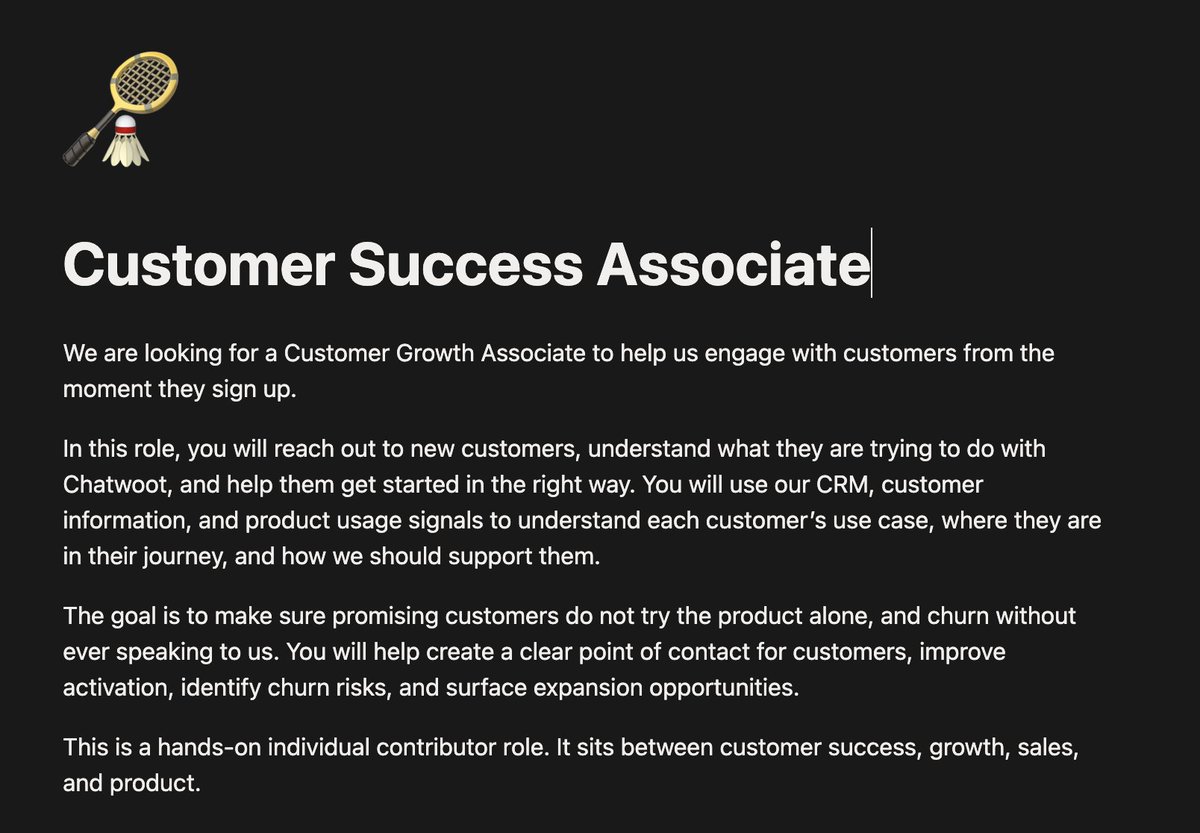
We are hiring a Customer Success Associate at Chatwoot.
You will work with new customers from day one, help them get started, understand where they are stuck, and make sure they get the most out of Chatwoot.
If you enjoy talking to customers and working at the intersection of support, growth, and product, we’d love to hear from you.
We built a Chatwoot CLI.
AI agents need safe ways to work with support systems.
Not full database access.
Not fragile browser automation.
Not random API calls stitched together.
A clear command-line interface.
With the new CLI, an agent can read conversations, understand context, draft or send replies, assign conversations, resolve threads, export data, and run controlled actions.
Developers can use it too:
chatwoot convs
chatwoot conv <id>
chatwoot conv <id> reply
chatwoot conv <id> assign
chatwoot conv <id> resolve
It works well with tools like Claude Code, Cursor, and Codex because the actions are explicit and easy to review.
The dashboard is still where most teams will work.
The CLI opens up a new layer: scripts, automation, internal tools, and AI agents that can operate on top of Chatwoot safely.
Still early, but this is the direction we’re excited about.
✨ Captain Tools is now live.
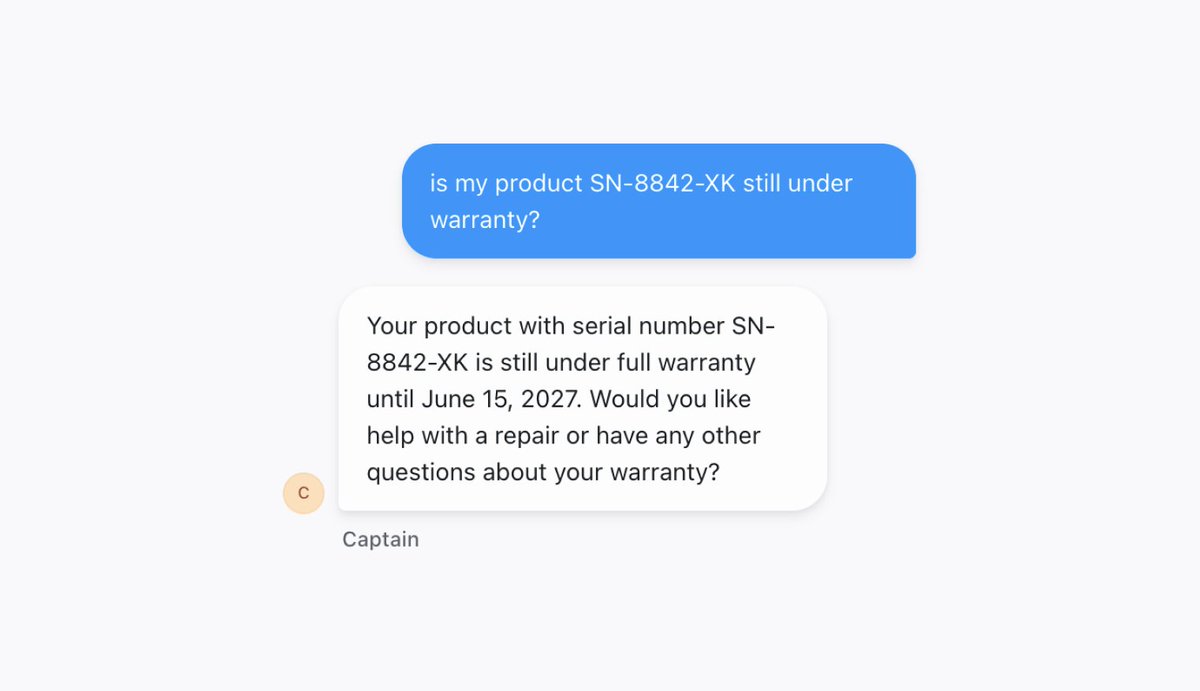
Captain can call your external APIs during conversations to check warranty status, verify service coverage, or fetch data from your systems without needing a human handoff.
Introducing Faultline
An open-source AI agent for infrastructure debugging.
- Ask your questions in plain English, get root cause analysis
- Queries New Relic, Sentry, AWS, GitHub, and PagerDuty autonomously
- Cross-references metrics, errors, deploys, and logs
Connect your monitoring stack and let it investigate. Fully open source.
A new Captain update is rolling out soon. Captain now supports complex scenarios, not just simple QnA flows.
Here’s what’s coming:
Scenario automation: You can define multiple situations and how each should be handled automatically.
Expanded functions: Captain can now access more parts of Chatwoot and external systems to complete tasks end-to-end.
Bring your own tools: Use our tools interface to connect your favorite apps or internal APIs.
The update is now available in beta, reach out to our support team if you’d like to enable it.
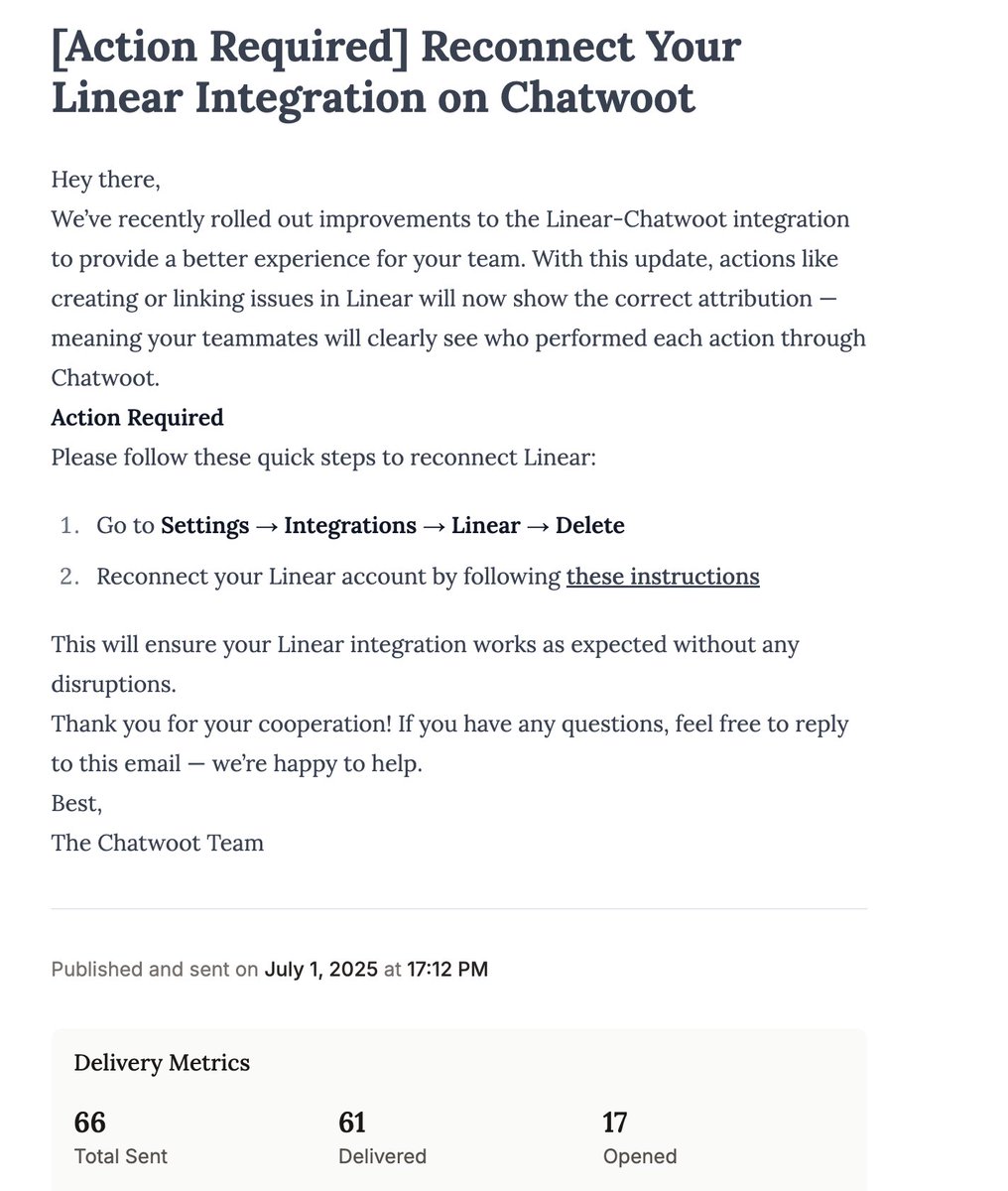
We needed to send an email to few customers about our Linear integration. Tried https://t.co/ATjArBkEem — setup took 15 mins, full campaign done in 30. Nice work @Scmmishra, Love how simple it is ❤️
Building AI agents in Ruby has been hard, especially when you need multiple agents to work together. While building Captain at Chatwoot, we realized the process was complex and fragile. Even small changes made the system harder to understand. We built a small abstraction to define tools, which helped us create a few agents.
At one point, we looked at tools like OpenAI Agents and Crew. They offered simpler ways to build agent systems, but using them meant giving up our monolithic setup. That would have added more complexity. We’d have to rethink how we deploy, monitor, and scale everything. It didn’t feel worth the tradeoff.
Then last week, during a discussion, we thought: “Why can’t we just build our own library?” We had all the pieces, but hadn’t thought about packaging it cleanly. So we gave it a shot. In just a few days, @Scmmishra and @TanmayDeep had something working. It came together faster than we expected.
Now we have a lightweight library that can run inside Sidekiq, works seamlessly with background jobs, and keeps agent context clean.
We’ll be open-sourcing it soon. If you’ve been trying to build AI agents in Ruby and felt like you were forcing it to work, this might help. We’re excited to share what we’ve built and learn from others solving similar problems. It’s still early, but the foundation feels solid. More soon.
We’ve been working on making our copilot better. We wanted to solve a lot of our internal use cases with it.
Most copilots for support we saw, focused only on rewriting replies or looking up documentation, but the work in support often involves looking for context and taking action.
We started with solving 3 things:
- While handling a conversation, I wanted to know: Have I talked to this customer before about a specific topic, in any of the past conversations?
- If there is a bug, I want to validate whether similar issues are reported in Linear.
- Can I search through my data to find things like customers with certain traits or conversations that mention something specific? For example: Who are all the customers who reached out to me in the last 10 days, and how many of them were enterprise customers?
We started building something that could do these. Pretty simple: Look things up and connect to tools.
It’s already working with Linear. Stripe and Shopify are under development. We’re adding more. Let us know what you’d find useful.
If you’re building support workflows or thinking about agent tooling, I’d love to hear how you’re approaching it.
Say hello to Captain, our AI agent built for customer support.
It takes care of common questions, gives smart suggestions to your team, and makes support easier for everyone.
Now available on Chatwoot Cloud. Self-hosted version coming soon.
Ever since we shipped Agent Bots in @chatwootapp , a UI to manage them was on my todo list… for 5 years 😂
Finally shipping it — 2 hours jamming with Claude code.
AI-assisted productivity is unreal.
PR → https://t.co/EemGYGbfvM