Survive war, navigate exile, praise the system, and please keep criticism safely within acceptable limits. Afghan diasporic peacebuilding in Australia refuses this script. https://t.co/ytueodaYzW
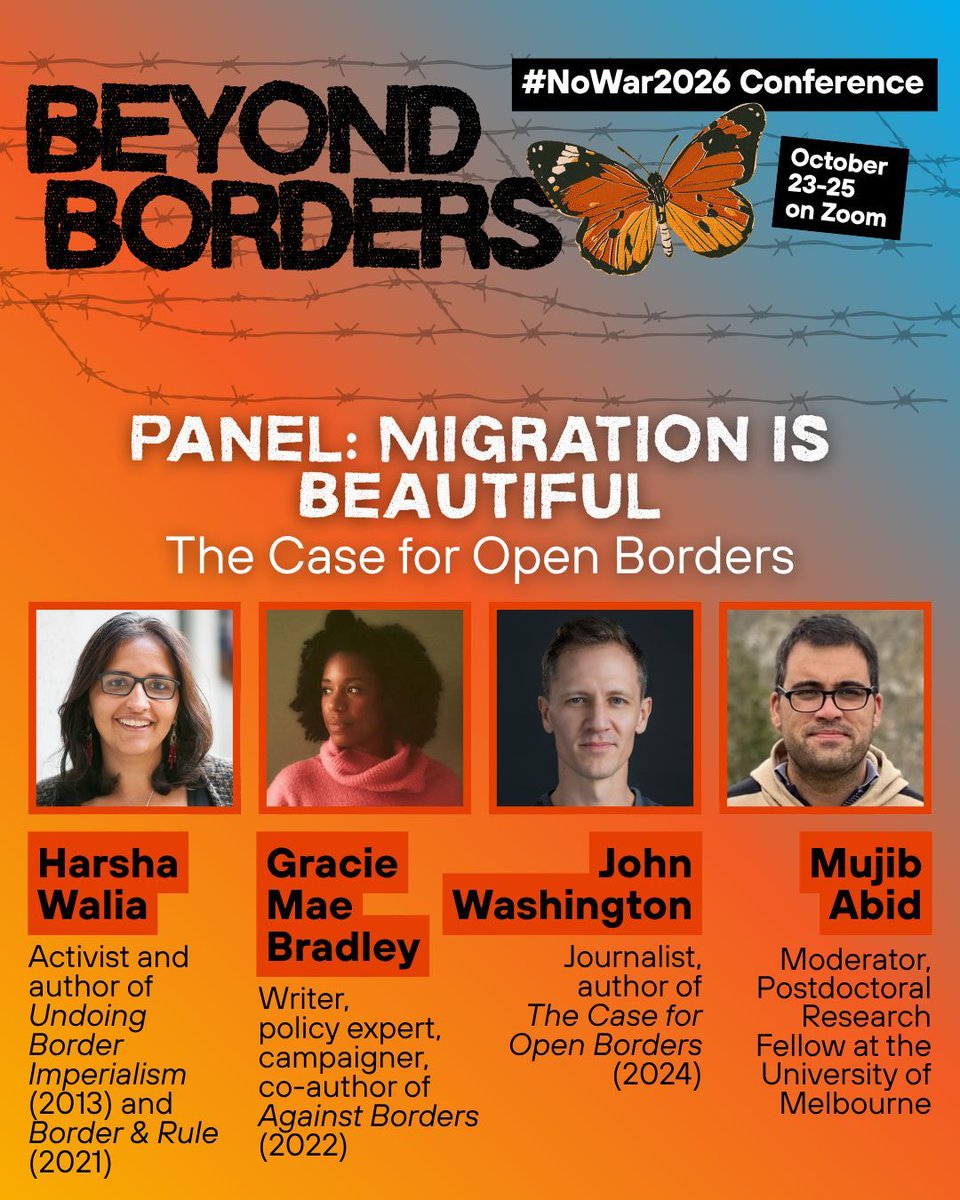
We're excited to start unveiling the panels for #NoWar2026! First up: Migration is Beautiful: The Case for Open Borders, featuring @HarshaWalia, @graciemaybe, and John Washington, moderated by @MujibAbid.
More info: https://t.co/Zc5Prd4Ynj
The First Intergalactic Conference on Resistance Studies kicks off at University of Massachusetts Amherst. Great to be here as a part of global resistance movements with activists, scholars and practitioners from all continents. #resistancematters#speakout4truth@UMassAmherst
UNAMA is concerned over multiple arrests and detentions of women in Herat #Afghanistan for alleged non-compliance with dress requirements, which raises serious human rights concerns.
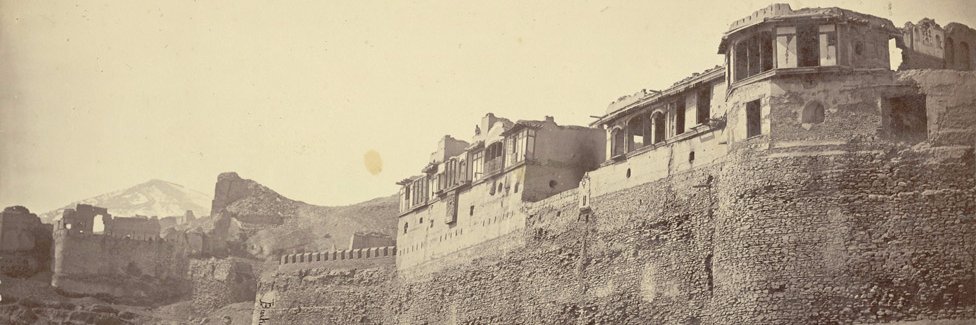
وزارت اطلاعات و فرهنگ میگوید در جریان سال گذشته صدها اثر باستانی در نتیجه حفریات علمی در بالاحصار کابل بهدست آمده و همزمان دهها ساحه تاریخی جدید در کشور شناسایی و آثار متعددی به موزیمهای ملی و ولایتی انتقال یافته است.https://t.co/t95qVtrR7C
Today was one of the most horrifying days of my life as an academic. Walking through Iran University of Science and Technology, a top-ranked public university in Iran, I was struck by the devastation. Only last month, this campus was alive with students, bustling between classrooms. Now, parts of the campus lie in ruins, classrooms shattered, hallways choked with dust and shattered glass.
I saw the offices of professors burned. A newly renovated building, where students gathered for programs, for socializing, for life, destructed.
One student, tearfully, told me: “My professor’s office was still burning a little. That’s where I used to wait for office hours. To ask questions. To appeal my grade.”
This is the same university that launched Iran’s Omid and Zafar 2 satellites, symbols of homegrown technological achievement. A week ago, one of its professors was assassinated. Yesterday, they bombed it.
From sanctions to targeted killings, to the bombing of research centers and universities, there’s a clear pattern: de-development & de-industrialisation/ the systematic dismantling of a nation’s indigenous development, its industrial base, its capacity to stand on its own.
We will never forget that as the American and Zionist war criminals blatantly target universities, schools, hospitals/ assassinating professors and killing children, and after 2 years or genocice, western intellectuals are still debating whether or not to pass a symbolic, non-enforceable BDS resolution.
Photos taken by me, full report incoming.
As the new school year begins in #Afghanistan, it has been five years since girls were barred from secondary education. Our new report examines the rise of radio learning—its promise and its limits.
🔗 https://t.co/Dqyg1y4T6O
#Afghanistan#GirlsEducation
“We Afghan girls demand the immediate reopening of schools and the establishment of educational justice. We hope that this year positive changes will take place toward reopening girls’ schools" in Afghanistan -Najila to @TOLOnews
https://t.co/DN7QywIU3s
Hamdullah Fitrat, the deputy spokesperson for the Taliban, claimed that as a result of a Pakistani airstrike on a hospital for treating drug addicts in Kabul, 400 people were killed and around 250 were injured.
Some Notes on Jürgen Habermas (1929 –2026)
Yesterday post-iftār, I read the news of death of Habermas on my social media feed. While the Associated Press described him as “one of the world’s most influential philosophers,” the German Chancellor Friedrich Merz said that “Germany and Europe have lost one of the most significant thinkers of our time.” When read together, the two observations where the world is or can be mostly synonymous with Germany or Europe (and vice versa) also summarize the scope and limits of Habermas’ thinking.
Even for many informed observers and readers of Habermas, he was a noteworthy and “rational” philosopher of our time except for his 2023 statement on Palestinians-Israel, which they take as a deviation or digression from his otherwise uplifting, Enlightenment-defending philosophy. As I have argued in my 2025 essay, Habermas’ 2023 statement, when analyzed closely, instead was largely an offshoot of his earlier, otherwise “good” philosophy.
1. Eloquent about “internal colonization” of lifeworld by system in Western plutocracies (especially, Germany), Habermas was conceptually silent about external colonialism and imperialism at large. This silence by a philosopher of “universalism” speaks volumes about the kind of philosophy he wrote and stood for. Clearly, in his philosophy there is no mention of the ongoing brutalization of lifeworld of Palestinians who have no system of their own, as they (un)live under occupation of the Israeli settler colonial state.
2. “… there’s no sense in his [Habermas’] writings” that he felt “guilt or shame for his adolescent role in fighting for Hitler” (Jeffries, Grand Hotel Abyss, Verso, 2016, p. 295, ebook).
3. In a way, Habermas also diminished, even demeaned, philosophy when he argued that “philosophy cannot and should not try to play the role of usher” or a “judge” (in Moral Consciousness and Communicative Action, 1990). In agreement with Richard Rorty’s argument about the demise of philosophy, he held that cultural anthropology would be “the strongest candidate to succeed philosophy after its demise.” Yet, Habermas had no genuine interest in anthropology and cultures of the non-West. For example, whenever he wrote about Islam, as he did prominently after 2001, he mostly mimicked and displayed rank Western Orientalism. In his writings and many interviews, there is no reflexivity, the so-called attribute bequeathed by the Enlightenment and modernity.
4. Commentators on and defenders of Habermas take him as Kantian or neo-Kantian. Habermas too sees himself in that tradition. From a decolonial framework, this indeed is the precise problem. As the star philosopher of the Enlightenment, Kant’s own project of rational philosophy stands in opposition to a series of others, most notably Islam and Muslims. Habermas’ rank orientalism vis-à-vis Islam is thus beholden to Kant as well as to Max Weber, who serves as his key inspiration in The Philosophical Discourse of Modernity and who is an arch orientalist in relation, among others, to Islam [ on my formulation of European Enlightenment as an ethnic project, see Religion as Critique: Islamic Critical Thinking from Mecca to the Marketplace, 2017; https://t.co/ggpdBY2ubx ]
5. Many on the Left take Habermas as a critic –– sometimes even a radical one –– of capitalism. However, his stance on capitalism is at best pretty reformist. In The Theory of Communicative Action, he described capitalism as “norm-free:” capitalist “market is the most important example of a norm-free regulation of cooperative contexts.” Though he withdrew his characterization of capitalism as “norm-free sociality,” the withdrawal was only in its linguistic “expression,” not in substance. With the fall of the USSR and Berlin Wall, Habermas’ liberal position became stark; for Habermas, the enemy was not capitalism but its “management” and technocracy. He was “an enthusiastic apologist for…capitalism in its all viciousness at home and abroad.”
6. Of his many texts, the one on public sphere is widely discussed. There is certainly much merit in this text; however, it is also ridden with contradictions and elision. In Public Sphere and Experience: Toward an Analysis of the Bourgeois and Proletarian Public Sphere Negt and Kluge wrote an early critique. There are notable critiques of it from feminist scholars too. Consider this. Israel struck a deal with Paraguay, which had given refuge to Nazi war criminals, including Dr. Josef Mengele, responsible for murdering hundreds of Jews in Auschwitz. In this deal, Israel aimed to get rid of sixty thousand Palestinians, ten percent of the total population, by transferring them to Paraguay. Such deals that defy democracy’s supposed transparency to remain in dark secrecy rarely find any meaningful mention in Habermas’ theory of public sphere.
7. The Eurocentrism of Habermas and his total disregard of non-Weste was evident in his 2003 text, at once an analysis and an “appeal,” on the demonstrations against the US-engineered imperialist invasion of Iraq. To counter “the hegemonic unilateralism of the United States,” Habermas proposed a common European policy based on a historical and futuristic European identity. To the existing and future constituent nation-states of the EU, Habermas advised adding a “European dimension” to their “national identities.” The core of this European identity, to Habermas, was the distinct “form of spirit” “rooted in the Judeo-Christian tradition.” So permeated throughout with Eurocentrism was Habermas’ appeal that he felt impelled to say, in his final sentence, that he rejected Eurocentrism. American political theorist Iris Young rightly noted how the philosopher’s appeal amounted to a re-centering of Europe and far removed from any notion of an inclusive global democracy. Tellingly, she dubbed Habermas’ posturing of European identity against the US as “little more than sibling rivalry.” More importantly, Young pointed out how the appeal to fashion and nurture “a particularist European identity” entailed designing new “others,” indeed continually constructing and setting “insiders” against “outsiders.” Young also correctly identified the erasure of demonstrations outside Europe because Habermas highlighted only those within Europe to signal “the birth of a European public sphere.”
[for more on this, see this link below]
https://t.co/PM5RjiDuxR
@NewLeftReview@MehreenKhn@alex_callinicos@CihanTugal@TuttReal@TeachinginHE@ibrar_bhatt
#Habermas #habermas #philosophy #Enlightenment #Europe #modernity #GazaGenocide #anthropology
https://t.co/DhNcvbwUjO
Excellent essay on the broader historical patterns, colonial and racial/civilisational logic of the American-Israel attack on Iran.
I interviewed Asef Bayat to discuss the US/Israeli war and the January protests.
We talked about the history of Iranian opposition to the Islamic Republic, impact of foreign intervention and diaspora voices, and possibilities for a democratic transition:
https://t.co/heCx8OjZuN
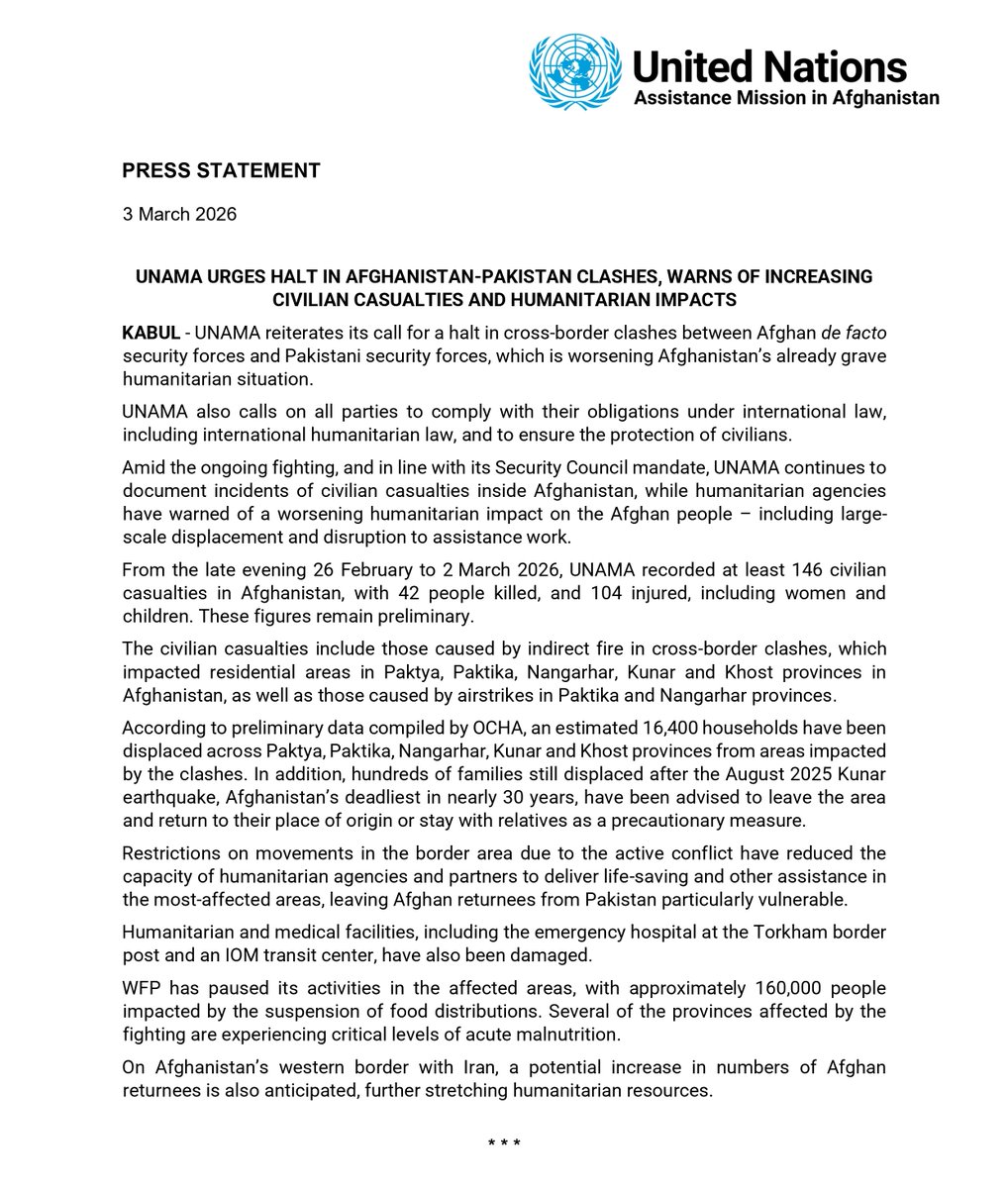
Statement: UNAMA reiterates its call for a halt in cross-border clashes between Afghan de facto security forces & Pakistani security forces, which is worsening #Afghanistan’s already grave humanitarian situation. Full statement (in English, Dari, Pashto): https://t.co/WPBnAzyKNR
Hundreds of soldiers and scores of civilians have been killed in cross-border fighting since Pakistan announced a state of “open war” with Afghanistan last week. https://t.co/Pe6Ld8eLy9