حسابي على متصفح X تجد فيه إن شاء الله فوائد من الدين القيم وعقيدة المسلم وقول الله تعالى ﴿أفلا يتدبرون القرآن ولو كان من عند غير الله لوجدوا فيه اختلافا كثيرا﴾.
This world is a dwelling of perishing, not permanence. No matter how great its pleasures, they are fleeting and fading, and no matter how abundant its possessions, they are passing and transient.
On the other side, the Quranic context stands to introduce us to a treasure that never perishes or disappears: the enduring good deeds. In chapter 18, God presents the parable of the man with two gardens, who was deceived by his fleeting wealth, followed by a clear divine statement: “Wealth and children are [but] adornment of the worldly life. But the enduring good deeds are better to your Lord for reward and better in [one’s] hope.”
The enduring good deeds are words chosen by the Lord of the worlds, and He has made their reward better and everlasting. In a narration, the Prophet ﷺ said: “Increase in the enduring good deeds.” It was asked: “And what are they, O Messenger of Allah?” He said: “Saying Allahu Akbar (Allah is the Greatest), La ilaha illa Allah (There is no deity worthy of worship except Allah), Subhan Allah (Allah is free from any imperfection), Alhamdulillah (All praise is due to Allah), and La hawla wa la quwwata illa billah (There is no power and no strength except with Allah).”
قول النعمان رضي الله عنه "أحمد الله تعالى" يُعدّ ضرباً من ضروب الشكر.
والشكر سببٌ لرضا الله وزيادة في النِّعَم، وثوابه في الآخرة أعظم من كل متاع الدنيا الفاني. فلو أن الله منح عبداً الدنيا بأسرها في كِفَّة، ووضع في الكِفَّة الأخرى قولَ "الحمد لله"، لكانت كلمةُ الحمد خيراً له من الدنيا الزائلة محدودة الأجل. فشتَّان بين نعيمٍ يغيب، وثوابٍ لا يغيب، وشتَّان بين لذةٍ تفنى، وحسنةٍ تبقى. العاقل من آثر الباقي على الفاني، والموفَّق من استكثر من الحمد في ليله ونهاره، في سرّائه وضرّائه.
قال النبي ﷺ "الْحَمْدُ لِلَّهِ تَمْلَأُ الْمِيزَانَ".
The saying of the Prophet ﷺ: Allah is Greater in Number (Allahu Akthar).
- It is said that this means Allah’s grace is greater—that what He grants out of His bounty and generosity exceeds what you merit in return for your prayers.
- Others say it means Allah is supreme in abundance, and you cannot overwhelm Him by asking for more, for His treasures never run out and His gifts never cease.
- Another interpretation is that Allah’s rewards and blessings are greater than what you imagine, so ask as much as you wish, for He will respond to your supplications with what is even greater and more magnificent.
It was narrated on the authority of Abū Hurayrah (may Allah be pleased with him) that the Messenger of Allah ﷺ once stood before a seated gathering and said “Shall I inform you of the best and the worst among you?” They remained silent. He repeated it three times, then a man said “Yes, O Messenger of Allah, inform us of the best and the worst among us.” He ﷺ said “The best of you is the one from whom good is hoped and whose evil is safe from. The worst of you is the one from whom no good is hoped and whose evil is not safe from.”
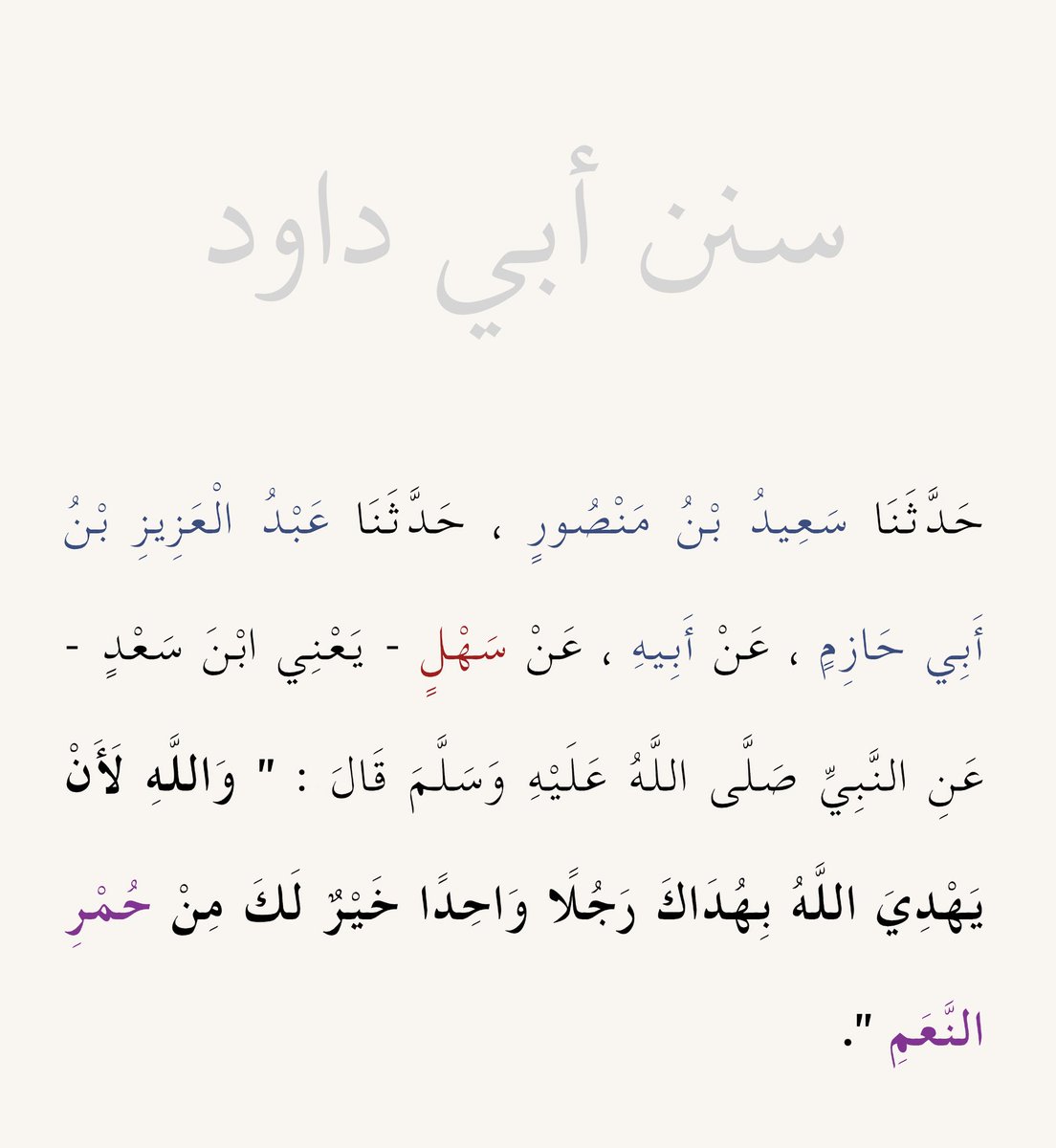
Red camels, or humr al-na'am, were considered among the most precious and valuable possessions of the Arabs in ancient times, often cited proverbially to symbolize something of exceptional rarity and worth. In the ḥadīth, this example is used to make the meaning more relatable to people's minds, yet it cannot be compared to the grandeur of Paradise's bliss; for an atom's weight of that bliss outweighs in value the earth and all it contains.
The truly courageous confronts matters with clarity and integrity (direct and responsible action), seeking constructive resolution through wisdom and effort, rather than indulging in futile criticism or evading responsibility.
سمعت الشيخ الفاضل يقول أنّ نَفَسُ الخوارِج التَّسَّرُّع في إصدار الأحكام—وإنْ تدثر بدثار الغيرة على الحق والإنتصار له. وقد قال النبي ﷺ عنهم "يَقْرَءُونَ الْقُرْآنَ لَا يُجَاوِزُ حَنَاجِرَهُمْ"، أي أنّهم لا يعقلونه حق عقله ولا يتعلمونه من العاملين به، فلا يصل أثره إلى قلوبهم ولا ينعكس على أعمالهم!