A stock ticks up two cents. Someone bought it. A millisecond later, someone sold it. Both trades were the same machine.
In between them: your order.
This is how a single company in Chicago earns $10 billion a year. Without ever betting on a stock going up or down.
Michael Lewis put it on 60 Minutes in 2014. The book became a bestseller. Congress held hearings. A new exchange opened just to fight it.
Nothing broke the machine.
Here's exactly what it does.
You place an order. A machine somewhere else sees it before the exchange does. Buys the stock a millisecond earlier. One cent cheaper. Two cents cheaper. Then turns and sells it back to you.
You never see the trade.
You never see the machine.
You just get filled a fraction late, at a fraction worse.
One cent. Two cents.
Billions of shares a day.
That's not gambling. That's a toll booth.
The company is called Citadel Securities. It handles more than a third of every retail trade in America. The man who built it is Ken Griffin. Forty-three billion dollars, and not one of them came from being right about a stock.
He doesn't predict where prices go. He gets paid every time prices move at all.
The stock market isn't a place where prices are discovered.
It's a place where prices are sold to you.
Fourteen minutes below. It will change every trade you place after.
ایک مرتبہ وزیراعظم کے ساتھ میٹنگ کر کے باہر نکلے تو جنرل باجوہ نے مجھے کہا کہ اسد صاحب عمران خان ہمیشہ مجھے کہتے ہیں کہ میں 22 سال اسٹرگل کر کے آیا ہوں جیسے مجھے سیاست کا پتہ ہے تمہیں نہیں پتہ یار ان سے کہیں ہم 75 سال سے یہی کام کر رہے ہیں ! اسد عمر ۔۔
لحظة نزع رُتب قادة الإنقلاب على ملك المغرب الحسن الثاني في الصخيرات قبل تنفيذ الإعدام فيهم :
"طلب منهم الجنرال أوفقير ان يرددوا عاش الملك” وسيُعفى عنكم…
فلما صاحوا بها أمر أوفقير بإطلاق النار عليهم، إلا العربي الشلواطي الذي كان يصرخ محذراً:
توقفوا… إنها خدعة! "
في العاشر من يوليو 1971،
كان الملك الحسن الثاني يحتفل بعيد ميلاده الـ42 في قصر الصخيرات جنوب الرباط بحضور نحو ألف مدعو من وزراء ودبلوماسيين وشخصيات مغربية وأجنبية.
حوالي الساعة 14:00، اقتحم حوالي اكثر من الف من التلاميذ العسكرية القصر فجأة وأطلقوا النار بشكل عشوائي على الضيوف، مستخدمين أسلحة أوتوماتيكية وقنابل يدوية.
قُتل وأُصيب اكثر من 278 شخصاً بينهم ضيوف ودبلوماسيون منهم سفير بلجيكا
الملك نجا باختبائه في غرفة صغيرة (حجرة ملابس أو حمام) قرب المسبح مع بعض المقربين لساعات.
سيطر المتمردون مؤقتاً على بعض المواقع في الرباط (الإذاعة والتلفزة، وزارة الداخلية، ومقرات عسكرية).
أُذيع بيان يعلن سقوط النظام، لكن الوضع انهار بسرعة بسبب الخلاف بين القادة الانقلابيين (يُقال إن أعبابو قتل المدبوح أو العكس أثناء الاشتباكات).
تدخلت قوات موالية بقيادة الجنرال محمد أوفقير، (والذي كان دوره مشبوها كما سيتضح لاحقاً)
واستعادت السيطرة.
سلم بعض التلاميذ أنفسهم بعد أن تعرفوا على الملك وقبلوا يده.
بعد ثلاثة أيام أُعدم 10 ضباط رمياً بالرصاص.
أما معظم التلاميذ فحصلوا على عفو بعد تدخل الجنرال محمد أوفقير، وأقنع الملك بذلك و خرج من الأحداث أقوى وأكثر نفوذاً، وتولى وزارة الدفاع.
لكن أوفقير لم يتوقف. في 16 أغسطس 1972، بعد أقل من
13 شهراً، دبّر محاولة ثانية أغرب:
اعتراض طائرة الملك البوينغ 727 العائدة من فرنسا بست مقاتلات F-5 من قاعدة القنيطرة.
أطلقت ثلاث منها النار، أصابت الطائرة وتعطل محركان، وقُتل ثمانية وأُصيب أربعون.
نجا الملك بعد أن أُقنع المهاجمون عبر اللاسلكي أن «الطاغية مات».
فخدع المهاجمين وتركوا الطائرة تهبط
في الليلة نفسها وبعد ان نجا الملك بأعجوبة وُجد الجنرال أوفقير ميتاً
الرواية الرسمية قالت «انتحار»، والعائلة قالت «إعدام». خاصة انه قُتل باكثر من رصاصة !!
أُعدم بعدها 11 طياراً وضابطاً، وأُرسل آخرون إلى تازمامارت.
محاولتان في ثلاثة عشر شهراً.
الأولى من داخل القصر،
والثانية من السماء كلاهما فشلتا، وكلاهما فتحتا الباب لما عُرف لاحقاً بـسنوات الرصاص وقبضة الملك الحديدية على مفاصل الجيش والدولة
It breaks my heart to post this graph, but running away from truth never helps
Pakistan's cricket is at its lowest in 50 years, and no one has been able to arrests its fall since the 1990's
/1
HOLY CRAP 🚨: Graham Hancock just dropped a devastating blow to mainstream archaeology with the Great Pyramid of Giza.
“It’s a 6 million ton monument… more than 2 million individual blocks of stone.”
“The Great Pyramid is aligned within 3/60ths of a single degree to true north… on a 6 million ton monument.”
“It sits almost exactly on latitude 30 which is 1/3rd of the way between the north pole and the equator.”
“And it incorporates the dimensions of the earth on a scale of 1 to 43,200 in its own dimensions.”
“So if you take the height of the Great Pyramid and multiply it by 43,200… you get the polar radius of the earth. Measure the base perimeter of the Great Pyramid… multiply it by the same factor, 43,200, and you get the equatorial circumference of the Earth.”
“Archaeologists know this. They say it’s a coincidence, total coincidence, just by chance.”
“However, I could agree with them actually if the scale was not 1 to 43,200. But the fact that it’s 1 to 43,200 changes everything because that belongs to a sequence of numbers that is found in ancient mythology all around the world… multiples of the number 72… derive from… the precession of the equinoxes.”
کرائے دار اب کبھی کسی کی جگہ پر قبضہ نہیں کر سکے گا۔
ہائیکورٹ کا تاریخی فیصلہ
اگر کوئی کرائے دار جگہ خرید بھی لے تو اسے ایک بار جگہ خالی کرنی پڑے گی
اور پھر وہ واپس بطور مالک آ سکے گا۔
وہ کرائے دار جو لمبے عرصے تک کرائے دار رہنے کے بعد
عدالتوں میں دعوے دائر کر کے
مالکان کو پریشان کیا کرتے تھے
وہ اب ایسا نہیں کر سکیں گے
Pakistani air defense is not pretty good and the Gulf states already have way better air defense than anything Pakistan could offer. Even then, if they still need something more, they can always go directly to China or Russia. In practicality, Pakistan doesn't offer much more than manpower.
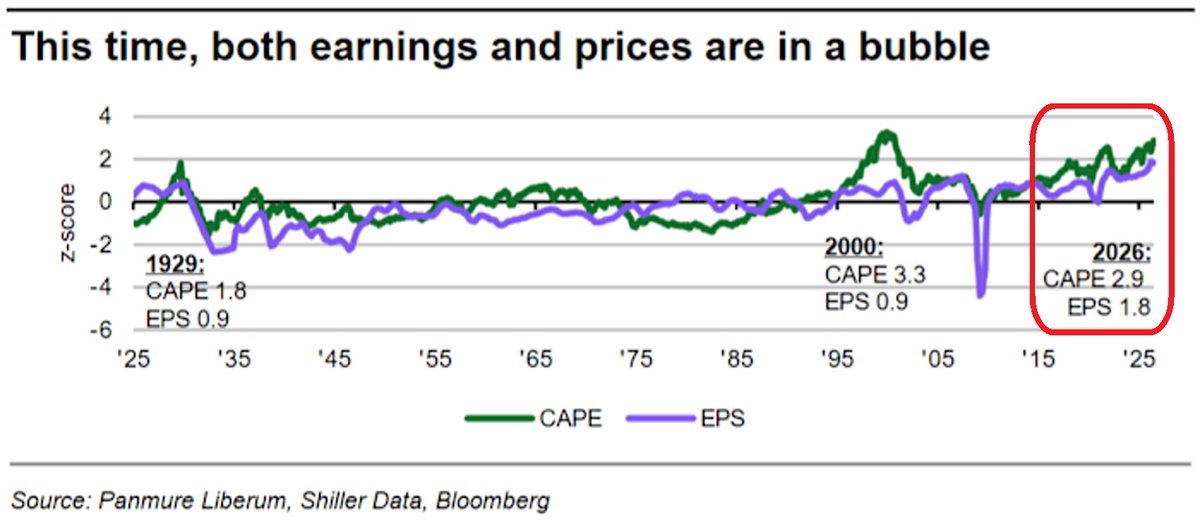
⚠️Is this a valuation bubble, an earnings bubble, or both?
The S&P 500's cyclically adjusted price to earnings ratio (CAPE) rose to 41x, the highest since the 2000 Dot-Com Bubble peak.
This is also 2.9 standard deviations above the trend, similar to the 3.3 standard deviations seen at the 2000 Dot-Com top.
Unlike previous bubbles, though, earnings themselves are also elevated and surged to 1.8 standard deviations above the historical trend.
By comparison, earnings during both the 1929 and 2000 bubbles stayed within a normal range, under 1 standard deviation above trend.
If today's CAPE ratio is adjusted to strip out this earnings bubble, the ratio would jump to 67.6x, or 4.6 standard deviations above trend, and 53% above the 44.2x peak in 2000.
If earnings normalize, valuations could see a correction far steeper than investors expect.
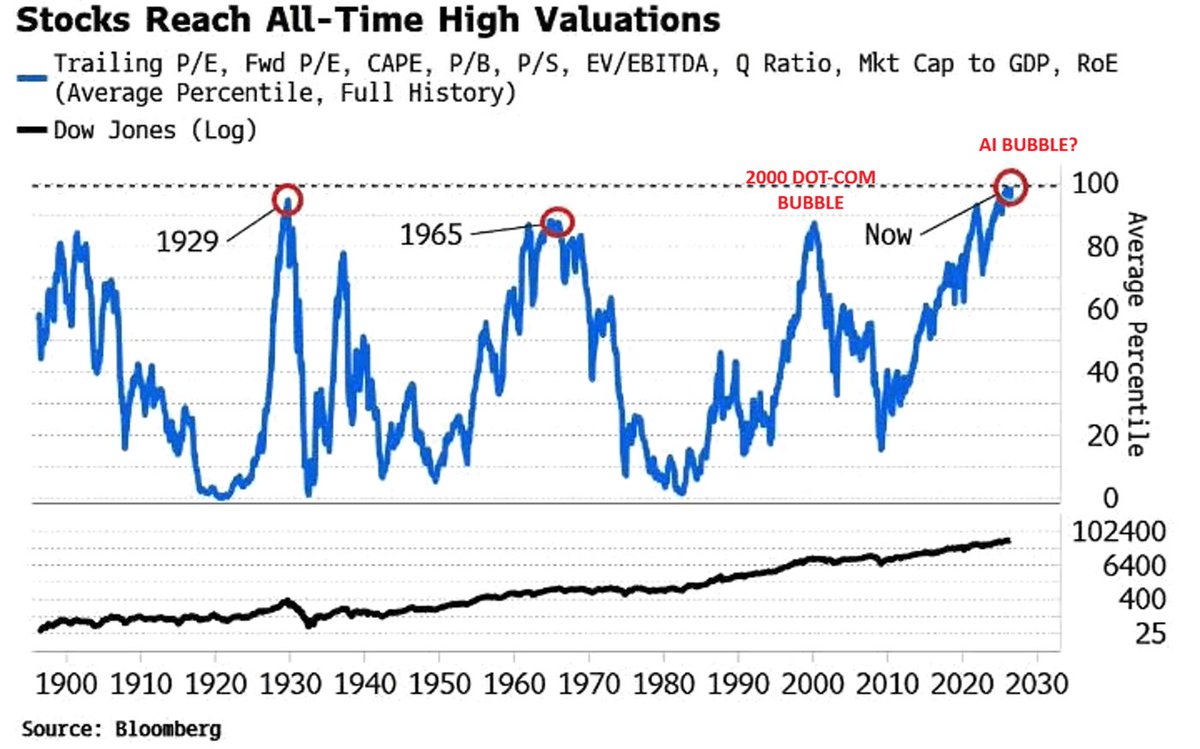
⚠️The US stock market has NEVER been this expensive:
The US equity market valuation has now reached the highest level on record.
This includes P/E, forward P/E, Shiller P/E, Price-to-Book, Price-to-Sales, EV/EBITDA, Q ratio, Warren Buffett indicator, and Return on Equity (RoE).
This combined metric is now higher than previous peaks seen before the Great Depression in 1929, or at the 2000 Dot-Com Bubble peak.
Historically, such periods have followed years of US stock market underperformance.
Is history set to repeat, or will the US equity market continue to thrive?
1/2
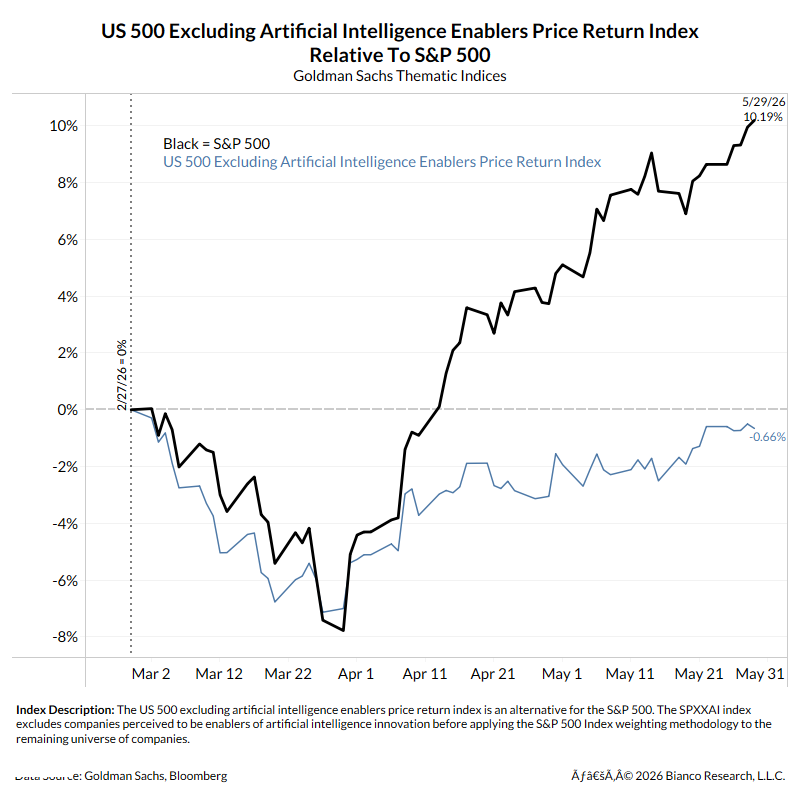
Yesterday, I posted the chart below, which shows that the entire "war rally" in the stock market has been driven by AI. Take out AI, and the rest of the stock market has done little since gasoline started soaring (blue).
Is this a bubble? Probably. But the more important question, when in the "bubble cycle" are we, rather than just a proclamation that there is one?
Remember that bubbles can be both the best time to make a lot of money and the hardest time to hold on to that money (when they pop).
Using the internet bubble as a benchmark:
Is today more like Dec 5, 1996, when Greenspan warned of "irrational exuberance"? If so, and you were worried about it popping on this date, you missed a nearly 300% rally in the NASDAQ over the next few years.
Or is it like March 2000, and not worrying about it, exposes you to a NASDAQ correction of almost 80% over the next few years?
As I explain in the repost below, it might be closer to 1997. I argue it is NOT overdone and explain why the massive capex spending makes sense.
Feb 27 is the day before the war began.
The black line is the S&P 500; it is up 10+% since Feb 27.
The blue line is the S&P WITHOUT the AI stocks (see the description and repost). It is still DOWN 0.66%.
Maybe soaring gas prices are having an impact on the market after all?
The structure of the market is experiencing a historic shift:
The number of US-listed ETFs is up to ~4,900, an all-time high, up +95% since 2020.
Over the same period, the number of US publicly listed companies has declined -1,000, or -20%, to ~3,900, the lowest this century.
As a result, there are now ~1,000 more ETFs than stocks to trade in the US market, the widest gap in history.
Meanwhile, US ETF assets under management (AUM) jumped +10% in April, to a record $14.9 trillion.
Over the last 4 years, US ETF AUM has surged +140% and now accounts for ~69% of the global ETF market.
ETFs are reshaping the foundation of financial markets.
In 2025, there was a flight between the UAE and Pakistan, on average, every 12 minutes. And by some estimates, at least 8 passengers on every flight from Dubai to Karachi were khepiyas. A khepiya, for those that have not heard the term before, is a professional luggage carrier.
These are the individuals who have over the years brought certain luxuries to upper middle class neighbourhoods in Pakistan by smuggling consumer products in their luggage. Most of these products come from Dubai. Expensive tech like iPads and MacBooks, perfumes, designer bags, cosmetics, skincare, chocolates and clothes are all available in Pakistan even if the brands that make them have no retail or distribution presence in the country. So much so that many upper-middle-class households no longer ask visiting expat relatives to bring them anything from abroad because “ab toh Pakistan mai sab milta hai”.
But over the past few years, and specifically the past few months, the vast network of khepiyas has been brought to its knees. Not because the authorities have gotten stricter, but simply because visa constraints with the UAE and the sudden fall in air traffic between Pakistan and the UAE is making business more difficult. Profit explores the khepiya network and the immediate, consumer level implications of the shift in Pakistan’s relationship with the UAE in this week’s cover story.
https://t.co/8hgWVHORGB
The wealth gap has never been wider:
US private sector financial assets relative to US GDP are up to a record 6.7x.
This means that the total value of stocks, bonds, and other financial instruments held by the private sector has never been larger relative to the real economy.
This also surpasses the previous all-time high of 6.3x seen in 2021 after one of the sharpest market recoveries in history.
The size of private sector financial assets relative to GDP has more than DOUBLED since the 1970s low.
When financial assets outpace the real economy, the wealthy get richer, and workers get left behind.
Own assets or be left behind.