Prophet Muhammad did not die in battle, assassination, or some mysterious cover-up like critics online try to imply. Islamic history is actually very detailed about his final days.
Years before his death, after the Battle of Khaybar, a Jewish woman poisoned some meat offered to him. He tasted it, spat it out, and survived the immediate incident. One of his companions, Bishr ibn al-Bara, ate more of it and later died. Muhammad himself continued living for years after that event. Near the end of his life, he reportedly said he still felt the effects of that poison. Muslims see this as part of his suffering, not some hidden scandal.
When he became seriously ill in 632 CE, he was surrounded by his family and closest companions, including his wife Aisha, his daughter Fatimah, and companions like Abu Bakr and Umar ibn al-Khattab.
His final days were not about power, revenge, or wealth. Reports describe him praying, advising people to treat others well, maintain prayer, and avoid oppression. One of the most repeated narrations is that his last concerns were about prayer and kindness to those under people’s care.
His final moments happened in Aisha’s room, with his head resting against her. According to Islamic narrations, his last words included prayers to be with “the highest companion,” meaning closeness to God.
No secret murder plot. No dramatic conspiracy. Just a man who spent 23 years preaching, became physically weak after a lifetime of hardship, and died surrounded by the people who loved him most.
What’s interesting is that even many non-Muslim historians acknowledge how transparent early Muslims were about his human moments. They documented his sickness, pain, grief, and death openly instead of turning him into an untouchable myth.
And Allah knows best💯
This is what happens when Muslims publicly display arrogance in how we belittle our Deen. We invite non Muslims to do the same.
This company is in the UK, regulated out of Poland 😆 and is technically INSOLVENT (negative net assets) and the following are directors :
Michael Fortun
Joshua Hearne
Gillian Hughes
David Battle - resigned
Roderick Mackenzie - resigned
Richard Walker - resigned
One of them builds golf simulators and Muslims have presented such an opportunity to them that they are launching this Halal sports betting company with crypto rails and “asset backed” betting tokens.
All to take money from Muslims who want to gamble.
Do we not see how attractive we have made ourselves to grifters and chancers. That is directly because we project that we will do anything if you can attach a Halal label to it.
We get what we deserve.
Let’s talk about the 7-7-7 rule of parenting. I know that some of you might have heard of it before. But what I want to share with you are rare tips that you cannot find in your regular blogs.
Why the 7-7-7 Rule in the first place?
We are all exhausted. I see it in my DMs every day. We are fighting battles in our homes that we should not even be in because we try to use the same heavy hand for every age.
The truth is, you cannot use the same logic for a toddler that you use for a teenager. When you use the wrong tool at the wrong time, you do not just fail to teach the child. You break the relationship between you and the child.
The 7-7-7 rule is the solution to this constant friction. This rule was first echoed by Ali ibn Abi Talib (May The Almighty be pleased with him).
He said: Play with them for seven years, Discipline them for seven years, and then Befriend them for seven years. It sounds easy, but most of us do it in the wrong order. We are too serious with the toddlers and then we try to be the boss when they are already teenagers.
(1) The 0 to 7 Years Stage. This is the stage to build the love tank. Imam Al-Ghazali said in Ihya, that a child's heart is a precious jewel that is blank and ready for any carving. In these years, you should play more than you lecture.
One rare tip that you can adopt going forward is Overhead Praise. Direct praise is good, but overhead praise is gold. Instead of telling them they are good, tell your spouse or a friend about their good deed while the child is in the room. When they hear you brag about their kindness when they think you aren't looking, it builds a deep confidence.
Action Tip: Find one small thing they did well today and mention it to someone else while they are nearby. Make sure they can hear you. Be intentional and consistent about it.
(2) The 7 to 14 Years Stage. This is the time for character and boundaries. The scholar Ibn al-Jawzi in Sayd al-Khatir, warned us about forcing a narrow vessel to hold too much.
Remember I talked about Taghaful (Strategic Ignorance) yesterday. This is the right age to use it. It means you see the mistake, but you choose to look away. If you correct every single thing they do wrong, they will develop a hearing block against your voice by age ten. You have to save your corrections for the things that matter.
Action Tip: Start today by adopting the 70/30 rule. Ignore 70% of the small irritations, maybe it is a messy desk or a slow response. Save your energy for the 30% that actually involves character or safety.
Only speak up for the big boundaries. You are building authority by not wasting it on small irritations. Pay attention to their demeanor and be consistent.
(3) The 14 to 21 Years Stage. In this stage, the "boss" version of you must die so the "consultant" version can be born. The scholar Ibn Miskawayh in Tahdhib al-Akhlaq, wrote about the refinement of the soul as a process that requires respect. If you keep using force, they will just learn to hide their life from you.
Action Tip: Your job now is to protect their Sirr (Sacred Secrecy). If they tell you something heavy, misdeed or embarrassing, keep it between you. Do not share it with the extended family. To keep them close, you must be a safe vault.
This week, try to listen to them for twenty minutes without giving a single piece of advice. Just listen so they know you are a friend they can trust with their future.
In all, the 7-7-7 rule is about realizing that you are a gardener. You don't make the plant grow. You just provide the right environment for it to reach its own opening (Fath).
As a parent, which stage are you currently navigating? Let’s discuss in the comments👏🏿👏🏿
Since the past 24 hours that I made the tweet on child parenting solution, my DM has been buzzing. I checked them, and one thing was quite common to all: Parents who are not happy about their kid’s performance in school, and they have approached it the wrong way.
If you fall in this category, this post is for you.
Many of us use brutal force because expectations are too high, and the anger is just too much. The scholar Ibn al-Jawzi explained in his book Sayd al-Khatir that intellect is a Rizq (provision) from God, just like money or health.
He said some people are born with a wide vessel and others with a narrow one. If you try to force the water of a whole sea into a small cup, you will only spill the water and ruin the cup. This is what many of us are doing. We are trying to force a "doctor's brain" into a child whose cup was designed for something else.
By that, it causes a soul-crushing resentment in the child. Imam Al-Ghazali described this beautifully in Ihya’ Ulum al-Din. He warned parents about a state called “Al-Malal”, where a child builds resentment because they are pushed beyond their limit. Everyone wants the best for their child. No doubt. However, if you keep yelling at them for things they cannot grasp yet, you make them hate the very sight of a book. You are closing the door to their heart while trying to kick open the door to their mind.
Then what is the solution? It is simple.
Going forward, every parent should make efforts to start looking for the Fath (the opening) in their kids. What does this mean? This is the lane the Almighty has prepared for them. In our history, if a child is slow with grammar or math, the scholars don’t call them a failure. They move them to a trade, a craft or a service.
How then do you identify this Fath (Opening) in your child? Please pay close attention to me…
(1) The first phase is Observation. Ibn al-Qayyim mentioned a concept called Istid’ad (natural readiness) in his book titled: Tuhfat al-Mawdud. This means you want to watch/observe/look at the child when they think nobody is looking. This is your first tool. For the next two weeks, stop talking about school. Do not worry yourself about how they perform on their homework.
Instead, keep a "Strength Log." Every evening, write down one thing they did well that had nothing to do with a classroom. Did they fix a broken toy? Did they calm down a crying sibling? Did they organise their shoes? You are looking for their Istid’ad (natural readiness). If they are "book-slow" but "people-smart" or "hand-smart," that is where the key has been placed.
(2) Introduce “Project or Craft” early on. Ibn Khaldun, in his Muqaddimah, argued that projects/crafts are high forms of intelligence that build civilizations. He argued that some minds are designed to understand the physical world better than the abstract one.
Give them a "Project Day." Buy a basic tool kit, a sewing machine, or a coding starter kit. Give them a broken radio or a piece of furniture to fix. Delegate. Give them a real-world task that has a visible result. When a child who fails at math sees that they can build a table or bake a perfect loaf of bread, their internal shame starts to heal. They realize they are not stupid; they were just in the wrong room.
(3) Kill the Comparison Virus. Imam Al-Zarnuji, in his classic work Ta’lim al-Muta’allim, explained that a student should only study what fits their nature. He said that forcing a student into a field they have no taste for is a waste of their life and the teacher's time. When you compare your child to others, you are catching a virus that blinds you to their path. Always filter.
When family members start bragging about their kids' grades, you must be the shield. Tell them, "My child is mastering the art of (so so and so)." You are teaching your child that success is not a single ladder. There are many ladders to it. And if you do not value their ladder, they will stop climbing.
(4) Prioritize Character Building. Put more efforts to praise your kids for their good character. Always tell them you love them when they behave well or show good character. Character recognition helps the child build a good self-image, which translates into self-confidence and barrier-breaking for the child. Prioritise this.
(5) Don’t underestimate the power of your words. Always pray to God to grant them their opening. The scholars taught that the "opening" is a gift from Al-Fattah (The Opener). Supplicate.
In your Sujud or in your prayers, stop asking for them to be a doctor/engineer, and what have you. Ask for the door that was made for them to be opened. Ask Him to show you the Fath so you can stop pushing them against a closed wall.
Always remember, a parent who finds the "Fath (The Opening)" for their child has given them a gift better than a degree. You have given them a purpose. Start that journey NOW. It’s never too late…
Thank you for your attention.
Allah knows best.
Hello Lola, I am a Muslim, and our spiritual tradition has a very deep approach to raising children. I want to share some tips from our scholars that will be beneficial to you regardless of your faith.
First of all, our theology teaches the concept of Fitrah. This means that every child is born with a pure heart. At six years old, she is not a criminal mastermind. She does not have a wicked soul.
If she doesn’t have all these, then what is happening? The truth is that she is just lacking impulse control and testing boundaries. By this, if you look at her as a manipulator, you will fight her. However, if you look at her as a pure soul making mistakes, you will be able to guide her.
Secondly, for every problem anyone faces today, it has been solved in history. The only problem is how to locate them.
A classical scholar named Al-Ghazali wrote about child psychology over 900 years ago in his famous book “Ihya Ulum al-Din.” In his section on disciplining children, he gave a practical rule I want you to adopt going forward.
He advised that parents should never push a child into a corner where they are forced to lie. When you ask a question you already know the answer to, her survival instinct kicks in. She cries and she lies to defend herself because she is scared of you. Stop interrogating her. Just look at her and state the fact. Say, I know you took this, and we are going to return it right now.
Again, another scholar and sociologist Ibn Khaldun addressed this exact behavior in his masterpiece titled: “Al-Muqaddimah.” He warned that when a child is raised with harsh punishment, they learn deceit, trickery, and lying to protect themselves. This is why she is covering her tracks and crying to manipulate you. The fear of a harsh reaction is making her a better liar.
Lola, do not attach a label to her. Do not ever call her a thief. If you attack her identity instead of her action, she will internalize it and grow into that dark label. Tell her the action is wrong but protect her dignity.
Make her return the item. Do not fall for the tears. Hold her hand, walk her back to wherever she took it from, and make her hand it back and apologize. The discomfort of returning a stolen item teaches a much better lesson than beating her will ever do.
Finally, I don’t know if you are a Muslim, but never underestimate the power of your own words. In our faith, we believe the prayer of a parent for a child goes straight to God without any barrier. Pray over her. Pray for her heart to be content and for her character to be straight.
Keep doing this consistently and the habit will break.
Allah knows best.
You are a dunce 😂😂😂
That verse narrates the geographical journey of the great ruler Dhul-Qarnayn. At least look at the specific Arabic word used in the text: وَجَدَهَا (wajadaha).
This translates to "he found it" or "it appeared to him".
The Quran is not describing the literal cosmic mechanism of the sun. It is describing the sunset from the subjective visual perspective of the observer (Dhul-Qarnayn) who reached the westernmost edge of his journey. He was standing at the edge of a landmass looking out over a dark, murky body of water.
Just like when you stand on a beach in the evening and look at the horizon, you say you are watching the sun set into the ocean. Everyone says this. Does that mean you literally believe the star which is composed of burning plasma just splashed into the Atlantic? No. You are only describing a visual perspective from where you stand.
Olodo 😂😂😂
"This particular reciter is no more.
I am sharing his recitation to be a reward for him for anyone that listens to it.
May ALlah grant him paradise and free him from the torment of grave."
STOP THE MUSLIMS GENOCIDE IN NIGERIA.
STOP THE MUSLIMS GENOCIDE IN NIGERIA.
STOP THE MUSLIMS GENOCIDE IN NIGERIA.
STOP THE MUSLIMS GENOCIDE IN NIGERIA.
STOP THE MUSLIMS GENOCIDE IN NIGERIA.
STOP THE MUSLIMS GENOCIDE IN NIGERIA.
STOP THE MUSLIMS GENOCIDE IN NIGERIA.
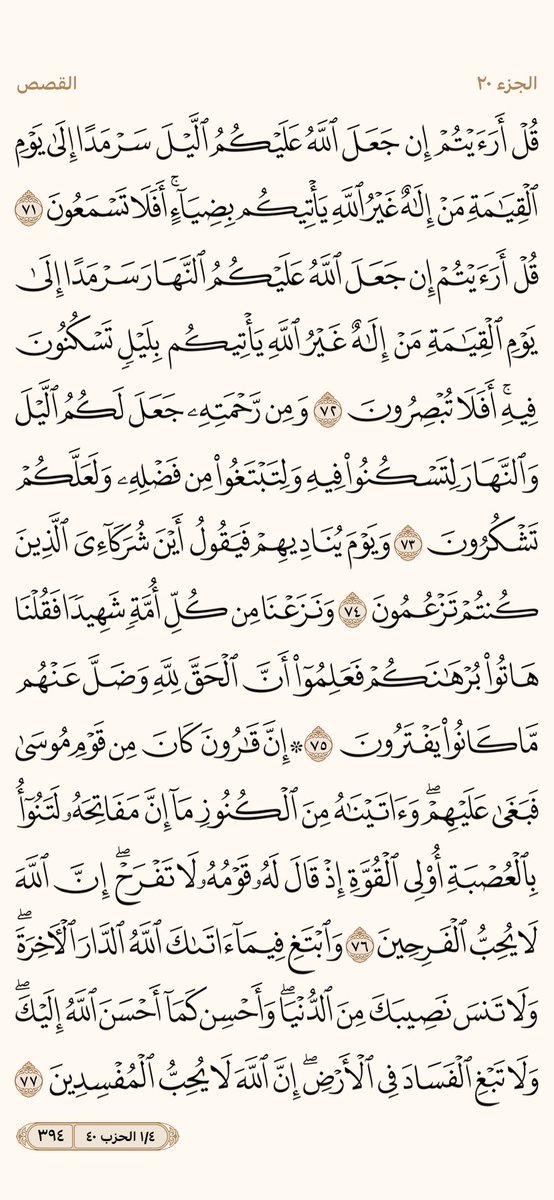
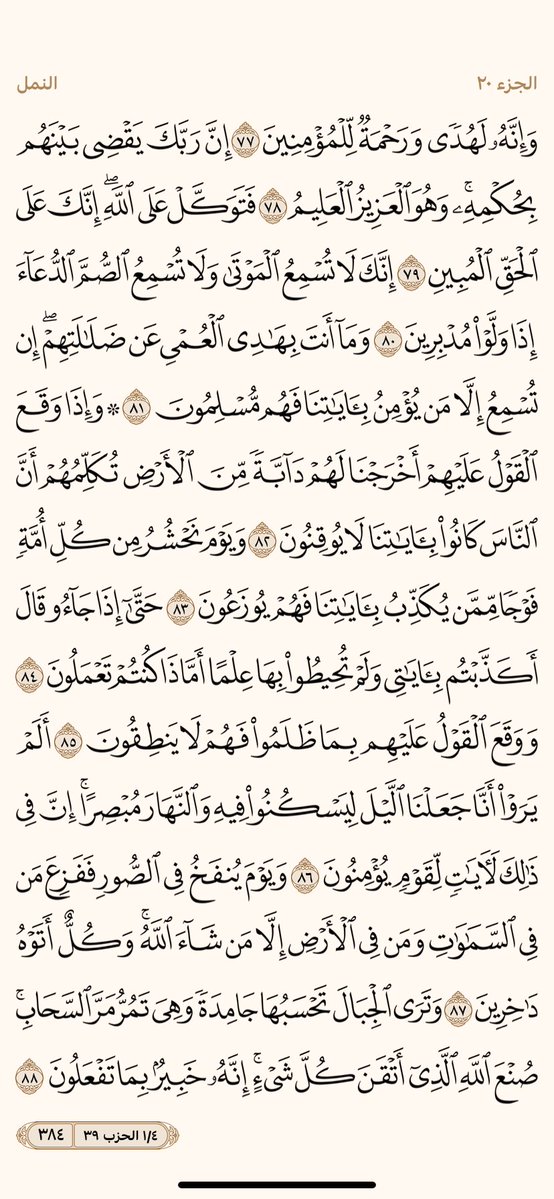
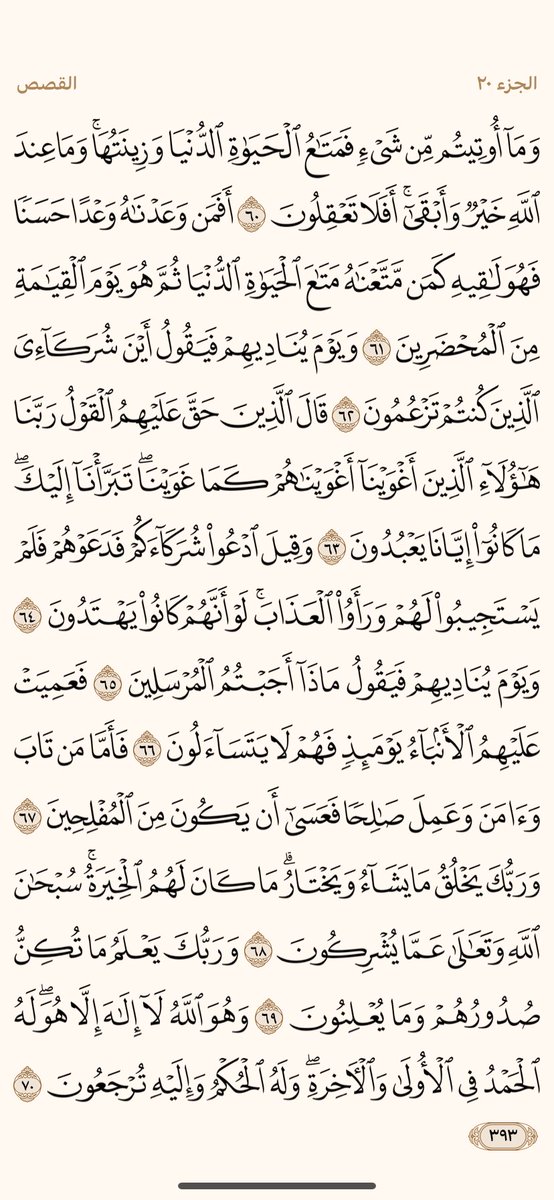
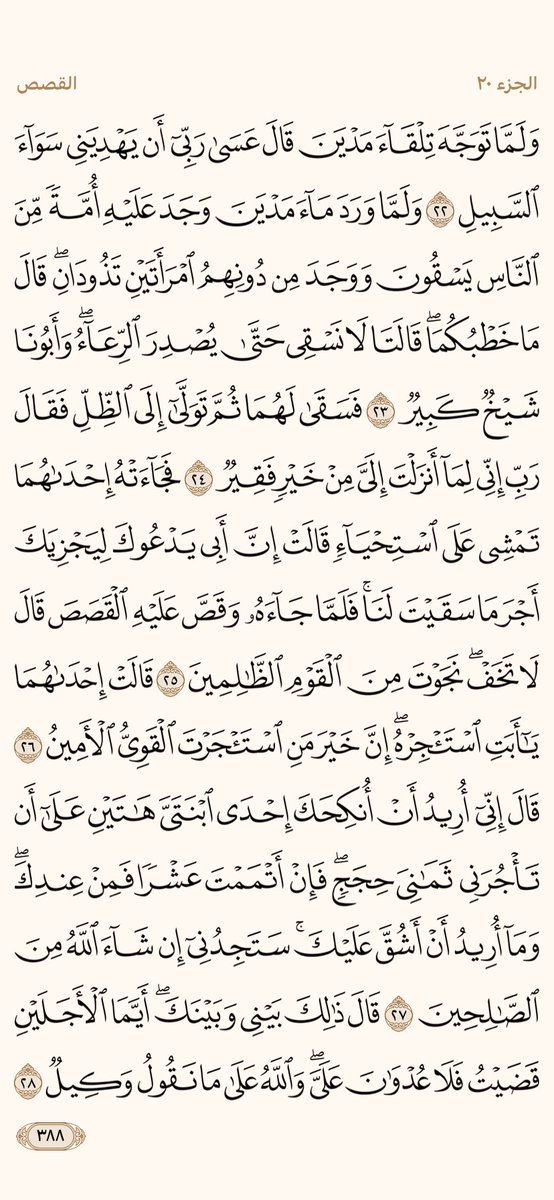
الوررد اليومي
صفحات رقم 59 - 60
"اللهم من يعيدتغريدهاويتابع الحساب اغفر ذنبه وفرج همه ويسر له أمره واشرح صدرة و ارزقه من حيث لا يحتسب وبشره بالجنة يارب"🌹
قولوامين يارب .-