WHY EVERYONE LOVES MIRIA MATEMBE:
——————————————————
See, Dr. Miria Matembe reminds almost everyone of their mother; the typical African Mother. Unpredictable, Fearless, Risky, Hilarious, in between being Mean and being Angelic.
-The kind of mother you ask after eating, “Mummy where should I put the plate,?” And she says, “Put it on my head.”
-The kind of mother who hears/sees you break a glass plate and gives you another ten plates saying, “Break these ones too, we no longer need them.”
-The kind of mother who attempts to slap your face and when you protect your face with your hands, she calls her brothers (your uncles) and says, “If you fine me dead just know your nephew finished me; isn’t he the one who now has beards and a deep voice?”
-That mother who would beat you blue black but should any teacher beat you at school, the headmaster, teacher on duty, bursar and Askari would have to leave the country until she stops coming to school to ask, “Who wanted to kill my child.”
-The kind of mother who would see you accept a piece of meat from the visitor and give you that look with a pointed mouth-the look that would make you go to wash plates, mop the toilets and slash the compound at night without being told to.
-A disciplinarian with unmatched motherly love, a pillar in her family, the one who keeps the home together and the one who praises God like they have ever met face to face.
That’s why we love Miria Matembe. We see our mothers in her.
Prof. Peter Kagwanja: There are two solutions to the Ugandan issue. One is regional, supported by international forces that agree with what we are doing, which is essentially mobilizing a broad social movement of intellectuals and political leaders, and ensuring that the momentum is sustained. #CitizenDayBreak
Was it #PLU or @GovUganda that took the action to close the two media houses? Or maybe let us know if the @NRMOnline that Ugandans elected on 15th January 2026 is no more, and we just settle down.
@JackieAkampwera@CultonScovia Well, conflict is good afterall. See how it has led to rapid development in Ankole. But everything said, this discussion will be more meaningful if we all were willing to examin, deeply, the cause for the tribal tensions
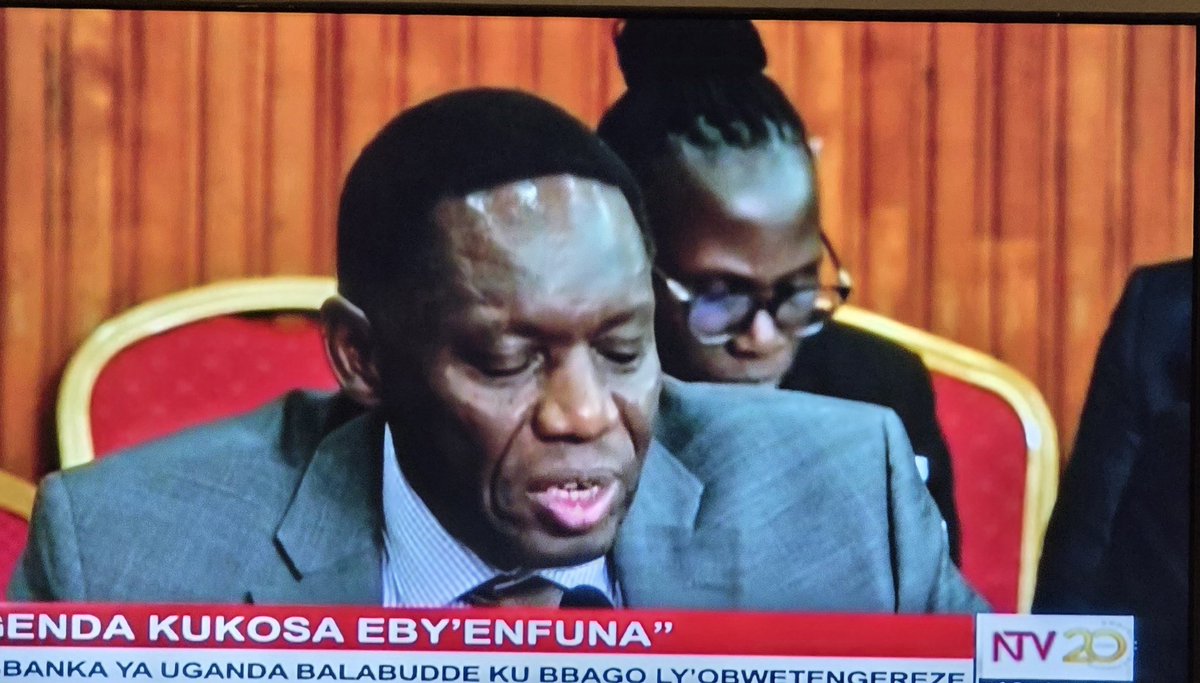
Listening to Governor Bank of Uganda talk about the dangers of the proposed SOVEREIGNTY BILL to the economy, IDI AMIN to came to mind! Story is told when Uganda was faced with acute shortage of FOREIGN EXCHANGE, and every time Amin was told they couldn't buy this, or that, because of Foreign Exchange. Amin got so pissed off and told Maliyamungu to go and "ARREST THIS FOREIGN EXCHANGE AND HAVE HIM SHOT IMMEDIATELY"! These Africans think SOVEREIGNITY IS BUILT ON LEGAL DOCUMENTS AND POLITICAL STATEMENTS! Reason African Countries easily COLLAPSE! TRUE INDEPENDENCE/SOVEREIGNTY, is grounded in ECONOMIC AUTONOMY AND FISCAL HEALTH of a Country. Once a Country depends on FOREIGN CAPITAL, it necessarily loses SOVEREIGNTY! SOVEREIGNTY is anchored on capacity to produce and sustain an INDEPENDENT ECONOMY, not PARLIAMENTARY KWALA-KWALA! Seems we haven't learned from mistakes of the past when Kwame Nkrumah declared:"SEEK YE FIRST THE POLITCAL KINGDOM..."; doesn't work that way. It is SEEK YE FIRST THE ECONOMIC KINGDOM, AND ALL ELSE SHALL BE ADDED UNTO YOU"! Use this political independence to build ECONOMIC SOVEREIGNTY; everything then will fall into place.
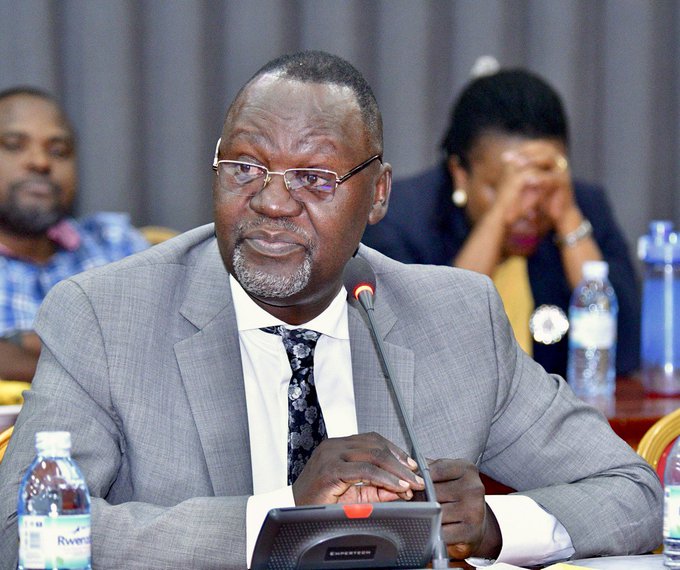
That is the ugly position the government has put us into. There is a big, big problem, ... “What we are doing today, is what should have been done by government.” said Katuntu.
Katuntu stated that from the moment the Governor started his submission, he was grappling with many questions in his mind as to what is going on in Uganda because the scrutiny of the Bill by Parliament should have been done by the Executive through consulting relevant stakeholders so Government agencies don’t come before Parliament to oppose the same bill.
“What we are doing today, is what should have been done by government. Talking to the central bank, talking to FIA, talking to Makerere University, talking to banks, talking to literally people who should be the stakeholder. But from all of them as they have appeared here, they seem to be so confused about who actually brought this sort of legislation here. That is the ugly position the government has put us into. There is a big, big problem,” said Katuntu.
Courtesy Photo
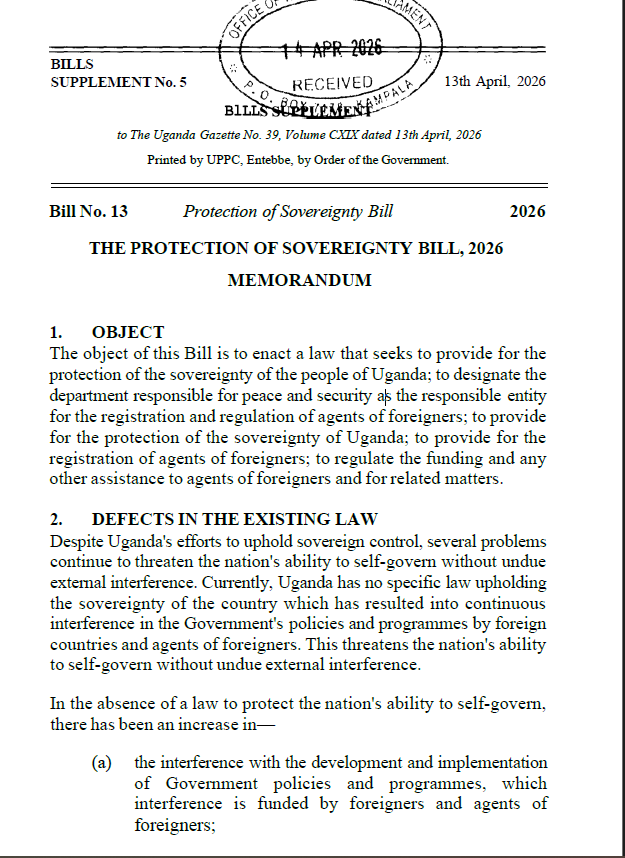
I finally got a copy of The Protection of Sovereignty Bill last evening, went through it and let me tell you, some people are in trouble....my take:
This Bill is being paraded as a shield for Uganda’s sovereignty and yet I thought we already have that in the Constitution. In reality it is a weapon aimed directly at the heart of our constitutional freedoms. It pretends to guard us against foreign interference but we are a poor country heavily dependent on foreign aid (government and private citizens). Its provisions are so sweeping, so vague, and so punitive that they would criminalise legitimate civil society, journalism, and even ordinary Ugandans who dare to engage with the wider world.
Clause after clause strips power from institutions and hands it to Cabinet and the Minister of Internal Affairs, concentrating unchecked discretion in the Executive. The definition of “agent of a foreigner” is so dangerously broad that it could ensnare NGOs delivering some service like Road Safety NGOs under @ROSACUg, health services, businesses trading internationally, or even citizens with relatives abroad.
The Bill dresses repression in the language of “economic sabotage” and “disruptive activities.” BUT criticism of government mismanagement is not sabotage it is holding it accountable. Cooperation with foreign partners in education, health, and development is not subversion, it is progress. By equating foreign support with treason, this Bill risks isolating Uganda from the very partnerships that have sustained our people.
Sovereignty is not preserved by silencing voices, strangling civil society, or threatening citizens with twenty-year prison sentences. Sovereignty is preserved when government is accountable, when institutions are independent, and when Ugandans are free to speak, organize, and participate without fear.
If passed in its current form, this Bill will not protect Uganda’s sovereignty but it will erode it. It will shrink freedoms, concentrate power, and undermine the democratic values that sovereignty is meant to defend.
It is not about not sovereignty, it is about suffocation.
COMPARATIVE TO OTHER COUNTRIES
Ethiopia: Charities and Societies Proclamation (2009)
Ethiopia introduced one of the most restrictive NGO laws on the continent in 2009. It barred organizations receiving more than 10% of their funding from foreign sources from engaging in human rights, advocacy, or governance work. The impact was devastating: civil society was crippled, international cooperation collapsed, and the country faced widespread condemnation. Recognizing that the law undermined democratic development, Ethiopia repealed it in 2019 and replaced it with a more liberal framework.
Kenya: NGO Coordination Act (1990, amended).
Kenya’s NGO Coordination Act requires registration of NGOs and disclosure of foreign funding. In 2013, draft amendments proposed capping foreign funding at 15%. This sparked strong public and international backlash, and the proposal was abandoned. The lesson from Kenya is transparency can be achieved without punitive restrictions, and civic space can be preserved by rejecting extreme measures.
Tanzania: NGO Act (2002, amended 2019)
Tanzania’s NGO Act mandates registration, government oversight of NGO activities, and reporting of foreign funding. Amendments in 2019 expanded state power, allowing authorities to deregister NGOs arbitrarily. In practice, this has been used selectively against critics of government. The Tanzanian example shows how over-regulation risks turning sovereignty laws into political weapons rather than genuine safeguards.
South Africa: Foreign Agents Registration Debate (2023)
South Africa has debated introducing a foreign agents registration law, modeled partly on the U.S. Foreign Agents Registration Act (FARA). The proposal would require disclosure of foreign-funded advocacy groups. Unlike Ethiopia or Tanzania, the debate has been framed around transparency rather than repression. The lesson here is that disclosure requirements, if narrowly tailored, can balance sovereignty with constitutional freedoms.
Nigeria: Foreign Contributions Regulation (proposed 2017)
Nigeria attempted to regulate foreign donations to NGOs and political groups in 2017. The proposal was heavily criticized as unconstitutional and was never fully enacted. Nigeria’s experience demonstrates that overreach not only undermines legitimacy but also invites legal challenges that weaken the credibility of such laws.
@Parliament_Ug
How much more strategic is that container than the building next to it? Everyone who was relocated had valid reasons for operating their businesses at their respective locations. In fact, it is an obstruction to the businesses around. @URAuganda
Africa is navigating some of the world’s hardest challenges with determination, creativity & resilience — solving problems in an international environment that is polarised, unpredictable & volatile.
The @UN stands with Africa for peace, sustainable development & climate justice.
The absence of permanent African seats on the Security Council is indefensible.
The Security Council must reflect today’s world. This is 2026 — not 1946.
Whenever decisions about Africa and the world are on the table, Africa must be at the table.