I am happy to announce my latest project: N-Gage SDK.
An ecosystem for developing (or porting existing) games for the Nokia N-Gage using modern tools such as Visual Studio 2019/2022 and CMake: https://t.co/xWecOIYVGG
🚨 BREAKING: Nokia N-Gage support has officially been merged into SDL3. Yes, the N-Gage!
Meanwhile, Dreamcast devs still arguing over VMU font rendering.
Snake > Sonic? 🐍📱 > 🌀💿
#SDL3#NGage#RetroDev#DreamcastCopium
https://t.co/tH63PwIMVW
Just a heads up, I'm moving to @bluesky. It's such a nice and non-toxic environment, full of great people. I'll post from time to time via @nokia_ngage, but that's it. See you there! 🤓
https://t.co/NPio4FeQxL
This is a VoxelSpace renderer running on a 1MB, 8MHz, 16-color Atari ST. Lots of optimization went into this project written mostly in C and inline m68k assembly. Most recently, use of the CRT was reduced, making the executable only 13430 bytes small, freeing almost 200KB of RAM.
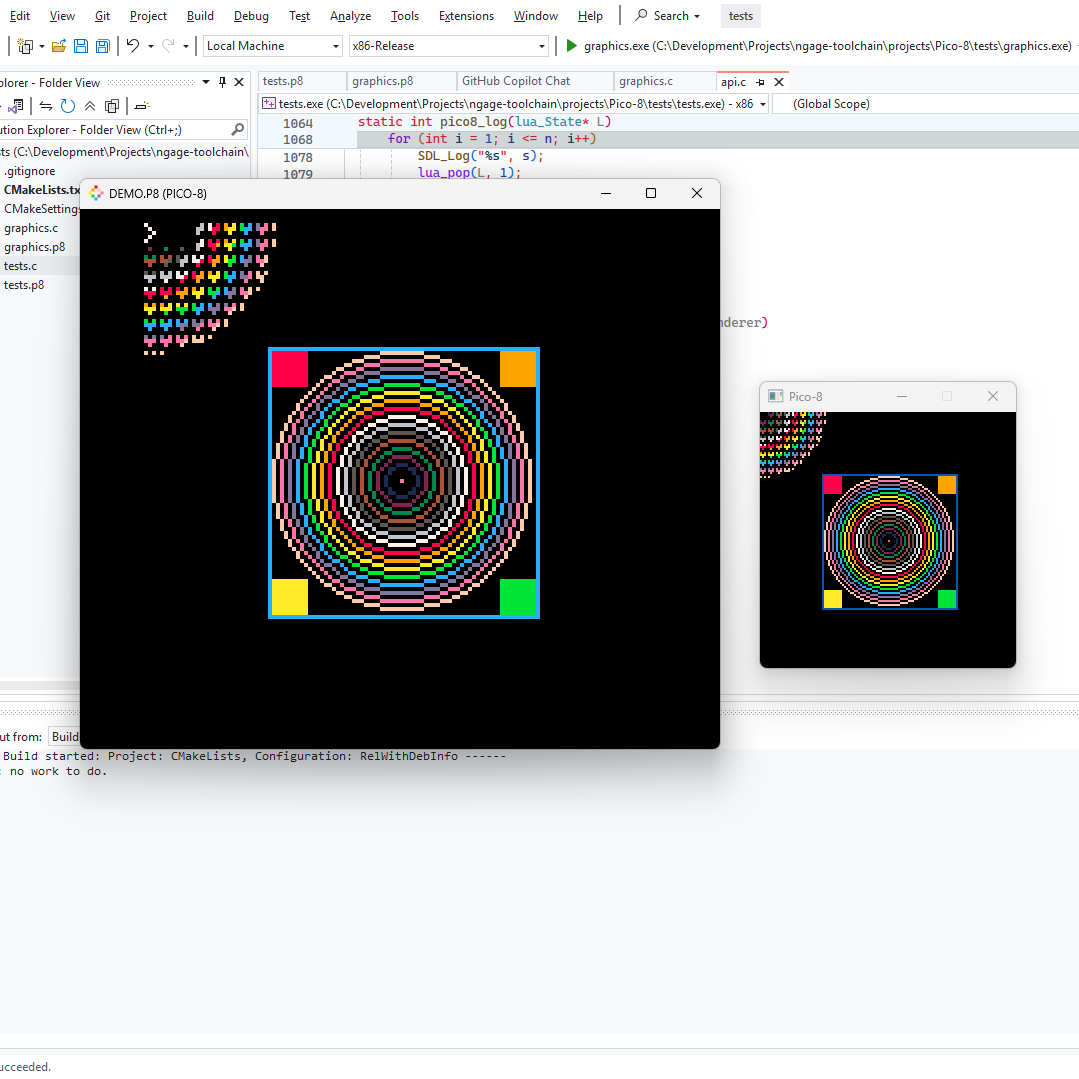
After struggling through the maths API, I'm finally getting started with the graphics API. However, PRs are still very much welcome and encouraged. So if you want to make a small contribution towards #Pico8 emulation on the Nokia N-Gage, I won't stop you. 🙃 #NGageSDK#RetroDev
Holy SHIT, I just figured out a way to directly HW accelerate Renderware's "decorated" Matrix type and eliminated the need for constant matrix format conversions in our Sega Dreamcast port of Grand Theft Auto 3!
In the top-left is my modified version of the main RW matrix structure. It encoded a 4x3 matrix within the layout of a 4x4 matrix, where 3 elements of the final column were just left as uninitialized padding while the top element was used to encode metadata "flags" within the matrix.
These flags were quite useful in that they encoded whether the matrices were in certain forms, allowing for various optimizations such as skipping transforms against an identity matrix or taking a fast path for an inverse...
While this Frankenstein matrix format was fine with linear algebra routines being implemented in vanilla C, which can easily skip the padding and flags, it presented a real goddamn problem with HW accelerating the math via SIMD instructions.
Now suddenly an intermediate conversion was necessary to go from the "decorated" matrix format to the "raw" matrix format, before it could be crammed into SIMD instructions... which was less than ideal.
So... I came up with a crazy-ass idea that would allow me to DIRECTLY use the decorated matrices with the DC's SH4 CPU SIMD instructions...
Since the SH4 instruction, FTRV (which can do a whole 4D vector transformed by a 4x4 matrix), is just an approximation, it turns out that at least a few of the least significant bits within the elements of the vector and matrix operands are simply ignored... which means... WE CAN SCOOT THE GODDAMN FLAGS TO THE END OF A FLOAT ELEMENT AND PASS THEM TO OUR SIMD INSTRUCTIONS WITH THEM GETTING SAFELY IGNORED!
So now, as you can see on the right, we can replace the slow-ass C software routines with fast SH4-accelerated intrinsics which use the FTRV instruction, by simply changing the padding to proper identity matrix values plus abusing the 3 least significant bits of element [0][3] to store our flags!
So now RW matrices are basically native DC 4x4 SIMD types... and we got some pretty handsome gainz (plus a few FPS in high FPS areas) to show for it!
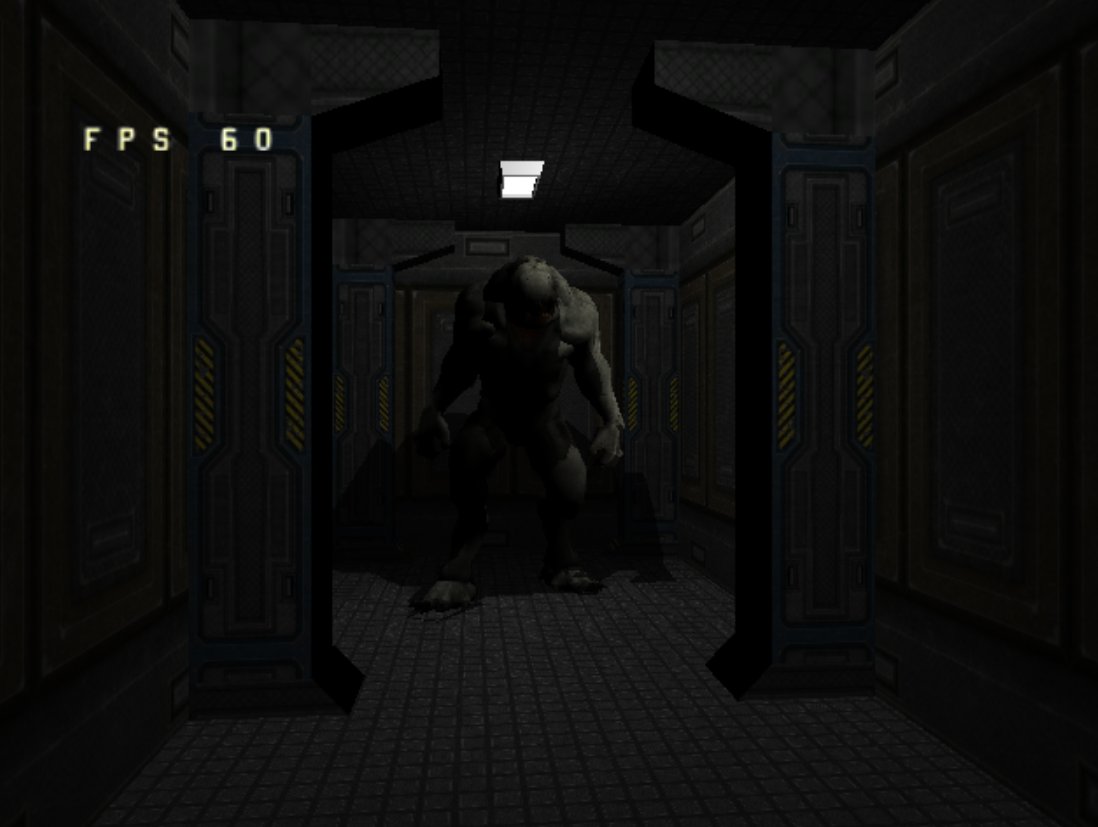
This is Dreamcast!💪 I haven't had much time for Spiral Engine lately, but its development continues, and it can do things like this, shadows on animated objects. 😁 #dreamcast#gamedev#retrocomputing
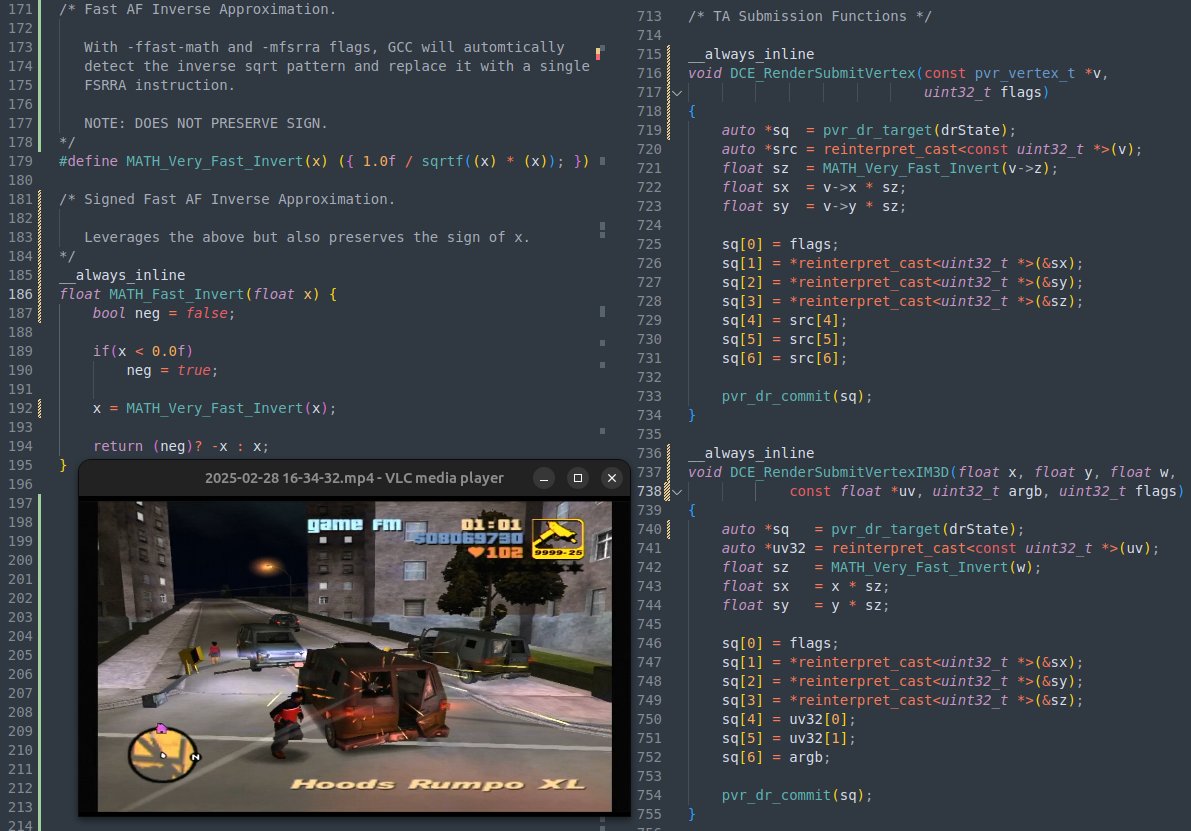
Today's Grand Theft Auto 3 micro optimization for the Sega Dreamcast... speeding up vertex transformation by approximating perspective division.
On the DC's SH4 CPU, a single-precision FDIV instruction takes a whole 13-14 cycles to execute. Ain't nobody got time for that shit, so we can abuse the builtin floating-point reciprocal square root approximation instruction (FSRRA) and a couple multiplications to perform a much faster, approximate division with an unsigned result ("MATH_Very_Fast_Invert()").
It turns out that for our PowerVR GPU, which requires clipping all polygons intersecting the camera's near Z plane, we never even need a negative result with a perspective divide, so this is an immediate win. You can see us using the "MATH_Very_Fast_Invert()" macro directly for the vertex submission routines on the right.
For other scenarios where we'd like to be slightly better than a real FDIV, where we only need an approximate result, but we MUST preserve the sign of the value we're inverting, "MATH_Fast_Invert()" takes exactly as many cycles as an FDIV in isolation; however, other instructions can be get scheduled in with the routine when it gets inlined for better superscalar dual-dispatch utilization, plus the resulting value is able to be accessed by a later instruction in the pipeline earlier with this routine than with a full FDIV.
Command & Conquer source code available on Github https://t.co/0OJETBLRMF
Command & Conquer Archive Footage from Renegade and Generals https://t.co/bgY18XYWz7
@AskurOdinson Die ist bzw. war freiwillig zugelassen. Meine Simme ist das auch. Das ist initial aufwändig, spart aber Kosten in der Versicherung. Kann zudem auch saisonweise zugelassen werden, lohnt sich aber kaum. Das komplette Jahr kostet mich bei der HUK ca. 20 Euro.
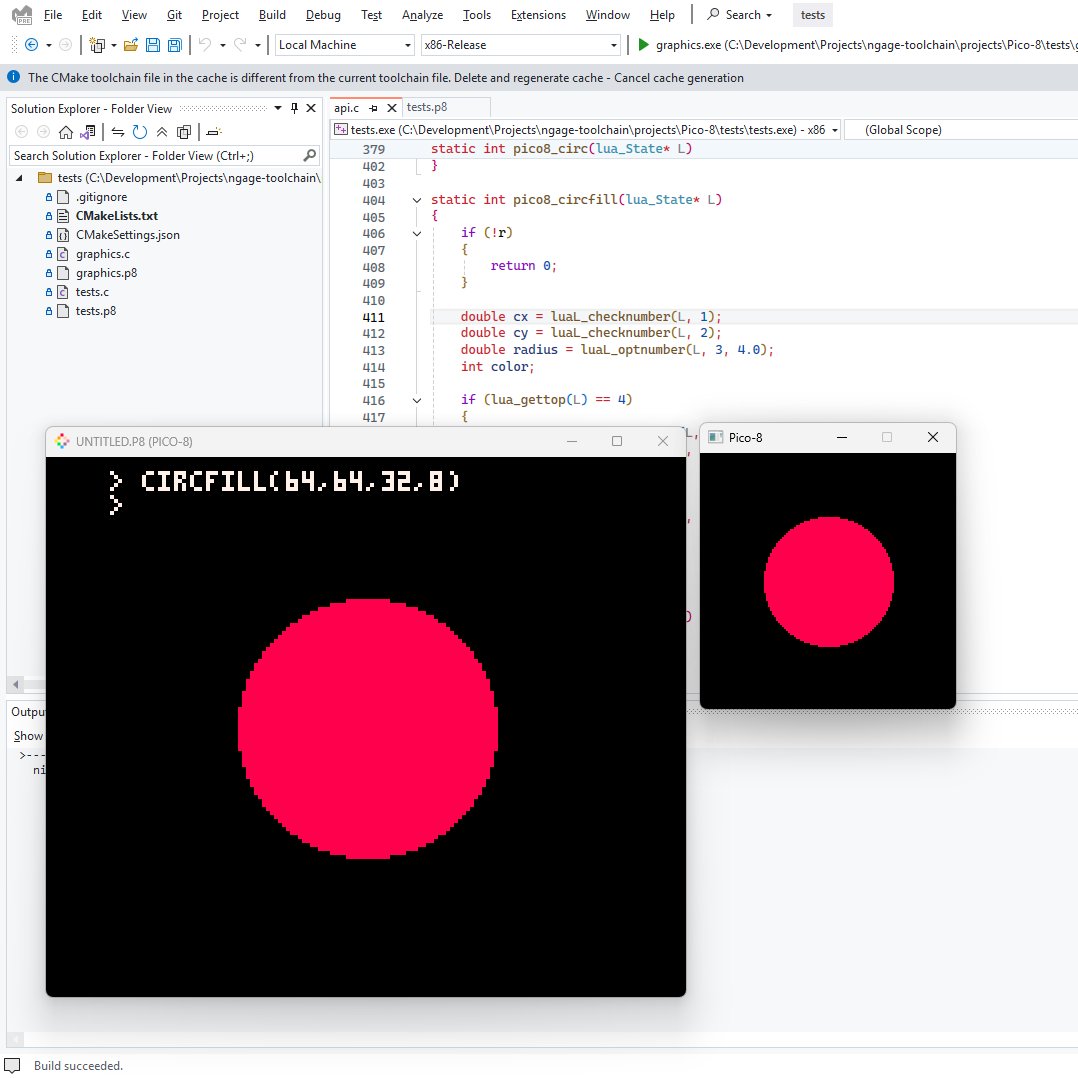
The more I get involved with Pico-8, the more I start to appreciate it. fillp() was surprisingly straightforward to emulate. Why? Because almost everything in Pico-8 is just that: simple by design. #NGageSDK@nokia_ngage
After struggling through the maths API, I'm finally getting started with the graphics API. However, PRs are still very much welcome and encouraged. So if you want to make a small contribution towards #Pico8 emulation on the Nokia N-Gage, I won't stop you. 🙃 #NGageSDK#RetroDev










![falco_girgis's tweet photo. Holy SHIT, I just figured out a way to directly HW accelerate Renderware's "decorated" Matrix type and eliminated the need for constant matrix format conversions in our Sega Dreamcast port of Grand Theft Auto 3!
In the top-left is my modified version of the main RW matrix structure. It encoded a 4x3 matrix within the layout of a 4x4 matrix, where 3 elements of the final column were just left as uninitialized padding while the top element was used to encode metadata "flags" within the matrix.
These flags were quite useful in that they encoded whether the matrices were in certain forms, allowing for various optimizations such as skipping transforms against an identity matrix or taking a fast path for an inverse...
While this Frankenstein matrix format was fine with linear algebra routines being implemented in vanilla C, which can easily skip the padding and flags, it presented a real goddamn problem with HW accelerating the math via SIMD instructions.
Now suddenly an intermediate conversion was necessary to go from the "decorated" matrix format to the "raw" matrix format, before it could be crammed into SIMD instructions... which was less than ideal.
So... I came up with a crazy-ass idea that would allow me to DIRECTLY use the decorated matrices with the DC's SH4 CPU SIMD instructions...
Since the SH4 instruction, FTRV (which can do a whole 4D vector transformed by a 4x4 matrix), is just an approximation, it turns out that at least a few of the least significant bits within the elements of the vector and matrix operands are simply ignored... which means... WE CAN SCOOT THE GODDAMN FLAGS TO THE END OF A FLOAT ELEMENT AND PASS THEM TO OUR SIMD INSTRUCTIONS WITH THEM GETTING SAFELY IGNORED!
So now, as you can see on the right, we can replace the slow-ass C software routines with fast SH4-accelerated intrinsics which use the FTRV instruction, by simply changing the padding to proper identity matrix values plus abusing the 3 least significant bits of element [0][3] to store our flags!
So now RW matrices are basically native DC 4x4 SIMD types... and we got some pretty handsome gainz (plus a few FPS in high FPS areas) to show for it!](https://pbs.twimg.com/media/GlIaJ6uXEAA6GYa.jpg)