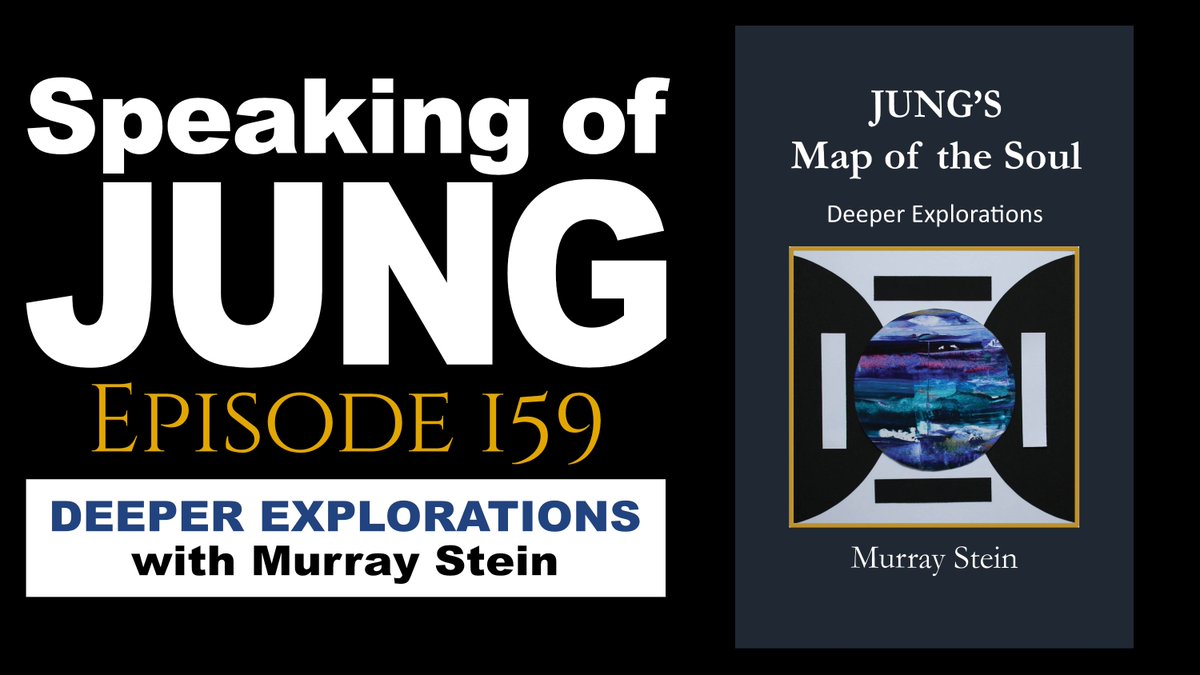
Murray Stein (@murraywsteinII) returned this week to Speaking of Jung (Ep. 159) to discuss the new companion edition to his bestselling book ‘Jung’s Map of the Soul.’ ‘Deeper Explorations’ is currently the #1 New Release in Jungian Psychology. (We also talked BTS!)
NEW: Speaking of Jung, Ep. 159 – Jungian psychoanalyst Murray Stein, Ph.D. joined us from Zürich to discuss his new book, Jung’s Map of the Soul: Deeper Explorations, and the return of BTS! (Video edition now available. Audio and show notes coming soon.) https://t.co/ZcqrntB1hB
On the next episode of Speaking of Jung, Dr. Murray Stein returns to discuss his new book, Jung’s Map of the Soul: Deeper Explorations, coming May 18th from Chiron Publications. In it, he revisits #BTS.
Here's the Preface:
“To begin, I want to thank Len Cruz and Steve Buser of Chiron Publications for their suggestion that I write this updated version of my earlier book, Jung’s Map of the Soul. Their words of encouragement were inspirational and offered a welcome opportunity to take my reflections on #Jung’s ‘map’ some steps further to what I hope the reader will find to be a deeper level of exploration, hence the title of this book. It has now been over a quarter of a century since the earlier version was published, and much expansion and further development has taken place in the field of Jungian #psychology since then.
In addition, the adaptation of some ideas from that book by the wildly popular K-Pop group #BTS for several of their best-selling albums has given me added motivation to update this work and offer further reflections to a new generation of readers. It has been my hope for decades that Jung’s insights into the human mind would be as widely disseminated as possible in the global community of #soul-searchers and thinkers.
In the earlier book, which was based on lectures I delivered at the Jung Center in Evanston, Illinois in 1991, I offered an introduction to the fundamental theories of analytical psychology as presented in several central texts in the Collected Works of C.G. Jung. Those sources remain important for what is presented here, but today it is possible to include many further texts by Jung that were not available at that time. Previously unpublished letters and the seminars given by Jung in the 1920s and 1930s have appeared that add fascinating complexity, allowing further understanding of his thinking. The correspondences with Victor White, Wolfgang Pauli, and Erich Neumann off er fascinating insights into Jung’s developing thoughts about religion, physics, and analytical psychology. And the brilliant seminars—Dream Analysis, Visions, Nietzsche’s Zarathustra, and Children’s Dreams—feature Jung speaking vividly and freely (and often humorously) to small audiences of enthralled colleagues and students at the Psychology Club in Zurich. These carefully edited books offer a wealth of information for a renewed and even revised appreciation of Jung’s incredible range of interests and his remarkable capacity for playful and imaginative thinking.
Most important to mention are the publications of The Red Book: Liber Novus in 2009 and the Black Books in 2020. These books made the private writings of Jung available to the public, and they have added considerably to our understanding of the creation of his map of the soul. The characters, landscapes, and ideas that Jung discovered in his own deep dive into the dark waters of the #unconscious, and his recording of his experiences initially in the Black Books before writing out and amplifying the text for Liber Novus and finally transcribing it in The Red Book, offer us a view into much of the background of his later theoretical writings. In his meticulously crafted calligraphic script and his colorful paintings and illustrations, Jung created a timeless work of art, capturing his exploration of his inner world during his midlife period—an era in his life that the historian Henri Ellenberger called a ‘creative illness.’ Jung’s hand-scripted Red Book was left unfinished when he abandoned further work on it in 1928, but the inner explorations that the publication of The Red Book: Liber Novus made visible to readers today are invaluable for our study of the map he later created in his official writings and seminars. In recognition of its importance, my late friend Thomas Arzt and I invited seventy Jungian scholars and analysts to contribute essays, which we published in five volumes under the series title Jung’s Red Book for Our Time: Searching for Soul Under Post- Modern Conditions (Chiron Publications, 2017–2022).
Additionally, since the first edition of Jung’s Map of the Soul was published in 1998, a large number of publications by many Jungian authors have extended and deepened our understanding of Jung’s oeuvre. In this book, I am offering further reflections that include the views of many other gifted scholars. For their contributions, I express my deepest appreciation and gratitude.
Most of Jung’s texts are so multilayered and complex that one can read them many times with an ever deeper and more capacious understanding of his vision and how he was using his multitude of sources— ancient, medieval, and modern. In my own recent readings, I have attended more carefully than before to footnotes, particularly in the #alchemical writings, which show a highly complex and intimate web of relations between Jungian psychology and the philosophical and religious ideas of often obscure and esoteric texts from medieval and ancient times. Jung was very concerned with connecting modern depth psychology to the wisdom of the cultural traditions out of which it grew. Modern psychology is a product of the European Enlightenment and of scientific thinkers, many of whom had no interest whatsoever in the cultural roots of their discipline. For Jung, it was essential to become #conscious of this history. This was the rationale for his extensive study and writing on Gnostic and alchemical sources. It was more than a serious hobby for Jung; it was fundamental to his oeuvre.
This new account of Jung’s map of the soul represents my own further study concerning the many layers and levels embedded in Jung’s thinking about the human psyche. I only hope and pray I can do justice to the rich legacy he has left us.
I want to thank Jennifer Fitzgerald for her assistance in bringing this book to print. I also want to thank my family, patients, colleagues, and friends, with whom I have shared many of these thoughts over the years, and especially Diane Stanley for her brilliant cover design for this book.”
See Speaking of Jung’s special section on Murray Stein for more. https://t.co/iJwiqOnSck
When I showed the music video for #SWIM to Dr. Murray Stein he said this: Map of the Soul, Anima! It shows a journey over the great waters (individuation at midlife). Reminds me of Odysseus. I think #BTS are moving into the stage of individuation after leaving mother and father worlds and moving on to deeper levels than persona, ego and shadow, i.e., encounter with anima. She dominates the film, totally.
Dr. Stein returns to the podcast on May 18th for a very special video edition of Speaking of Jung: Interviews with Jungian Analysts.
#keepswimming 💜
BOOK LAUNCH: Twilight at Bollingen by Jungian psychoanalysts Murray Stein (@murraywsteinii) and Henry Abramovitch, was released by Chiron Publications (@ChironBks) on April 1st. There will be a free book launch on Zoom on Wednesday, April 22nd at 1:00 PM EDT.
Twilight at Bollingen is a play with four characters – C.G. Jung, Aniela Jaffé, Erich Neumann and Marie-Louis von Franz – speaking about Jung’s legacy. The play is set at Jung’s tower in Bollingen and takes place in the last years of his life. It is a tribute to Jung and to his successors, as well as a dialogue about the #shadow of Analytical Psychology, the afterlife, and personal destiny.
This volume includes chapters by each member of the Ensemble, all Jungian Analysts, specially written, who give unique reflections as performers and analysts.
Includes Speaking of Jung guests Murray Stein (15 episodes), Henry Abramovitch (Ep. 47 & 126), Paul Brutsche (Ep. 147), and Kathrin Schaeppi (Ep. 148).
Table of Contents:
▪️Twilight at Bollingen: A Play, by Murray Stein (14 episodes) and Henry Abramovitch
▪️Speaking of Twilight at Bollingen: A Conversation between authors Murray Stein and Henry Abramovitch
▪️The Bollingen Tower and Its Symbolic Significance, by Paul Brutsche
▪️Twilight: “I enter into a twilight: I am this and yet also something else.,” by Kathrin Schaeppi
▪️Twilight at Bollingen – A Reflection, by Marco Della Chiesa
▪️The Owl’s Gaze – Announcing the Twilight, by Heike Weis Hyder
▪️Music for Twilight at Bollingen: Excerpts from Serge Rachmaninoff, Sonata in G minor for Cello and Piano, by Barbara Helen Miller
📔 Get the book (*aff link) – https://t.co/T0Mqx1VgGY
🖥️ Attend the Zoom Book Launch – https://t.co/rktbLDCzlH
BREAKING: Vatican sends Trump’s favorite Cardinal packing as Pope Leo cleans house.
In a move that sent shockwaves through both the Catholic Church and MAGA world, Pope Leo has officially shown Cardinal Timothy Dolan the door—replacing Donald Trump’s favorite cleric with a far quieter, far less political bishop from Illinois.
Yes, that Cardinal Dolan. The Fox News regular. The inauguration prayer guy. The culture-war crusader who once called slain MAGA commentator Charlie Kirk a “modern-day Saint Paul.” That Dolan is now out as head of New York’s powerful Catholic archdiocese, after Pope Leo accepted his resignation and tapped Bishop Ronald Hicks to take his place.
And the message from Rome couldn’t be clearer: the Trump-aligned, red-meat brand of American Catholic politics is officially out of favor.
Dolan, long seen as a reliable spiritual cheerleader for Trumpism, was so beloved by the former reality-TV president that Trump once floated Dolan as a potential pope—and even mused about nominating himself for the job. But Pope Leo, the first American pope in history, apparently had other ideas.
Enter Bishop Ronald Hicks: 58, low-profile, media-averse, and blessedly uninterested in cable-news culture wars. Hicks, who grew up near Pope Leo in Chicago’s south suburbs and shares a background in missionary work, represents a sharp pivot away from Dolan’s performative politics.
The shake-up comes as Pope Leo has increasingly clashed with Trump’s agenda, condemning his “inhuman” immigration policies and urging him to back away from reckless saber-rattling over Venezuela. In other words, the Vatican is done pretending Trumpism and Christian compassion are compatible.
Experts say the move is no accident. Dolan didn’t just retire—he was replaced.
“This is a sign of change,” said one church scholar, noting that Hicks is far less likely to justify or excuse Trump’s behavior. While not a liberal firebrand, Hicks has made clear he wants a church focused on unity, healing, and cooperation—concepts that don’t exactly poll well on Truth Social.
Dolan’s resignation was technically routine—bishops submit them at 75—but popes don’t have to accept them. Pope Leo did. Immediately.
Bishop Hicks will be installed as New York’s new archbishop on February 6, marking the end of an era where MAGA politics enjoyed a privileged seat in America’s largest pulpit.
In short, Trump lost another ally, the Vatican reclaimed the moral high ground, and the culture-war cardinal just got benched by the pope.
Please like and share to thank Pope Leo for the welcome change!
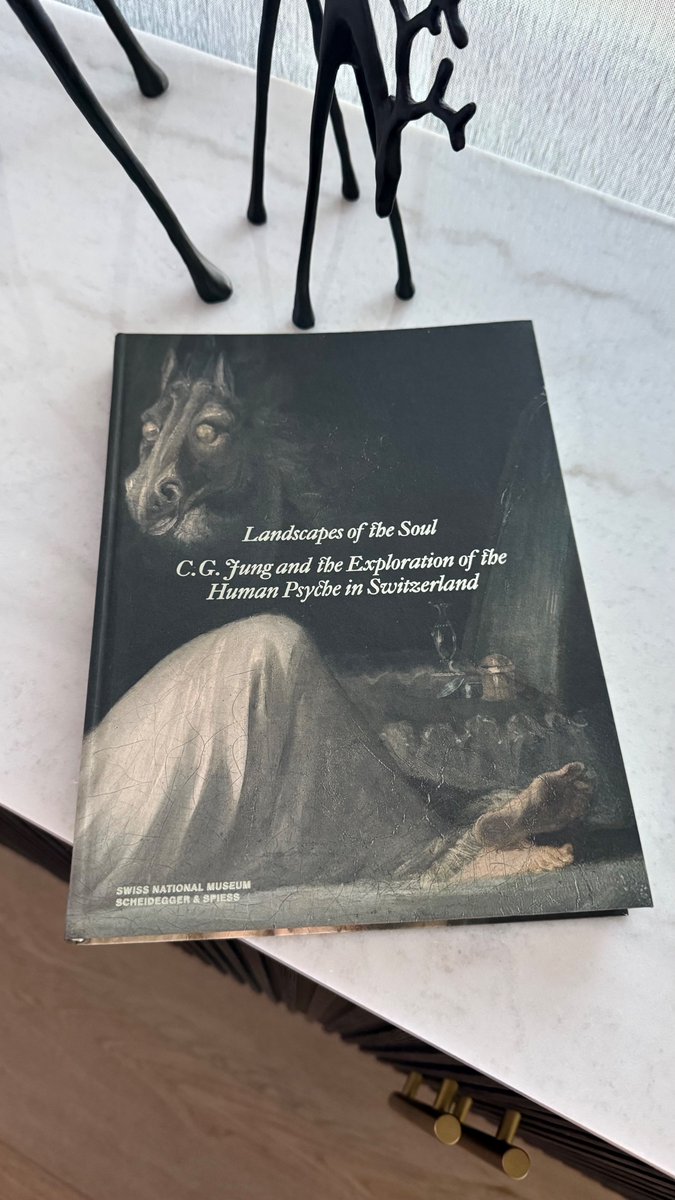
Landscapes of the Soul: C.G. Jung and the Exploration of the Human Psyche in Switzerland, published by the Swiss National Museum (Scheidegger & Spiess, 2025), drops December 22nd. Includes essays by Speaking of Jung guests @MurrayWSteinII, Ph.D. (“C.G. Jung as Thinker and Author”) and Thomas Fischer, Ph.D. (“Emma Jung: A Pioneer in Swiss Depth Psychology”).
🔗 |: https://t.co/7camxUsjhH
{as an amz assoc we earn from qualifying purchases}
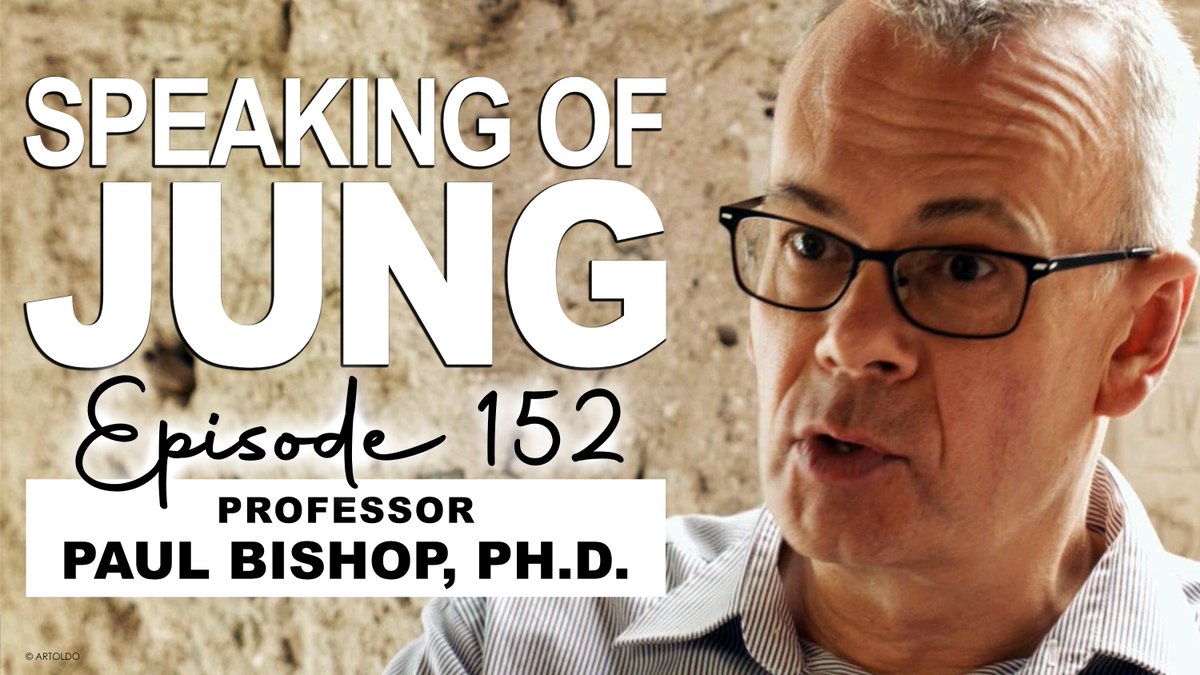
The new episode of Speaking of Jung with Professor Paul Bishop (@paulbishop4U) is now available on YouTube. (Podcast edition with full show notes coming later in the week.) We discuss the influence of Goethe's Faust on C.G. Jung. https://t.co/3cYMpFhlb1
All of my research notes for Episode 151 with Jungian psychoanalysts Murray Stein and Steven Herrmann have been sent to Patreon members. Contribute just $5 per month to our Tip Jar for full access.
Speaking of Jung, Ep. 151: Jungian psychoanalyst Murray Stein, Ph.D. returned to discuss his latest book, Jung and Alchemy: A Path to Individuation. Then, I was joined by his biographer, Jungian analyst Steven Herrmann, Ph.D. | Video edition ▶︎ https://t.co/6dFX8NhTNL
Jung and Alchemy: A Path to Individuation
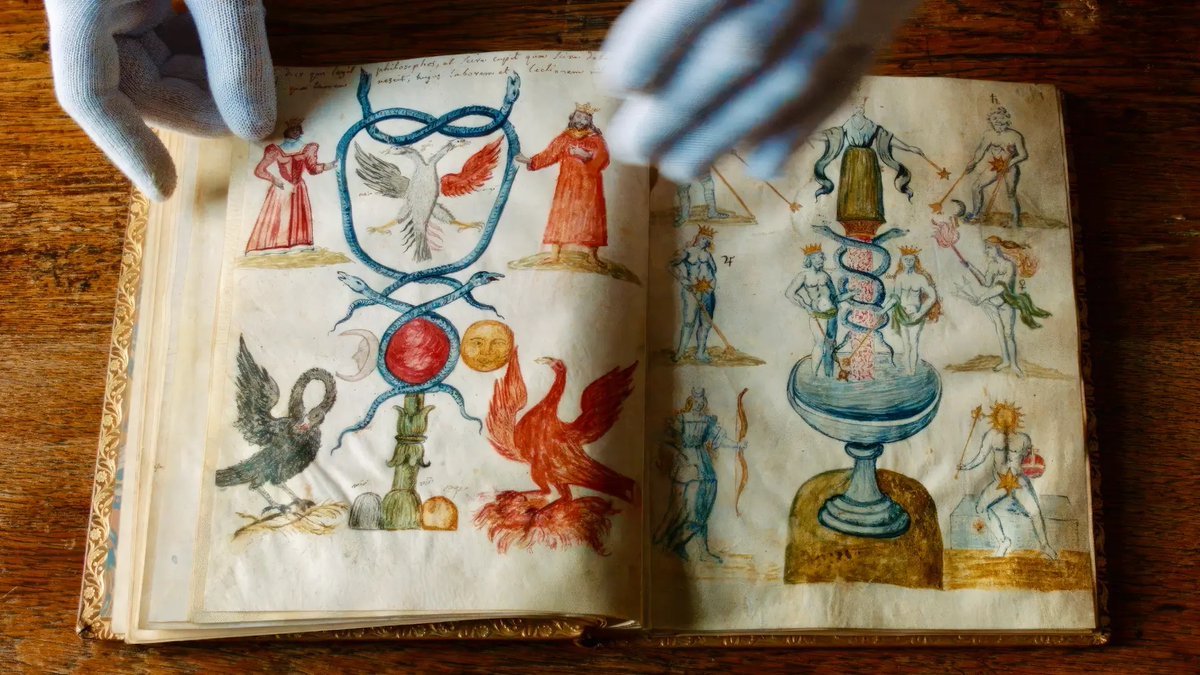
Stages of the Opus – Nigredo, Albedo, Rubedo
“The alchemical opus typically unfolds across three stages (though sometimes four), and these are coded in color. Three Latin words relate to the progressive stages of the work: nigredo, albedo, and rubedo. The nigredo refers to a time of darkness – a state of mind associated with #depression and confusion, just as a substance in the dark holds little energy. Sometimes this stage is represented by an image of chaos. However, it is the state of mind in which transformation of the psyche, from less to more #conscious, begins.
People often enter analysis following a crisis that plunged them into a state of confusion and disorientation. This is the starting point. And it is necessary, if the process is to be at all deep. However, if an analysand is not confused when they begin the work, they will soon enough find themselves disoriented as the analysis deepens. #Jung once said (I think in jest!): ‘Bring me a sane man and I will cure him.’ The alchemists rejoiced when the material in the vas turned black, as this was a sign that the transformation was beginning. Why? Because old structures must be deconstructed to make room for the new. This stage in analysis, which Jung called ‘confession,’³² brings the #shadow into the foreground – a necessary condition for deeper work.
The nigredo is followed, after a time (often a long time!), by the albedo, or ‘whitening,’ during which the ingredients in the vessel turn from black to white. Once the old material has been burned to a crisp, the ashes begin to turn white. This represents the beginning of a new stage – one that, for the alchemist, was associated with the dawn. At the moment of first light, darkness slowly gives way to soft glimmers of sun rays, and it becomes possible to look around and see one’s surroundings. The Aurora Consurgens (‘dawn rising’), an #alchemy text attributed to Thomas Aquinas that Marie-Louise von Franz interpreted, explicates this stage of the opus in great detail.³³
Psychologically, the albedo is associated with a state of mind that has achieved insight after a period of depression and guilt, facilitated by confession. As Nietzsche wrote: ‘The bad conscience is an illness, there is no doubt about that, but an illness as pregnancy is an illness.’³⁴ The albedo is the birth from this pregnancy of a new sense of self, based on an awareness of the shadow dynamics at play behind the screen of egocentrism. Things that were once hidden away from #consciousness, whether due to repression or fear or denial, now emerge into view as a new day’s light. Now, one can begin to sort out the jumble of feelings, of formerly hidden impulses and desires, and of shameful motivations that previously swam like fish in the waters of the #unconscious. At this stage, one begins to develop a more realistic picture of the inner world and what is there.
Perhaps this also includes seeing through a personal or cultural #complex and getting a glimpse of something deeper and broader in significance. With the birth of a sense of meaning in one’s personal destiny, the stage of the rubedo makes its appearance. The rubedo refers to the rising of the sun, which brilliantly reddens the sky, bestowing not only light, but also warmth. The appearance of the rubedo in the vas warmed the heart of the alchemist, indicating that the opus was nearing completion. Soon, the alchemical gold would appear and the work would be complete. This was a moment to celebrate. Psychologically, the rubedo represents a state of mind that is not only enlightened, but also energized and strong, able to act.
The opus thus proceeds from the darkness of unconsciousness to the dawn of consciousness and eventually a new day of energy and meaningful action. Following this, one is able to create warmth in the environment and provide what is needed for the world around them to blossom and flourish. This is the goal of the alchemical opus – to arrive at the state of mind represented by the rubedo.”
³² Jung, “Problems of Modern Psychotherapy,” CW 16, para. 123ff.
³³ Von Franz, Aurora Consurgens.
³⁴ Nietzsche, On the Genealogy of Morals, 88.
~Murray Stein, Ph.D., Jungian analyst, Jung and Alchemy: A Path to Individuation, pp. 39-42
📸: C.G. Jung on Alchemy: Sara Ferro and Chris Weil – World Premiere at the Hermetic International Film Festival
Murray Stein joins me on November 5, 2025 to discuss his new book on Speaking of Jung: Interviews with Jungian Analysts.
WEBINAR TODAY! The Guild of Pastoral Psychology in England presents “The Eternal Feminine Draws Us on High (Das Ewig-Weibliche zieht uns hinan): Jacob Boehme, Sophia and the Eternal Feminine” presented by Oxford scholar Professor Paul Bishop, Ph.D. (@paulbishop4U)
In Hellenistic philosophy and in Judeo-Christian theology the figure of Sophia is a personification of Divine Wisdom. More recently, in Orthodox theology a school of Sophiology has emerged, building on the work of late nineteenth and early twentieth century thinkers as Vladimir Solovyov, Pavel Florensky, and Sergei Bulgakov.
But the figure of Sophia can also be found in the thought of Jacob Boehme, the 400th anniversary of whose death (in 1624) falls in 2024 while the 450th anniversary of his birth (in 1575) falls in 2025. So now seems a good time to consider the role of Sophia in one of the most significant mystics of the Reformation era — whose ideas influenced, among others, Johann Wolfgang von Goethe.
In the conclusion to the Second Part of Faust, we are given a glimpse of the post-mortem world as imagined by medieval Catholic theology in which Faust — in striking contrast to the original legend — finds redemption.
In the final lines of Goethe’s drama, we are told, “The Eternal Feminine / Draws us on high”; can this celebrated conclusion help us understand the dynamic by which Sophia shares her divine grace?
Date: Thursday 2nd October 2025
Location: Online
Time: 7:30 – 9:30 pm London time
Registration: https://t.co/huLas9aC43
Coming November 5th to Speaking of Jung: Jungian psychoanalyst and author of Jung's Map of the Soul @murraywsteinII returns to us from Zürich, Switzerland to discuss his new book on Jung and #alchemy.
Speaking of Jung guests Leonard Cruz, M.D. and Steven Buser, M.D. (Ep. 78), owners and general editors at Chiron Publications (@ChironBks), at last week's IAAP Congress in Zürich, Switzerland. Photo by Ep. 123 guest Robert Hinshaw, Ph.D.
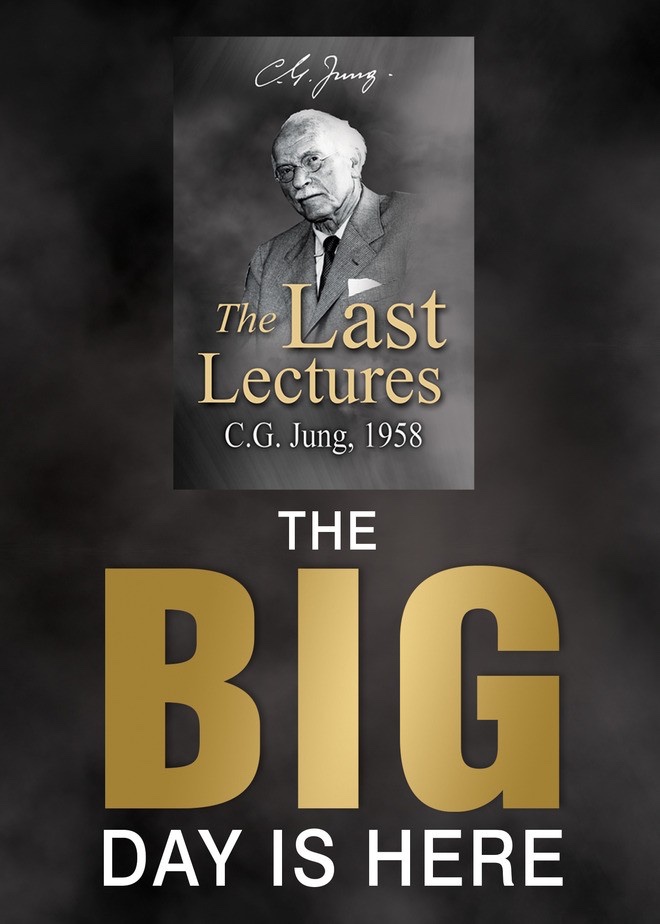
In celebration of the 150th birthday of C.G. Jung, Chiron Publications is offering 20% off their entire online store, including The Last Lectures: C.G. Jung, 1958. Use code birthday150 (ends July 31st). https://t.co/NqjPEVvUBL