We finally got this series out. We tried to simplify Linux kernel exploitation for those interested in getting started. There are plenty of resources out there, but my impression is that they are written for experienced people, not for beginners in this complex field.
In this series, we tried to do something close to real-world kernel exploitation, but much simpler, so people can use it as a first contact with Linux kernel exploitation. I hope people like it, and we will be available to help anyone who wants to reproduce all the content.
Have you ever wanted to get started with Linux kernel exploitation? We wrote a 4-part blog series aimed at newcomers, going from setting up the environment to bypassing SMEP and KASLR. We exploit a real Linux kernel vulnerability step by step, debugging every crash along the way.
Introduction to Linux Kernel Exploitation: Vulnerability and Environment – Part 1
https://t.co/tephfqrvqD
Introduction to Linux Kernel Exploitation: Triggering the Vulnerability – Part 2
https://t.co/QEWCat60VA
Introduction to Linux Kernel Exploitation: Exploitation – Part 3
https://t.co/qqL6IPAUk3
Introduction to Linux Kernel Exploitation: Mitigation Bypass (KASLR and SMEP) – Part 4
https://t.co/O3bgNpU5wI
Systems programming is easier to understand when you build the things yourself.
LowLevelCraft has 479 hands on tasks covering C, assembly, compilers, CPUs, operating systems, networking, virtual machines, graphics, and storage.
Write code in the browser and test it against hidden cases.
https://t.co/UhlaY9iPmt
Prof. Ndubuisi Ekekwe is right. The age of Nigerian hardware is emerging and we've documented some of them.
1. Emmanuel Ezenwere - Arone Technologies @AroneTech. Manufacturing drones and deep hardware from Nsukka, Enugu State. Signed a ₦12.95 billion partnership with IMT Enugu
1/6 🧵 Another thread -- and time to put on my slightly boring “professor” hat 🤓
We’ve just released the first three chapters of The Decompilation Book!
We call it a book, although technically, it’s a series of blog posts:
https://t.co/04mRXVWlZH
If you're new to exploit development, reverse engineering or vulnerability research, bookmark this before buying another course.
Blackstorm Security has published 1,600+ pages of research for FREE.
Windows kernel exploitation.
Driver reversing.
Patch diffing.
Chrome / V8 / WebAssembly.
Hyper-V.
macOS / iOS internals.
Modern mitigation bypasses.
Real CVEs taken from root cause to working exploitation.
Their CVE-2024-30085 series alone spans hundreds of pages and multiple exploitation strategies.
This is the kind of material that teaches you how vulnerability researchers actually think, not just how to run tools.
19 research papers. 1,657 pages. Free.
Start here:
https://t.co/wDftgmamHH
Author: @ale_sp_brazil
Focus on the techniques not the tools (X64DBG, GHIDRA/IDA, WINDBG, GDB GEF)
#ExploitDevelopment #ReverseEngineering #VulnerabilityResearch
We’ve secured this facility for ISEE in Enugu.
It will be fully functional by the 2nd of November, 2026.
This will be our headquarters for the South East Maths and Science Olympiad and all other education interventions we embark on within the region.
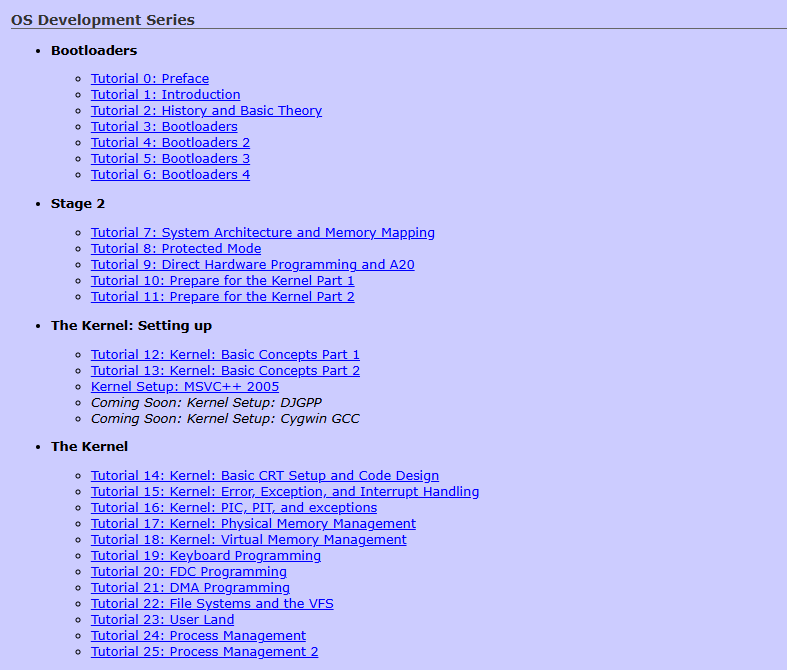
a free tutorial series takes you from an empty boot sector to a working 32-bit protected mode kernel
you build the bootloader GDT the A20 line VGA text mode and the kernel itself step by step
the entire series is still online for free
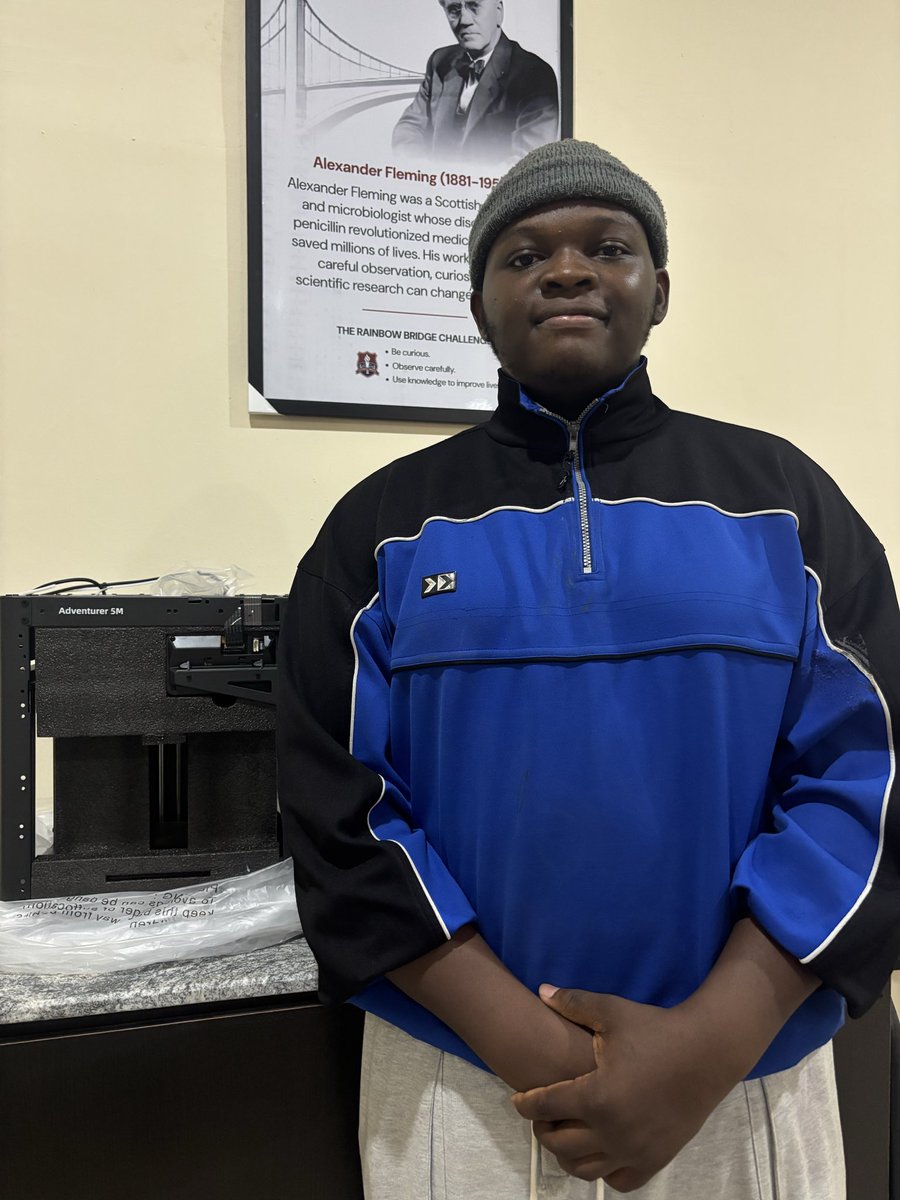
Kayode Williams built a drone from scratch, and he is just 20 years old.
He arrived in Enugu today and will be with us for the next 4 weeks to teach our children how to make real-life drones from scratch during the bootcamp.
What we want to solve is making low-cost drones to improve security in the East and also to dispatch emergency items like pallets, drugs, and other supplies.
These 4 weeks are going to be hot in Enugu.
We have geniuses hidden everywhere, and we will create millions of them in a few years.
One of the reasons I share almost everything we're doing in the South East is simple:
I want you to copy it.
If a strategy gets more children learning, gets more students excited about STEM, raises academic standards, or inspires excellence, don't admire it from afar or criticize Alex. Replicate it in your region. Improve it. Scale it.
Africa has spent too much time protecting ideas instead of spreading what works.
I don't want the South East to be the exception. I want it to become the template for Africa civilization.
Imagine every region in Nigeria building its own Olympiads, ranking schools, training teachers, identifying talent, and making education a public movement.
Imagine every African country adapting the same ideas to fit their own realities.
That's how continents change.
Education is Africa's greatest opportunity. If something works, copy it.
I will be running another experiment.
The top 40 students in Enugu from the last Olympiad will engage in a 3-week bootcamp to learn some critical skills with precision.
They will learn how to build drones from the ground up, auto mechanics, precision welding, electrical work, and basic programming.
Some experts will fly into Enugu for the period to train them on these skills. It will run from August 10 to August 30.
If this works as planned, then it will give us stronger validation for the skill development program we are currently designing.
Don’t be tired of my experiments. Whatever works, we scale quickly.
We have been invited to Singapore for 2027. We will challenge their best students in Maths.
The winners of the 2027 South East Maths Olympiad will challenge the best in Singapore in 2027. 56 other countries will join too.
I like how the world is now taking an interest in our children.
I am benchmarking our education against that of Singapore, Finland, Shanghai, China, Canada, and the US.
This is how we can move from being a third-world country to a first-world country.
The future is looking exciting.
22 years ago, in Enfield, London, I met this Nigerian guy whose job was to wash celebrities' cars at a very high-end car wash. Everything he made, he sent back to Nigeria to invest in property. He was not well educated and didn't know of any other assets to preserve wealth.
At the time I met him, he was saving a lot and regularly sending home millions of Naira. His clients and patrons were very generous, and he was very hardworking.
The first thing I asked him was why he didn't take all the knowledge he had gained to set up a similar business back home. His answer was - "They will rob me blind if I am not there."
He wasn't ready to leave his cash cow in England, and he also knew that setting up a business at home was a risky endeavor. I see this pattern repeated with many successful Nigerians outside Nigeria. Trust is rare, and many have been burned.
The surprising thing is that when Nigerians do the reverse and try to set up businesses abroad from Nigeria, they would most likely choose other Nigerians to run them. I have seen this with banks and churches. Some are successful, and others are not, but they keep doing it anyway.
What happens to Nigerian trust locally, and why is it different when things are abroad? The simple answer is systems. A Nigerian doing business with another Nigerian abroad is protected by the rule of law and the systems in place there. There is also something deeper that I stumbled upon.
Nigerians typically choose other Nigerians to run things, even though their products are originally Nigerian products or products largely meant for Nigerians in the Diaspora. When it is a universal product, they would choose others, but would still likely choose Nigerians first. It is a paradox.
There are many times when choosing a Nigerian to run a Nigerian business outside Nigeria is a very bad idea, especially in those places with xenophobia, and where Nigerians are despised, but the reason Nigerians choose other Nigerians is that Nigerians abroad work hard. They know what they are running away from and put everything into it so they don't go back.
I always joke that I have more relatives in Atlanta, Georgia, USA, than in Benin City, and it is likely true, as a family reunion there once had 200 people. One thing I noticed was that the family members almost always employed other family members in their businesses, and those businesses thrived.
One of them even ran a car wash, employing his brothers, who later set up their own car washes. These were informal arrangements without any contracts, but everyone behaved and played their part. The interesting thing was that they never tried to do the same thing back home in Benin City. The answer seemed simple: maybe desperation and greed led to bad choices by those at home, but why?
I have always wondered why the same family bonds abroad that bring people together and help them do well disintegrate when they get back home. The only people I have seen who have kept these family bonds in business, tight at home and away, were the Igbo people. The interesting thing was that the car guy in London was also an Igbo man, but he couldn't leave a business with his people back home to run.
I later asked why, and he told me it was a high-end, personalized service that took years of apprenticeship to perfect. He was cleaning and detailing Ferraris, Lamborghinis, and other high-end cars for footballers and bankers. If he tried to train people to do that, they may end up taking the business away from him. I finally got my answer.
Trust is multifaceted. You have to first trust yourself before you can trust others. I have a barber in Lagos called Chika who has absolutely no fear that I would choose others over him, as we have had a relationship for decades. I have the same relationship with Chika as I had with my late co-founder, because we were always truthful with each other. It was something that grew over time.
I have followed Chika from Ikoyi Hotel to Victoria Island, to a shed when his shop was demolished, and finally to his current place, where he has operated for the last decade. I have even begged him to come to Accra, as I still don't have a regular barber here after 17 years. Many others in Lagos have the same relationship with him, and there are more of them there than in Accra. Chika is that good.
He has also been unable to transfer that skill to others, making his business less scalable. It will always remain a niche luxury service. The type of business we try to do matters. High-trust businesses with a personal touch require the founder to micromanage everything.
In Ghana, I once lost a $ 330k-a-year deal because someone (a Ghanaian) was too laid-back to respond to an email on time. Another Nigerian took the deal. Nigerians are more aggressive in doing business than others. So, I understand why people hire Nigerians abroad, especially in other African countries. They have more hunger. Nigerians choose Nigerians because they are easier to micromanage.
Hunger at home can easily turn into greed. A Nigerian guy I recruited in Lagos for a project at MTN Group in the early days had tried to circumvent me with my South African partner. I was lucky to have seen the email he wrote to that effect when he left his screen open in the office. I became more cautious about who I worked with. It repeated itself much later, when I saw that our internal company emails were being read in the Ericsson office before they poached a lot of our people.
Could these things have happened outside Africa? Maybe the probability would have been much less. The hunger is the same, but the greed is less, as many of the needs are usually already met. This is the same for Nigerians working in other parts of Africa. You don't need to worry about diesel for your generator, fuel scarcity, or security. When those basic needs are met, Nigerians become very different people.
This is why I keep telling people recruiting from the diaspora not to bring them to Nigeria, but to allow them to settle in other African countries for now. Trust is enhanced when people worry less about basic things.
This is a simple and pedestrian explanation, but trust me, it works all the time. There are people I know who would love to work for Nigerian companies but would never want to live in Nigeria. Hire them, but don't let them come back home unless you are ready to treat them as expats.
Nigeria is the problem with a lot of people; it is not because they are Nigerians but because they are in Nigeria.
This is me during my Shell Recruitment Day in November 2011.
1hr after the whole day group interview, I got the phone call I can never forget, “Congratulations, they all loved you. When can you start?”
If you have an upcoming group interview where they put a bunch of you together in a room and give you a task to work on together, then sit up.
I will tell you my secrets.
I don’t need them anymore and it can help you land your dream job.
They are what I used during my SRD.
I have given the same playbook to many mentees who used them to land their dream jobs in various companies.
So, trust me, this works.
A 🧵