@agnes51235072@prezydentpl Fun fact:
Pfizer wymaga od Polski ok. 5,6 mld zł za nieodebrane szczepionki COVID.
Za tę kwotę Kancelaria Prezydenta RP mogłaby funkcjonować przez ok. 17 lat.
How Weak Men Come About
It starts at home. The household is rich and civilized, and that is often understood as a sophisticated softness and smoothness. Feminine values take over. The mother rules at home and can afford to give her boy everything: to fulfil his every whim, to do everything for him. And so she does. With one child per family, it is often six adults – two parents, four grandparents – serving one boy. So the boy gets everything, for free, and immediately. He never takes the marshmallow test, because there is never anything to wait for. He never fails, because no one lets him. A boy becomes a man by meeting resistance, and his home has removed all of it.
And where is the father? Sometimes gone after a divorce, a weekend visitor. But even when he stays, he is gone. He leaves in the morning for abstract work the boy cannot see or relate to: meetings, emails, a screen. For thousands of years, a boy watched his father work, then worked beside him, then took over. He learned from older men by doing, and one day they told him: now you are a man. That apprenticeship has disappeared, and nobody ever tells him.
Then come the group dynamics at school. If the majority of boys already start like that, it becomes a self-reinforcing behavioral norm. Boys want to belong, so they all act soft. The one who wants to stay strong ends up alone, and loses. The predominantly female teaching staff reinforces it. The men teachers, a small minority, end up dominated by the feminine atmosphere of the school. There are no trees to climb and no fights to settle – the playground is padded. Competition becomes suspect, risk becomes a safety violation, and the restless boy who once got a football field now gets a diagnosis. The leftist curriculum only adds to that, teaching the boy that his strength is a problem to be managed.
Meanwhile the screen gives him everything a man used to fight for, for free. Video games give victory without a fight. Porn gives sex without courting a woman. Likes give status without achieving anything. Why pay the real price when the fake one costs nothing? So he doesn’t.
Then the leftist academia finishes him off. Three more years of learning that the men who built his civilization were oppressors, and that the right answer is always the softest one.
Then the HR-dominated corporate world simply keeps him that way. Promotion goes to whoever offends no one. The man who says the plan is bad is "not a team player". What school started, the office maintains for forty years.
The propaganda reinforces every mechanism along the way. In films, sitcoms and ads, the father is the idiot whom the wife and kids correct, and strength is either a joke or a threat. The boy learns early what a man is supposed to be.
And at the end, the state takes the last role he had left. It provides for the mother, so the provider becomes unnecessary. A man nobody needs has no reason to be strong.
And so it goes. Our men end up weak. This is not because they were born weak. It is because every institution they passed through rewarded softness and punished strength, from the first toy to the last performance review.
That is why we are being conquered by Muslims who laugh at us, seeing all of that.
Pride – The Engineers of Human Souls.
Pride is not the craftsman’s satisfaction in good work. That kind of pride built cathedrals.
Pride is the certainty that you know better than other people how they should live.
Pride is looking at a society and seeing a machine – with yourself as the engineer.
Pride is impatience with reality. Reality is slow, messy, full of people who want different things. So pride replaces it with a plan.
Pride "loves" humanity and despises people. Humanity never argues back.
Pride is blind in one specific way: it cannot see what it does not know. Hayek called it the fatal conceit – the belief that a few clever people can know what millions know, each about his own work, his own family, his own street.
Pride wears the mask of compassion. "For your own good" – the most dangerous words in politics. C.S. Lewis warned that the worst tyranny is the one exercised sincerely for the good of its victims – because its enforcers sleep with a clear conscience.
Pride never admits a mistake. A failed plan was sabotaged, betrayed, underfunded – never wrong. So the next plan is bigger.
And pride never lives in its own design. The architect of the housing estate lives in the old town. The reformer of the school sends his children somewhere else. The planner never pays for his plan.
Now scale it up. Plato’s ideal city abolished the family among its rulers and told the people a useful lie. The French revolutionaries redesigned even the clock – ten hours a day; it lasted barely a year and a half. Trotsky promised that under socialism the average man would rise to the level of Aristotle, Goethe or Marx; what came out was a man queuing for bread and informing on his neighbor. Le Corbusier wanted to raze the heart of Paris for identical towers; his ideas shaped the grim estates on the edge of every European city – designed for a new man, inhabited by real ones. Today the same pride works in committees, redesigning language, the family and what children must learn about themselves. Quieter than a revolution. The same certainty.
The West’s best tradition starts from the opposite place. Socrates: the wisest man knows that he does not know. Chesterton: never take down a fence until you know why it was put up. Society is not a machine. It is a living thing – grown, not built. The statesman should be a gardener, not an engineer.
A free society does not abolish pride. It converts it: be as proud as you like of what you build – your house, your company, your family – and let reality judge it. The planner is proud of what he designs for everyone else, and never has to live in it.
The cure is the oldest one: know what you don’t know. And let people live their own lives.
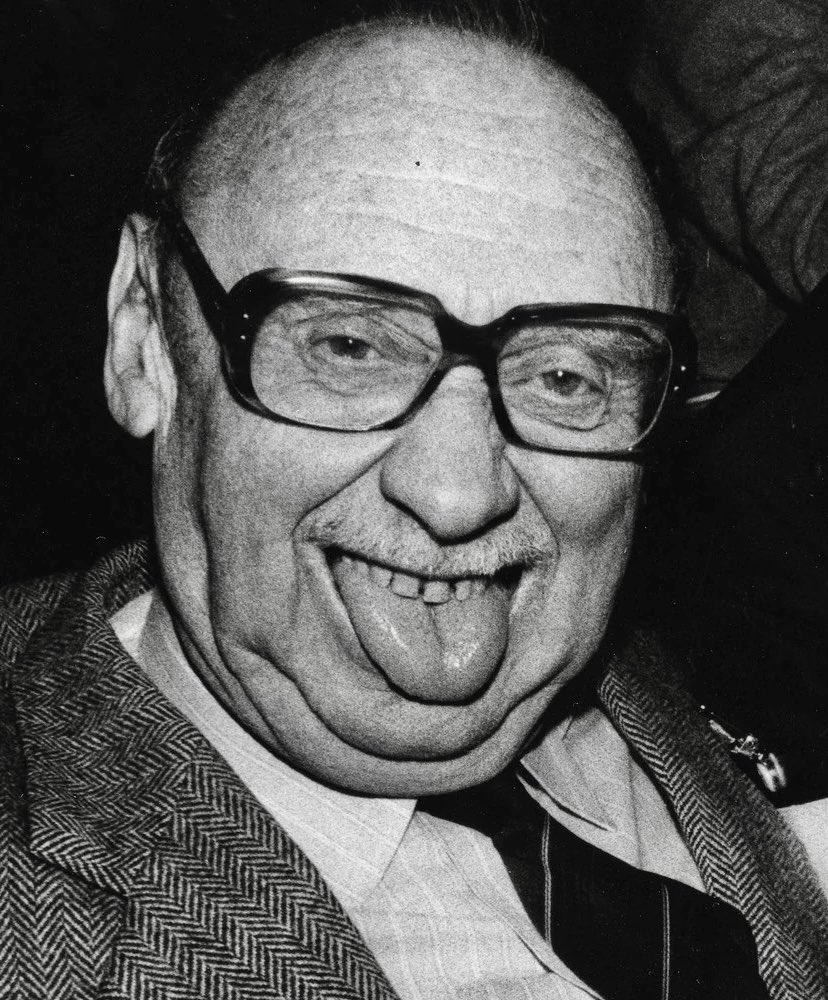
"Socialism heroically fights problems unknown in any other system."
Yes – this guy was one of our most brilliant intellectuals. Meaning a guy producing real understanding – not vapid commentary dressed up as depth. One sentence of his explains more than a shelf of political science.
1. The law. First the system creates the problem. Then it creates an office to fight the problem. Then it blames the people for the problem. Then it asks for more power to fight harder. Every step looks like a solution, and the whole thing is a trap.
2. The proof. In Poland we lived under these absurdities for 45 years. The state fixed the price of meat, so meat disappeared. Then came ration cards for meat. Then people sold meat privately at its real price, so the state made that a crime called "speculation" and set up special bodies to hunt the speculators. It was a problem unknown in any other system, and the state fought it heroically.
3. The queue. We got to know the machine deeply, from the inside, standing in line. You queued first and asked what was being sold later. People walked home wearing toilet paper rolls on a string around their necks, like trophies. And we learned to laugh about it. A man walks into a shop: "No meat?" "No, sir, here we have no fish. No meat is across the street."
4. The merriest barrack. We were called the merriest barrack in the communist camp. Other barracks were grimmer. We laughed at the queues, at the Party, and at ourselves, with jokes whispered at work and told loudly at weddings. The system had the army, the police and the press. We had the punchline.
5. The joke as knowledge. The laughter was not an escape. It was understanding. A good joke is a model of the system that fits into ten seconds. "They pretend to pay us, and we pretend to work" is a whole economics textbook in one line. The communists could censor newspapers, but they could never censor the joke.
6. The man. Stefan Kisielewski, known as Kisiel – the name of a sweet fruit jelly. He was a composer and a columnist, and readers opened the Catholic weekly from the last page, where his column was. He was the only public figure in communist Poland to openly praise capitalism from the parliament rostrum. In 1968 he called the regime a dictatorship of dimwits. Days later, "unknown attackers" beat him in the street. The tongue out was his method: a regime that demands to be taken seriously fears nothing more than a man who laughs at it – and is right.
7. The West today. Germany shut down its nuclear plants, then fought an energy crisis. Berlin capped rents, then fought a shortage of flats. Brussels writes rules that strangle industry, then launches plans to save European competitiveness. Each time, the problem is new to them. It was not new to us.
We laughed because we knew. The West does not laugh yet, because it still believes. The jokes come later – right after the queues.
“This is not a staffing shortage we face. It is a systemic removal of conscience from the patient's last line of defense between life and the most profitable industry in the United States. The nurse is present at the beginning of life, the end of life, and the scary moments in between.
Our loyalty must never belong to the institution. Our loyalty must always belong to our patients.” — Gail Macrae, RN, BSN
Własne badania Merck pokazują, że u osób, które w momencie szczepienia miały już wcześniejszy kontakt z wirusem HPV, ryzyko rozwoju zaawansowanych, nieprawidłowych komórek przedrakowych lub jeszcze poważniejszych zmian wzrasta nawet o 44,6%. I co? I nic, szczepimy wszystkie dzieciaki🤯
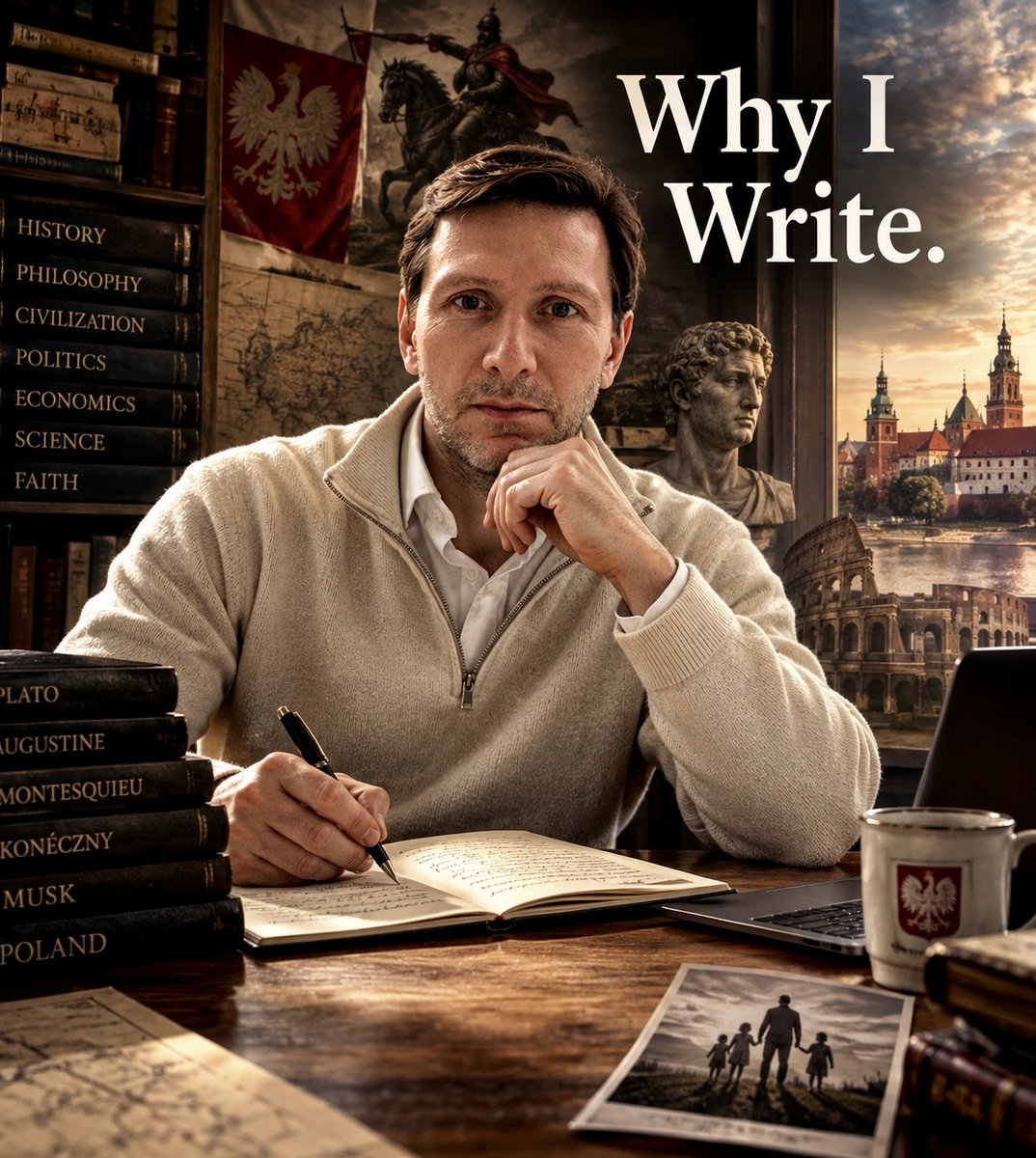
Why I Write.
The reach. The repost. The moment when the argument lands in the right mind at the right time and something shifts. Yes – all of that matters. Musk reposts. Milei reposts. A US Senator asks whether Poland is saving Western Civilization. These things matter. I will not pretend they don’t.
But also because I cannot not write it. Because I care. Because I find it important in a way that precedes the audience and would survive its absence. And for my children – as an act of transmission, yes, but also as a contribution to the world they will inherit. The two motives are not in tension. They are the same motive at different scales.
I came to this from four directions simultaneously – which is perhaps why the lens is what it is.
Warsaw first. I am Polish, which means I understand from the inside what the managed reality produces when it runs without constraint. My civilization was processed by both totalitarianisms. We lost Warsaw, rebuilt stone by stone from memory. We spent decades inside the Systemic Lie – the managed reality that corrupts categories of thought, that teaches people to perform beliefs they don’t hold, that produces the closed face and the careful answer and the smile that doesn’t come easily to strangers. We got out. And then I watched the West begin to build, from the inside, the thing we had just escaped. Not the same – subtler, slower, better dressed. But recognizable. The Polish wound produces a specific kind of clarity. You cannot gaslight someone who has been educated in the system you are trying to gaslight them with.
Paris second. I walked past the Café de Flore every morning on my way to ENA – the café where the ideas were made that would eventually capture the institutions that would eventually produce the managed reality this series has spent months naming. I studied at the École Polytechnique, at the Sorbonne, at ENA itself – the institution that produced the entire French administrative class that runs the European project Spinelli designed in a prison cell in 1941. The French formation gave me the depth, the philosophical framework, the ability to trace the argument back to its roots. It also gave me the ability to recognize the fumeux – the pretentious obscurantism that depth produces when it loses contact with reality. The French tradition at its best produced Tocqueville and Bastiat and Montesquieu. At its worst it produced what came out of the Parisian cafés. I learned both from the inside.
London third. Twelve years. Goldman Sachs, derivatives trading, the Anglo-Saxon formation that completes the picture. If Warsaw gave me the wound and Paris gave me the depth, London gave me the precision – the insistence on evidence, on the argument that can be tested against reality rather than merely admired for its elegance. The financial markets are the most ruthless epistemological environment available: you are right or you are wrong and the price tells you which. Twelve years of that produces a specific intolerance for managed reality – because in the markets, the managed reality eventually meets the actual reality, and the actual reality always wins.
And then close to twenty years among the Polish liberty-minded, conservative milieu – which I simply perceive as honest patriots with understanding. Not ideologues. Not partisans. And when I say conservative, I mean something specific: conserving our particular brand of liberty, not institutions that limit it. People who have lived through enough history to know what matters and what doesn’t, who have the specific clarity that comes from having paid for their convictions rather than merely performed them. People for whom zakłamanie is not an abstract concept but a lived experience, who recognize the Systemic Lie immediately because they spent decades inside it and decades more watching it reassemble itself in new clothes. This formation is hardest to explain to the Western mind – because it looks, from the outside, like conservatism, which the Western mind has been trained to dismiss. From the inside it is something simpler and more serious: people who know what civilization costs, who have paid the price, and who are not willing to watch it be given away by people who have never had to.
Four formations. Four wounds. Four ways of seeing the same thing from different angles – and discovering that the angles converge. The Polish wound names the Systemic Lie from the inside. The French depth traces its intellectual genealogy. The Anglo-Saxon precision tests it against evidence. The Polish liberty milieu keeps it grounded in the real rather than the theoretical.
I write in the format that reaches people – not the academic paper, not the policy brief, not the book that takes three years and reaches three thousand people. The post. The specific argument in the specific format that the person scrolling at midnight, anywhere in our civilization, can absorb, recognize, and pass forward. This format reaches millions wherever they are – in Argentina, in America, in Britain, in every country where the preference falsification is ending and the cascade is beginning. Hayek called them the secondhand dealers in ideas. I have made my peace with being one. It is the most useful thing I can be right now.
The series has become a canon – over one hundred and fifty pieces covering the full architecture of Western civilization, from the Parthenon to the positive program, from Homer to Gramsci, from the Sistine Chapel to the modern art banana taped to the wall. It was not designed to be a canon. It grew into one because the civilizational argument turns out to be a single argument seen from many angles – and each angle illuminates the others.
I write for the person at midnight who feels, without being able to name it, that something is wrong – that the civilization they inhabit is being dismantled by mechanisms they can sense but not identify. I write to give them the vocabulary. Because you cannot fight what you cannot name. Because the person who can name it is slightly less alone – and slightly more dangerous to the system that depends on the silence of the people who see.
And for my children. So that they inherit a vocabulary as well as a world. So that the series is itself an act of transmission – the parent passing forward not just values but the framework that makes the values legible.
Poland has always written for the West as well as for itself. Za wolność naszą i waszą – for your freedom and ours – is not just a military motto. It is a civilizational posture. The wound that produces the clarity. The clarity that produces the vocabulary. The vocabulary that produces the series. The series that reaches the people who need it.
This is why I write.
Tell the truth. Have courage. And build.
@swiat_ai Na Allegro za dychę latają linki dające Gemini AI Pro na 18 miesięcy na własne konto 😅
U mnie działa to już od kilku miesięcy bez problemu. Wyciek promocji operatora Jio z Indii 👳🏿♂️
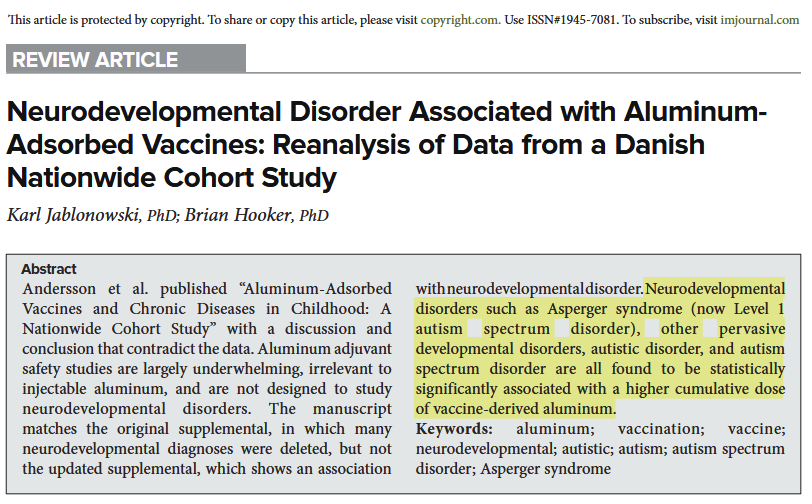
Widowiskowa wpadka naukowców próbujących dementować związek między aluminium (glinem) w szczepionkach a autyzmem!
Pamiętacie duńskie badanie Anderssona i wsp. (2025) obejmujące ponad milion dzieci, które sugerowało brak związku między obecnym w szczepionkach aluminium a autyzmem oraz 49 innymi chorobami? Oczywiście szeroko cytowane przez media głównego nurtu...
https://t.co/yQUySP31of
Właśnie opublikowano na łamach Integrative Medicine: A Clinician’s Journal reanalizę danych z tego badania
https://t.co/yBmCDGp0Cw
Nie zgadniecie co im wyszło...
Okazuje się, że wniosek Anderssona i wsp. („brak dowodów na zwiększone ryzyko zaburzeń neurorozwojowych”) przeczy ich własnym danym!
Oryginalny suplement do pracy Anderssona i wsp. zawierał mocno zredukowaną liczbę diagnoz neurorozwojowych (szczególnie cięższych przypadków), przez co wniosek o braku ryzyka był zbieżny z treścią manuskryptu
....ale zaktualizowany suplement (erratum z 17 lipca 2025) przywrócił te diagnozy i ujawnił istotne powiązania wyższej dawki glinu ze zwiększonym ryzykiem zaburzeń ze spektrum autyzmu i innych problemów neurorozwojowych.
Dzieci, które w pierwszych dwóch latach życia dostały wyższą dawkę glinu ze szczepionek (powyżej 3 mg do 4,5 mg), miały blisko 10 przypadków więcej zaburzeń neurorozwojowych na każde 10 000 dzieci w porównaniu z tymi, które dostały tylko umiarkowaną dawkę (1,5–3 mg)!
Wniosek autorów tej reanalizy: badanie Anderssona i wsp. jest wadliwe - autorzy wzywają do jego wycofania.
Media, które tak chętnie cytowały wadliwe badanie Anderssona i wsp. (2025), teraz będą siedzieć cicho...nie spodziewajmy się sprostowań
A ty Rodzicu nadal uważaj, że szczepionki nie mają żadnego związku z autyzmem i chorobami przewlekłymi!
Sen. Ron Johnson to Fauci:
“You SABOTAGED Ivermectin and Hydroxychloroquine because you knew that was the only way to get emergency use authorization for these experimental gene therapies — and you pushed Remdesivir, which nurses called ‘run-death-is-near.’”
106 studies involving 200,000+ patients show Ivermectin:
REDUCED cases 79%
REDUCED mortality 47%
REDUCED hospitalization 34%
INCREASED virus clearance 44%
IMPROVED recovery 39%