‘Allah, Allah’ chants erupted from the accused as Surat Police caught, beat and paraded 5 wanted attempt-to-murder suspects on the road.
These 5 criminals had unleashed terror in the city and had dozens of cases against them.
Kudos to Surat Police and SOG for swift action!
The date was December 23, 1912. Delhi's Chandni Chowk area.
British Viceroy Lord Hardinge was leading a royal procession on an elephant. Just then, a beautiful woman standing in the crowd waved her hand. No one suspected anything, but death lurked beneath the pallu of her sari.
She was not a woman, but 17-year-old boy, revolutionary freedom fighter Basant Kumar Vishwas.
At the behest of his mentor, Rasbihari Bose, he had disguised himself as a woman to breach the security cordon. Basant threw the bomb with perfect precision. The explosion was powerful, injuring the Viceroy, but he survived. Amidst the ensuing stampede, 'that girl' (Basant) quietly disappeared and returned to Bengal.
His father passed away some time later. While he was busy performing his father's funeral rites, the police arrested him.
He was subjected to unbearable torture behind prison bars. He was kept naked in the bitter cold, starved, but not a single name of his fellow freedom fighters came out of this 19-year-old's mouth. The British officers were astonished that at an age when boys play on the ground, this boy was playing with death.
The final scene before the gallows when he said, "I will come again."
His execution was scheduled for May 11, 1915, in Ambala Jail. Basant Kumar Vishwas was only 20 years old at the time. He became one of India's youngest martyrs.
It is said that as he was led to the gallows, there was not a trace of fear on his face. Rather, his face bore a smile like that of a groom leading his wedding procession.
He told the executioner, "Don't be afraid, brother, do your job. I will merge with this soil so that the plant of India's freedom may grow stronger."
When the noose was placed around his neck, he loudly shouted "Vande Mataram."
His voice echoed through the high prison walls, reverberating all the way outside.
A revolutionary brave man like Basant Kumar Vishwas not only threw a bomb, but also sacrificed his identity, his youth, and his life
for the freedom of India.
Hail the revolutionary freedom fighter Basant Kumar Vishwas!!!
Hundreds of salutes 🫡 🫡 🫡 to you!!!
Jai Hind 🇮🇳 🙏
Her name is Sonia Meena.
She is a young officer, still in the early years of her career. She seized the trucks of one of the most feared mining mafias in her state. In return, she got a death threat. She kept going to court to give evidence against him anyway.
She came from Rajasthan, cleared the civil services examination in her early twenties, and was posted into the Madhya Pradesh cadre.
She was handed the kind of postings that break people, districts where the sand and mining mafia runs a parallel government, where trucks strip the riverbeds through the night and everyone, from the local strongman to the officials meant to stop him, has quietly agreed to look away.
She did not look away.
As a sub divisional magistrate, she went after the illegal sand mining directly. She impounded the loaded trucks of a powerful mining operator, a man used to being untouchable.
She did not accept the usual arrangement where the raid happens, the fine is paid, and the trucks quietly return to the river the next night.
So the threats began. The mafia boss she had taken on was reported to have threatened her openly. A formal death threat followed, serious enough that the state had to increase her security.
Here is the part that tells you who she is. Even under threat, she kept travelling to the other district to submit her evidence in court, in person, so the case against him would not collapse. The easy thing was to fall ill, to be busy, to let the file go cold. She refused.
She is not a famous name. She has no film about her. She is simply one of those officers who took the oath seriously, in a system that often punishes exactly that.
They thought a young woman in her first postings would be easy to frighten. They were wrong.
Police woman strikes back! 👮♀️
Urban Company gig worker (delivery agent on a motorcycle) harasses a woman on the street in Khardah, West Bengal - making explicit gestures and allegedly exposing himself.
He didn’t realize she was an off-duty woman police constable - the Lady Singham of Khardah! 🔥
She immediately intercepted him, caught him by his collar, physically dragged him to the nearby Khardah Police Station, and got him formally arrested.
Never mess with our women! 💪
This is the kind of zero-tolerance energy we need on Indian streets.
Thoughts? Should these cases get fast-track justice?
Drop below 👇 & Share to spread awareness!
Not Japanese fans after a football match—these are Indians in Tamil Nadu.
After the Annamalai conference, party workers stayed back to stack chairs and clean the venue, disposing of the garbage responsibly. It’s inspiring to see people adopting the Japanese culture of leaving a place cleaner than they found it.
Civic sense is not defined by nationality but by attitude. If such small acts become a habit, India will become cleaner, more disciplined, and a better place for everyone. 🇮🇳👏
He is Mohammed Sanoof from Mallapurram, Kerala.
When 26 tourists were killed based on their religious identity in the Pahalgam terror attack in 2025,
he was sitting in Saudi Arabia, celebrating the terror attack and defending the terrorists on social media.
He thought nothing would happen to him.
Now, a year later, when he returned to India from Saudi Arabia, he was arrested and booked under the UAPA.
He is pleading for forgiveness.
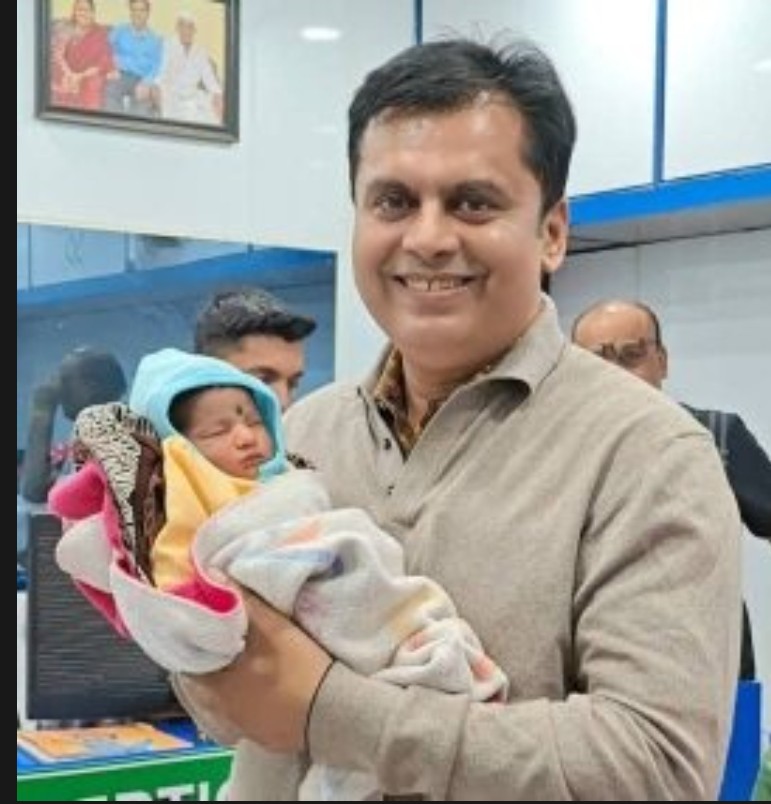
A laborer working on a site near a hospital in Pune came to the hospital with his pregnant wife in an emergency. Dr. Ganesh Khairi examined the woman and said, "I have to perform a cesarean section immediately to save the mother and child." For a moment, the laborer thought he would be stuck with a huge expense, but with no other option, he allowed the doctor to perform the operation.
The operation was successful, and a daughter was born. The laborer's biggest question was how to pay the bill. When the laborer met Dr. Ganesh and asked how much the bill would be, Dr. Ganesh smiled and said, "I don't charge for the birth of a daughter." The laborer was astonished.
The doctor clarified, "Every daughter is an incarnation of Lakshmi. How can money be taken during Lakshmi's incarnation?" When I was studying, my mother told me that when God sends a daughter into this world, to help her and her family in every possible way. Obeying my mother's orders, I don't take any money at the time of my daughter's birth."
The laborer immediately fell at Dr. Ganesh's feet and said, "You are truly a manifestation of God." It's been a decade since Dr. Ganesh opened his hospital. In ten years, nearly 1,000 daughters have been born at his hospital, and not a single penny has been charged to the parents of any daughter.
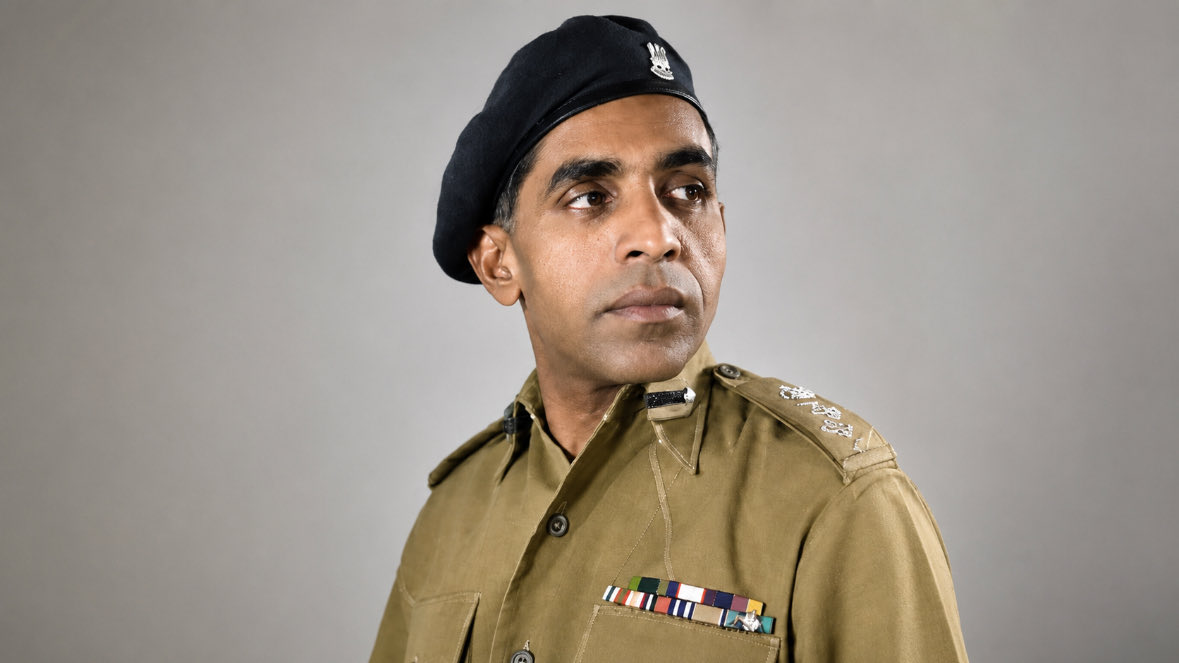
His name was Brigadier Mohammad Usman.
At Partition, Pakistan wanted him. He was one of the finest Muslim officers in the army, and he was offered seniority and a future in the new Pakistan he could not have dreamed of in India.
He said no.
Twelve days short of his 36th birthday, he died fighting for India instead.
He was born on 15 July 1912 in Azamgarh, the son of a police officer. When he was twelve, a child fell into a well in his village. Usman jumped in and pulled him out. The rope tore his hands open. He carried those scars for the rest of his life.
He trained at Sandhurst, one of the few Indians the British allowed to become officers.
Then came Partition. His regiment, the Baluch, was sent to Pakistan. Almost every Muslim officer went with it. Usman was urged to go too, and offered rank and promotion in the new army.
His answer was simple. He was born in India. He would die in India.
Late 1947. Pakistani raiders poured into Kashmir and took Jhangar, planning to hand it over as a prize. Usman was sent to hold Nowshera.
His own men, raw from Partition, doubted whether a Muslim commander would be loyal. He made "Jai Hind" the greeting of his brigade and swore he would not sleep on a bed until Jhangar was retaken.
6 February 1948. Eleven thousand attackers hit Nowshera from every side. His outnumbered men did not break.
Nearly a thousand of the enemy lay dead by the end. Thirty-three Indians fell. They began calling him the Lion of Nowshera. Pakistan put a bounty of fifty thousand rupees on his head.
3 July 1948. Evening at Jhangar. He had just finished his prayers and was meeting his officers when a shell landed near his post. He died within minutes.
He was the highest-ranking Indian officer killed in that war.
Nehru and his cabinet came to the funeral. Maulana Azad led the prayers. He was given the Maha Vir Chakra. He lies buried at Jamia Millia Islamia in Delhi.
A man who was offered a future in one country, and chose to die for another.
@Zaira583642 Indian law and justice dept needs a radical change with doctrine to save Hindus and real victims not the devils and perpetrators. Rape and love Jihad should be considered the top criminal act and the perpetrators should be hanged till death.
Rape victim k!lled her rapist after his release.
She got arrested and her statement was -
“He raped me, not the State. Who gave you the right to forgive him without consulting me?”
Do you agree with her,
Yes or No?
This is still so heartwarming to see.
Japanese tourists land in Israel wearing matching Israeli vests, singing “Am Yisrael Chai”. ❤️
Pure love for the Jewish people that the mainstream media won’t show.
There are millions of pro-India Sikhs across social media, but they all are scattered.
It's time to unite. 🇮🇳
If you know any Sikh or Kaur who proudly supports India, tag them below. This isn't for a GC, it's to build a strong network of like-minded people.
Waheguru 🙏