This is happening today in Warren Park, Harare. This is the water residents are expected to drink: dirty, foul-smelling water. This is not merely a service-delivery failure; it is a public-health emergency and a violation of the constitutional right to safe, clean and potable water.
Zimbabwe remains trapped in the water infrastructure inherited at independence in 1980, much of which was built during the 1950s for a city with a fraction of Harare’s present population.
Lake Chivero was completed in 1952 to supply water to approximately 200,000 residents, yet it remains Harare’s principal water source more than seven decades later, serving a metropolitan population of millions. The reality for many residents is brutal, they either receive dirty water or no water at all.
Responsibility must not be blurred for political convenience. Harare City Council is responsible for treating and distributing water, so it must answer for failures involving purification, maintenance, leakages and distribution.
However, the central government, through ZINWA, is responsible for planning and developing water resources and major raw-water infrastructure. It is dishonest for ZANUPF to pretend that an opposition run council can simply manufacture a new dam from residents’ rates.
Successive ZANUPF governments have failed to deliver the alternative water sources promised to Harare for decades, while public money intended for essential infrastructure has been squandered and looted.
Council officials must explain what they are doing within their powers and resources, while the national government must answer for its failure to build the infrastructure necessary to supply the capital with adequate raw water. Both institutions have responsibilities, although their powers and obligations are not equal.
I also want opposition leaders to speak about these issues more forcefully and specifically. They should be in Warren Park today, demanding independent tests of this water, identifying the responsible officials, challenging the relevant ministers and presenting a clear plan for solving the crisis.
They should take on Emmerson Mnangagwa by name and make the political lives of those responsible for this suffering uncomfortable.
Opposition politics cannot consist only of slogans, vague promises and assurances that “good things are coming.” Apart from opposition activists such as Fadzayi Mahere, the silence on many of these daily struggles is deafening.
A serious opposition must demonstrate its capacity to govern by showing that it understands how the State works, who is responsible for what and what must be done differently.
Clean water is not a luxury or a campaign slogan. It is a constitutional right. The people of Warren Park do not need empty promises; they need safe water, accountable leadership and opposition politicians prepared to fight publicly and relentlessly for the issues affecting citizens every day. If the opposition cannot organise a serious political response to people being forced to drink filthy water, why should those people believe that it has the capacity to govern the country?
President Emmerson Mnangagwa and his government must hang their heads in shame. Zimbabwe continues to suffer recurring outbreaks of cholera, a preventable disease that functional countries have largely eliminated as a routine public-health threat through clean water and proper sanitation. Yet Zimbabweans continue to die from it.
I have been covering cholera outbreaks in Zimbabwe for decades, and the causes remain the same: contaminated water, collapsing sewage systems, inadequate treatment capacity and the failure to develop water sources capable of serving Harare’s present population.
We continue asking what the problem is when the answer is staring us in the face. Harare’s population has vastly outgrown water infrastructure built more than seven decades ago, yet successive ZANUPF governments have failed to provide adequate new water sources.
Cholera is not an act of God. It is the consequence of political choices, corruption, incompetence and state failure.
Every preventable death from contaminated water is an indictment of a government that has failed to provide one of the most basic necessities of human life.
A government that cannot guarantee its citizens clean drinking water has no business boasting about development.
Hakainde Hichilema has now closed all High Courts across Zambia. This is the Solwezi High Court in Solwezi, the capital of Zambia’s North-Western Province. It, too, has been shut down.
Judges and court staff have reportedly been instructed not to report for work, ensuring that the opposition cannot lodge its presidential election petition within the constitutionally prescribed period, which expires in 24 hours.
This is not merely the closure of court buildings; it is the deliberate obstruction of access to justice at the most critical moment in Zambia’s post-election process.
DSTV and Social media rescued us from ZTV https://t.co/CmYkX3oq76 remember when ZTV was the only entertainment and had programs like NATIONAL ETHOS & CHI CHRISTU NETSIKA where;
Vimbai Chivavura
Claude Mararike
Sheunesu Mupepereki
Tafatavona Mahoso
discussed nonsense?
Tsiuranai ana Vene ,tino ziva kuti muri marombe, mabhinya, mhondi, mbavha, asi mangwana ano svika chete.
Chokwadi muchazoona kuti ED akakuparirai ngozi.
MaZimbo remember rombe iri
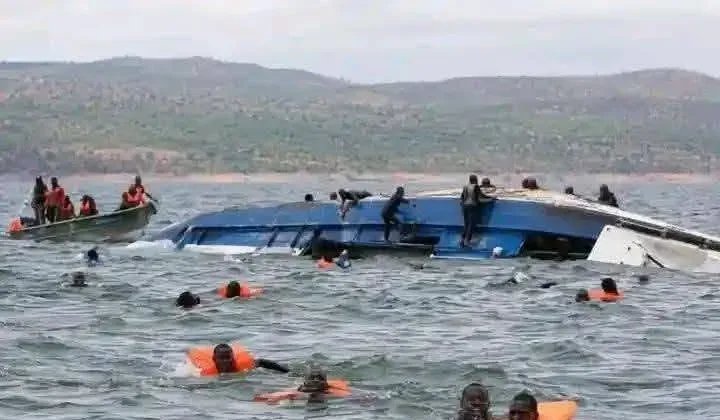
🔸Please note that there was barely a life jacket in sight when the Kariba Ferry capsized. Yet suddenly, politicians are visiting the site for mileage and each of them has a brand new life jacket. These buggers are anti-poor and selfish. The madness of these optics is lost on them. You could not make this up.🙌🏽
We need new leaders.🇿🇼
Please musape vanhu pressure. We run our own races & people have got different responsibilities & circumstances.
Some invest in supporting extended family members over many years, covering household, medical & education bills, not individual assets.
Some choose to acquire assets & qualifications where they are based while some work in jobs where bills make it difficult to save at scale.
Only when we take time to learn the individual story do we get to find out why their lives have taken the coarses they have.
There are many silent heroes & heroines in the diaspora who have sacrificed their lives for those back home but have got no assets, are a laughing stock to many & go to their graves broken hearted.
Let's show kindness, compassion, empathy & understanding to others. Life is all about swings & roundabouts.
🔸Kana muchipanana mari dzenyu dzekutengana kumusangano wenyu munopanana mazi$10,000 nema$20,000. Munotombosvitsa pa$50,000. Asi murombo akabheutswa nechikepe chenyu chinenge chimugweje chaparara nekusachengetwa zvakanaka, munomupa$100. This Govt has failed the masses.
We need new leaders.🇿🇼
On 23 July 2013, Chiwoniso Maraire spoke to her daughter Chengeto after spending days in hospital in Chitungwiza.
Only months earlier, she had been performing at HIFA, recording new music and planning future performances.
As mother and daughter talked, Chengeto began crying. She could not explain why, but something about their conversation made her feel that this might be the last time they would ever speak.
Chiwoniso had carried Zimbabwe's mbira onto stages around the world, creating music deeply rooted in the traditions she had learned from childhood.
Among Chiwoniso's most personal songs was Mai, centred on the bond between mother and daughter.
The following day, Chengeto received a telephone call from her aunt Tawona. Before she was told what had happened, she sensed something was terribly wrong.
On 24 July 2013, Chiwoniso Maraire died at South Medical Hospital in Chitungwiza, aged just 37.
The voice behind Wandirasa, Iwai Nesu and Nhemamusasa was gone.
The child who had once sung for her mother had now left a daughter of her own.
Hi @crimewatchzw, I would like to start by asking our local police in Zimbabwe: Have they now started arresting people simply for walking around the CBD or going into town to look for something to eat?
I parked my car in town and decided to look for something to eat before going to work. I am a carpenter and was supposed to go to work with my colleagues.
I went to a place selling drinks and pies. While I was waiting for the woman to give me my change after I had already paid, I suddenly felt someone grabbing me by the collar and neck and putting me in handcuffs. I asked why I was being arrested, and I was told it was for obstruction.
I asked what I had obstructed, but one of the female officers pushed me. I asked her again why I was being arrested because I needed to go to work. She told me to wait and that we would discuss it later. I was then taken to Central Police Station along with other people who had been arrested.
I was detained from around 11am until 4pm and was hungry because I had not eaten. I tried explaining my situation to the officers, but no one helped me. I eventually realised that I was going to miss work, so I decided to pay the fine and leave so that I could go to work.
However, no one wanted to accept the money. Whenever I asked what offence I had committed, I was told that they would explain it to me later. I kept waiting for someone to tell me why I had been arrested, but eventually one officer simply told me to pay and leave.
That is how I ended up being forced to admit guilt. The police system is dead. #chaora chinhu ichi
@PoliceZimbabwe
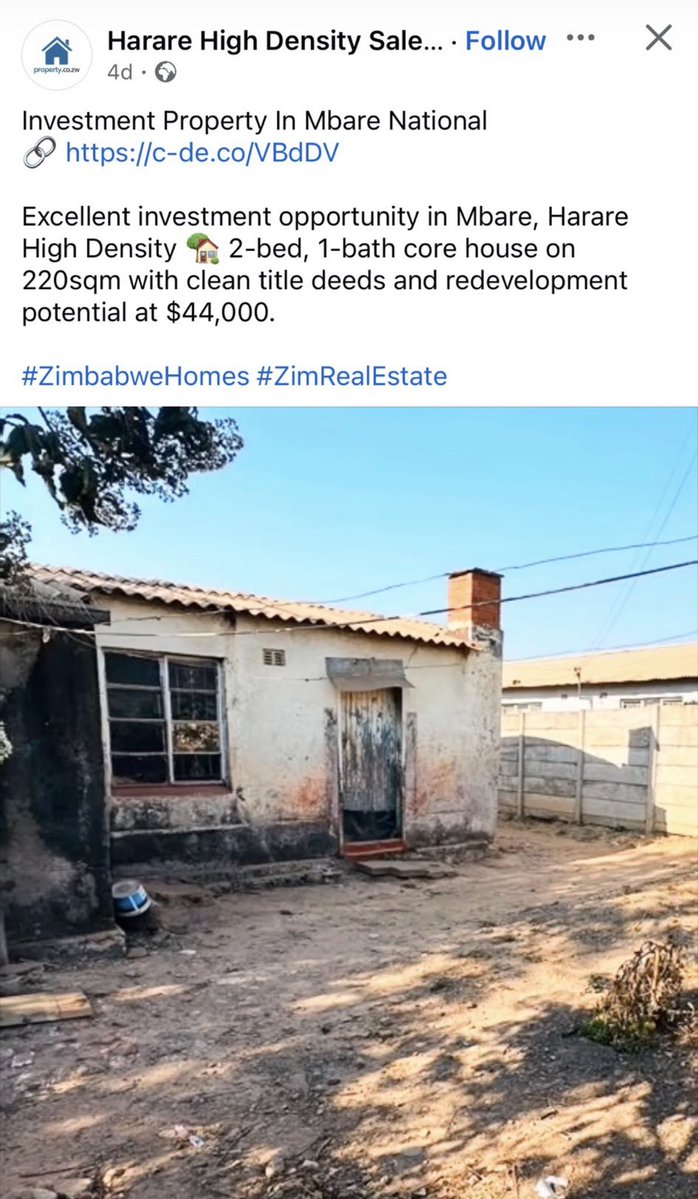
This house is up for sale in Mbare, Harare’s oldest township, in Zimbabwe. It is on the market for US$44,000, or R800,000.
A Zimbabwean university professor earns US$300, or R5,454, a month. There are no regular mortgages in Zimbabwe to buy this house.
So it will take the professor roughly 147 months, or over 12 years, to raise enough to buy this house. And that assumes they never spent a cent of their salary on anything else, including food.