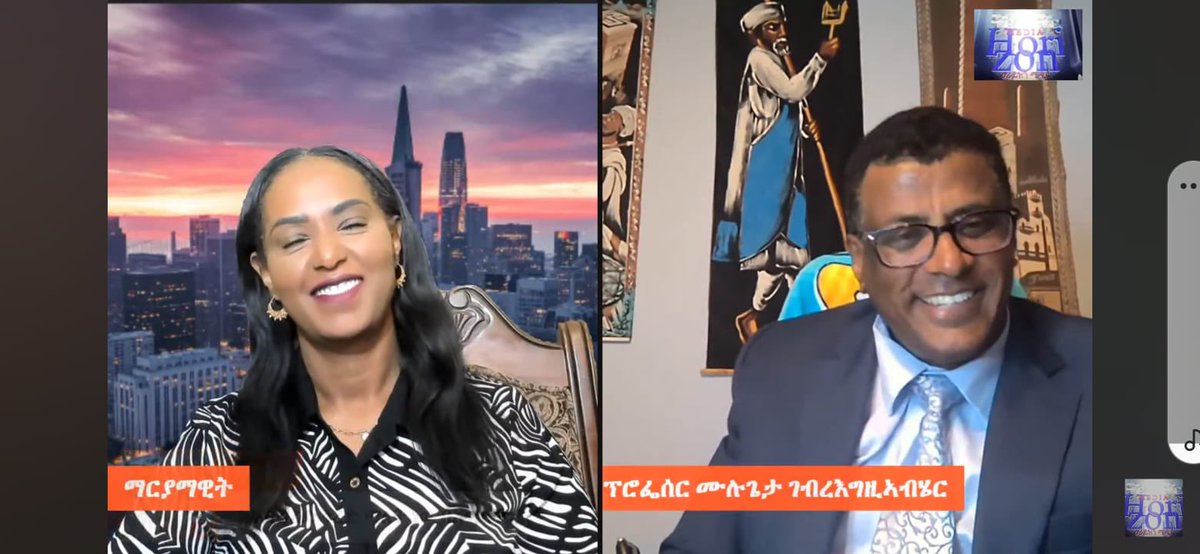
Axum massacre: #Eritrea|n Army began firing bullets at every civilian who happened to be found on the streets. ... causing the loss of the lives of hundreds of civilians. It felt like I was watching a horror movie made in my dreams.
#TigrayGenocide
https://t.co/6FCNVumE5Z
#Ethiopia: Social media platforms “failed to adequately moderate genocidal content” during #Tigray war, study finds
A recent study by the Distributed AI Research Institute (#DAIR) examining moderation practices on social media platforms during the 2020–2022 war in Ethiopia’s Tigray region found that these platforms “failed to adequately moderate genocidal content,” enabling the widespread circulation of hate speech, incitement, and atrocity denial. According to the report, platforms “prioritized superficial cultural awareness and language skills of dominant languages,” while overlooking “in-depth familiarity with dialects, cultural practices, and broader social contexts.”
The study, conducted by journalists, activists, data archivists, and former content moderators—including DAIR founder Timnit Gebru—focused on moderation failures during the conflict. It cited internal documents disclosed by whistleblower Frances Haugen to show that while Ethiopia has “a population of 128 million people speaking an estimated 100 languages,” Facebook “only supported two of those languages for integrity systems.” The report also emphasized that dialectical understanding was crucial. “We found that dialectical knowledge, including slang terms, was crucial in identifying harmful posts,” the authors wrote, based on a four-month annotation study involving 340 posts in Amharic, Tigrinya, Arabic, and English.
One example involved a post with the hashtag “#FakeAxumMassacre,” which researchers categorized under “Violent Event Denial.” The study stated that although “the event was recounted by survivors and investigated and corroborated by the likes of Amnesty International, Human Rights Watch, and Associated Press,” the post “claims that the massacre is ‘fake.’” In another instance, a post translating to “Clean the cockroaches” was not flagged by all annotators; the study noted that recognizing its genocidal nature “require[d] knowledge that the Ethiopian government and its allies regularly described Tigrayans as cockroaches.”
https://t.co/oVTFOEu0v5
As a concerned Tigrayan Ethiopian, I must speak up—because silence is no longer an option.
The Tigrayan Genocide, led by Ethiopian Prime Minister Abiy Ahmed, is one of the deadliest and most ignored atrocities of the 21st century. Alongside him were co-conspirators: Isaias Afwerki of Eritrea, Amhara regional forces, the Fano militia, and foreign actors like the UAE and Turkey, all with the silent complicity of the West.
This was not a war—it was a coordinated campaign of extermination, and Abiy Ahmed is the chief architect of it.
The numbers speak for themselves:
• Over 1 million Tigrayans killed
• More than 120,000 women raped
• 2 million internally displaced
• Over 100,000 refugees forced into Sudan
• Hundreds of thousands more forced to flee Ethiopia entirely
• 40% of Tigray still under foreign and enemy occupation
And yet, the world has turned its back. The victims are being blamed. The narrative has been rewritten. We are no longer even allowed to say “genocide” without being silenced.
We Tigrayans once stood firm, demanding accountability and justice. Today, those demands have been watered down into begging for peace—a false peace, made without justice, with those who slaughtered our people still in power and walking free.
Worse, we are now fighting each other. Tigrayans are turning on one another, becoming propaganda machines for the very forces that tried to wipe us out. Our own leaders are failing us, consumed by infighting and ego, with some even collaborating with the same enemies who led the genocidal war against our people.
Let us be clear:
Peace without justice is a lie.
Peace without accountability is surrender.
Peace without unity is destined to fail.
This genocide continues—through starvation, military occupation, political betrayal, and forced displacement. The world may look away. But we will not.
We are Tigray.
We are the survivors.
We are the resistance.
Now is the time to rise.
It’s time to stop the infighting.
It’s time to stop being afraid.
It’s time to unite—across all divides—and demand the justice we deserve.
We must also demand our fundamental right to self-determination.
Tigrayans must be allowed to hold a referendum and decide our own future—whether within Ethiopia or outside of it. After all we’ve endured, no one else has the right to dictate our fate.
Only through truth, unity, and courage can we bring about a lasting peace—one that honors our martyrs, defends our dignity, and ensures that never again will Tigray bleed in silence.
We have not forgotten. We will not forgive without justice. And we will never stop fighting for Tigray.
#TigrayGenocide
#FreeTigray
Not in Our Time!!
Call for action- stop politicide on TPLF, the only viable organized political party that fought for the rights of the people of Tigray for 50 years and counting. This is not about individual leaders. This concerns a Tigrayan institution that many enemies from far and close tried to destroy and eliminate it. Not in our time!!
If you agree to preserve the TPLF and rescue COHA then please help me out by signing this petition?
@DawitSeyoum14@elsatigray3@DAT_TDF@JoeTseGy@JborgGa@EllaAtsbeha@martinplaut@BashirHashiysf@Wedi_ATM@BerhanuAsres@dr_wakanda
https://t.co/yChpDijhHB
TIME's new cover: Meet this year's #TIME100Health, a community of leaders—scientists, doctors, advocates, educators, and policy-makers, among others—who are changing the health of the world. https://t.co/1MpFEK5mKo
We speak with the academic and commentator Ezekiel Gebissa about the fate of the TPLF, including possible outlawing, and its implications to Tigray, and Ethiopia's drive for a port access, including through challenging Eritrea's sovereignty.
https://t.co/LlWt9j2KxH
« Remember Tigray VR » is now available on YouTube.
Based on first-hand accounts from victims of weaponized rape during the war in Tigray, this short film is initially an immersive 360-degree virtual reality experience.
https://t.co/UXjLxTCKyX
Ethiopia Should Name GERD Reservoir After Meles Zenawi
Some might ask: Why focus specifically on Meles Zenawi? Isn't this dam the result of generations of Ethiopian aspirations? Aren't there controversies surrounding Zenawi's other political decisions? To clarify, I'm not defending every aspect of his political legacy or dismissing other Ethiopian leaders' contributions. I aim to objectively highlight the unique and pivotal role Zenawi played specifically in turning the Renaissance Dam from dream into reality—through direct initiation, innovative domestic financing strategies, and assertive diplomatic advocacy on Nile water rights, including the historic Nile Basin Cooperative Framework Agreement (CFA).
Have you ever wondered why reservoirs often bear leaders' names? Consider Lake Nasser in Egypt, Hoover Dam in the U.S., or Atatürk Dam in Turkey. Each symbolizes a nation's journey, ambition, and achievements. Ethiopia now stands on the verge of its transformative story with the Renaissance Dam.
Who Laid GERD's Foundation Stone?
Imagine the morning of April 2, 2011: sunlight breaking over the Blue Nile valley, many gathered, hearts beating with hope and anticipation. Meles Zenawi himself set the cornerstone for one of Africa's most significant infrastructure projects. Picture the cheers and tears of joy as decades of aspiration crystallized into reality.
Why Domestic Financing Matters
Zenawi made a bold choice: financing GERD domestically. Why was this critical? Egypt had diplomatically lobbied the World Bank and other institutions for many years to block Ethiopia's development efforts. Zenawi's domestic financing plan was a new and different way of preventing external interference and empowering Ethiopians to control their destiny. Through bonds and citizen contributions, Ethiopians invested their money, pride, and hope into GERD. Families across Ethiopia—from bustling cities to rural villages—proudly contributed whatever they could, symbolizing a unified national commitment.
Was GERD a Diplomatic Victory?
Absolutely. Zenawi tirelessly championed Ethiopia's equitable Nile water rights internationally, achieving a landmark victory with the CFA in 2010. CFA successfully stopped colonial injustices, securing Ethiopia's ensured future generations would inherit a fair and recognized right to their most precious resource—Our water.
Is Naming Reservoirs After Leaders a Global Tradition?
Indeed. Lake Nasser commemorates President Nasser's vision for Egypt; Hoover Dam honors President Hoover; Atatürk Dam recognizes Atatürk's foundational role in Turkey. Naming GERD's reservoir after Zenawi aligns Ethiopia with globally respected traditions—it's about recognition and embracing international norms of honoring pivotal national contributions.
What Legacy Do We Want to Leave Behind?
Every leader leaves behind a legacy marked by both achievements and mistakes. Meles Zenawi was no different. So, Naming GERD's reservoir after Zenawi creates a lasting symbol, highlighting the power of leadership in driving national progress. On top of that, if current Ethiopian leaders neglect or diminish the contributions of past leaders, we must ask ourselves—when today's leaders pass, who will recognize and honor their legacy really?
#GERD #Renaissancedam #Ethiopia #Sudan #Egypt #Uganda #Kenya #Tanzania #Rwanda #Burundi #DRCongo #SouthSudan
🔇🔇🔇Announcing new work from DAIR which is very close to my heart, 3 years in the making. When #TigrayGenocide, the deadliest genocide of the 21st century thus far, started in November 2020, it was 1 month before I got fired from Google. 🧵
https://t.co/SZLzi9YLUJ
"The return of TPLF dominance in Tigray may have locked Addis and Mekelle into a strategic stalemate...
"...it is in fact TDF’s presence and neutrality which is preventing relapse into another round of war in the Horn."
https://t.co/wdsiv99oyN
I am very grateful for my personal as well as our foundation (https://t.co/x5zkewBqQt) championing of this very special cause to bring these conjoint twins to the US for surgical separation.
I’m very grateful & thankful to everyone who put their faith for my initial call for help and action after my visit to the #Tigray region of #Ethiopia exactly this time last year.
I was visiting @AksumHospi4940 university hospital & the College of Health Sciences as part of my global health work and partnership with @MedUnivSC Witt support from @MUSC_COM @MUSC_CGH and my department of #PublicHealthSciences.
If you would like to support this and other similar lifesaving projects, please visit the website for #GezanaBBT or #LOLA children’s home.
You can make a difference!
#LifeSavingCause
#CleanWater4Amdo
The Genocide Convention obliges Ethiopia to prevent and punish genocide, yet it has failed. This could be a case for the International Court of Justice. The West should push for a UN-backed investigation to ensure perpetrators face justice. 4/6
Displaced families in #Tigray’s Abi Adi town face water shortages, #OXFAM aid alleviates but challenges remain
In Abi Adi, a town in Ethiopia’s Tigray region, water remains scarce for thousands of displaced people, including Birzaf Gebreabezg, a mother of eight who fled from #Humera in West Tigray during the Tigray war. She and her children endured a 450 km journey before reaching a camp that now shelters over 17,000 people. “There was no water when we arrived; we relied on the river,” she said, adding that “the river was overcrowded, and the water was often contaminated.”
OXFAM, with support from the European Union, later rehabilitated a key water source, improving access to clean water for over 17,500 people. “We didn’t have jerrycans and buckets, but OXFAM provided them,” Birzaf said. “We used to wash our clothes on stones, but now we have basins. Our children were constantly sick from dirty water, but now things have improved.”
However, the available supply remains inadequate. Alem Gomera, a public health assistant with OXFAM in Ethiopia, highlighted the ongoing difficulties. “The daily water provision is only 15 liters per person—far below the recommended 50,” he said. “Long queues often leave people waiting, and sometimes, they return home empty-handed, relying on neighbors to quench their thirst.” OXFAM has maintained 405 hand pumps across Tigray, serving over 281,000 people, and expanded efforts in Abi Adi by constructing latrines and distributing water treatment chemicals.
Despite these improvements, Birzaf remains hopeful about returning home. “I was hopeful before, and I still am,” she said. “My greatest wish is to return to my village in West Tigray.”
https://t.co/uWu7EnE6Ab




![addisstandard's tweet photo. #Ethiopia: Social media platforms “failed to adequately moderate genocidal content” during #Tigray war, study finds
A recent study by the Distributed AI Research Institute (#DAIR) examining moderation practices on social media platforms during the 2020–2022 war in Ethiopia’s Tigray region found that these platforms “failed to adequately moderate genocidal content,” enabling the widespread circulation of hate speech, incitement, and atrocity denial. According to the report, platforms “prioritized superficial cultural awareness and language skills of dominant languages,” while overlooking “in-depth familiarity with dialects, cultural practices, and broader social contexts.”
The study, conducted by journalists, activists, data archivists, and former content moderators—including DAIR founder Timnit Gebru—focused on moderation failures during the conflict. It cited internal documents disclosed by whistleblower Frances Haugen to show that while Ethiopia has “a population of 128 million people speaking an estimated 100 languages,” Facebook “only supported two of those languages for integrity systems.” The report also emphasized that dialectical understanding was crucial. “We found that dialectical knowledge, including slang terms, was crucial in identifying harmful posts,” the authors wrote, based on a four-month annotation study involving 340 posts in Amharic, Tigrinya, Arabic, and English.
One example involved a post with the hashtag “#FakeAxumMassacre,” which researchers categorized under “Violent Event Denial.” The study stated that although “the event was recounted by survivors and investigated and corroborated by the likes of Amnesty International, Human Rights Watch, and Associated Press,” the post “claims that the massacre is ‘fake.’” In another instance, a post translating to “Clean the cockroaches” was not flagged by all annotators; the study noted that recognizing its genocidal nature “require[d] knowledge that the Ethiopian government and its allies regularly described Tigrayans as cockroaches.”
https://t.co/oVTFOEu0v5](https://pbs.twimg.com/media/Gr8tVc3XkAAZsut.jpg)